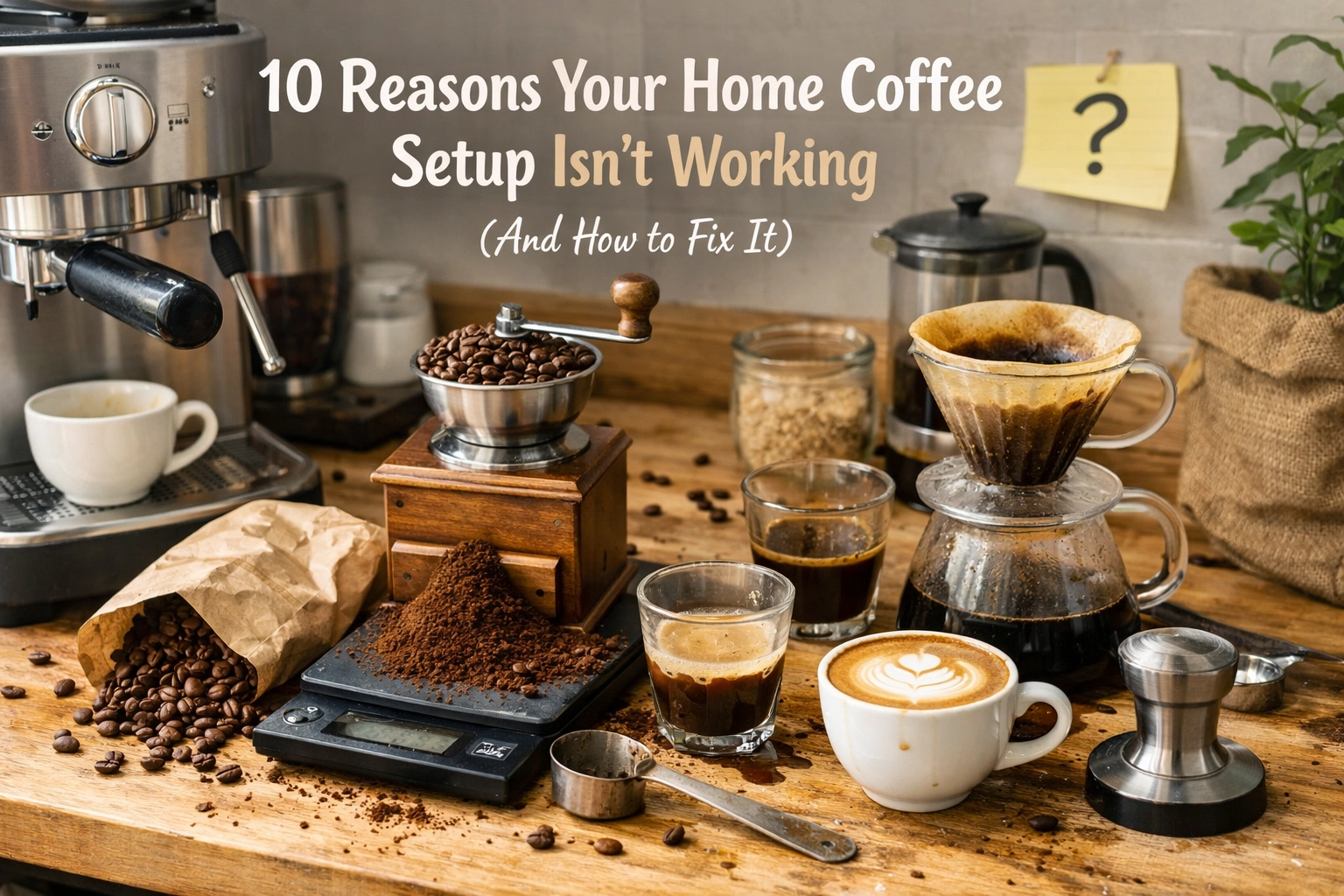
So, you’ve spent a small fortune on a shiny new espresso machine, a fancy-looking gooseneck kettle, and enough gadgets to stock a laboratory. You’ve watched the YouTube videos, you’ve bought the "Instagram-famous" beans, and yet… your morning cup still tastes like a mixture of old pennies and burnt toast.
Believe us, we’ve all been there. There is nothing more frustrating than having the gear but not the gear-output. The good news? It’s probably not you, and it’s probably not even your machine. Usually, it’s a few small, annoying variables that are throwing your entire brew off-balance.
At Limini Coffee, we spend our lives obsessing over the perfect extraction. We want your home setup to feel like a mini-sanctuary, not a source of stress. So, let’s troubleshoot. Here are 10 reasons your home coffee setup isn’t working and exactly how to fix it.
1. You’re Using "Zombie" Beans
We’re going to be blunt here: if you’re buying your coffee beans from a supermarket shelf, you’ve already lost the battle. Those beans were likely roasted months ago. By the time they hit your grinder, they are "zombies": dead on the inside with no soul left to give.
Coffee is a fresh agricultural product. Once roasted, it begins to degas and oxidize. For the best results, you want beans roasted within the last 2 to 4 weeks. If you’re looking for that vibrant, sweet, and complex cup, you need to be looking at freshly roasted coffee beans from Limini Coffee.
The Fix: Buy small bags, buy often, and always check the "roasted on" date. Fresh is best. Period.
2. Your Grinder is a "Whirly-Blade" Nightmare
If you are still using a blade grinder (the kind that looks like a tiny blender), we have some bad news. Blade grinders don’t actually grind coffee; they shatter it into random, uneven shards. You end up with "fines" (microscopic dust) and "boulders" (huge chunks).
When you brew, the dust over-extracts and tastes bitter, while the boulders under-extract and taste sour. It’s a mess. To get a balanced cup, you need a burr grinder. Burr grinders crush the beans to a uniform size, which is the secret sauce to great coffee.
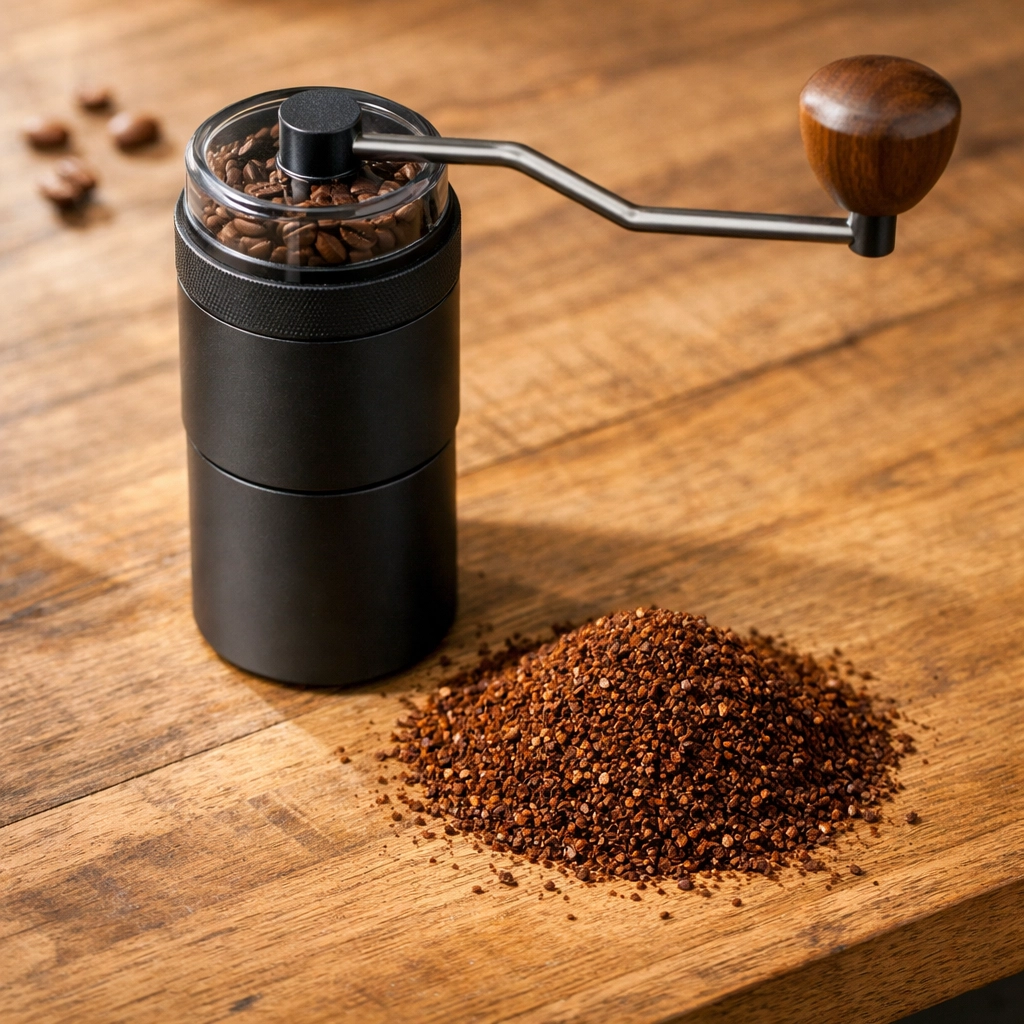
The Fix: Invest in a decent burr grinder. It is, without a doubt, the most important piece of home brewing gear you will ever own. Even a basic hand-cranked burr grinder will outperform a high-end blade grinder every single time.
3. The "Goldilocks" Grind Size Problem
So you’ve got a burr grinder, but your coffee still tastes "off." Is it sour and sharp? Or is it bitter and dry?
This is all about extraction surface area. If your grind is too coarse, the water rushes through too fast (under-extraction). If it’s too fine, the water gets stuck and cooks the grounds (over-extraction).
- Sour/Thin? Your grind is too coarse. Make it finer.
- Bitter/Harsh? Your grind is too fine. Make it coarser.
The Fix: Don’t be afraid to adjust your grinder daily. Beans change as they age, and the weather (humidity) actually affects how they grind. It’s a moving target, so keep aiming.
4. You’re Not Using a Scale
"I just use a scoop."
Stop right there. Using a scoop to measure coffee is like using a handful to measure flour for a cake: it’s never the same twice. Different beans have different densities. A scoop of a dark roast might weigh 12 grams, while a scoop of a light roast might weigh 16 grams.
If you want to fix your coffee, you have to be consistent. We use grams because they don't lie. For a standard filter coffee, we generally recommend a 1:16 ratio (1 gram of coffee for every 16 grams of water). For espresso, we usually aim for 1:2 (18g of coffee in, 36g of liquid out).
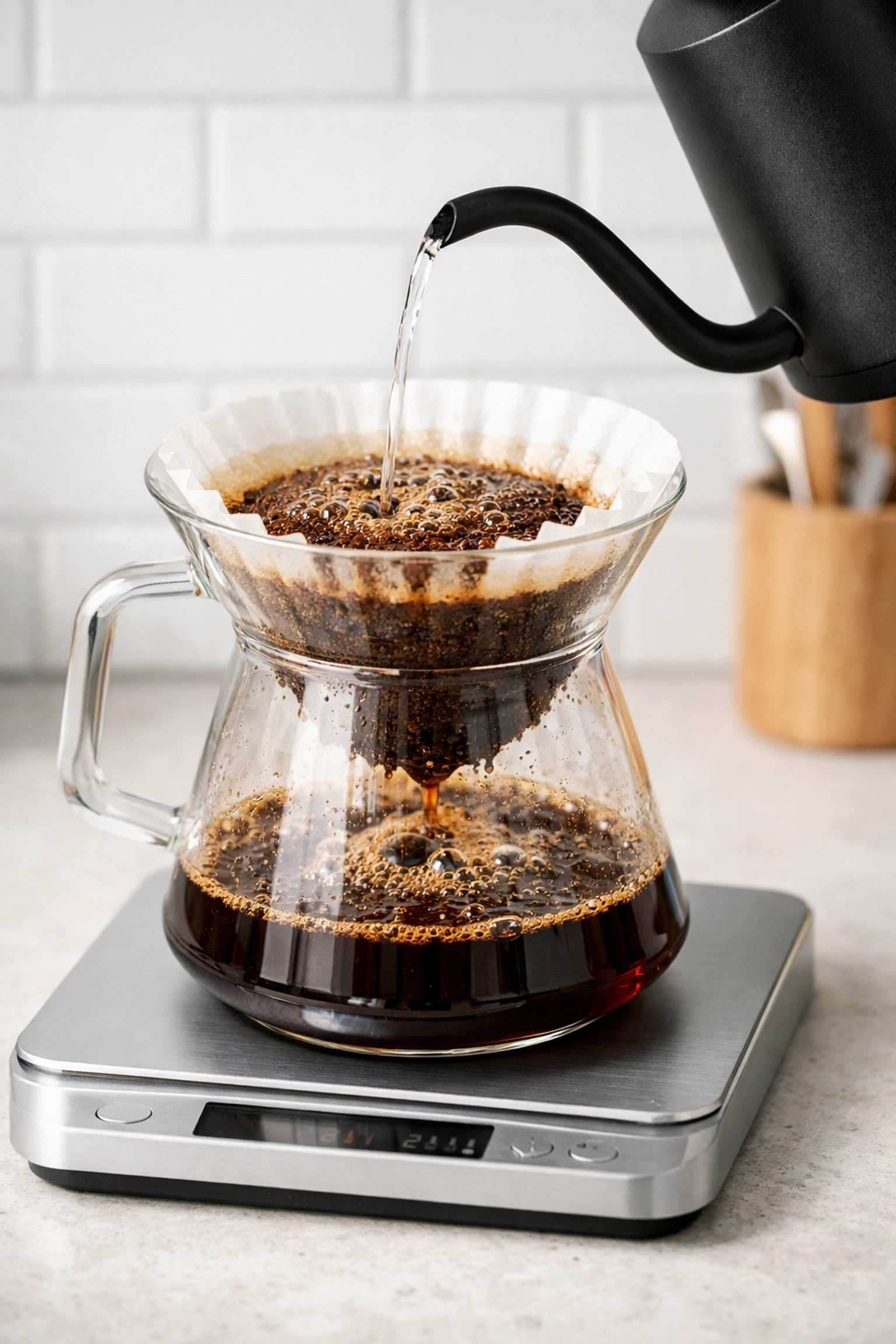
The Fix: Buy a cheap digital scale that weighs to 0.1g. Use our coffee brewing calculator to find your perfect numbers and stick to them. Consistency is the bridge to quality.
5. Your Water is Too Hot (or Too Cold)
Boiling water (100 ºC / 212 ºF) is generally too aggressive for most coffees, especially darker roasts. It can "scorch" the grounds and bring out unpleasant ashy notes. On the flip side, if you’re using water that’s cooled down too much, you won’t extract the sweetness.
We find the "sweet spot" is usually between 92 ºC and 96 ºC (198 ºF to 205 ºF).
The Fix: If you don't have a temperature-controlled kettle, let your boiling water sit for about 60 to 90 seconds before pouring. This simple pause can transform a bitter cup into a smooth one.
6. You’re Ignoring the Water Quality
Coffee is about 98-99% water. If your tap water tastes like chlorine or is incredibly "hard" (full of minerals), your coffee will taste muted and flat. Hard water also leads to scale buildup, which is the number one killer of espresso machines.
We’ve seen beautiful La Spaziale machines ruined in months because of untreated hard water.
The Fix: At the very least, use a basic water filter jug. If you want to go pro, look into third-party water minerals or bottled water with a low mineral content. Your taste buds (and your machine's boiler) will thank you.
7. The Dreaded "Channeling"
This one is for the espresso lovers. Have you ever noticed your espresso shot spraying everywhere or coming out of only one side of the portafilter? That’s channeling.
Water is lazy; it wants to find the path of least resistance. If your coffee bed has clumps or isn't level, the water will blast a hole through the weak spot, leaving the rest of the coffee dry. The result? A shot that is simultaneously sour and bitter. Yuck.
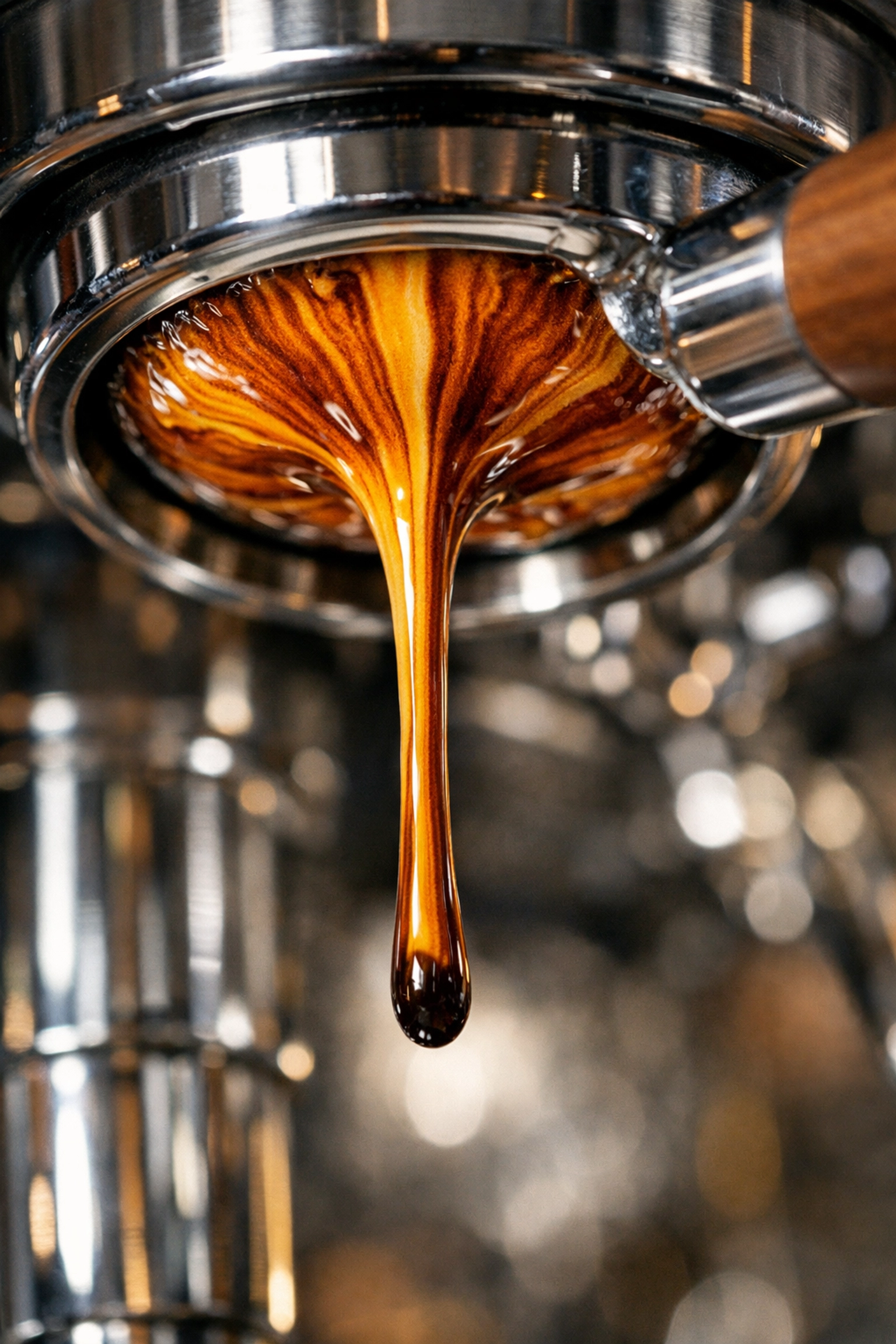
The Fix: Focus on your prep. Use a WDT tool (basically a few thin needles) to break up clumps before you tamp. And when you do tamp, make sure it's perfectly level. You don't need to push with 50lbs of pressure; you just need to make sure the air is gone. Check out our guide on proper tamping technique for more.
8. Your Equipment is Dirty
Be honest: when was the last time you backflushed your machine or cleaned your grinder? Old coffee oils are hydrophobic (they hate water) and turn rancid very quickly. If your portafilter basket is covered in black sludge, every shot you pull is being filtered through "trash flavor."
A dirty machine produces bitter, "dirty" tasting coffee regardless of how expensive your beans are.
The Fix: Backflush your espresso machine with water every day and with cleaner once a week. Take your grinder apart once a month and vacuum out the old stale grounds. It’s a bit of a chore, but looking after your espresso machine is non-negotiable for good flavor.
9. The Milk is "Cooked," Not Steamed
If you’re making lattes or cappuccinos and the milk tastes like sulfur or is full of giant "bath bubbles," your technique needs a tweak. Many home baristas over-steam their milk, heating it way past 70 ºC (160 ºF). At this point, the proteins break down and the sweetness vanishes.
You want that "wet paint" look: glossy, silky, and micro-foamed.
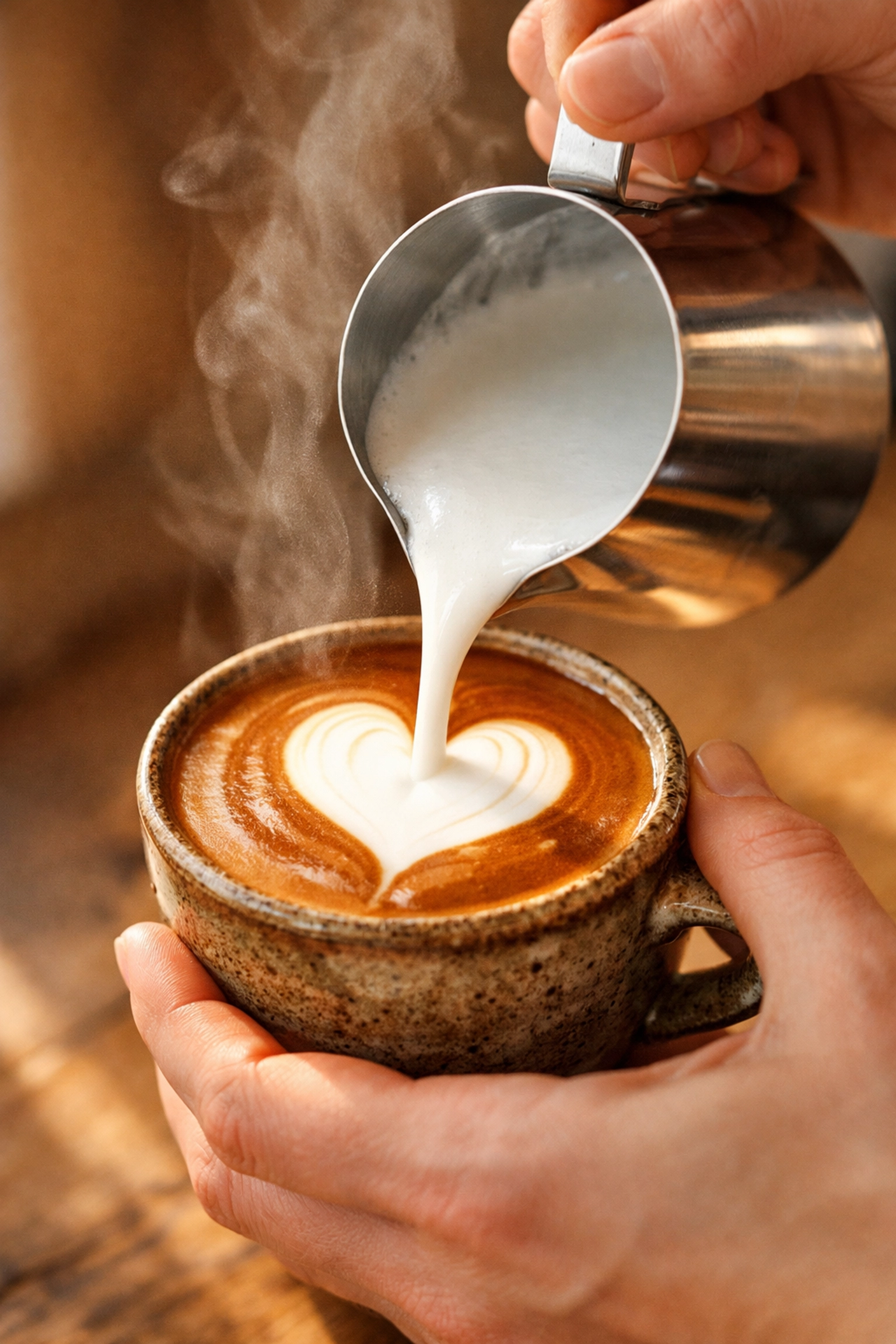
The Fix: Aim for a final temperature of around 60 ºC to 65 ºC (140 ºF to 150 ºF). Use cold milk and a clean pitcher. We have a deep dive on understanding milk that will help you get those silky textures every time.
10. You’re Changing Too Many Things at Once
This is the most common mistake for passionate home brewers. You pull a bad shot, so you change the grind, and the dose, and the temperature all at once. Now you have no idea which change actually helped (or hurt).
Coffee brewing is a science experiment you get to drink. If you change three variables, you’ve lost the plot.
The Fix: Change one thing at a time. If the coffee is sour, make the grind finer and keep everything else the same. Still sour? Go finer again. This systematic approach is the only way to truly "dial in" a coffee.
Ready to level up?
The journey from "okay" coffee to "wow" coffee is usually just a series of small adjustments. It starts with the right equipment and, most importantly, the right beans.
If you're ready to stop settling for mediocre brews, head over to Limini Coffee and grab a bag of our latest single-origin roast. Whether you need a new espresso machine, some barista training, or just some solid advice, we're here to help you make the best coffee of your life.
Remember, the best cup of coffee is the one you enjoy making as much as you enjoy drinking. Happy brewing!
Leave a Reply