☕ 7:00 AM.
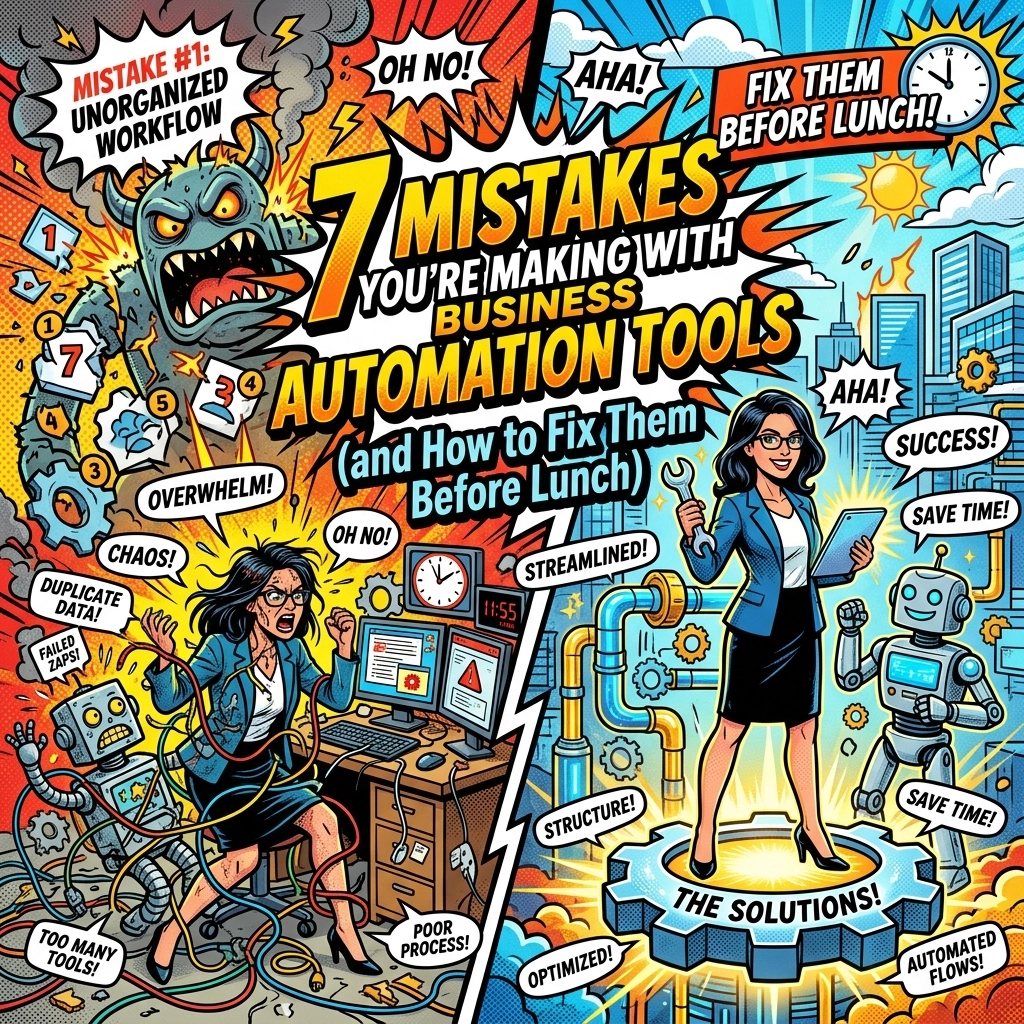
The sun is barely up, and your phone is already buzzing. Not with client calls, those would be welcome. No, it’s buzzing with notifications from the four different business automation tools you signed up for last week.
"Zapier failed."
"HubSpot sync error."
"New lead (Incomplete Data)."
You stare at the steam rising from your coffee and wonder… wasn't this supposed to make your life easier? You were promised a beach, a laptop, and a business that runs itself. Instead, you’ve just built yourself a digital monster that requires constant feeding.
Scaling shouldn't be this exhausting. But here we are.
If you feel like you’re working for your software instead of the other way around, you’re likely making one of these seven common mistakes. The good news? We can fix them before you even think about what’s for lunch.
1. THE "SHINY OBJECT" TRAP (9:00 AM)
You saw an ad. Or a TikTok. Someone told you that "AI is the future" and showed you a flashy dashboard. So, you hit "Subscribe."
Most small business owners start with the tool, not the problem. You’re buying a high-end chainsaw to cut a slice of bread. It’s messy, expensive, and totally unnecessary.
The Mistake: Adopting ai business automation because it looks cool, rather than because it solves a specific bottleneck.
The Fix: Stop. Put the credit card away. Before you touch another piece of software, do a process audit. Grab a piece of paper (yes, physical paper) and list every repetitive task that makes you want to scream. Is it lead follow-ups? Is it invoicing? Pick one.
Define a goal. "I want to save 3 hours a week on manual data entry." Now, go find the tool that does exactly that. If you want a partner that actually understands the "business" part of business automation, check out what we're doing at Marblism.
2. AUTOMATING A BROKEN PROCESS (9:30 AM)
You have a lead generation flow that’s about as smooth as a gravel road. It’s full of manual hand-offs, missing info, and "I'll get to that later" sticky notes.
You decide to automate it.
Congratulations. You now have a high-speed, automated gravel road.
The Mistake: Automating a flawed process. Automation doesn't fix bad habits; it scales them. If your manual process is confusing, your automated process will be a catastrophe.
The Fix: Optimize first. Automate second. Look at every step. If a human can’t explain the logic behind a task, a machine definitely can't execute it. Clean up the workflow. Cut the fluff. Once the manual version works perfectly, then, and only then, do you let the business automation tools take over.
3. THE "HUMAN SOUL" DELETE BUTTON (10:00 AM)
You’ve seen those LinkedIn messages. You know the ones.
"Hello [FIRST_NAME], I see you are in [INDUSTRY]. Let's hop on a 15-minute call to discuss synergies."
Gross.
The Mistake: Automating the "core" of your brand, the human connection. You’re trying to automate empathy, and your customers can smell the silicon from a mile away.
The Fix: Use AI for the grunt work, not the heart work. Let your ai business automation handle the scheduling, the data syncing, and the initial lead sorting. But when it comes to the actual conversation? That’s where you step in.
Use tools like Marblism to build the infrastructure that gives you more time to be human. Automation should be the wind in your sails, not the person steering the boat. You can see how we handle that balance right here: https://marblism.link/scott-bowen.
4. CREATING AN "AUTOMATION ISLAND" (10:30 AM)
You have a tool for your CRM. A tool for your email marketing. A tool for your project management.
But they don’t talk to each other.
You’re spending your "saved time" exporting CSV files from one and importing them into another. You’ve built a series of high-tech islands, and you’re the only person with a rowboat.
The Mistake: Building siloed workflows. If your tools aren't integrated, you haven't automated anything, you've just moved the manual labor to a different screen.
The Fix: Look for the "bridge." Before you commit to a new piece of software, check its integration capabilities. Does it have a native integration? Does it play well with Zapier or Make? If it doesn’t talk to your existing ecosystem, it’s a liability, not an asset.
5. IGNORING THE "GARBAGE IN" RULE (11:00 AM)
Your automation is running perfectly. It’s sending out 500 emails a day.
The problem? Your data is trash. Half the emails are bouncing, and the other half are addressed to "Current Resident" or "Test Test."
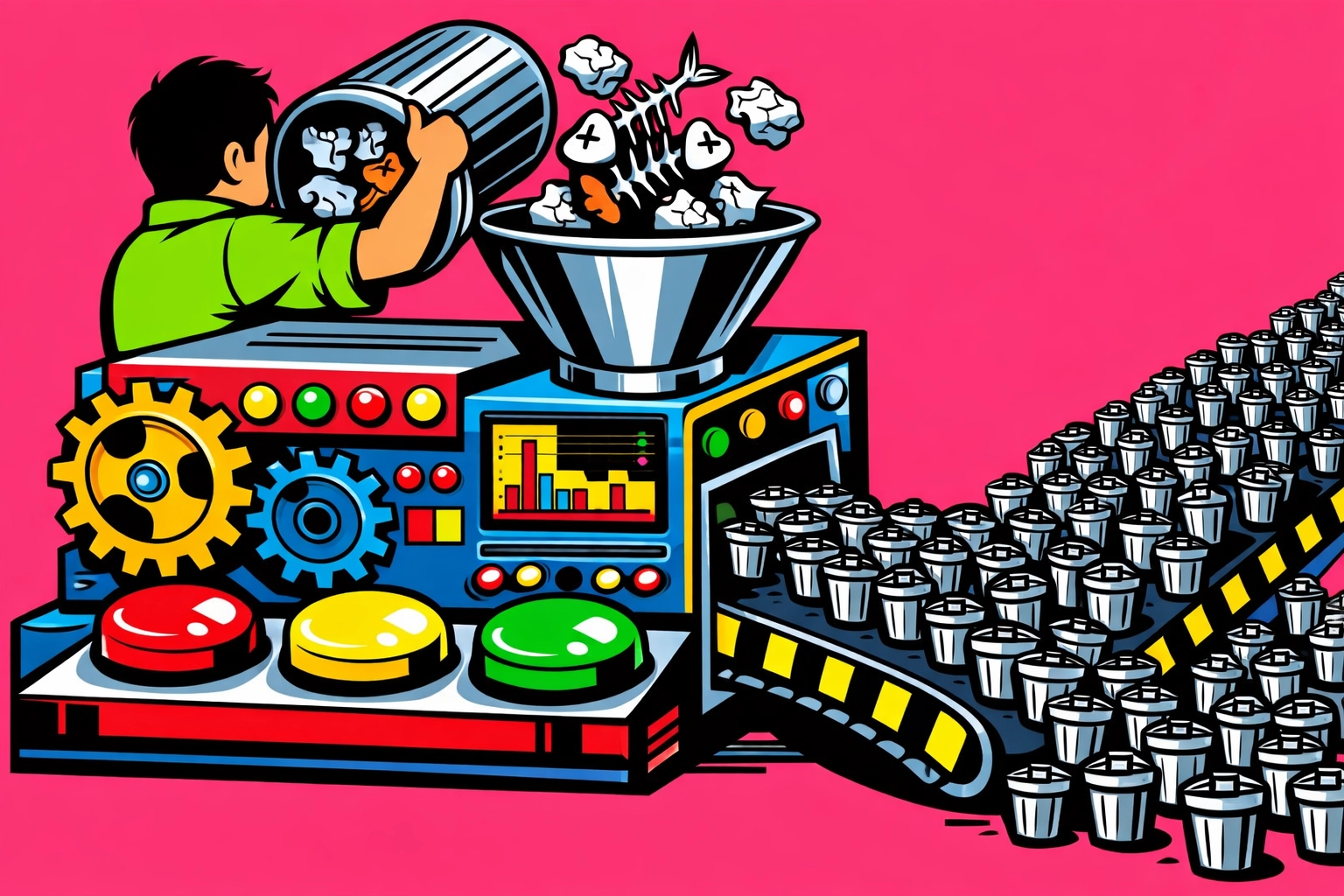
The Mistake: Neglecting data quality. Automation is a multiplier. If you multiply zero, you still get zero. If you multiply garbage, you get… well, a lot of garbage.
The Fix: Implement data validation at the source. If you’re using a form to capture leads, make the fields specific. Use tools that "clean" your data before it hits your automation triggers. A small, high-quality list will always outperform a massive, messy one.
6. THE "SET IT AND FORGET IT" MYTH (11:15 AM)
You built a workflow six months ago. It worked great. You haven't looked at it since.
But APIs change. Software updates. Your business model evolves. Suddenly, that automation is sending outdated pricing to your best prospects.
The Mistake: Assuming automation is a one-time setup. It’s not a crockpot; it’s a garden. If you don’t weed it, it will eventually become a mess.
The Fix: Schedule a monthly "Automation Audit." Take 30 minutes to walk through your key workflows. Are they still relevant? Are they still firing correctly? A quick check-up prevents a massive breakdown down the road.
7. SCARED TEAM SYNDROME (11:30 AM)
You’ve implemented a suite of business automation tools, and you’re excited. But your team? They’re quiet. They’re hesitant. They’re worried they’re being "replaced."
Because they aren't using the tools, the data is incomplete. Because the data is incomplete, the automation fails.
The Mistake: Prioritizing tools over people. If your team doesn't buy into the "why" behind the automation, they will subconsciously (or consciously) sabotage it.
The Fix: Bring them in early. Explain that the AI isn't there to take their jobs: it's there to take the boring parts of their jobs. Show them how it saves them time. Let them help design the workflows. When they see it as a teammate rather than a threat, that’s when the real magic happens.

12:00 PM: THE LUNCH BREAK REVELATION
You look at your watch. It’s noon.
By identifying these seven mistakes, you’ve already done more for your business than most owners do in a month. You’ve moved from "randomly clicking buttons" to "strategic implementation."
Automation shouldn't feel like a second job. It should feel like a superpower. It should be the quiet hum in the background that allows you to focus on the big ideas: the reasons you started this business in the first place.
But let’s be honest. Setting this all up alone is a headache. You’ve got a business to run, not a coding degree to earn.
That’s where we come in.
At Marblism, we specialize in helping small business owners bridge the gap between "overwhelmed" and "automated." We don't just give you a tool; we give you a system. A system that generates leads, manages data, and saves you hours every single day.
Stop wrestling with your software.
Start winning.
Take three minutes right now: before you grab that sandwich: and see how easy it can actually be. Your future, less-stressed self will thank you.
👉 Fix Your Automation at Marblism
The chaos is gone before you even take your first sip of afternoon coffee.
Scaling shouldn't be this easy. But here we are.
Leave a Reply