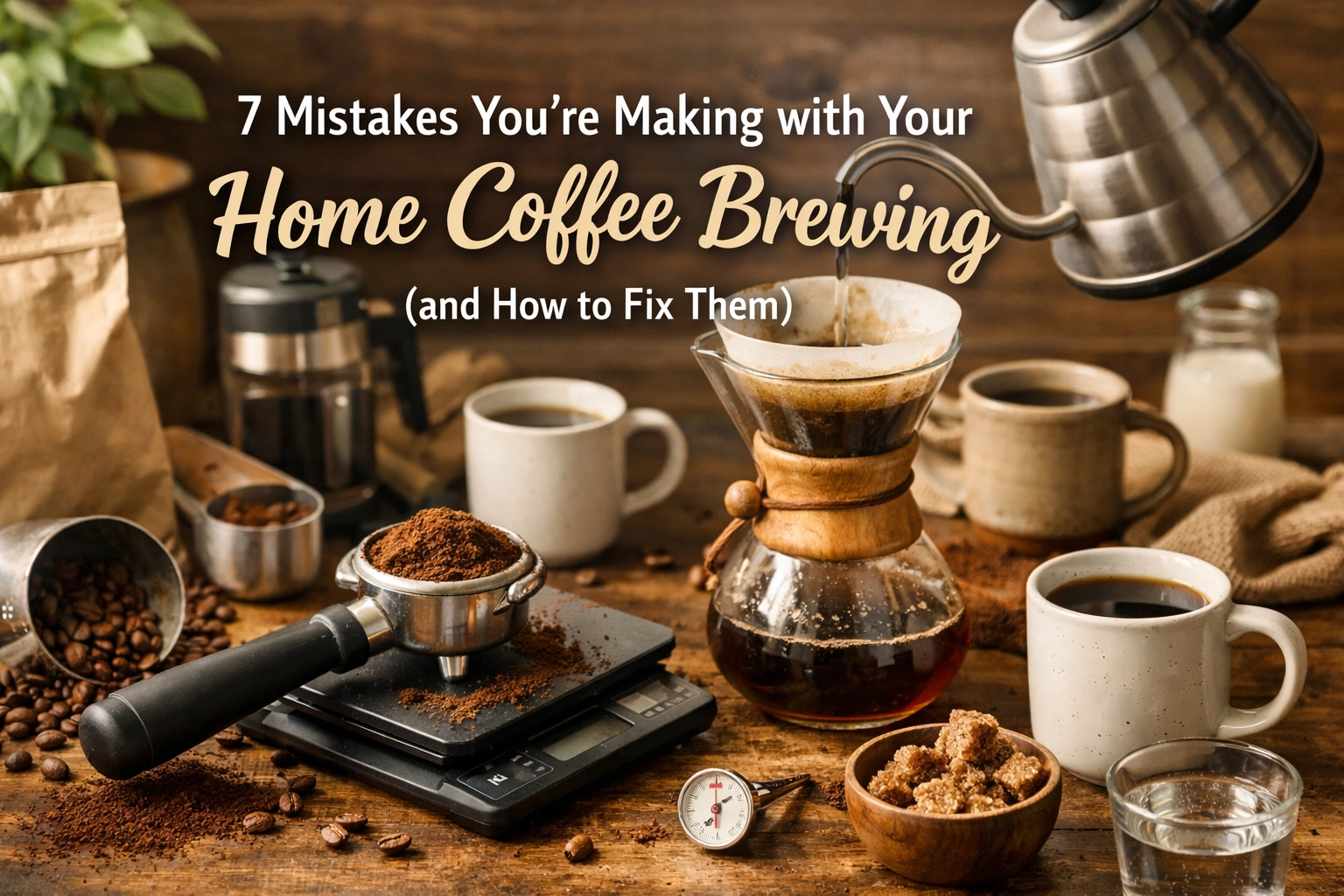
Ever made a coffee at home that should have been amazing… but it came out thin, bitter, sour, or just weirdly “meh”? You’re not broken. Your kit isn’t cursed. It’s usually one (or two) small habits that quietly wreck extraction (the process of dissolving the good stuff from coffee into your cup).
So let’s fix it.
Below are the 7 mistakes we see most often with home brewers, plus practical, repeatable adjustments you can make today. And yes, we’ll keep it real: most “coffee problems” are measurement, water, grind, freshness, or cleanliness. Boring? Slightly. Life-changing? Absolutely.
1) You’re eyeballing dose and water… and wondering why it’s inconsistent
Do you scoop “about two tablespoons” and call it a day? Totally normal. Also the fastest route to randomness.
The problem
Coffee is sensitive to ratio. If your coffee dose changes by even a few grams, extraction changes, sometimes a lot. Volume measures (scoops, “cups”, heaped spoonfuls) are wildly inconsistent because:
- beans differ in density (light roast vs dark roast)
- grind size changes volume dramatically
- scoops aren’t standard (and our “heaped” is never the same twice)
The fix
Use a scale. Not a fancy lab scale, just a basic 0.1 g digital kitchen scale.
Starter ratios we use all the time (by weight):
| Brew method | Coffee | Water | Ratio | Time target |
|---|---|---|---|---|
| V60 / pour-over | 18 g | 300 g | 1:16.7 | 2:30–3:30 |
| AeroPress | 15 g | 225 g | 1:15 | 1:30–2:30 |
| French press | 30 g | 500 g | 1:16.7 | 4:00 + plunge |
| Drip machine | 60 g | 1,000 g | 1:16.7 | machine-dependent |
Want to nerd out (in a helpful way)? We’ve got a handy calculator to speed this up: https://www.liminicoffee.co.uk/coffee_brewing_calculator
And if you’re grabbing fresh beans while you’re at it, our main shop link is here (affiliate): https://www.liminicoffee.co.uk/?af=1471531379787
Quick takeaway: pick one ratio, weigh it for a week, then adjust one variable at a time. That’s how you get consistent fast.
2) Your water is the wrong temperature… and your coffee tastes “sharp” or “burnt”
Do you boil the kettle and instantly pour? Or wait ages and end up with lukewarm water? Both can be a problem.
The problem
Brew temperature controls how quickly compounds dissolve. Too hot and you pull more bitter, harsh flavours (and you can “scorch” delicate aromatics). Too cool and you under-extract, hello sour, thin, watery cups.
The fix
Aim for 195–205 °F (90–96 °C) for most filter methods.
Simple guide we use:
- Light roasts: 203–205 °F / 95–96 °C (they’re denser, need more energy)
- Medium: 199–203 °F / 93–95 °C
- Darker roasts: 195–199 °F / 90–93 °C (less heat, fewer bitter edges)
No temperature-controlled kettle? Do this:
- Boil kettle.
- Wait 30–60 seconds (varies by kettle and room temp).
- Brew.
Espresso people… yes, you’re in this too. If your machine has PID (a temperature controller, basically cruise control for brew temp), use it. If not, your “temperature surfing” routine matters more than you think.
Quick takeaway: if your coffee is sour and thin, go hotter (or finer). If it’s bitter and drying, go cooler (or coarser).
3) Your beans aren’t fresh… and you’re chasing flavour that isn’t there
Be honest: how long have your beans been open?
The problem
Coffee stales. It’s not a vibe thing; it’s chemistry. Aromatics evaporate, oils oxidise, and your cup loses sweetness and complexity. Pre-ground coffee stales even faster because you’ve massively increased surface area.
So you end up doing gymnastics with grind size and technique… trying to “fix” what’s basically old coffee.
The fix
- Buy fresh roasted beans.
- Store them properly.
- Grind right before brewing.
Freshness windows (real-life useful):
- Filter: best from ~5 to 30 days off roast (some coffees shine longer)
- Espresso: often best from ~7 to 35 days off roast (needs a little rest for CO₂ to calm down)
Storage tips we actually follow:
- Keep beans in the original bag with a one-way valve, sealed tight.
- Store in a cool, dry cupboard.
- Avoid the fridge (condensation + odours = sadness).
- Freeze only if you’re portioning carefully (advanced, but great when done right).
If you want a straightforward path: grab a couple of fresh single origins and taste them side-by-side. That’s where home brewing gets properly addictive. Start here (affiliate): https://www.liminicoffee.co.uk/?af=1471531379787
Quick takeaway: if your coffee tastes flat no matter what you do, it’s often just stale beans. Fresh is best. Annoyingly true.
4) You’re ignoring water quality… but water is basically the whole drink
Your coffee is mostly water. So if your water tastes off, your coffee will too.
The problem
Hard water (too many minerals) can mute flavour and cause scale build-up. Very soft or heavily filtered water can extract poorly and make coffee taste hollow. Chlorine? That’ll bulldoze aroma.
The fix
Use water that’s clean and balanced.
Easy options:
- A basic carbon filter jug (removes chlorine/odours)
- Filtered tap + regular descaling for machines
- Bottled water that tastes neutral (not super mineral-heavy)
Coffee-water targets (for the curious):
- Total hardness often suggested around 50–175 ppm
- You’re aiming for pleasant taste first: numbers second
And yep, espresso machines are extra sensitive here. Scale affects heating efficiency and can mess with pressure and flow. Not dramatic… until it is.
Quick takeaway: if your coffee is strangely dull, “chalky”, or inconsistent day-to-day, your water could be the hidden culprit.
5) Your grind size is wrong… and extraction goes off the rails
Ever had a coffee that tasted both bitter and weak? That can happen when grind is wrong and uneven.
The problem
Grind size controls flow rate and contact time:
- Too coarse → water runs through too fast → under-extracted (sour, watery)
- Too fine → chokes or over-steeps → over-extracted (bitter, astringent)
And the bigger issue: blade grinders make a mix of boulders and dust. That gives you a confusing cup: some grounds over-extract, some under-extract… and you’re stuck with “why does it taste like that?”
The fix
- Match grind to the brew method.
- Use a burr grinder for consistent particle size.
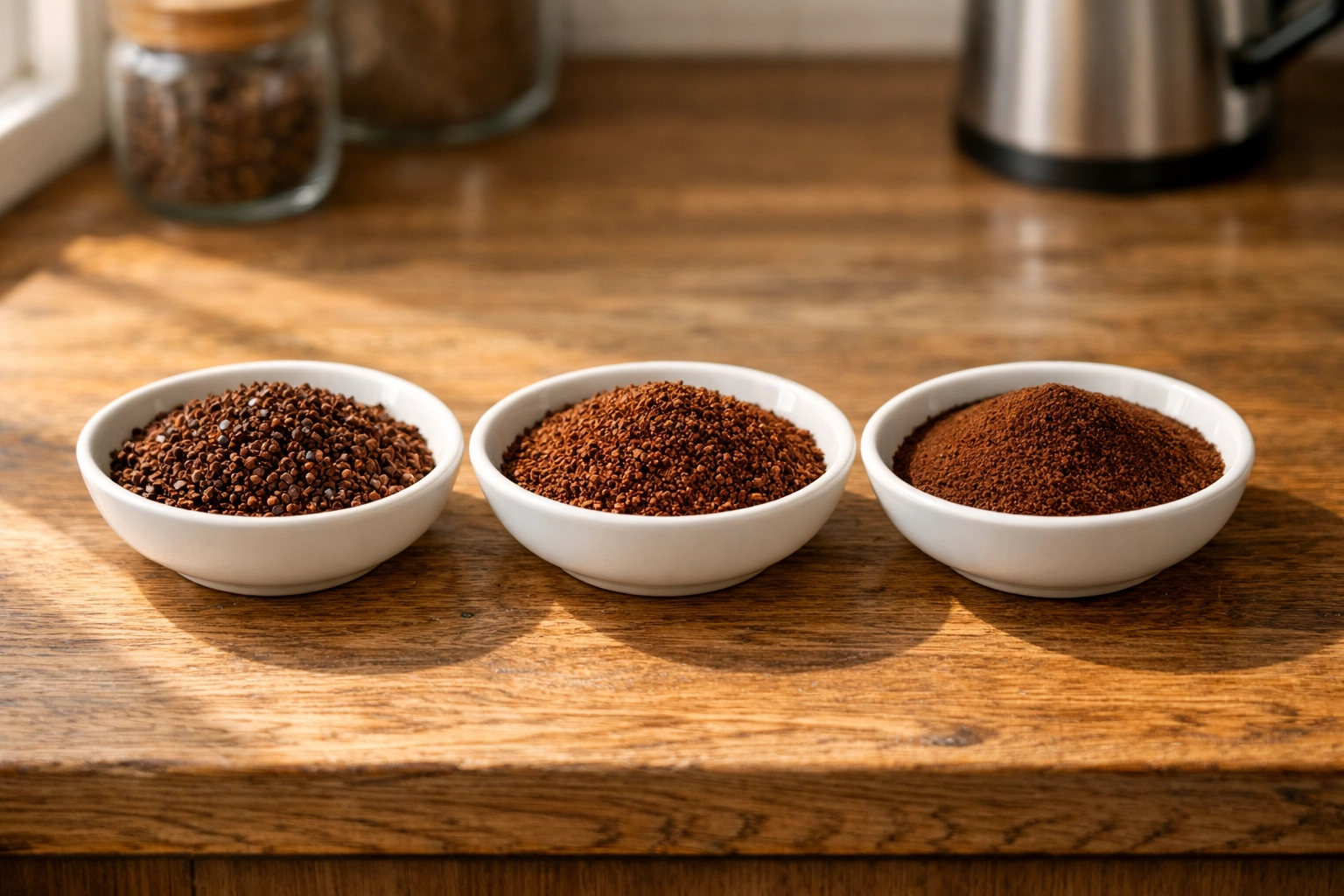
Grind size cheat sheet (visual):
- French press: coarse (kosher salt vibes)
- Drip machine: medium (granulated sugar)
- Pour-over (V60): medium-fine (a touch finer than drip)
- AeroPress: medium-fine to fine (depends on recipe)
- Espresso: fine (powdery, but not clumpy: unless your grinder is struggling)
Micro-adjustment rule we live by: change grind size in small steps, then keep everything else the same (dose, ratio, temp). Your palate will learn fast.
Quick takeaway: if you only upgrade one thing in your setup, we’d usually pick the grinder. It’s the steering wheel, not the paint job.
6) You’re not cleaning your gear… and old coffee oils are haunting every brew
This one hurts because it’s so common. And because the fix is genuinely easy.
The problem
Coffee oils and fine particles build up on:
- grinder burrs and chute
- filter baskets and screens (espresso)
- carafes, V60s, AeroPress seals
- milk steam wands (if you’re doing milk drinks)
Those oils go rancid. So even if you buy great beans and nail the recipe, your cup can taste stale, smoky, or just “off”.
The fix
Create a cleaning rhythm that you can actually stick to.
Simple cleaning schedule:
- After each brew: quick rinse anything coffee touches
- Weekly: wash with mild detergent (especially carafes and lids)
- Monthly: deeper clean (espresso backflush if applicable; check manufacturer guidance)
- Every 1–3 months: descale machines depending on water hardness and usage
Espresso folks: puck screens, shower screens, and baskets collect gunk fast. And grinders? The “seasoning” myth goes too far sometimes. A clean grinder is a flavour upgrade.
If you’re running more advanced home espresso and want to go deeper, we’ve got helpful guides on equipment selection here: https://www.liminicoffee.co.uk/choosing_espresso_equipment
And if you’re browsing beans and gear in one go (affiliate): https://www.liminicoffee.co.uk/?af=1471531379787
Quick takeaway: if every coffee has the same weird aftertaste, it might not be the beans. It might be last month’s oils.
7) You’re pouring into a cold cup… and killing aroma (and heat) instantly
Have you ever brewed a beautiful coffee, then two minutes later it’s already lukewarm? That’s often the cup, not the coffee.
The problem
A cold ceramic cup acts like a heat sponge. Your brew temperature drops quickly, and as coffee cools, the perception of sweetness and aroma changes. It’s not that cooler coffee is “bad”… it’s that you didn’t choose it. It happened to you.
The fix
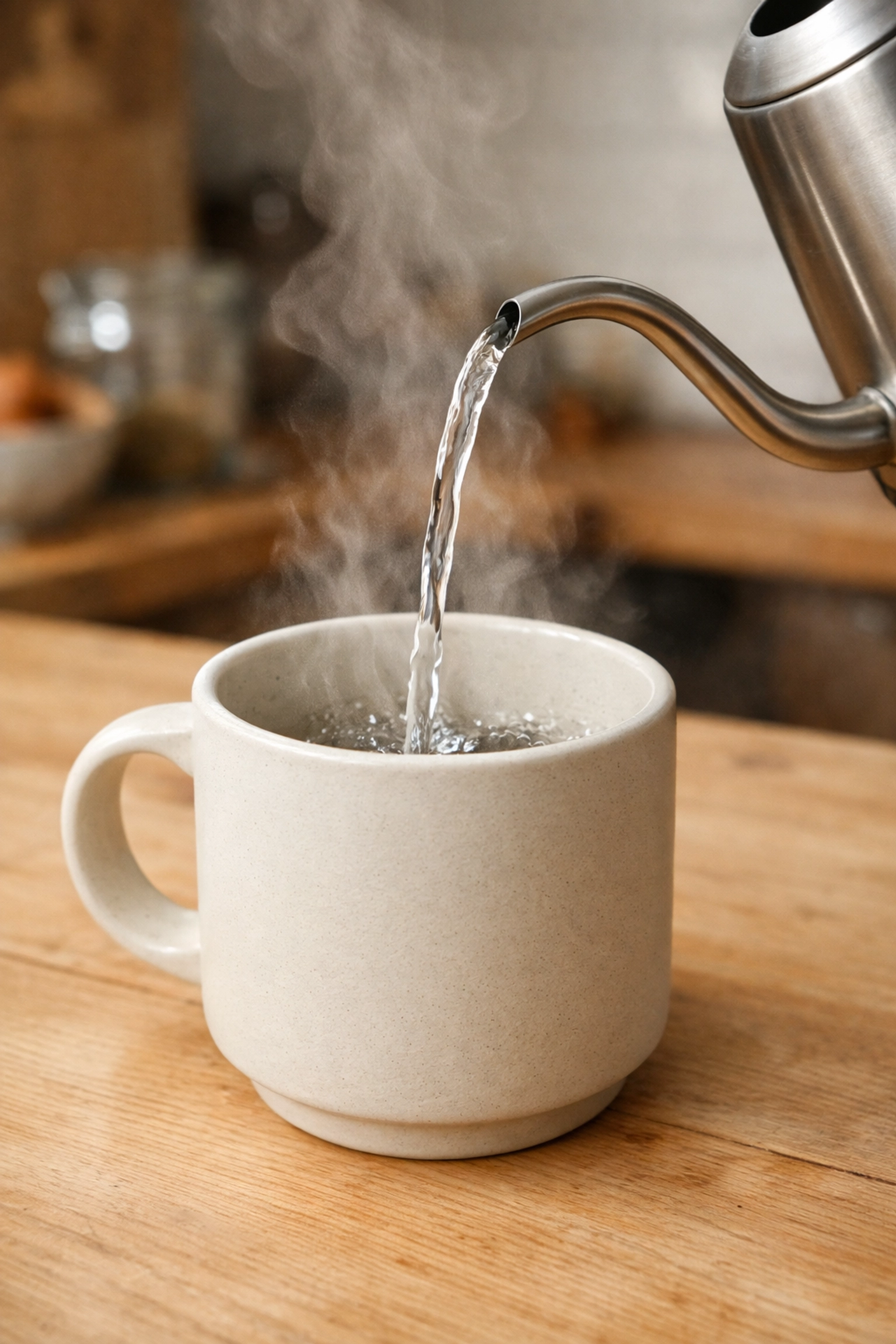
Pre-heat your cup or server:
- Fill it with hot water while you brew.
- Discard the water.
- Pour your coffee.
Also consider thicker-walled mugs for better heat retention. Thin glass looks great on Instagram, though it can be a cruel mistress.
Quick takeaway: preheating is a 10-second habit that makes your coffee taste better for longer. Easy win.
A quick “diagnosis” map… because sometimes you just want the answer
So what’s your coffee telling you?
| What you taste | Likely cause | Fix (try in this order) |
|---|---|---|
| Sour, sharp, thin | Under-extraction | Grind finer → hotter water → longer brew time |
| Bitter, drying, harsh | Over-extraction | Grind coarser → cooler water → shorter brew time |
| Flat, papery, dull | Stale coffee or bad water | Fresher beans → better water → clean gear |
| Weak but also bitter | Uneven grind / channeling | Burr grinder → better distribution (espresso) → adjust grind |
| Great at first, then meh | Temperature drop | Preheat cup → insulated server |
And if you want to explore coffees that make these tweaks feel worth it (because they do), we’d point you to fresh roasted options here (affiliate): https://www.liminicoffee.co.uk/?af=1471531379787
The “do this this week” plan (no overthinking)
If you want the fastest improvement with the least effort, do these in order:
- Buy/borrow a scale and lock in a ratio (start at 1:16.7)
- Use fresh beans and grind just before brewing
- Dial in grind size (one change at a time)
- Get water into the 90–96 °C / 195–205 °F zone
- Clean the stuff you’re embarrassed to clean
- Preheat your cup
That’s it. Not glamorous. Extremely effective.
If you’re experimenting with new origins and want to keep notes like a proper coffee nerd (we approve), you can also check reviews and community opinions here: https://www.liminicoffee.co.uk/reviews
And when you’re ready to restock, here’s the main Limini Coffee link again (affiliate): https://www.liminicoffee.co.uk/?af=1471531379787
Leave a Reply