Look, we've all been there. You've invested in decent gear, watched countless YouTube tutorials, and yet that morning cup still doesn't quite hit the mark. Here's the thing – most home coffee enthusiasts are unknowingly sabotaging their own brews with some surprisingly common mistakes.
After years of working with passionate home brewers, we've noticed the same issues cropping up again and again. The good news? They're all fixable. Let's dive into the seven biggest culprits standing between you and café-quality coffee at home.
1. You're Not Cleaning Your Equipment Properly
We get it. You rinse your portafilter after pulling a shot. Maybe you wipe down your machine. Job done, right?
Not quite.
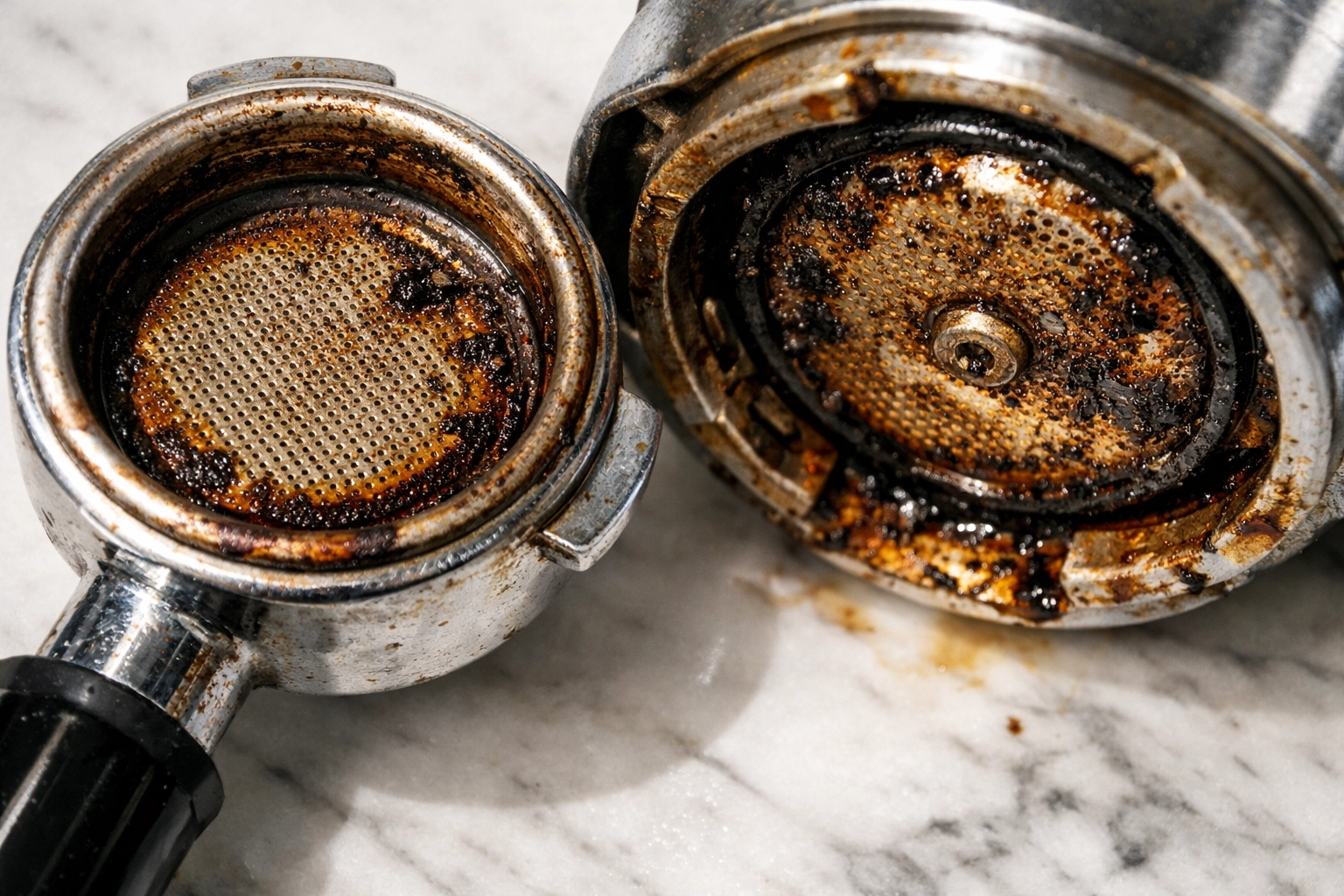
Coffee oils, fine particles, and residue accumulate in places you don't see – inside your group head, throughout your grinder's burrs, and in the hidden corners of your brewing equipment. When you use pressurized systems like espresso machines, that pressure creates turbulence that deposits gunk absolutely everywhere. Over time, this buildup turns rancid and taints every shot you pull.
The Fix: Get serious about cleaning. For espresso machines, backflush your group head weekly with proper espresso machine cleaner – not just water. Remove your shower screen and give it a proper scrub. For grinders, brush out the burrs regularly and do a deep clean monthly. Pour-over gear? Hot water rinses aren't enough. Use dedicated coffee equipment cleaners to strip away those oils that plain water leaves behind.
It's tedious, we know. But the difference in taste is honestly dramatic.
2. You're Using Stale Coffee (or Worse, Pre-Ground)
This is probably the biggest crime we see. You wouldn't cook with ingredients past their prime, so why do it with coffee?
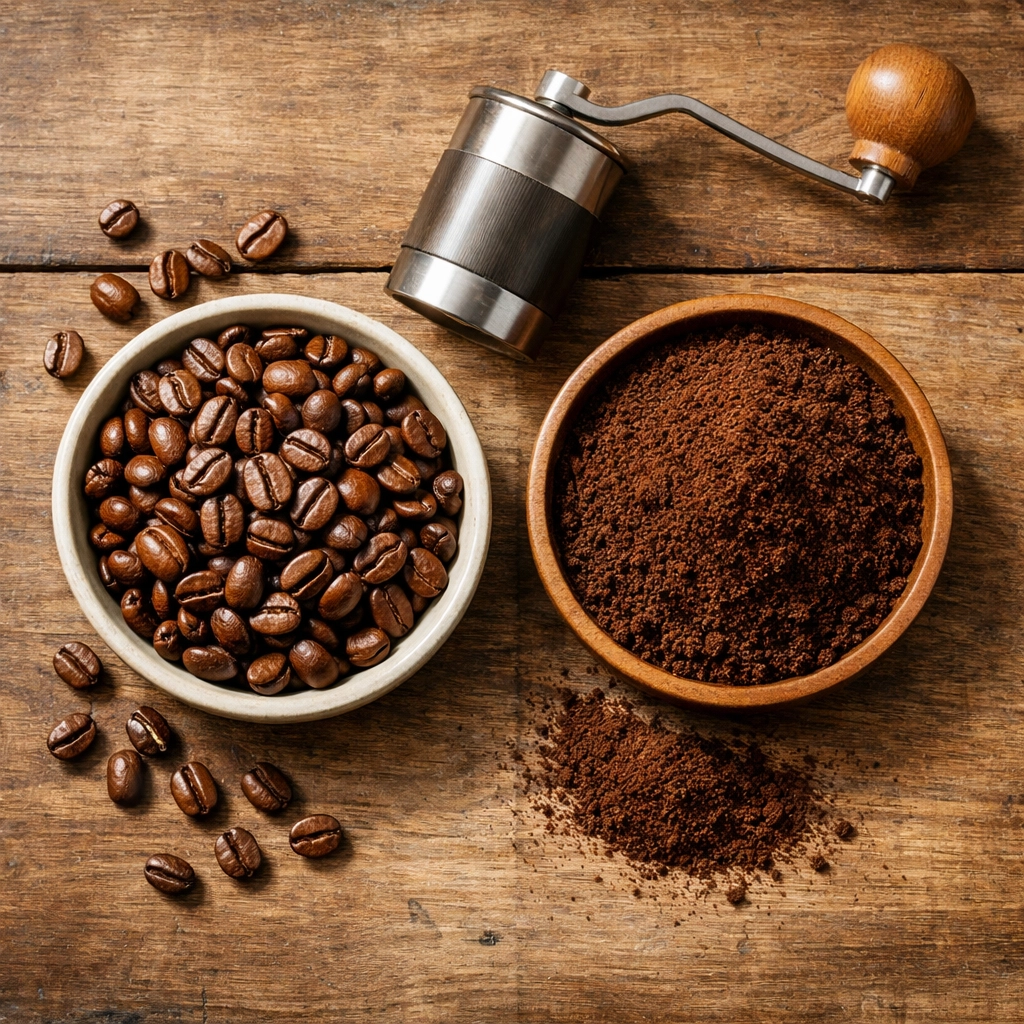
Coffee starts losing its magic the moment it's roasted. Within days, those volatile compounds that create complex flavors begin to dissipate. Grind those beans? You've just accelerated the process exponentially. Pre-ground coffee – even if ground last night – has already lost a significant portion of what makes specialty coffee special.
The Fix: Buy fresh, buy whole bean, and grind immediately before brewing. We're talking minutes before, not hours. At Limini Coffee, we roast to order for exactly this reason – so you're getting beans at their absolute peak. Store your beans in an airtight container with a one-way valve in a cool, dry place away from light. Use them within two to three weeks of the roast date for optimal flavor.
And please, invest in a decent grinder if you haven't already. It matters more than you think.
Check out our freshly roasted single origins here – we roast specifically for home brewers who care about this stuff.
3. Your Water Temperature is All Over the Place
Too hot? You're scalding your coffee and extracting bitter, astringent compounds. Too cold? You're under-extracting, leaving all those delicious flavors locked in the grounds.
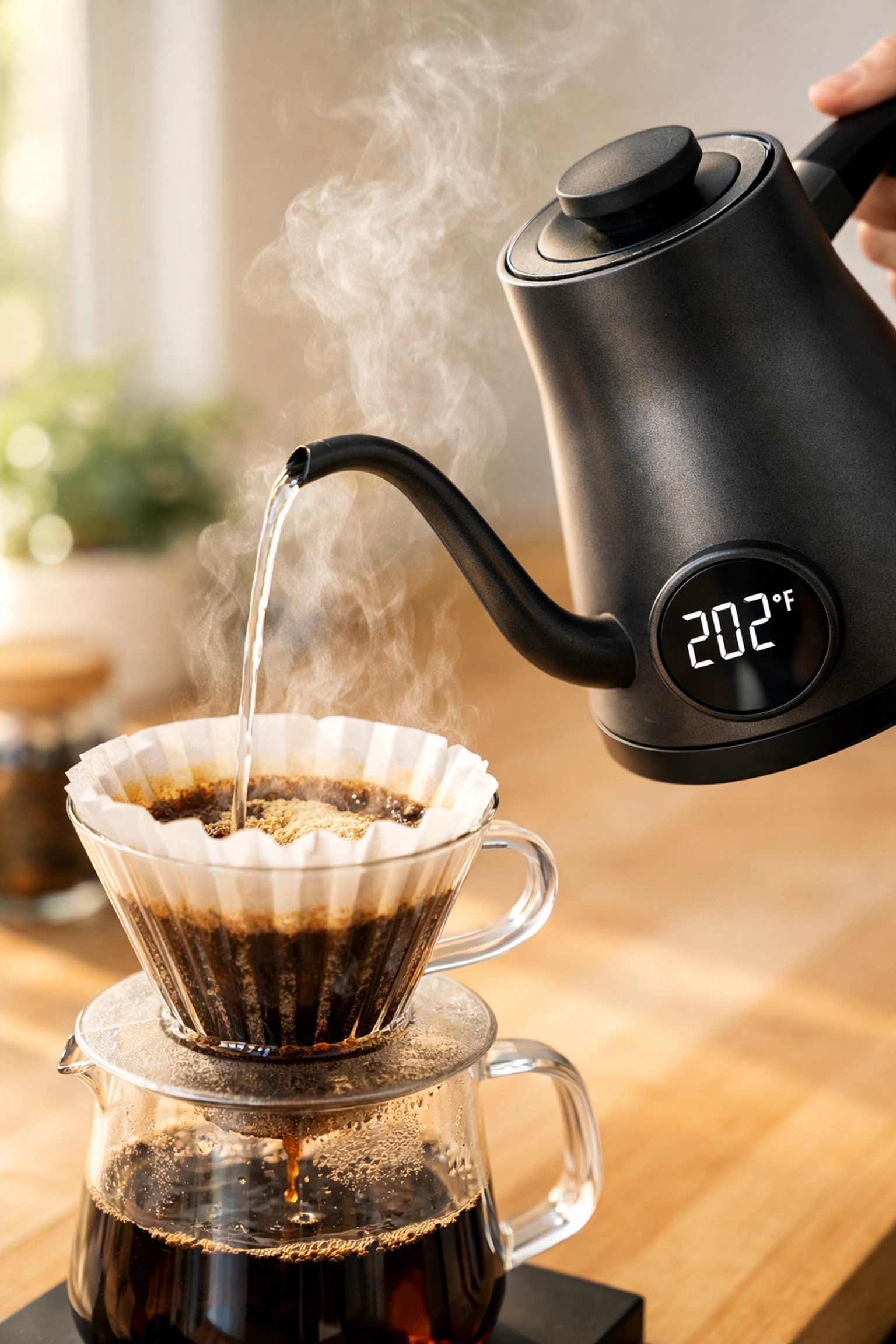
The sweet spot sits around 93°C (200°F) for most brewing methods. But here's what many home brewers miss – your kettle reaching boiling doesn't mean your water stays at the right temperature when it hits the grounds. Heat loss happens quickly, especially with some brewing methods.
The Fix: Use a temperature-controlled kettle if you're serious about pour-over or other manual methods. They're not that expensive anymore, and the consistency they provide is worth every penny. For espresso machines, ensure your machine has adequate temperature stability – ideally with PID control (basically cruise control for temperature). Let your machine fully warm up before pulling shots. We're talking 20-30 minutes, not five.
If you're using a standard kettle, let the water rest for about 30 seconds after boiling before brewing.
4. Your Grind Size is Wrong for Your Brewing Method
Fine grinds for French press? You're getting over-extraction and a muddy, bitter cup. Coarse grinds for espresso? Good luck getting any pressure buildup or decent extraction at all.
Each brewing method has an ideal grind size range for a reason. The contact time between water and coffee determines how fine or coarse you need to go. Espresso needs fine grounds because water passes through quickly under pressure. French press needs coarse grounds because the coffee steeps for several minutes.
The Fix: Match your grind to your method. Espresso requires fine grounds (think table salt consistency). Pour-over methods like V60 want medium-fine (like sand). French press needs coarse grounds (like breadcrumbs). Drip coffee machines typically work best with medium grinds.
But don't just set it and forget it. Taste your coffee. If it's too bitter and harsh, grind coarser. If it's weak and sour, grind finer. Dialing in is an ongoing process, and variables like bean age, roast level, and even humidity affect the ideal grind size.
5. You're Guessing Your Coffee-to-Water Ratio
Eyeballing your coffee dose is the fastest way to inconsistent results. Too much coffee creates an overpowering, muddy brew that's often bitter. Too little leaves you with something that tastes more like coffee-flavored water than actual coffee.
The Fix: Buy a scale. Seriously, a basic digital scale costs less than a bag of decent beans, and it's arguably the most important tool in your arsenal. We recommend starting with a 1:16 ratio for most brewing methods – that's 1 gram of coffee to 16 grams of water. For espresso, you're typically looking at 1:2 to 1:2.5 (so 18g of coffee to 36-45g of liquid espresso).
Use these as starting points, then adjust to taste. Some people prefer stronger coffee and go with 1:15. Others like it lighter at 1:17. The key is consistency – once you find what you like, you can recreate it reliably.
Need help calculating? We've got a brewing calculator that takes the guesswork out.
6. You're Ignoring Water Quality
You wouldn't make tea with terrible water, right? Coffee is 98% water, yet so many home brewers overlook this completely.
Heavily chlorinated tap water will absolutely ruin your coffee. But it's not just about avoiding bad water – the mineral content matters too. Too soft (like distilled water), and your coffee tastes flat and under-extracted. Too hard, and you're getting mineral buildup in your machine plus off-flavors in your cup.
The Fix: At minimum, use filtered water. A simple carbon filter removes chlorine and many unpleasant tastes. If you want to get serious, look into water specifically formulated for coffee brewing – yes, this is actually a thing, and yes, it makes a difference.
The ideal water for coffee has moderate mineral content – enough calcium and magnesium to aid extraction, but not so much that it creates scale. If you're on particularly hard water, consider using bottled water for brewing. It seems excessive until you taste the difference.
7. You're Storing Your Coffee Wrong
That cute glass jar on your counter might look Instagram-worthy, but it's killing your coffee. Light, air, heat, and moisture are the four enemies of fresh coffee. Exposing your beans to any of these accelerates staling.
Keeping coffee in the bag it came in (if it's not resealable) means air exposure every time you open it. Storing it near your stove? The heat fluctuations are degrading those precious aromatics. In the freezer? Unless you're doing it properly, you're introducing moisture and freezer odors.
The Fix: Store your coffee in an airtight container with a one-way valve, kept in a cool, dark place like a cupboard. Room temperature is fine – you don't need to refrigerate or freeze unless you're storing beans long-term (and even then, it's debatable).
Buy smaller quantities more frequently rather than bulk-buying. We know it's convenient to stock up, but coffee is at its best in that two-to-three-week window after roasting. At Limini Coffee, we purposely roast small batches regularly so you're always getting the freshest beans possible.
Only grind what you need for each brew session. Ground coffee stales within minutes, not days.
The Bottom Line
Here's the thing – these mistakes are incredibly common because they're not immediately obvious. You can make decent coffee while doing several of these things wrong. But once you address them? The improvement is honestly night and day.
You don't need to fix everything overnight. Pick one or two areas to focus on first. Maybe start with buying fresh, whole beans and a basic scale. Get consistent with your ratios. Then work on cleaning routines. Add a temperature-controlled kettle. Each improvement compounds on the others.
We've seen home brewers who've invested thousands in equipment still making mediocre coffee because they're using month-old pre-ground beans stored in a glass jar on the counter. Conversely, we've seen people pull incredible shots from relatively basic setups because they nail the fundamentals.
The gear matters, sure. But these fundamentals matter more. Get these right, and you'll be amazed at what your current setup can actually produce.
What mistakes have you caught yourself making? We'd love to hear what clicked for you when you finally fixed that one thing that was holding back your home brewing game.
Leave a Reply