Empower your team. Elevate guest experiences. Automate your operations.
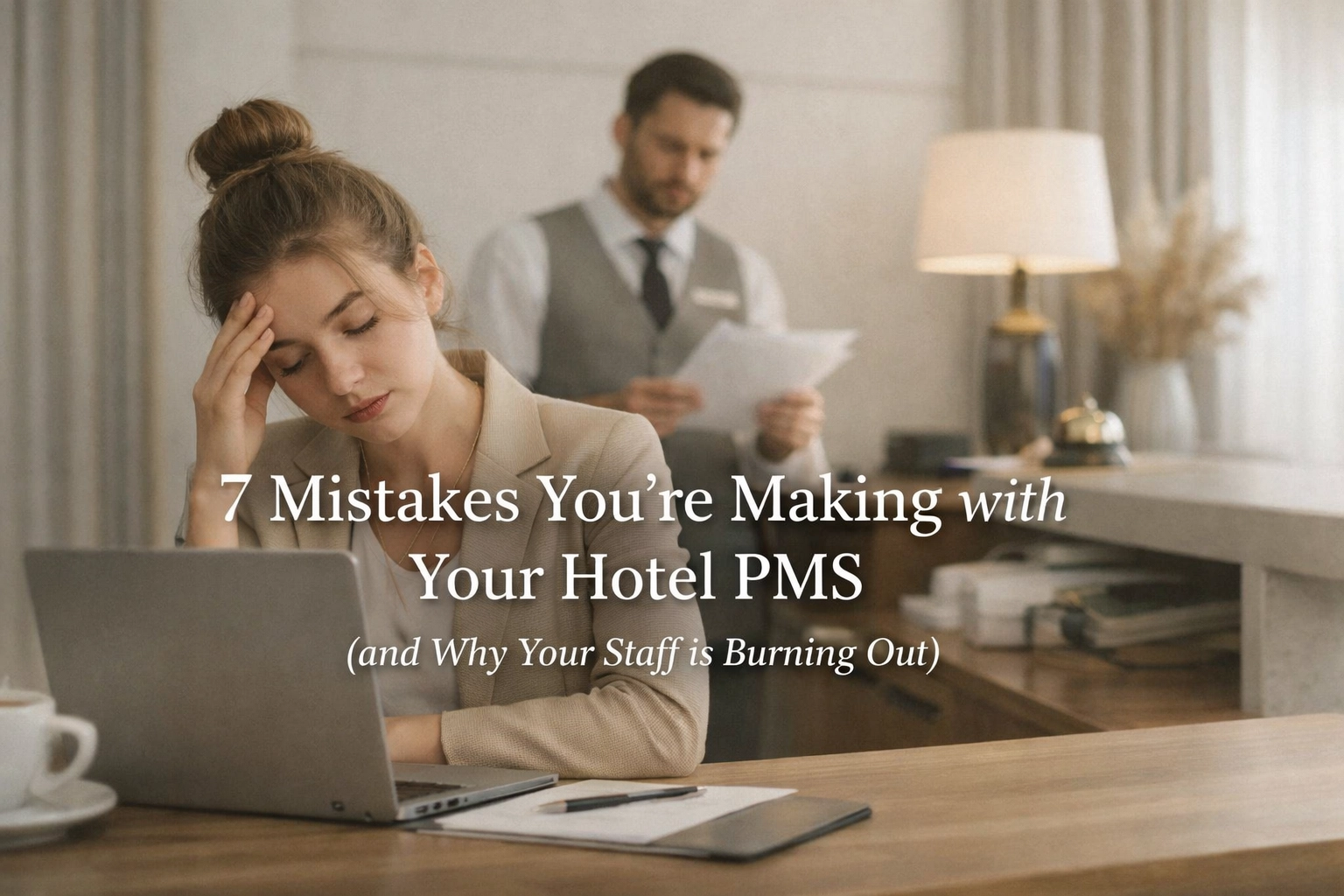
Hospitality is a people business. But when your team spends 40% of their shift fighting with a clunky interface or fixing manual entry errors, they aren't looking after guests. They’re looking for a way out. At Mews, we’ve seen how modern technology can transform a stressful front desk into a hub of creativity and connection: all from one innovative platform.
1. The high cost of manual overrides
We get it. You want control. You’ve spent years learning the nuances of your local market, so when the system suggests a rate change, your instinct is to step in. But manual overrides are the silent killers of efficiency.
When you manually tweak prices or availability, you break the digital thread. The automation stops. Suddenly, your channel manager isn't syncing perfectly, and your staff is left to play detective across five different tabs. It creates a domino effect of errors that your team has to mop up.
Why it matters:
- Eliminates synchronization errors across channels
- Reduces the "cleanup" workload for front-desk staff
- Ensures pricing strategy remains consistent 24/7
We believe that technology should handle the repetitive, so your people can handle the remarkable. If you’re still clicking "manual override" ten times a day, you aren't running a hotel; you’re running a spreadsheet.
2. A fundamental distrust of automation
Trust is earned, but in hospitality tech, it’s often ignored. Many hoteliers treat their PMS like a junior intern who needs constant supervision. This lack of trust translates into hours of manual market analysis that your system could do in seconds.
If your staff sees you second-guessing every automated recommendation, they’ll do the same. This creates a culture of "double-checking the machine," which effectively doubles the workload. It’s a fast track to burnout.
"Since we moved to an automated system, I’ve reclaimed ten hours a week that I used to spend on manual rate updates," says one GM. That’s ten hours back for guest engagement or, let’s be honest, finally getting a proper lunch break.
Build a smarter culture:
- Trust the data-driven insights
- Set clear boundaries for automation
- Review results weekly, not hourly
3. The chaos of messy room configurations
Your PMS logic is only as good as its foundation. If your room types are poorly defined or your rate plans look like a bowl of digital spaghetti, your system will fail.
Misconfigured room types lead to faulty recommendations and synchronization failures. Your staff then has to deal with the fallout: like a guest arriving for a "Superior Suite" that the system thinks is a "Standard Double." This isn't just an operational hiccup; it’s a moment of friction that drains your team's emotional energy.
We think a PMS should be intuitive. It should feel like a natural extension of your physical space. If your digital setup doesn't mirror your physical reality, you’re setting your team up for a daily battle with the software.

4. Building silos instead of bridges
The era of the "all-in-one" closed system is over. Today, it’s about the ecosystem. When your tools don't talk to each other: when the guest’s spa booking doesn't show up on their folio or the booking engine doesn't update the PMS in real-time: your staff becomes the bridge.
Manually transferring data between platforms is soul-crushing work. It’s repetitive, it’s prone to human error, and it’s a waste of your most valuable asset: human personality.
The connectivity checklist:
- Seamless API integrations with your favorite apps
- Real-time data flow between housekeeping and front desk
- A unified guest profile across all touchpoints
By using a platform that prioritizes open connectivity, like Mews, you remove the "data janitor" role from your employees' job descriptions.
5. The "Set and Forget" distribution trap
Leaving your distribution strategy on autopilot isn't the same as automation. "Set and forget" means you aren't adjusting to demand, which leads to two things: lost revenue and high commission bills.
Staff frustration peaks when they see the business struggling because of a stale strategy. They know the demand is there, but the system is restricted by rules set six months ago. Modern hospitality requires a dynamic approach to channel management. You need to be able to pivot instantly.
Innovation in distribution:
- Adjust restrictions based on real-time demand
- Prioritize direct bookings through smart guest journeys
- Use AI to predict and react to market shifts

6. Operating on gut feeling, not data
"I think we’re going to be busy this weekend" is not a strategy. Yet, many hotels still make major decisions based on "the vibe." Without structured reporting, your team is flying blind.
When decisions aren't backed by data, they often lead to inefficiencies. Prices might stay too low during a surge, or you might over-rely on high-commission OTAs when you could be driving direct traffic. Staff see these inefficiencies. They feel the weight of working hard but not working smart.
We believe data should be accessible, not just for the C-suite, but for the people on the floor. When the team understands the why behind a decision, they’re more engaged and less likely to burn out.
Reporting that works:
- Real-time dashboards you actually want to look at
- Granular data on guest preferences
- Clear insights into RevPAR and ADR trends
7. The reactive mode of "Blind" operations
If your team only finds out about an overbooking when the guest is standing at the desk with a suitcase, you’ve already lost. A lack of real-time visibility into availability and pricing forces your staff into a permanent state of "reaction."
Reactive work is exhausting. It’s constant firefighting. Proactive work, on the other hand, is where the magic happens. When your team has real-time awareness, they can anticipate needs, solve problems before they escalate, and actually enjoy their shift.
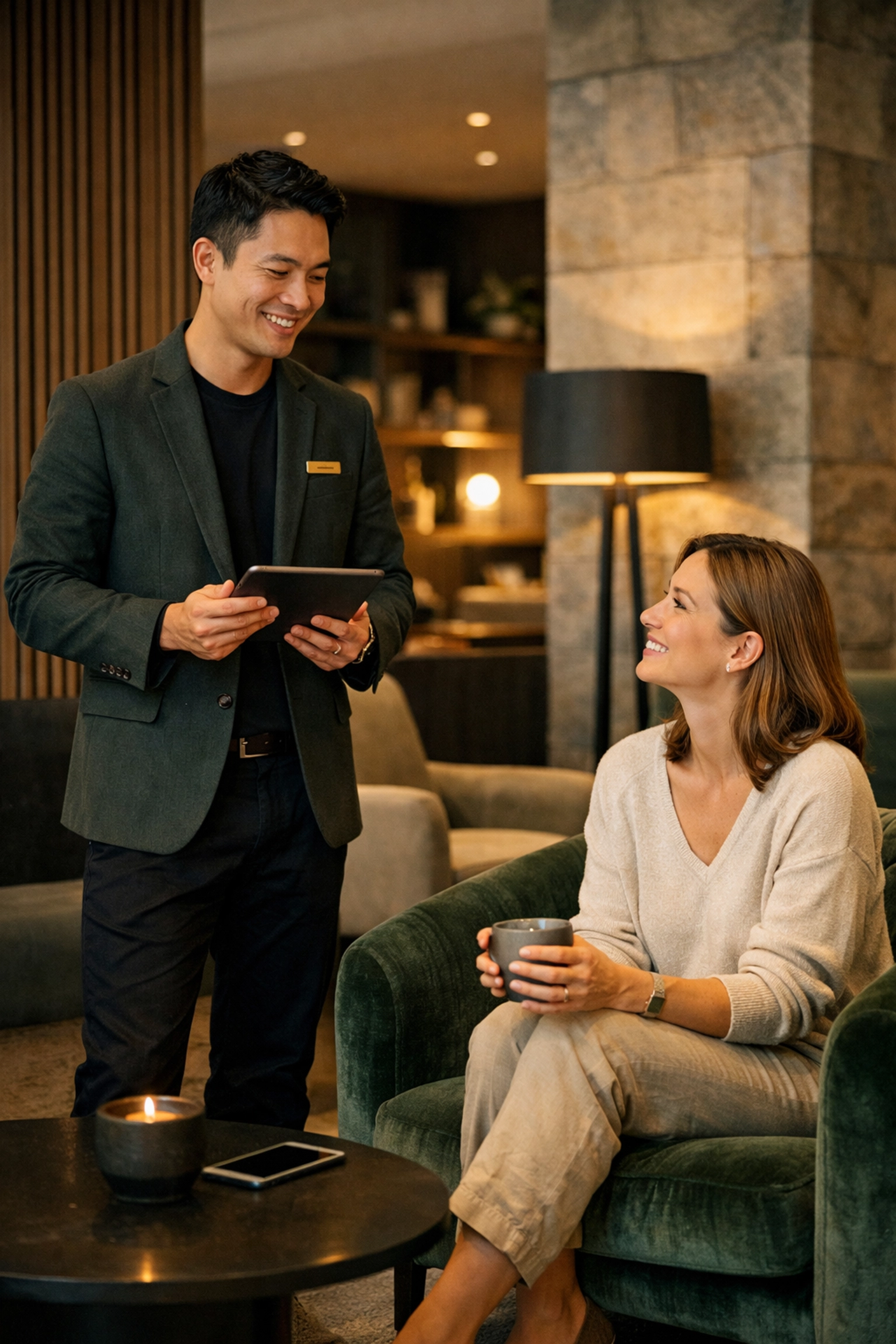
The solution is a cloud-native PMS that allows for mobile access. Why tie your staff to a desktop at a reception desk? Let them move. Let them check guests in on a tablet in the lobby or handle housekeeping updates from a smartphone.
From Process-Centric to Guest-Centric
The common thread in all these mistakes is the prioritization of process over people. Old-school PMS systems were built as accounting tools first and hospitality tools second. That’s why they’re so hard to use.
When you force your staff to navigate 1990s-era interfaces, you’re telling them that their time isn't valuable. You’re telling them that the system matters more than the guest.
At Mews, we’re flipping the script. We’ve built a platform that scales with your business, integrates with the tools you love, and: most importantly: is actually enjoyable to use. We believe in creating "Space into Places": turning a physical room into a remarkable experience.
Ready to stop the burnout?
Schedule a 30-minute chat to see how we can transform your operations. It’s time to move away from manual work and toward a more innovative, AI-driven future.
Join over 12,500 properties that are already redefining the guest experience. Let’s get you and your team back to what you do best: making people feel at home.
Check out the Mews difference here and get your team performing at their best in no time.
Leave a Reply