
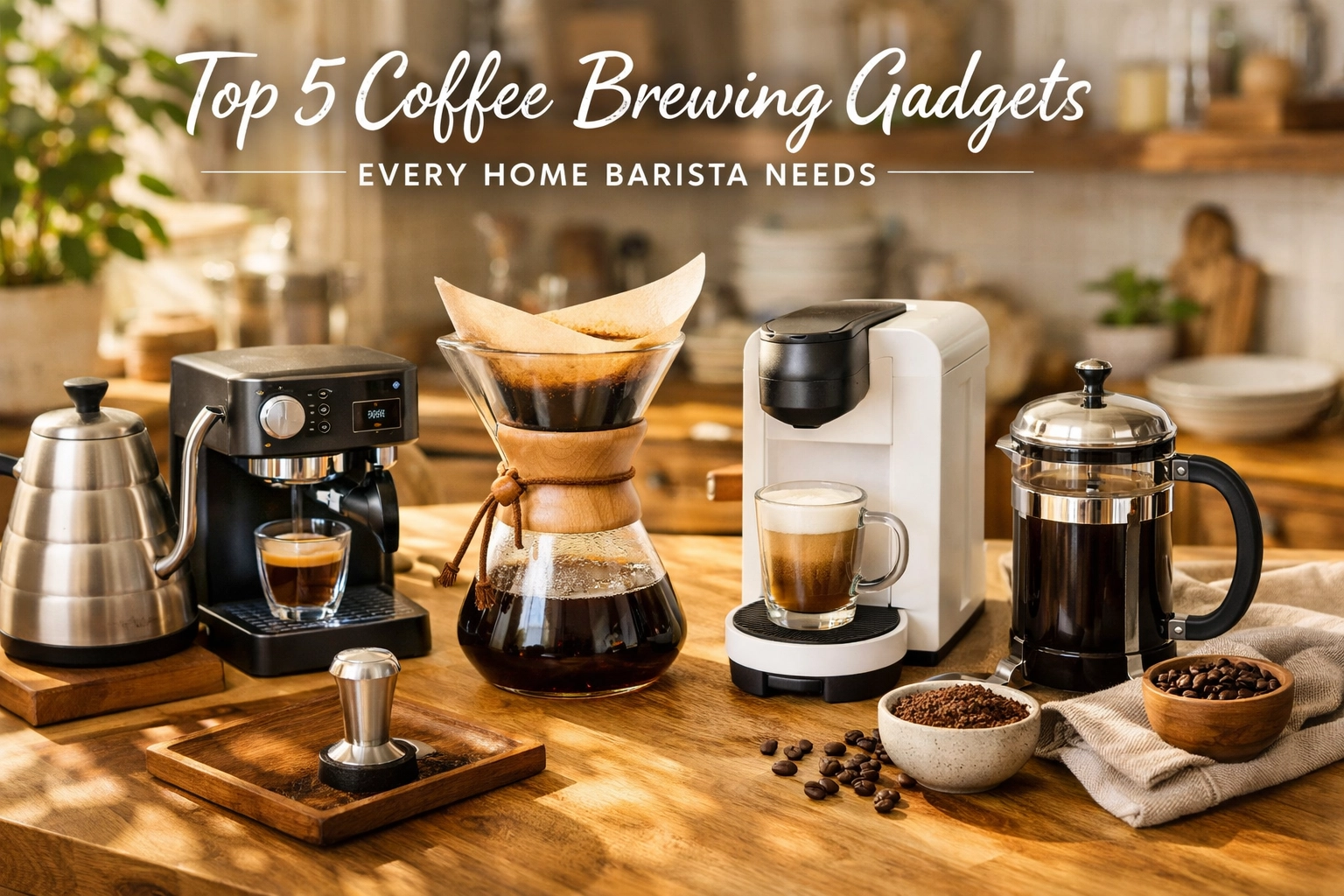
So you've decided to level up your home coffee game. Brilliant.
The thing is, making exceptional coffee at home isn't about having a kitchen that looks like a café (though we won't judge if yours does). It's about having the right tools that give you control, consistency, and, most importantly, coffee that actually tastes like something worth waking up for.
We've spent years working with home baristas, and we've seen the same pattern over and over: people invest in beautiful coffee beans, get excited about brewing, and then wonder why their cup doesn't quite hit the mark. Usually, it comes down to the kit.
Let's walk through the five essential gadgets that will genuinely transform your home brewing setup.
1. A Quality Burr Grinder (Non-Negotiable, Really)
If you're going to invest in one thing, make it this.
A burr grinder is the foundation of excellent coffee. Not a blade grinder (which essentially smashes beans into uneven chaos), but a proper burr grinder that crushes beans between two abrasive surfaces to produce a consistent grind size.
Why does this matter? Because extraction is everything. When you brew coffee, you're extracting soluble compounds from ground coffee using water. If your grind is inconsistent, some particles fine as dust, others chunky like gravel, you'll get simultaneous over-extraction (bitter, harsh) and under-extraction (sour, weak). Not ideal.
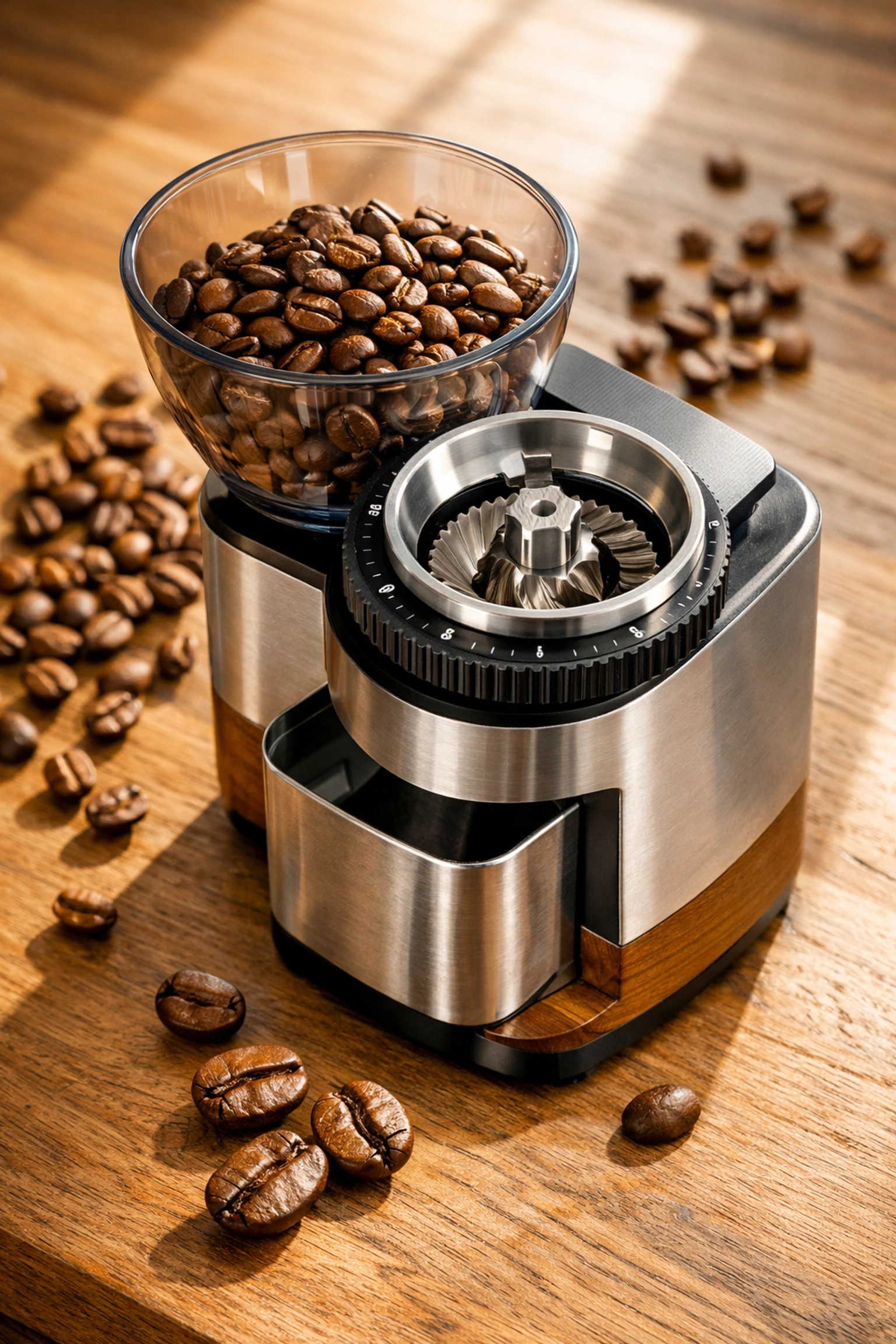
Burr grinders come in two styles: conical burrs and flat burrs. For home use, either works brilliantly. Conical burr grinders tend to be quieter and slightly more forgiving, while flat burr grinders often deliver even more consistency (though at a higher price point).
You can go manual or electric. Manual grinders are fantastic if you're only making one or two cups and don't mind a bit of arm workout with your morning ritual. Electric grinders are the move if you value speed and convenience, or if you're making multiple cups.
We recommend looking at grinders with stepped or stepless adjustment. This lets you dial in your grind size precisely for different brew methods, coarser for French press, medium for filter, fine for espresso. The Baratza Encore is a solid workhorse for filter brewing. For espresso-capable grinders, you're looking at something like the Sage (Breville) Smart Grinder Pro or stepping up to prosumer territory.
Here's the truth: even the most exceptional beans (like the ones we roast fresh and send out at Limini Coffee) won't reach their potential if they're ground poorly. Fresh roasted, specialty-grade coffee deserves a grinder that does it justice.
2. A Gooseneck Kettle with Temperature Control
Water is 98% of your cup. So it makes sense that how you heat it and pour it matters, right?
A gooseneck kettle gives you precision. The narrow, curved spout allows you to control your pour rate and placement, extremely important for methods like V60, Chemex, or Kalita Wave where you're manually saturating the coffee grounds.
But temperature control? That's where things get interesting.
Different coffees extract optimally at different temperatures. Generally, we're talking about a range between 92°C and 96°C (that's roughly 197°F to 205°F). Water that's too hot (straight off a rolling boil at 100°C) can scorch delicate flavours and create astringency. Water that's too cool struggles to extract properly, leaving you with flat, underdeveloped flavours.
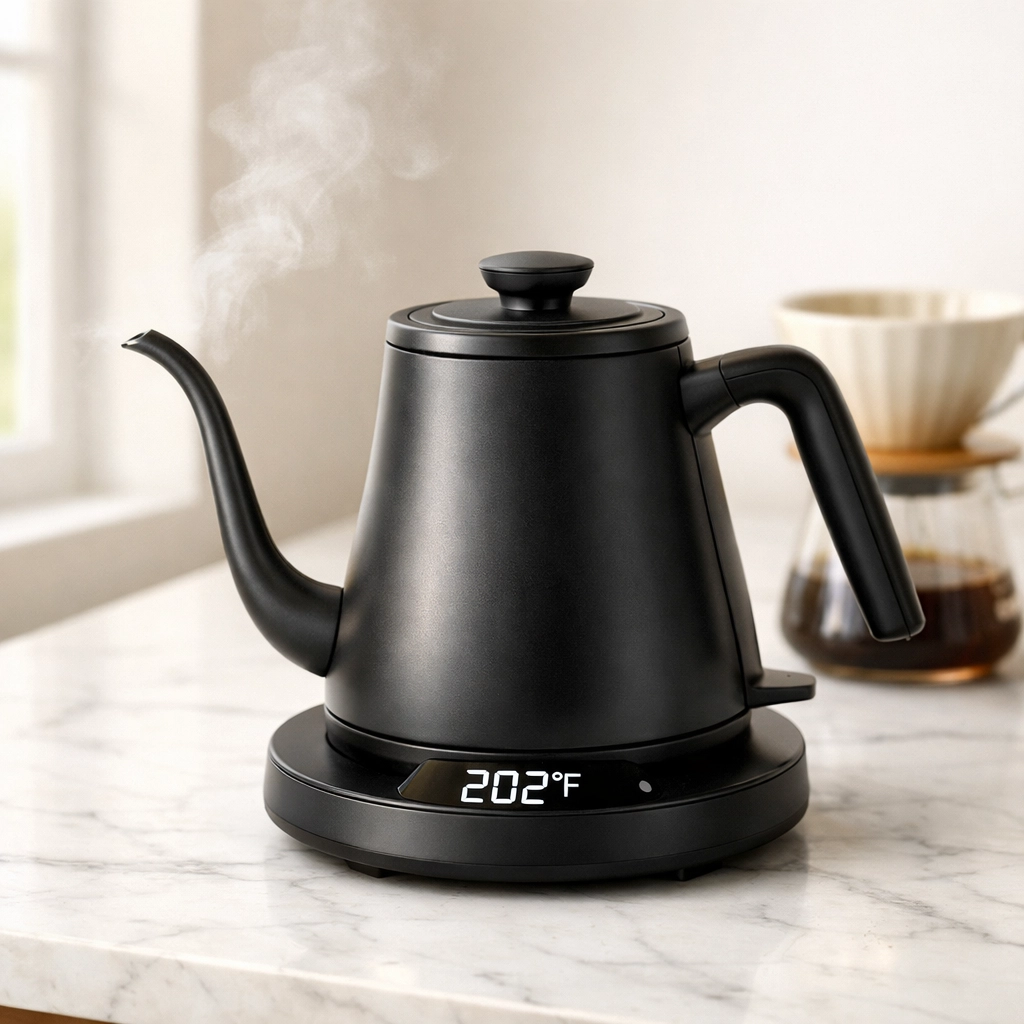
A variable temperature kettle lets you dial in the exact temperature for your coffee. Brewing a light, fruity Ethiopian natural? You might push toward 94-95°C to extract those bright, complex notes. Got a darker roast? Maybe you pull back to 90-92°C to avoid emphasizing bitterness.
Brands like Fellow (the Stagg EKG is gorgeous and functional), Brewista, and Bonavita make excellent options. You'll pay a bit more than a basic kettle, but the control and repeatability are worth it. And honestly, they look pretty fantastic sitting on your counter.
This is one of those investments that seems subtle until you use it. Then you realize you've been limiting your coffee's potential the whole time.
3. A Precision Digital Scale
Measuring by volume (scoops, tablespoons) is inconsistent. Coffee beans vary in density depending on roast level, origin, and age. A "scoop" of light-roasted Ethiopian might weigh significantly different than a scoop of dark Brazilian.
A digital scale removes the guesswork.
You need accuracy to 0.1 grams and a timer function. That's it. The scale lets you measure your coffee dose precisely and your water weight accurately, giving you a reliable coffee-to-water ratio every single time.
Most home brewers work somewhere in the range of 1:15 to 1:17 (coffee to water). So if you're brewing with 20g of coffee, you'd use 300-340g of water. But here's the thing, you can't dial in these ratios without measuring. And once you find your sweet spot, you can replicate it endlessly.
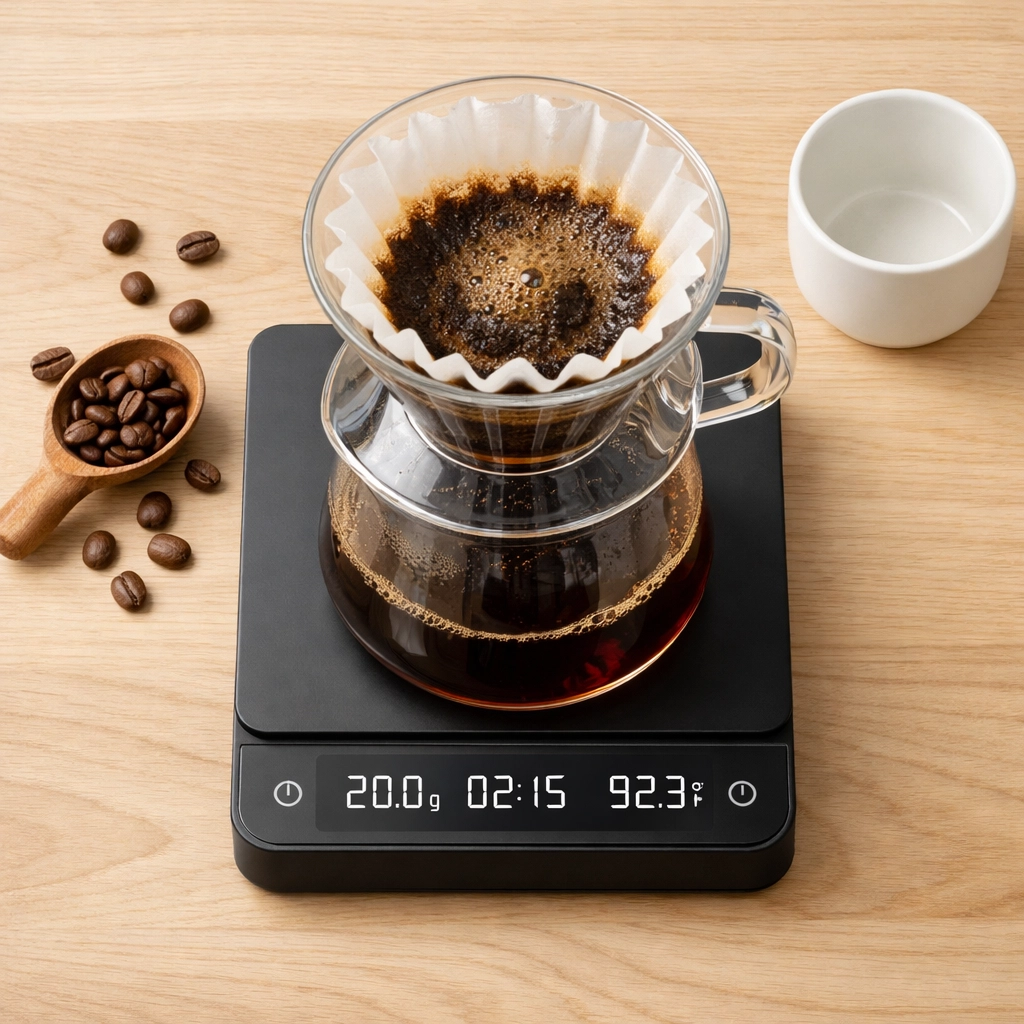
The timer function is crucial for techniques like the V60 or AeroPress, where brew time directly affects extraction. Being able to track your bloom time (that initial 30-45 second saturation) and total brew time helps you troubleshoot and refine.
You don't need to spend a fortune. Timemore, Hario, and Acaia all make scales that work brilliantly. The Timemore Black Mirror is a popular mid-range option. If you're getting serious about espresso, the Acaia Lunar is beautiful but pricey.
We genuinely believe this is one of the most underrated tools in coffee brewing. It's not sexy. It doesn't have a motor or buttons to play with. But it's absolutely essential for consistency.
4. A Quality Brewer (Method Matters)
Right, so you've got fresh beans (hopefully from somewhere excellent), a brilliant grinder, temperature control, and a scale. Now you need something to actually brew the coffee.
The best brewer depends entirely on what you enjoy drinking and how involved you want the process to be.
Pour-Over (V60, Kalita, Chemex): These are manual, engaging, and produce clean, nuanced cups. The V60 is probably the most popular: it's affordable, produces exceptional clarity, and gives you tons of control. The Kalita Wave has a flat bottom that's a bit more forgiving. The Chemex looks stunning and makes larger batches but uses thick filters that create an ultra-clean cup (sometimes too clean if you prefer more body).
Immersion (AeroPress, French Press): The AeroPress is brilliantly versatile and nearly indestructible. You can brew everything from espresso-style concentrates to delicate filter coffee. The French Press is classic: full-bodied, rich, and forgiving. It does leave some sediment and oils in the cup (which some love, some don't).
Batch Brewers (Moccamaster, Ratio, Bonavita): If you want automation without sacrificing quality, these are your answer. They hit proper temperatures, have good saturation, and make consistent coffee with the press of a button. The Moccamaster is the gold standard and will genuinely last you 10+ years.
There's no "best" here. We'd suggest starting with something like a V60 or AeroPress if you want to learn the fundamentals and don't mind being hands-on. If you want convenience, invest in a quality batch brewer.
5. The Supporting Cast (Accessories That Matter)
You've got your main players sorted. But there are a few smaller items that make the whole process smoother and more enjoyable.
Quality Filters: If you're doing pour-over, get proper filters. Cheap ones can impart papery flavours and don't always fit properly. Hario, Chemex, and Cafec make excellent options. We recommend rinsing your filter with hot water before brewing: it removes any paper taste and preheats your brewer.
A Decent Pouring Technique: This isn't a gadget, but it's worth mentioning. Learn to pour in controlled, circular motions, keeping the water level consistent. There are loads of YouTube tutorials that can help. Technique matters as much as equipment.
Server or Carafe: If you're brewing more than one cup, you'll want something to collect your coffee. Hario and Fellow make beautiful glass servers. They're functional and let you see what you're brewing (which is oddly satisfying).
Cleaning Supplies: Cafiza or Urnex for backflushing if you've got an espresso machine. Grinder cleaning tablets to remove oils. A simple brush for your grinder burrs. Fresh coffee oils go rancid, and stale oils ruin fresh coffee. Keep your kit clean.
Bringing It All Together
Here's what we genuinely believe: coffee is better when you have control over the variables that matter. These five tools: grinder, kettle, scale, brewer, and accessories: give you that control.
You don't need to buy everything at once. If you're starting from scratch, prioritize the grinder and scale. Then add temperature control. Then explore different brewers.
And obviously, none of this matters without fresh, properly roasted coffee. We're slightly biased, but we think starting with beans from a specialty roaster who cares about sourcing and roasting makes all the difference. You can explore our range of single origins and blends here.
The beautiful thing about coffee is that there's always more to explore. Better equipment doesn't just make better coffee: it makes the process more enjoyable, more consistent, and honestly, more fun.
So start with these five essentials. Dial in your technique. And enjoy the journey. Because that's genuinely what it is: a journey, not a destination.
Your morning cup is about to get significantly better.