Empower your guests. Unlock new revenue. Transform your property.
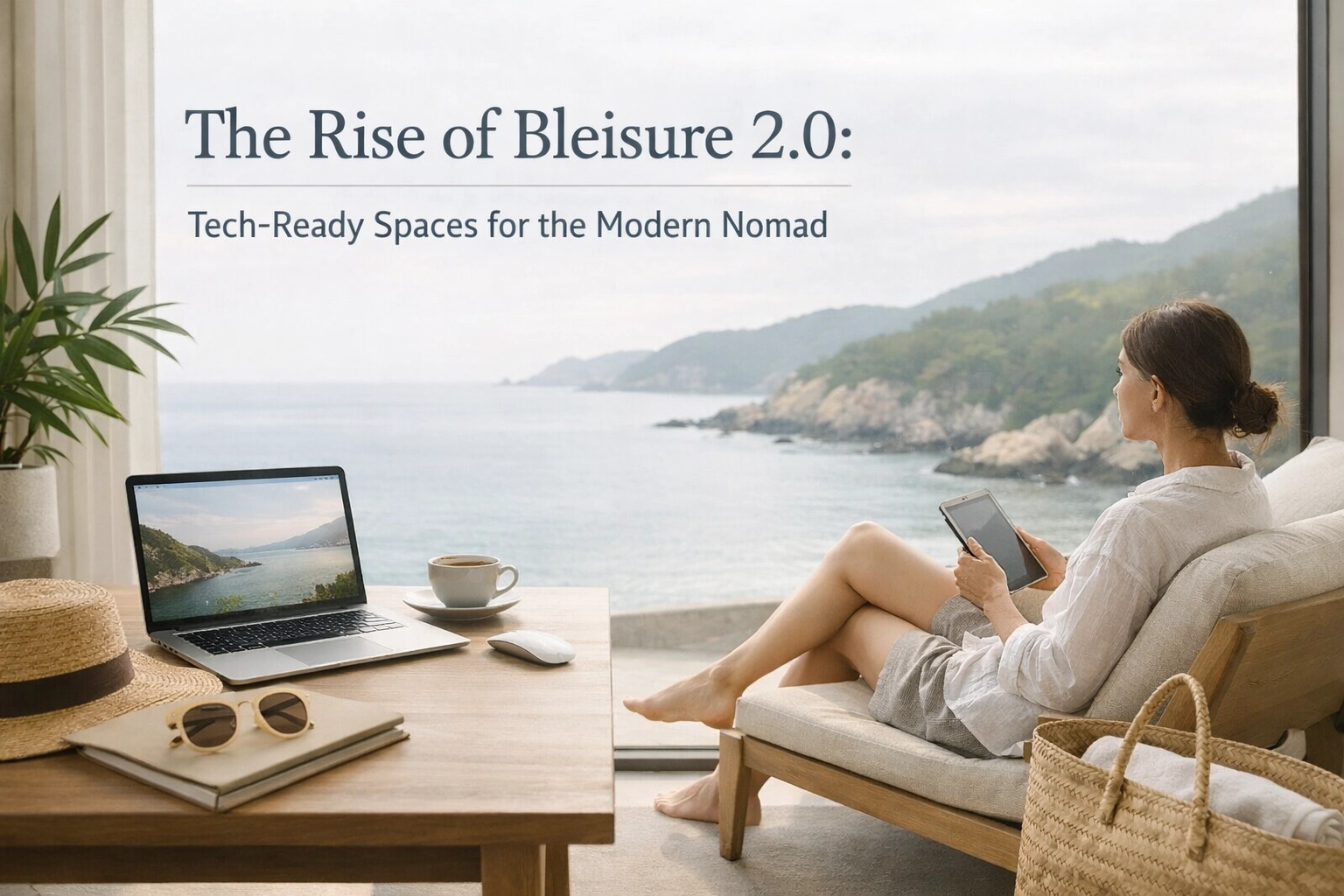
The traditional business trip is officially a relic. In its place, a more fluid, sophisticated way of traveling has emerged: one where the boundaries between professional productivity and personal discovery don't just blur; they vanish. We call it Bleisure 2.0. By 2035, this market is projected to hit a staggering $692.7 billion. Today, 83% of workers are already integrating leisure into their professional journeys. They aren’t just looking for a place to sleep; they are looking for a high-performance ecosystem that supports their lifestyle, all from one innovative platform.
The connectivity baseline
We believe that high-speed Wi-Fi is no longer an amenity: it is a fundamental right for the modern traveler. For the Bleisure 2.0 guest, a dropped connection during a high-stakes Zoom call is a dealbreaker. If your tech stack isn't up to the task, your guest won't just leave a bad review; they simply won't return.
The modern nomad expects a frictionless digital experience from the moment they book. This means:
- Symmetrical gigabit speeds that handle video conferencing and streaming simultaneously.
- Seamless Wi-Fi roaming that keeps them connected from the lobby to the rooftop bar.
- Security protocols that satisfy even the most stringent corporate IT requirements.
When guests know they can rely on your infrastructure, they stay longer. They turn a two-day conference trip into a week-long stay because they know they can get their best work done right from your lounge: or their balcony.

Rethinking square footage
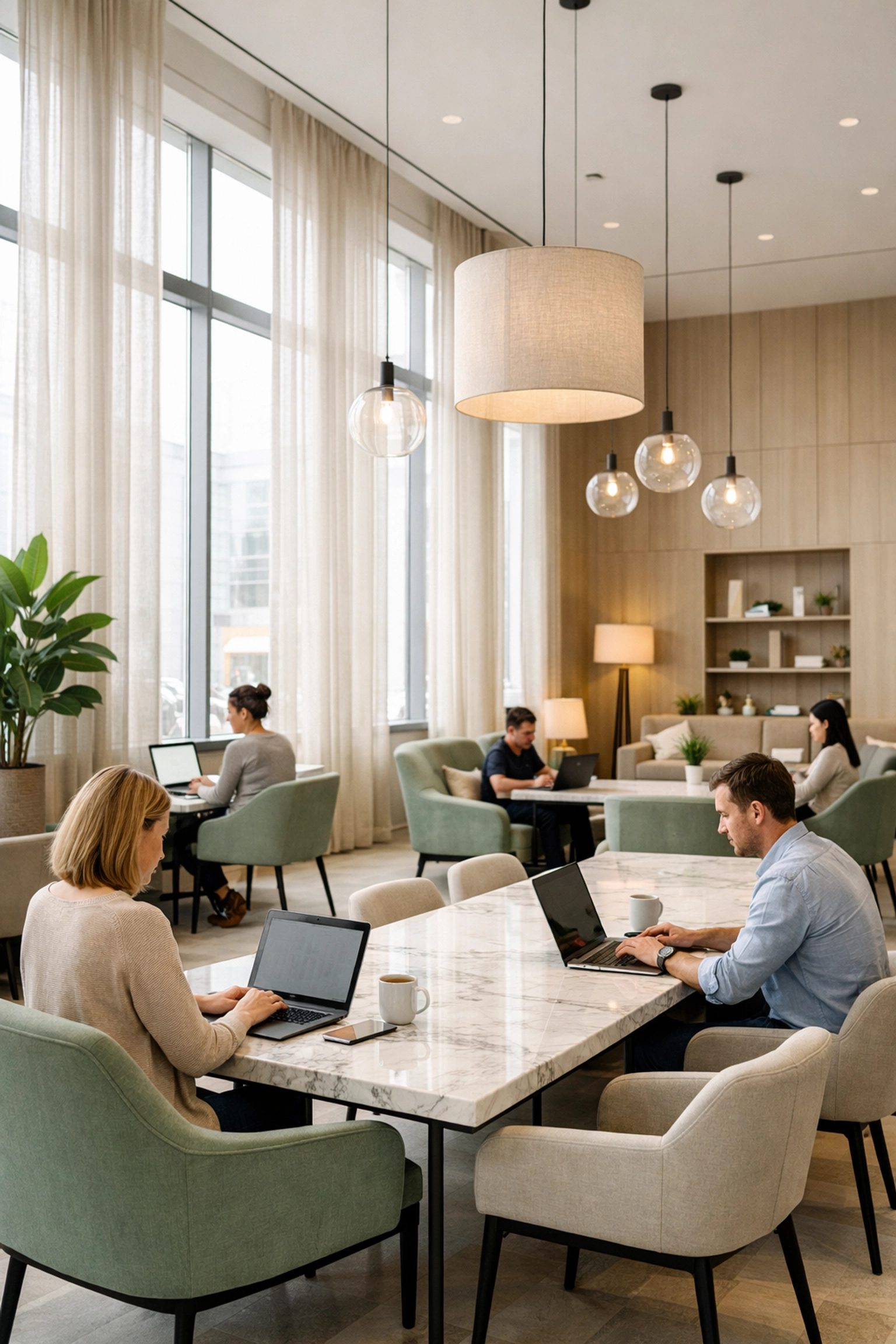
We think the days of the empty hotel lobby are over. Your physical space is your most valuable asset, but only if it’s working for you around the clock. The Rise of Bleisure 2.0 has turned hotel common areas into vibrant, multi-use hubs.
Properties that thrive in this new era are those that treat every square meter as a potential revenue stream. This isn't just about putting a desk in the corner of a room. It’s about creating tech-ready environments that adapt to the user's needs.
- Modular meeting rooms: Spaces that can be booked by the hour for a private pitch or a quick team huddle.
- Co-working zones: Dedicated quiet areas with ergonomic seating and ample power outlets.
- Hybrid lobbies: Social spaces that transition from coffee-fueled workstations in the morning to cocktail lounges in the evening.
By integrating these spaces into your central management system, you make them discoverable and bookable. You aren't just selling rooms anymore; you're selling productivity and community.
Diversifying revenue with Mews
Managing a hotel used to be straightforward: sell rooms, maybe some F&B. But the Bleisure 2.0 crowd demands more variety. They want to book a podcast studio for an hour, a hot desk for an afternoon, or a parking spot for their electric vehicle: all without jumping through hoops.
This is where Mews changes the game. Our platform is designed to manage diverse revenue streams beyond the traditional overnight stay.
- Inventory flexibility: Manage meeting rooms, parking spots, and co-working desks as easily as you manage your penthouses.
- Automated billing: Ensure every minute of space usage is accurately tracked and billed to the guest's folio.
- Real-time availability: Let guests see what spaces are free and book them instantly via their mobile device.
"We saw a 22% increase in non-room revenue within the first six months of implementing flexible space booking," says one of our partners in London. This is the power of thinking beyond the bed.
The death of the front desk
The modern nomad is tech-savvy and time-poor. They don't want to stand in a queue for twenty minutes to fill out a paper form they already completed online. They want to arrive, get their digital key, and head straight to their meeting: or the pool.
Innovation in hospitality means removing friction. We believe the check-in process should be invisible.
- Online Check-in: Guests provide their details before they even arrive.
- Digital Keys: Their smartphone becomes their access pass to the room and the gym.
- Self-Service Kiosks: For those who prefer a physical card but want to skip the line.
When you automate these administrative tasks, your staff is freed up to do what they do best: provide actual hospitality. They become curators of the guest experience rather than data entry clerks.
Designing for the 2026 traveler
As we look toward the mid-2020s, the expectations of Gen Z and Millennials are becoming the industry standard. These generations represent about 34% of those extending business trips for leisure. They value authenticity, sustainability, and: above all: integration.
To capture this market, your property needs to feel like a neighborhood, not a fortress.
- Hyper-local experiences: Partner with local gyms, galleries, or cafes to offer guests a "work-from-anywhere" pass that extends beyond your walls.
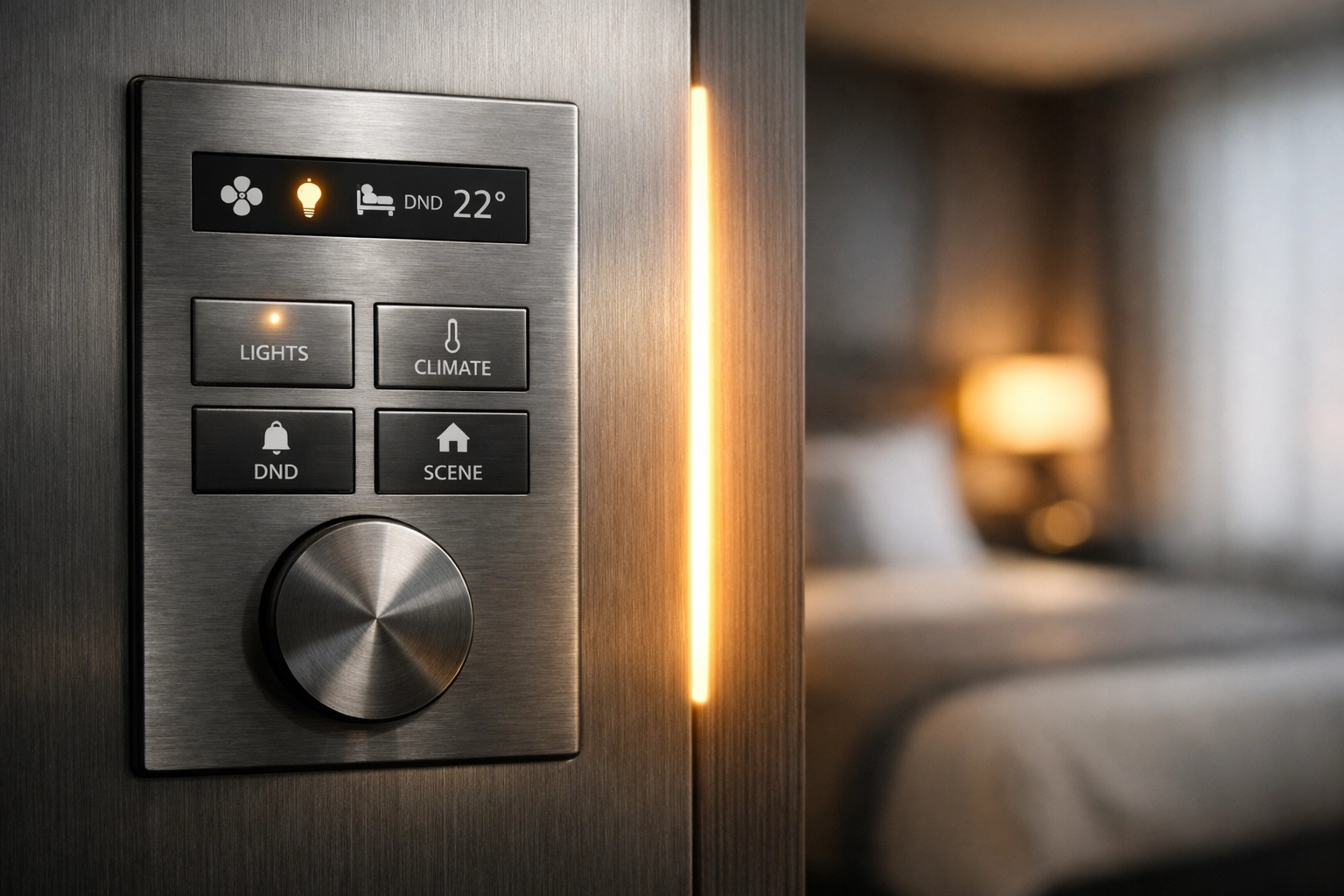
- Sustainability tech: Use smart room sensors to ensure energy isn't wasted when the guest is out exploring the city.
- Personalization at scale: Use guest data to remember that they prefer a quiet corner in the co-working space and a decaf oat latte at 3:00 PM.

Operational excellence through AI
The complexity of managing a multi-use property requires more than just a spreadsheet. It requires intelligence. We are moving into an era of agentic AI: systems that don't just show you data but take action on your behalf.
Imagine a system that automatically adjusts the pricing of your meeting rooms based on real-time demand or suggests a late check-out offer to a guest who has been working in the lobby all morning. This isn't science fiction; it's the next step in hospitality technology.
- Predictive maintenance for high-use tech spaces.
- AI-driven staffing models that align with co-working peak hours.
- Automated guest communication that feels personal, not robotic.
By leveraging these tools, you can run a leaner, more efficient operation while providing a higher level of service. It’s about being proactive rather than reactive.
The path forward
The transition to Bleisure 2.0 isn't just a trend: it's a fundamental shift in how people live and work. For hoteliers, this represents one of the most significant opportunities for growth in decades. It allows you to stabilize occupancy, increase your average daily rate, and build a brand that resonates with the most influential segment of the traveling public.
Don't let your property be defined by the four walls of a guest room. Embrace the flexibility that the modern nomad craves.
Ready to see how you can maximize your space?
Schedule a 30-minute consultation
Get your property ready for the nomad era.
Start earning more from every square foot.
The future of hospitality is flexible, tech-driven, and focused on the guest’s total journey. Whether they are closing a deal or opening a bottle of wine: or both at the same time: your property should be the place they choose to do it.
We believe the best way to predict the future is to build it. Let's get to work.