
So, you want to open a coffee shop? It’s a classic dream. You imagine yourself behind a sleek counter, the smell of freshly roasted beans in the air, a queue of locals waiting for their morning fix, and perhaps a very stylish apron. It sounds idyllic, doesn't it?
But then reality hits. You start thinking about plumbing, health and safety forms, and the sheer terror of choosing the wrong espresso machine. Suddenly, setting up a coffee shop feels less like a cozy dream and more like trying to solve a Rubik's cube while wearing oven mitts.
Don't panic. At Limini Coffee, we’ve helped hundreds of people transition from "I have a dream" to "I have a thriving business." This guide is our roadmap for you: a comprehensive, slightly witty, and very honest look at what it actually takes to succeed.
1. Concept: What’s Your Vibe?
Before you buy a single teaspoon, you need to decide what you are actually building. Are you a high-volume "grab-and-go" kiosk near a train station, or a slow-paced, artisanal sanctuary where people spend three hours writing their first novel?
Your concept dictates your costs, your location, and even your beans. A brick-and-mortar cafe is the gold standard for building a community hub, but if you’re testing the waters, a coffee cart or kiosk is a brilliant, lower-overhead way to start. Either way, the goal remains the same: serving incredible coffee that keeps people coming back.
2. The Not-So-Boring Business Plan
We know, we know. Writing a business plan feels like homework. However, unless you have a secret money tree in your garden, you’re going to need one.
When setting up a coffee shop, your plan should cover:
- The Market: Who are your neighbors? If there’s a Starbucks next door, how will you be different? (Hint: Better coffee and a warmer soul usually does the trick).
- The Financials: Research suggests you’ll need anywhere from £25,000 to £60,000+ depending on your scale. Don't forget the "oops" fund: a 15-20% contingency for the things that will inevitably go wrong.
- The Menu: Keep it simple to start. Perfect the classics before you start offering "deconstructed beetroot lattes." Check out our guide on latte vs. cappuccino to get your head around the basics.
3. Location, Location, (And More) Location
You can have the best coffee in the world, but if you’re tucked away in an alleyway that no one visits, you’re basically running a very expensive hobby.
Look for foot traffic, but also look at the type of traffic. Commuters need speed; shoppers need seats. Accessibility is also key. If people can’t find you or can't get a pram through the door, you’re losing customers.
4. The Shiny Stuff: Choosing Your Equipment
This is the part everyone gets excited about. Your espresso machine is the heart of your shop. It’s not just a tool; it’s a member of the team. We are huge fans of La Spaziale machines here. Why? Because they are workhorses that produce incredibly consistent results.
When you’re choosing espresso equipment, don’t just look at the price tag. Look at the "internals." For instance, we love the La Spaziale workings because they use a steam-heated system that provides amazing thermal stability. This means your 1st coffee of the morning tastes exactly like your 100th.
And don't forget the grinder. A common mistake when setting up a coffee shop is spending all the budget on the machine and buying a cheap grinder. That’s like putting budget tires on a Ferrari. Your grinder is actually more important for flavour than the machine itself.
5. The Soul of the Shop: The Beans
This is where we get a bit geeky. You can have a £10,000 machine, but if you use stale, oily, over-roasted beans, your coffee will taste like a burnt shoe.
At Limini Coffee, we live for speciality roasts. We spend an enormous amount of time sourcing our coffee to ensure it’s ethical, fresh, and delicious. Freshness is non-negotiable. Coffee is a fresh produce, like bread. It has a peak window of flavor.
If you’re worried about managing stock, we offer a wholesale and dropshipping service that takes the headache out of logistics. We don’t just drop a bag of beans at your door and run; we partner with you to make sure you’re getting the best out of every gram.

6. Workflow and Shop Fitting
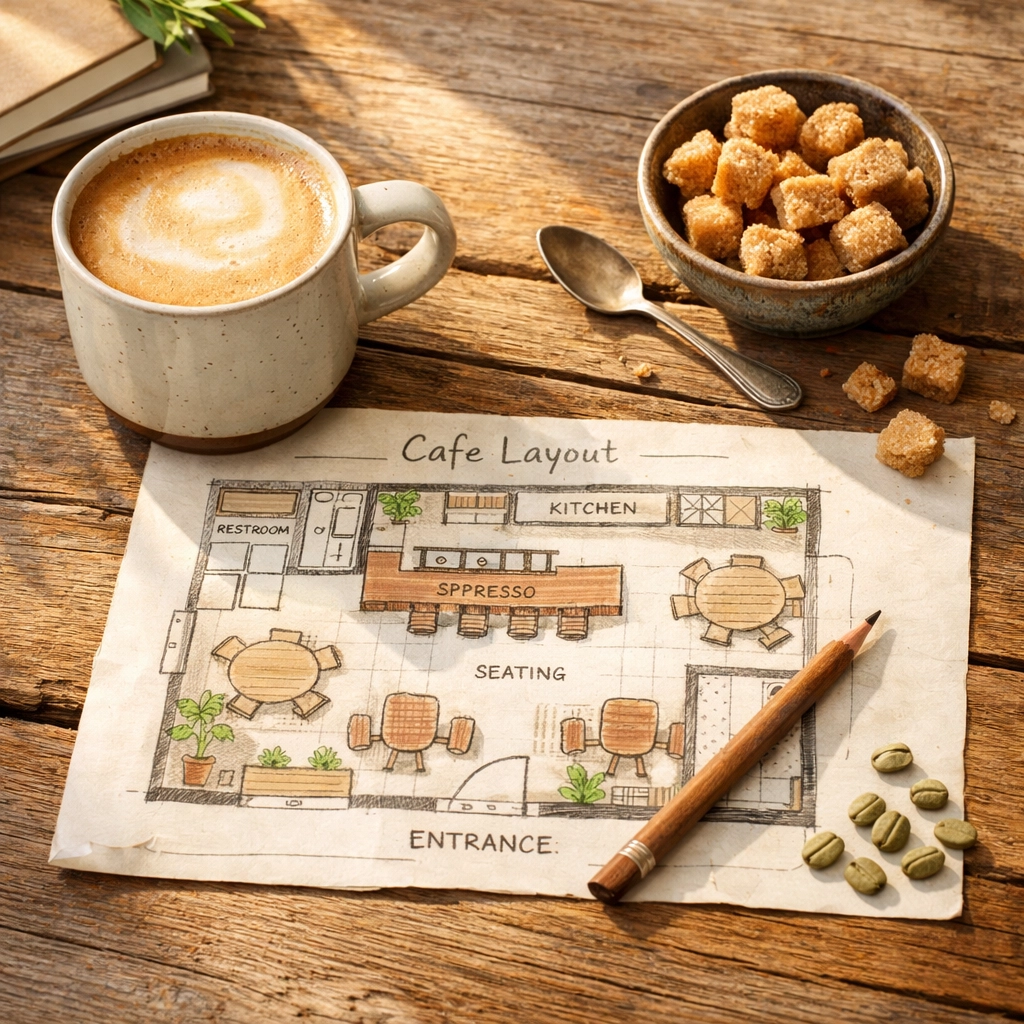
Imagine it's 8:30 AM on a Tuesday. You have ten people in line. Your barista is tripping over the person steaming milk, and the sink is three miles away from the espresso machine. This is a nightmare scenario.
Building a coffee shop requires a logical flow.
- Order & Pay: Where the customer starts.
- The Barista Station: Where the magic happens.
- The Pickup Point: Where the customer waits (without blocking the door).
Every step a barista takes should be intentional. If they have to turn around or walk across the room for a spoon, you’re losing time and money.
7. The Human Element: Barista Training
You can buy the best equipment and the finest beans from Limini Coffee, but if your staff don't know how to use them, it's all for naught.
Making great coffee is a skill. It requires an understanding of crema, the physics of tamping, and the delicate art of understanding milk.
We strongly recommend investing in professional barista training. A trained barista isn't just someone who makes coffee; they are a salesperson, a technician, and a brand ambassador all rolled into one. They need to know why the espresso is running too fast (and how to fix it) and why the milk isn't stretching properly.
8. Milk, Water, and the "Small" Details
It’s easy to overlook the details, but they matter.
- Water Quality: Coffee is 98-99% water. If your water tastes like a swimming pool, your coffee will too. Use a high-quality filtration system to protect your machine from scale and improve the taste.
- Cups: The vessel matters. Whether you're choosing coffee cups for your shop or takeaway options, think about heat retention and "hand-feel."
- The Theatre: Making coffee is a performance. People love watching the steam, hearing the grind, and seeing the latte art. Embrace the theatre of coffee.

9. Launching Your Dream
When you’re finally ready to open the doors, don’t just flip the "Open" sign and hope for the best.
- Soft Launch: Invite friends, family, and local business owners for a "practice run." It helps the staff get used to the pressure without the risk of a bad public review.
- Marketing: Get on social media early. Show the build-out, the training sessions, and the first "perfect" pour.
- Consistency: This is the hardest part. Being great on opening day is easy. Being great on a rainy Tuesday six months later is what builds a business.
Why Partner with Limini?
Setting up a coffee shop is a massive undertaking, but you don't have to do it alone. At Limini Coffee, we aren't just "suppliers." We consider ourselves your partners in success. From helping you choose the right lever or automatic machine to providing a coffee brewing calculator to get your recipes spot on, we’re here for the long haul.
We believe that specialty coffee should be accessible, friendly, and: most importantly: profitable for you. If you’re serious about your new venture, check out our wholesale options or read our customer reviews to see how we’ve helped others.
Ready to start the journey? We’d love to help you roast something special. Head over to Limini Coffee and let’s get brewing.
It’s a lot of work, absolutely. But when you hand over that first perfect flat white to a smiling customer, we promise you: it’s worth every single late night and every single plumbing headache. Good luck!