

So, you’ve decided to take the plunge into the world of home brewing. Maybe you’re tired of the watery, burnt-tasting stuff from the supermarket, or perhaps you’ve visited a local speciality shop and wondered, "Why can't I make it taste like that?"
The truth is, you absolutely can.
At Limini Coffee, we believe that brewing incredible coffee at home isn't some dark art reserved for people with expensive waistcoats and even more expensive moustaches. It’s actually quite a logical process of managing a few key variables. If you get the fundamentals right, the rest is just a matter of personal preference. Whether you’re after a punchy espresso or a delicate pour-over, we’re here to help you navigate the jargon and the gear.
And remember, the best coffee starts with the best beans. If you want to jump straight to the good stuff, you can check out our latest roasts over at Limini Coffee.
The Golden Rule: Freshness Above All Else
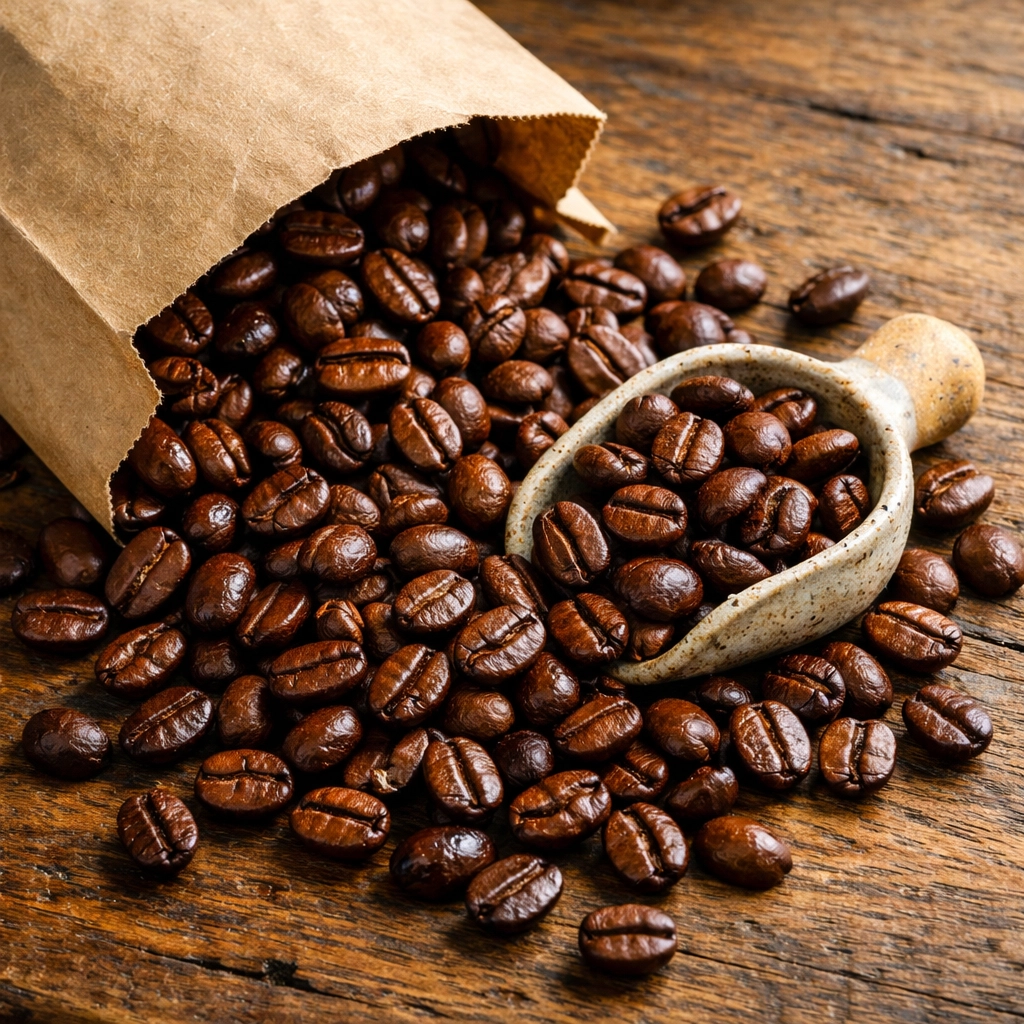
We can talk about equipment until we’re blue in the face, but if your beans are stale, your coffee will be dull. It really is as simple as that. Coffee is a fresh agricultural product. Once those beans are roasted, the clock starts ticking as they begin to release carbon dioxide and oxidise.
When you buy coffee from the supermarket, it has often been sitting on a shelf for months. By the time it reaches your kitchen, the volatile oils, the things that actually give coffee its flavour, have mostly vanished. This is why we focus so heavily on sourcing our coffee responsibly and roasting it in small batches.
So, tip number one: Always check the "roasted on" date. If it doesn’t have one, keep walking. Ideally, you want to use your beans within four to six weeks of roasting.
The Three Pillars of Home Brewing
To succeed at home, you need to master three fundamental variables: your grind, your water, and your ratio.
1. The Grind (Consistency is King)
If there is one piece of kit you should invest in, it’s a burr grinder. Avoid blade grinders like the plague, they don't grind coffee; they shatter it into uneven chunks. This means the tiny dust-like particles (fines) over-extract and become bitter, while the big boulders under-extract and taste sour.
A burr grinder uses two revolving abrasive surfaces to "crush" the beans to a uniform size. This consistency is what allows for an even extraction.
- Coarse (Sea salt texture): Best for French Press.
- Medium (Sand texture): Great for Drip or Aeropress.
- Fine (Table salt texture): Ideal for Pour-over.
- Extra Fine (Powder texture): Essential for Espresso.
2. The Water (The Hidden Ingredient)
Your cup of coffee is about 98% water. If your water tastes "off," your coffee will too. We generally recommend using filtered water if you live in a hard-water area. Scale is the enemy of both flavour and your coffee machine.
Temperature also matters, a lot. We recommend a range of 195–205 °F (90–96 ºC). If you use boiling water straight off the hob, you risk "scalding" the grounds and ending up with a bitter cup. Conversely, water that is too cool won't extract enough flavour, leaving your coffee tasting thin and weak.
3. The Magic Ratio
How much coffee should you use? We often see people guessing, but we prefer a more scientific approach. The industry standard is a 1:16 ratio. This means 1 gram of coffee for every 16 grams of water.
For a standard mug (about 250ml), you’ll want roughly 15-16g of coffee. If you aren't a fan of doing maths before your first caffeine hit, we’ve actually built a coffee brewing calculator to do the hard work for you. Using a scale is the easiest way to make sure your coffee tastes the same every single morning.
Choosing Your Method
There is no "best" way to brew coffee, only the way that suits your lifestyle and your palate. Here are our thoughts on the most popular methods for home brewers.
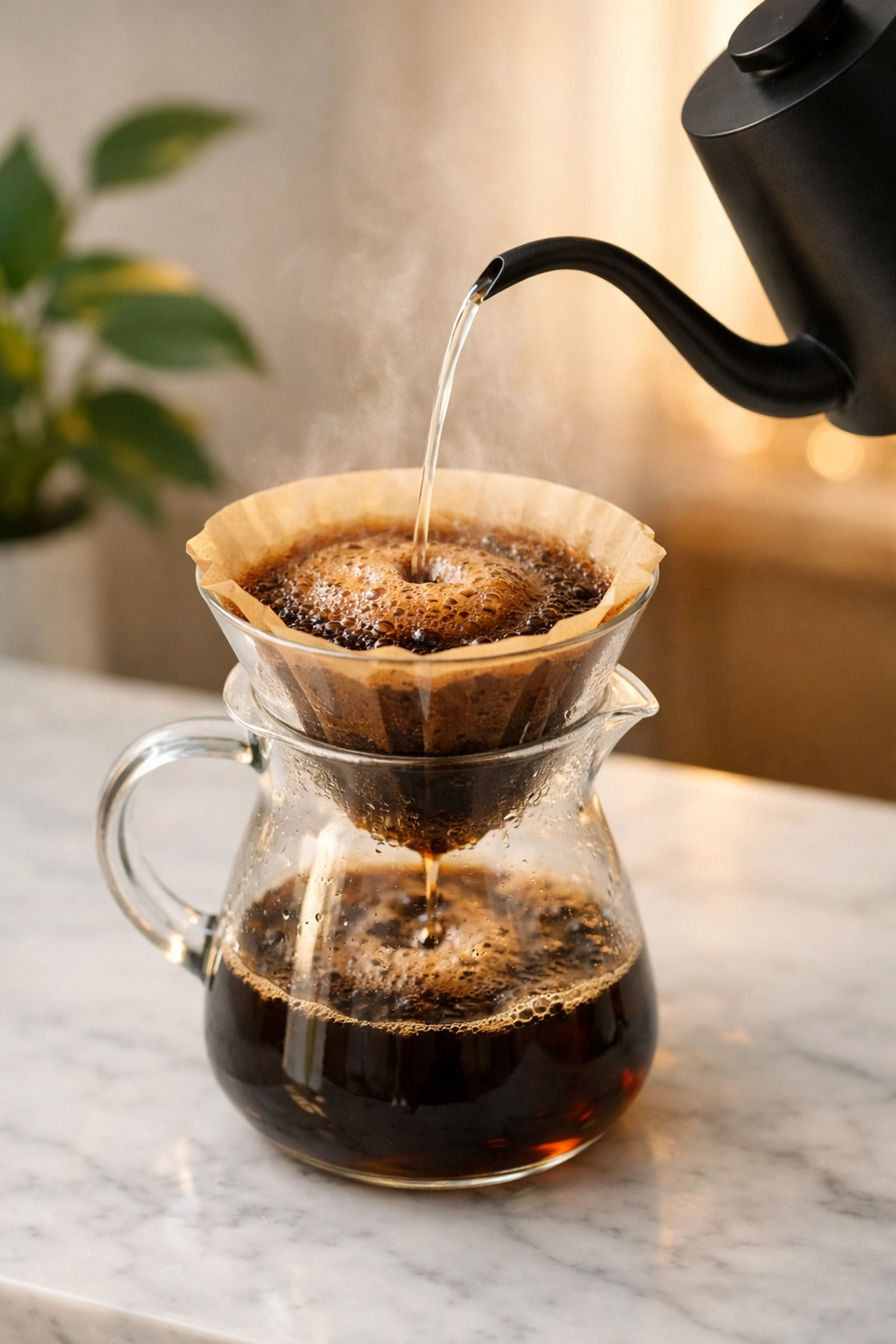
The Pour-Over (V60 or Chemex)
This is the purist's choice. It produces a cup with incredible clarity and highlights the nuanced flavours of single-origin beans. It takes a bit of practice and a steady hand (a gooseneck kettle helps!), but the results are worth it.
- Best for: Exploring different flavour profiles and enjoying a clean, sediment-free cup.
- Pro Tip: Wet your paper filter first to remove any "papery" taste before adding your grounds.
The French Press (Cafetière)
The old reliable. It’s an immersion method, meaning the grounds sit in the water for the entire brew time (usually 4 minutes). This produces a heavy-bodied, rich, and oily cup of coffee. It’s very forgiving, but it can be a bit of a pain to clean.
- Best for: Those who like a big, bold mouthfeel and want to brew for multiple people at once.
- Warning: Always clean your mesh filter thoroughly. Old coffee oils trapped in the mesh will turn rancid and ruin your next brew.
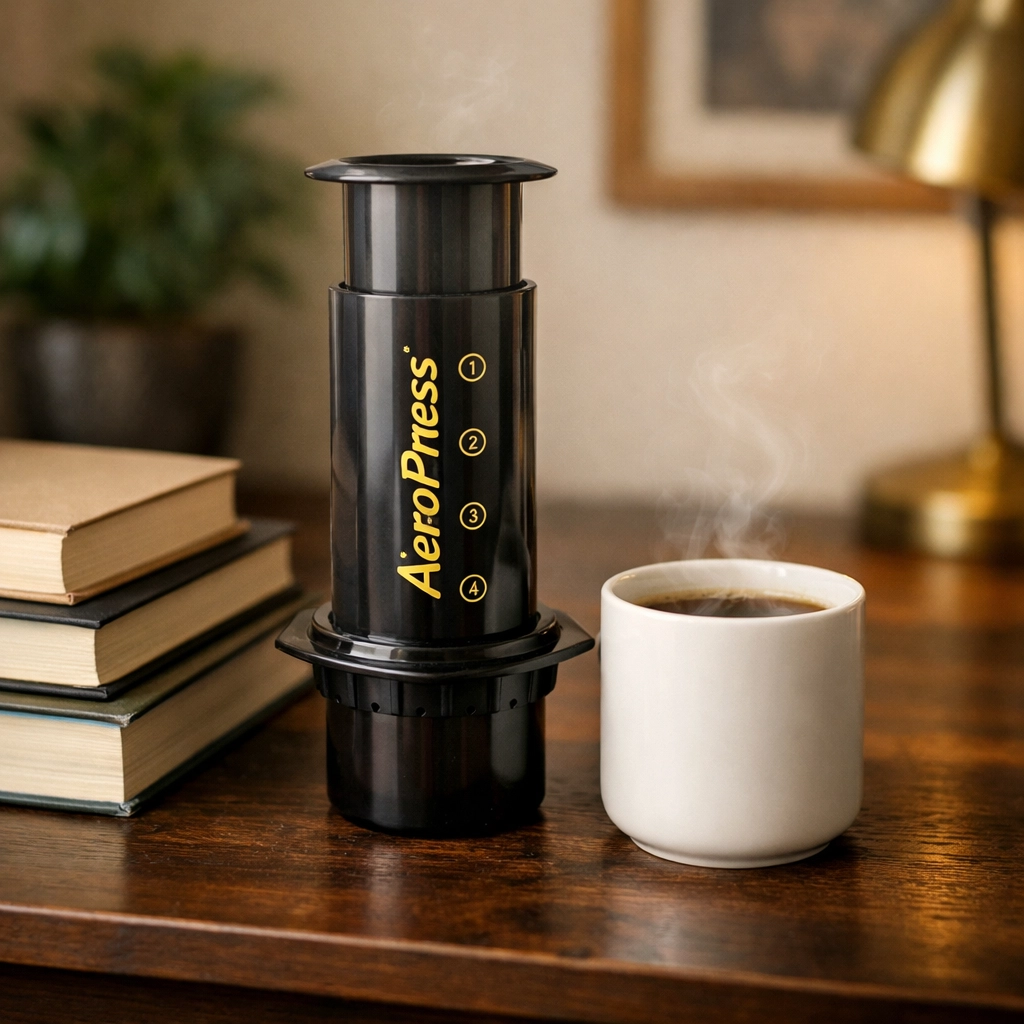
The Aeropress
We love the Aeropress. It’s indestructible, portable, and incredibly versatile. You can make anything from a concentrated espresso-style shot to a standard long coffee. It’s also very fast, you can be drinking your coffee in under two minutes.
- Best for: Travellers, office workers, and anyone who likes to experiment.
- Technique: Try the "inverted method" to prevent the coffee from dripping through the filter before you’re ready to press.
The Moka Pot
If you want something close to espresso without spending thousands on a machine, the Moka Pot is your best friend. It uses steam pressure to push water through the grounds. It produces a very strong, intense coffee that stands up well to milk.
- Best for: Fans of strong, traditional coffee who don't mind a bit of "theatre" on the stove.
Upgrading to Espresso
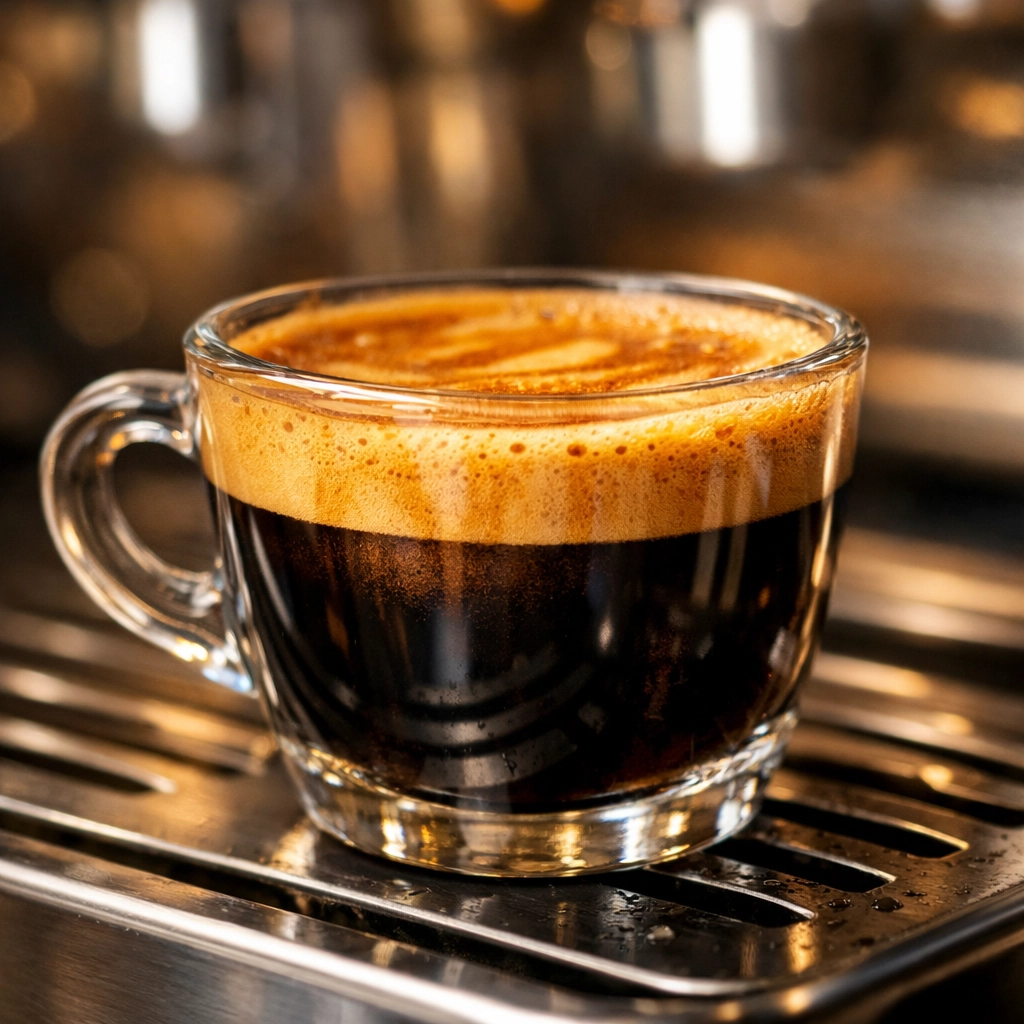
So, you want to move beyond filter coffee and into the world of espresso? This is where things get serious. Espresso is a whole different beast that requires precise pressure and temperature control.
When you’re choosing espresso equipment, you need to decide if you want the tactile feel of a lever machine or the consistency of an automatic. It can be intimidating, but it’s also incredibly rewarding when you finally see that perfect, golden crema pouring into your cup.
If you are just starting out with espresso, we highly recommend looking into some barista training. Learning how to tamp correctly and dial in your grinder will save you hours of frustration and kilograms of wasted coffee.
The Importance of the "Bloom"
You might have noticed that when you first pour water over fresh coffee, it bubbles and expands. We call this the "bloom." It’s the coffee releasing trapped carbon dioxide.
Why does this matter? Well, if that gas is still in the beans, it pushes the water away, preventing proper extraction. We suggest pouring just enough water to wet the grounds and waiting about 30-40 seconds before continuing your pour. It’s a small step that makes a massive difference in the final taste.
Troubleshooting Your Brew
Is your coffee not tasting quite right? Don't panic. Here is a quick guide to fixing the most common issues:
- Too Bitter? Your coffee is over-extracted. Try a coarser grind, lower your water temperature, or shorten the brew time.
- Too Sour? Your coffee is under-extracted. Try a finer grind, hotter water, or a longer brew time.
- Weak and Watery? You might need to adjust your ratio. Try adding more coffee or using less water next time.
It’s all about trial and error. We always say that the beauty of coffee is that you have total control. You aren't just a consumer; you’re the head roaster and head barista of your own kitchen.
Final Thoughts
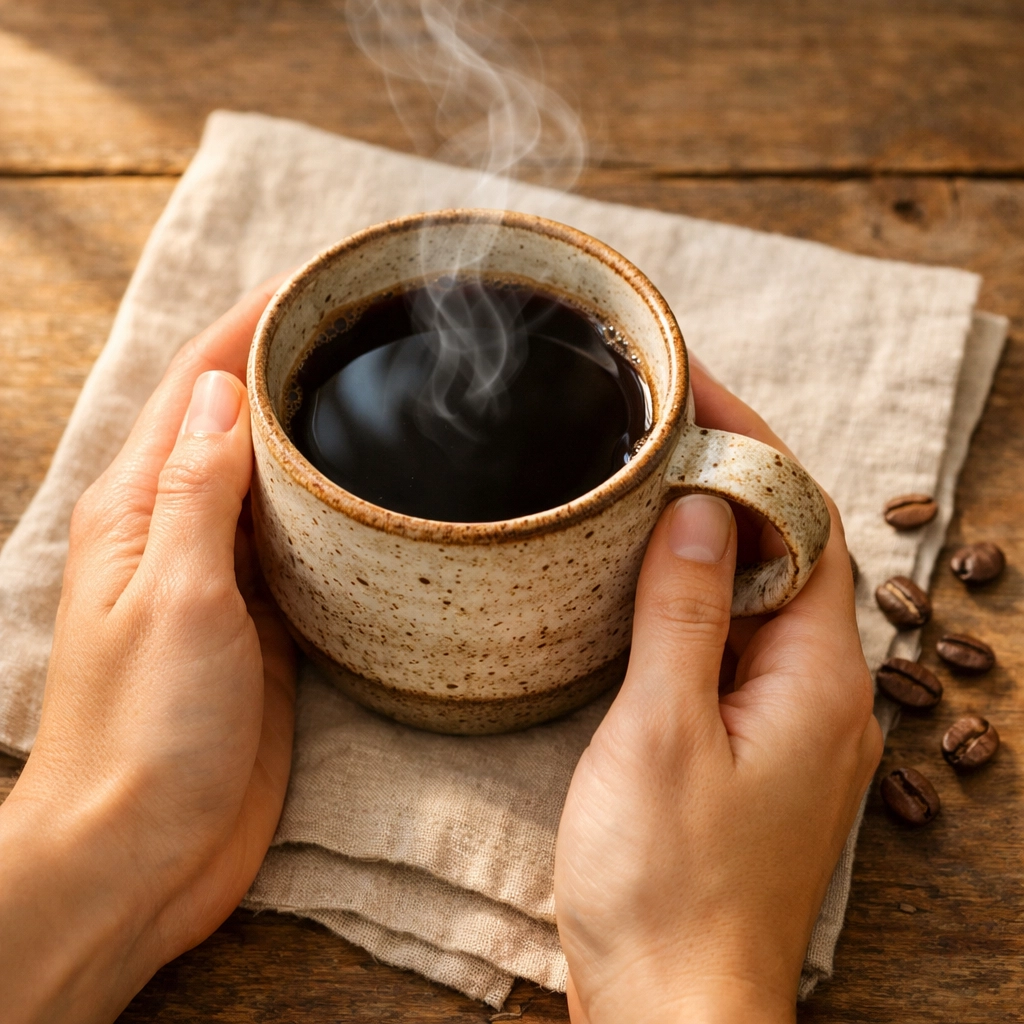
Brewing better coffee at home is a journey, not a destination. You’ll have days where you make the best cup of your life, and days where it ends up down the sink. That’s okay! Every "bad" cup is just a lesson in what to adjust for the next time.
If you’re ever feeling stuck or want to dive deeper into the technical side: like understanding milk for latte art or the difference between a latte and a cappuccino: we have plenty of resources on our site to help you out.
And of course, if you want to make sure you're starting with the highest quality beans possible, head over to Limini Coffee and see what we’ve got in the roaster this week. We’d love to be a part of your morning routine.
Happy brewing!