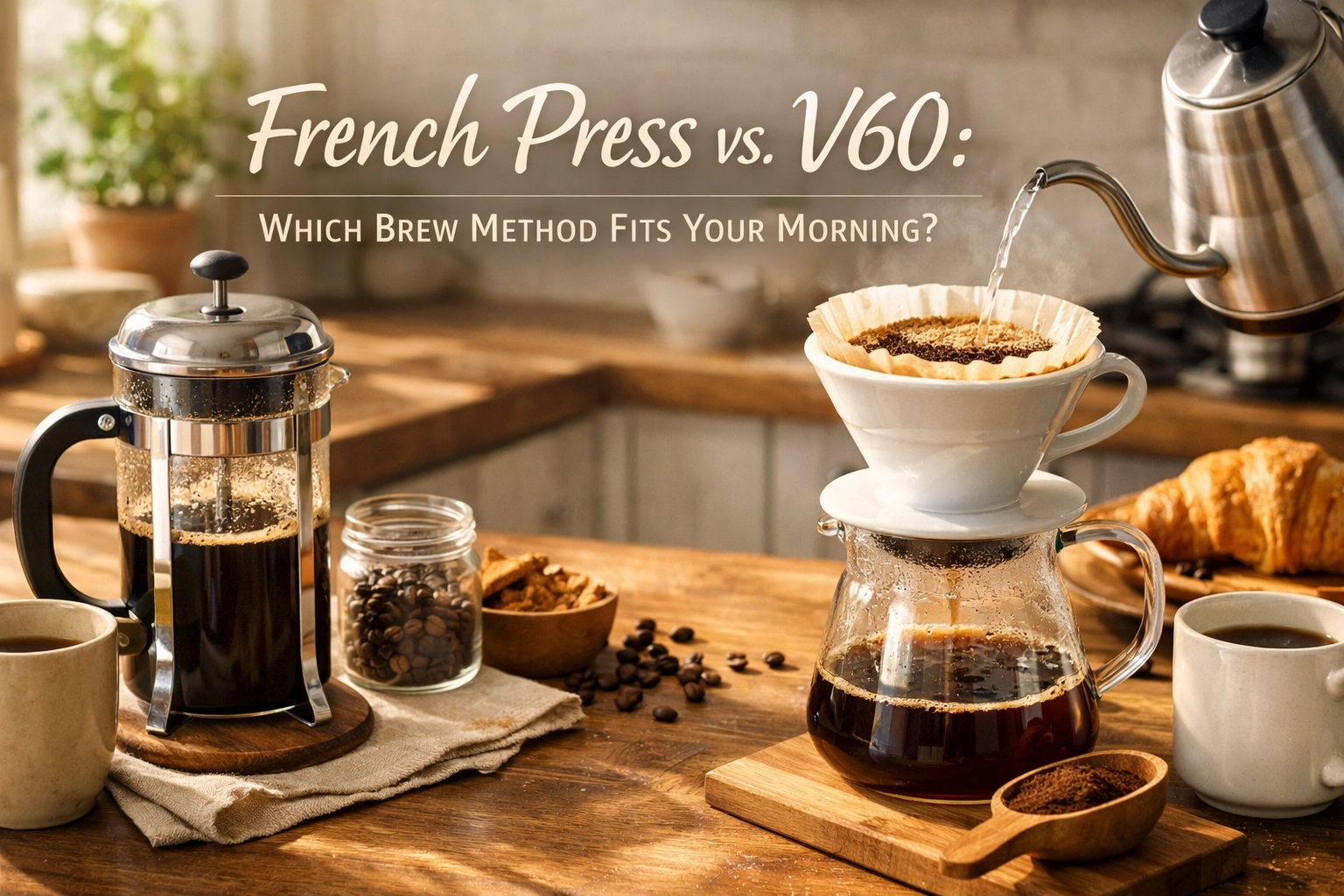
So, you want that coffee shop experience without having to put on actual trousers and trek down to the high street? We’ve all been there. There is something truly magical about the first sip of a perfectly balanced, velvety latte or a bright, floral single-origin pour-over. But for many, the journey from "instant" to "barista-quality" feels like it requires a PhD in chemistry and a bank account that can handle a four-figure espresso machine.
Well, we have some good news for you. Creating world-class coffee at home doesn't have to be a twenty-minute ritual involving scales, thermometers, and a stressful amount of precision. In fact, if you get your workflow right, you can be sitting down with a cup that rivals your favourite local roastery in just five minutes.
At Limini Coffee, we live and breathe the bean. We spend our days roasting, tasting, and training, and we’ve learned that the secret isn’t always the most expensive gear: it’s the quality of the ingredients and a few fundamental techniques. If you're ready to level up your morning routine, check out our freshly roasted coffee beans and let's get brewing.
The Golden Rule: Freshness Above All Else
We’re going to be blunt here: you can have the best brewing equipment in the world, but if your beans are stale, your coffee will taste like disappointment. Most supermarket coffee was roasted months ago, and once it's ground, it loses its aromatic oils faster than you can say "crema."
So, why is freshness such a big deal? When coffee is roasted, carbon dioxide is trapped inside the bean. This gas protects the delicate flavours. As the coffee ages (and especially after it’s ground), that gas escapes, and oxygen takes its place. This process, called oxidation, turns those vibrant, fruity, or chocolatey notes into something flat and woody. Which is just a real shame.
We believe that the single biggest improvement you can make is switching to freshly roasted speciality coffee. At Limini, we roast in small batches to ensure you get the beans at their peak. When you use beans that were roasted within the last two weeks, you’ll notice the difference immediately: the aroma alone will fill your kitchen.
The 5-Minute Gear Guide
To hit that five-minute mark, you need equipment that is efficient but effective. You don't need a 3000-watt commercial machine to get a great result. Here is what we recommend for the ultimate fast-yet-fancy home setup:
1. The Grinder (The Real Hero)
If you only buy one piece of kit, make it a burr grinder. Blade grinders (the ones that look like little blenders) don't actually "grind" the coffee; they smash it into uneven chunks. This leads to uneven extraction: some bits are over-extracted and bitter, while others are under-extracted and sour.
A burr grinder uses two revolving surfaces to crush the beans to a uniform size. This is extremely important for consistency. Whether you're going for a fine espresso grind or a coarse French press setting, consistency is king. You can find some fantastic options in our guide on choosing espresso equipment.
2. The Brewer: AeroPress or Clever Dripper
While we love a traditional pour-over, it can be a bit fiddly when you're in a rush. For a five-minute window, we suggest the AeroPress or the Clever Dripper. They are "immersion" brewers, meaning the water and coffee sit together for a set amount of time. They are incredibly forgiving, very fast to clean, and produce a remarkably clean cup.
If you’re more into the "theatre" of coffee and want to see how the pros do it, have a look at our article on coffee shop theatre.
3. The Kettle
You don't need a gooseneck kettle for immersion brewing, but you do need hot water. Ideally, you want water between 88°C and 95°C (190°F to 203°F). If you don't have a temperature-controlled kettle, just let your boiling water sit for about 60 seconds before pouring.
The 5-Minute Masterclass Workflow
Let's break down the actual minutes. Imagine it’s 7:00 AM. You’re bleary-eyed but determined. Here is how you get that Limini Coffee into your mug by 7:05 AM.
Minute 0-1: The Prep
Hit the button on your kettle. While the water is heating, weigh out your beans. We generally recommend a ratio of 60g of coffee per litre of water. So, for a standard 250ml mug, you'll want about 15g of coffee. Adjust this to your taste: if you like it stronger, go up to 17g.
Minute 1-2: The Grind
Throw those beans into your burr grinder. If you're using an AeroPress, aim for a medium-fine consistency (slightly finer than table salt). If you’re using a French press, go much coarser. The smell of those freshly ground beans is the best part of the morning, to be honest.
Minute 2-4: The Brew
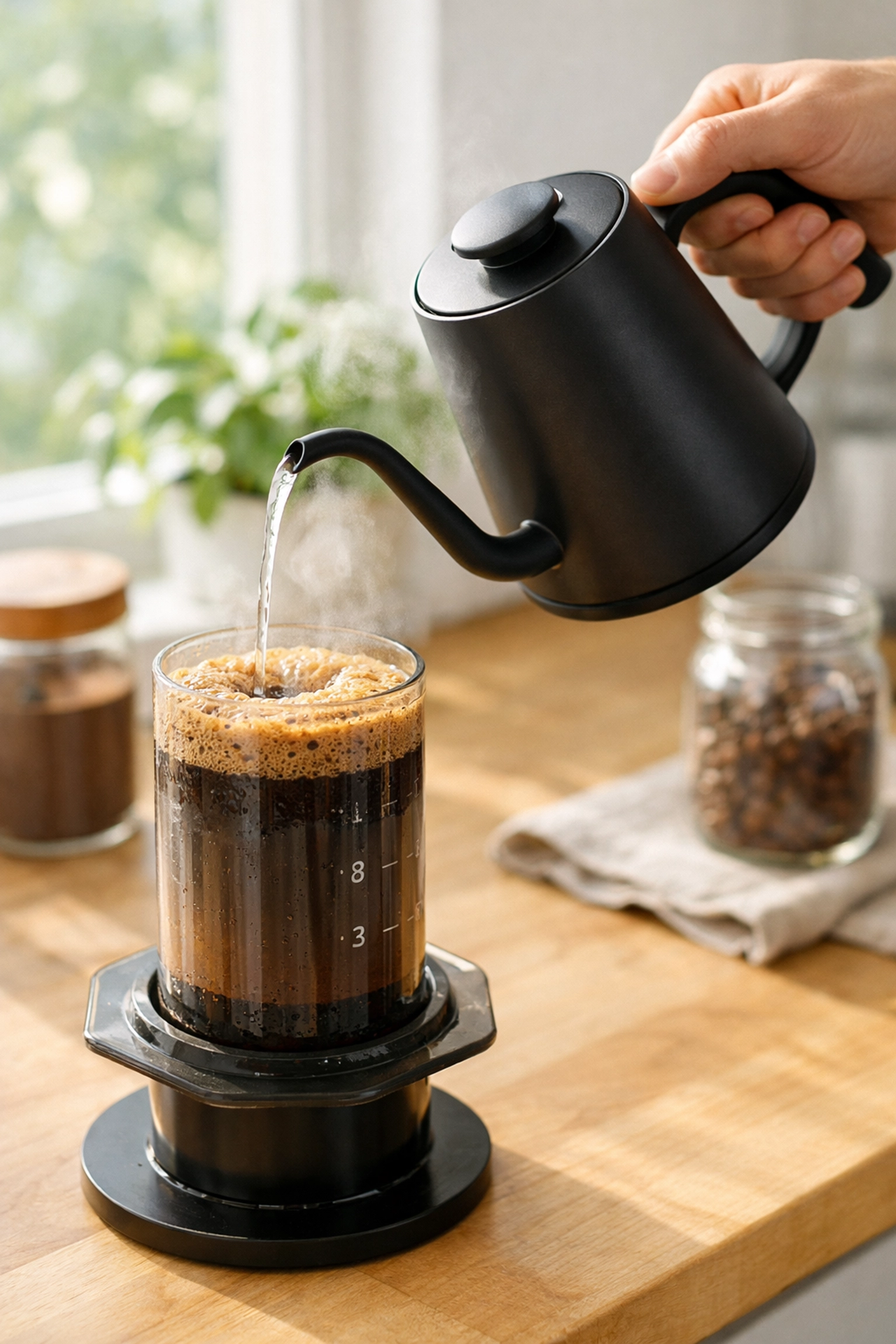
Place your filter in the brewer and give it a quick rinse with hot water (this removes any papery taste). Add your coffee grounds, then pour your hot water. Give it a gentle stir to ensure all the grounds are saturated: we call this "the bloom." Let it sit. For an AeroPress, a total brew time of about 2 minutes is perfect.
Minute 4-5: The Finish and Clean
Plunge (if using an AeroPress) or drain into your mug. The beauty of these methods is that the "puck" of coffee pops right out into the bin, and a quick rinse is all the cleaning you need.
Understanding the Science (The Simple Version)
Why does this method work? It comes down to extraction. When water hits coffee, it dissolves the flavours. First come the acids (sour), then the sugars (sweet), and finally the plant fibres and tannins (bitter).
The goal of a barista is to stop the brew right in the "sweet" spot. This is why grind size and water temperature are so vital.
- Too coarse or too cold: The water can't get the flavour out fast enough (Under-extracted/Sour).
- Too fine or too hot: The water takes out too much, including the nasty bitter stuff (Over-extracted/Bitter).
Basically, coffee brewing is just a balancing act between these elements. If you find your coffee is a bit too sharp, try a slightly finer grind next time. If it's too heavy and bitter, go coarser. For a deeper dive into the numbers, our coffee brewing calculator is a lifesaver.
What About the Milk?
If you're an espresso lover, you probably want that silky, micro-foam texture. Achieving this at home without a high-end steam wand can be tricky, but not impossible.
The secret to great milk is protein and fat management. You want to "stretch" the milk by introducing a tiny bit of air early on, then "roll" it to break those big bubbles into tiny ones. This creates that glossy, wet-paint look we all love.
For the full breakdown on how milk behaves under heat, you really should read our article on understanding milk. It covers everything from fat content to the chemistry of the "stretch." And if you're confused between a latte, a cappuccino, and a flat white, we’ve cleared that up right here.
Common Mistakes to Avoid
Even with the best beans from Limini Coffee, things can go wrong. Here are a few "gotchas" we see often:
- Using tap water: If your water tastes like chlorine, your coffee will too. Coffee is 98% water. Use a simple charcoal filter jug to give your beans a fighting chance.
- Eyeballing the measurements: "Two scoops" is not a measurement. Every coffee bean has a different density. Spend £10 on a digital kitchen scale; it’s the best investment you’ll make.
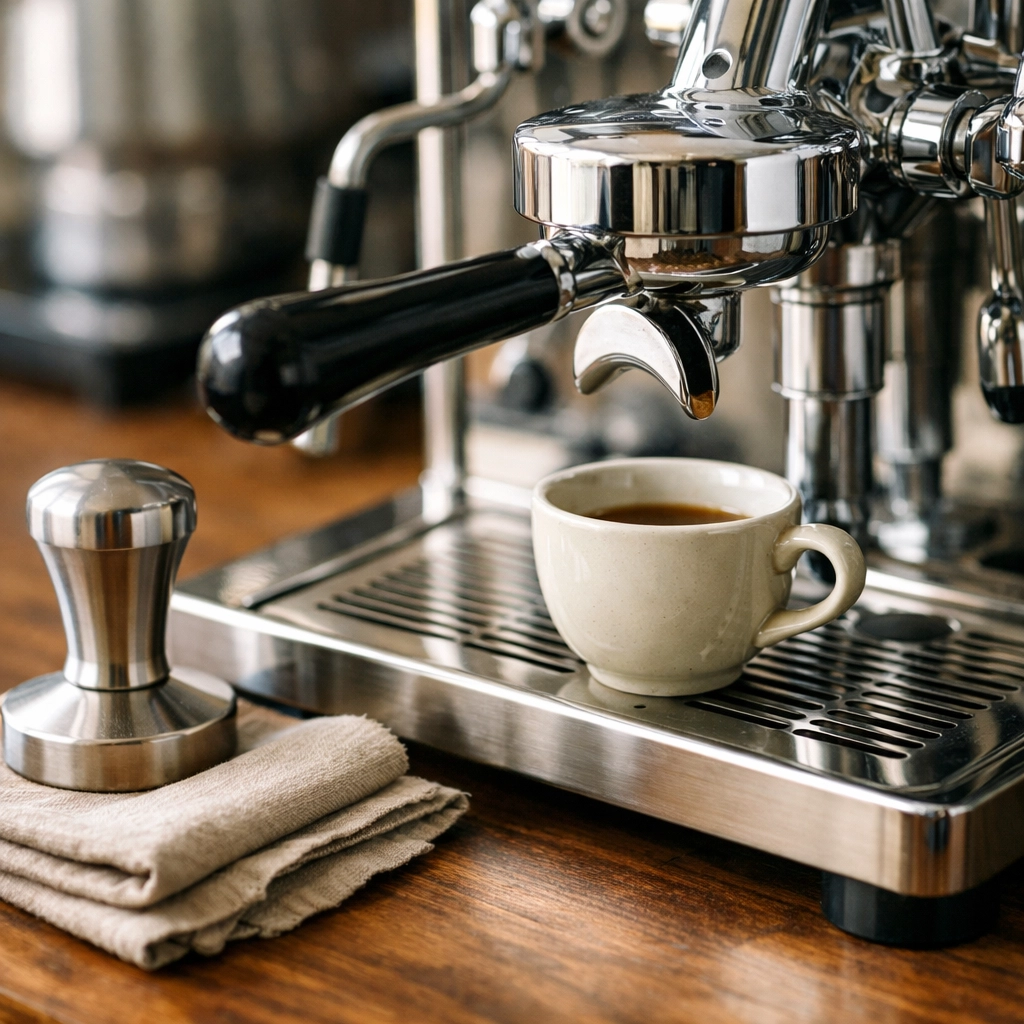
- Dirty equipment: Old coffee oils turn rancid and will ruin your fresh brew. Always give your gear a proper rinse. If you do have a home espresso machine, looking after it is the only way to ensure it keeps producing that beautiful crema.

Taking the Next Step
If you've mastered the 5-minute brew and you're starting to get the itch for something more professional, we'd love to help. Maybe you're dreaming of opening your own café, or you just want to pull the perfect shot of espresso every single time.
We offer comprehensive barista training at our roastery, where we go deep into the mechanics of espresso, milk texturing, and latte art. It's a fantastic way to spend a day and will change the way you think about coffee forever. Check out our training overview to see which course fits you best.
And for those who are truly serious, we even supply wholesale coffee and high-end machinery like the La Spaziale range. We’ve helped dozens of people with shop fitting and building coffee shops from the ground up.
Final Thoughts
Making barista-quality coffee at home isn't about having a complicated setup; it's about respecting the process and using the best possible ingredients. Start with freshly roasted beans, use a decent grinder, and pay attention to your brew time.
It might take a few tries to dial in your perfect cup, but that’s the beauty of coffee :). Once you hit that perfect extraction, you'll never want to go back to the "quick and easy" options again.
If you have any questions about which beans to choose or which brewer might be right for you, feel free to reach out to us. We’re always happy to chat about anything and everything coffee-related. Happy brewing!