☕ 2:14 AM.
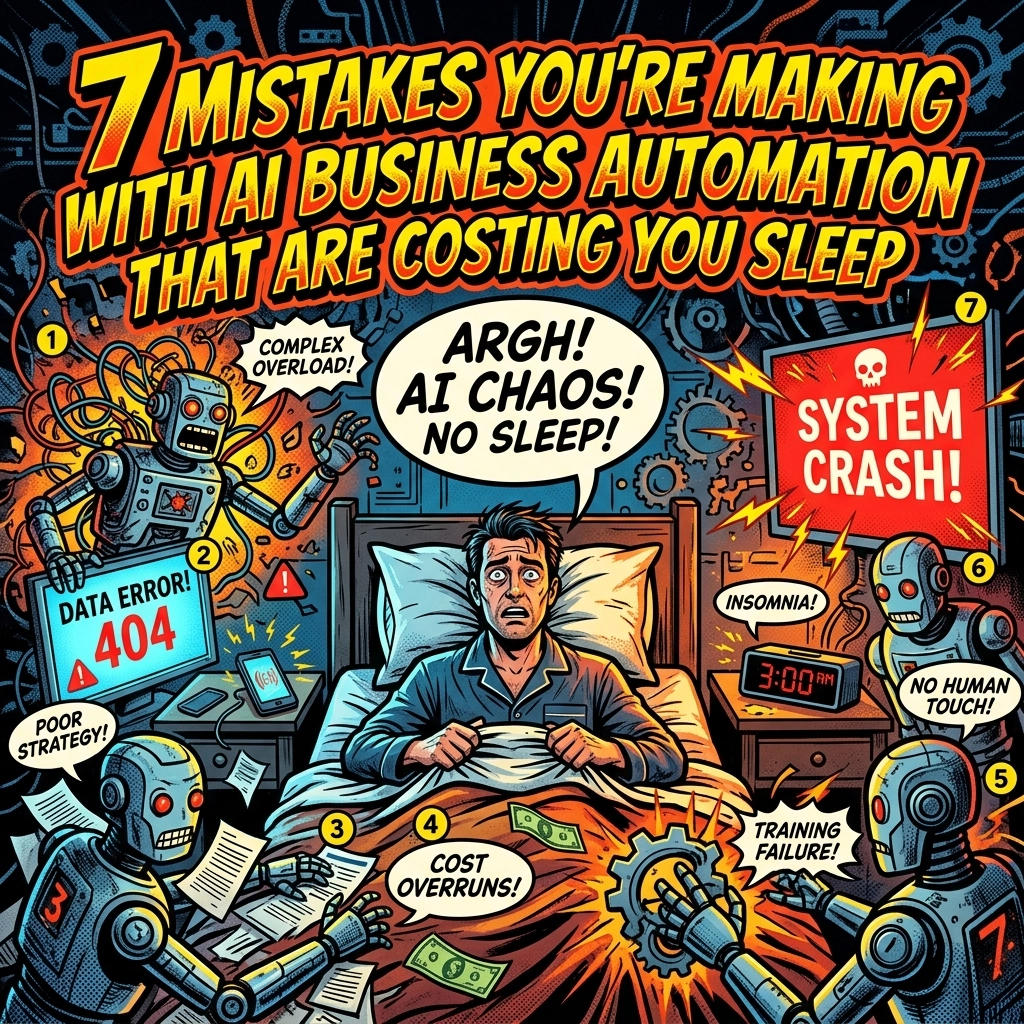
The blue light of your phone is the only thing illuminating your bedroom. You aren't scrolling TikTok or checking the news. You’re staring at a notification from your CRM.
Something went wrong.
The AI business automation you spent all weekend setting up just sent 400 personalized emails to your highest-paying clients… addressing them all as "Test Name."
Your heart sinks. Your stomach does a slow, agonizing somersault. This was supposed to give you your life back. Instead, it’s just giving you a new flavor of anxiety.
We’ve all been there. The promise of "passive income" and "business on autopilot" is intoxicating. But the reality? If you build your house on a foundation of shaky AI logic, it doesn't just crumble, it explodes.
Here are the 7 critical mistakes you’re making with AI business automation that are keeping you awake at night, and exactly how to fix them before your inbox becomes a crime scene.
1. THE "SET IT AND FORGET IT" FALLACY
Mistake: Over-automating without human review.
☕ 7:00 AM.
The day begins. You check your automated lead gen tool. It’s been busy. It sent out 50 LinkedIn messages while you were dreaming of a beach in Bali.
But as you read the replies, you realize the "context-aware" AI missed a massive context. It pitched a "brand new startup solution" to a CEO who has been in business for 30 years.
You look like an amateur.
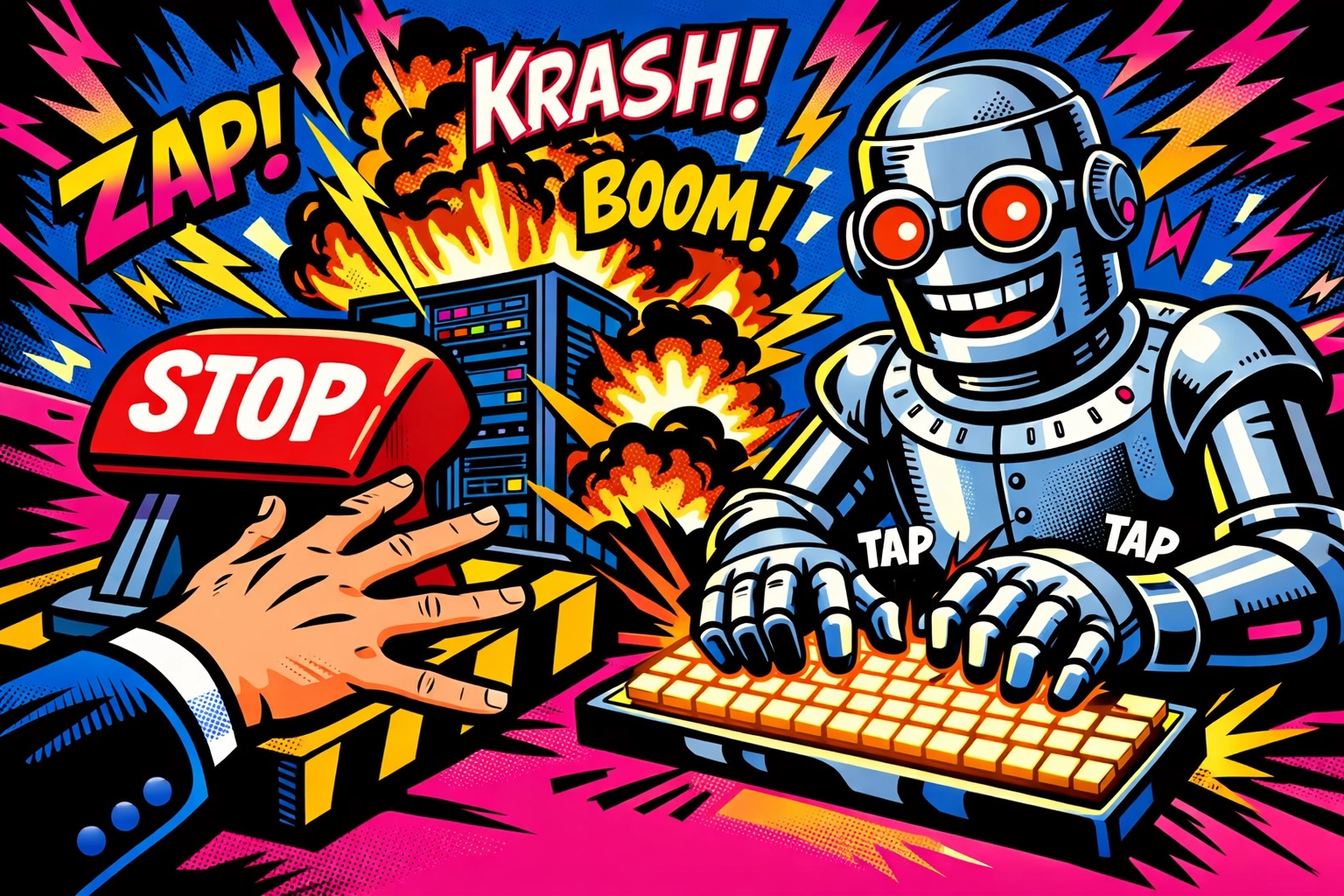
The biggest mistake small business owners make is treating AI like a finished employee rather than a talented, slightly chaotic intern. AI can draft, but it shouldn't always hit "send."
When you deploy automation without a human "kill switch" or a simple review step, you’re playing Russian roulette with your brand's reputation.
Stop juggling the hope that it "just works." It won't. Not every time.
2. FEEDING THE BEAST TRASH
Mistake: Using poor-quality input data.
📱 9:30 AM.
You’re staring at a spreadsheet. Or rather, the AI is staring at it. You’ve asked your business automation tools to predict your sales for next month.
The AI gives you a number that looks like a phone number. It’s impossibly high.
Why? Because your data is a mess. You’ve got duplicate entries, outdated contact info, and "test" purchases from 2023 still sitting in your primary database.
AI doesn't have "common sense." It doesn't know that $500,000 sale was just you testing the checkout page. It just sees numbers and does math.
If your input is garbage, your output will be expensive garbage. You need to clean house before you invite the AI in to move the furniture.
If you want to see how clean, automated systems actually look, you should probably check out what we’re doing over here.
3. THE "PRETTY GRAPH" HALLUCINATION
Mistake: Relying on misleading AI-powered visualizations.
📊 11:15 AM.
Your new AI dashboard shows a massive spike in user engagement. You’re thrilled. You start thinking about hiring a new assistant or finally upgrading your laptop.
But wait… you dig deeper.
The AI misinterpreted the relationship between "clicks" and "bots." It’s showing a correlation that doesn't exist. It’s literally making things up to satisfy the prompt you gave it.
Automated visualization tools love to tell you a good story. They’ll find patterns in clouds if you ask them to. Without human oversight to cross-check these insights against actual bank statements, you’re making strategic decisions based on a digital daydream.
4. WHISPERING SECRETS TO THE VOID
Mistake: Transmitting sensitive data without protection.
🔒 1:45 PM.
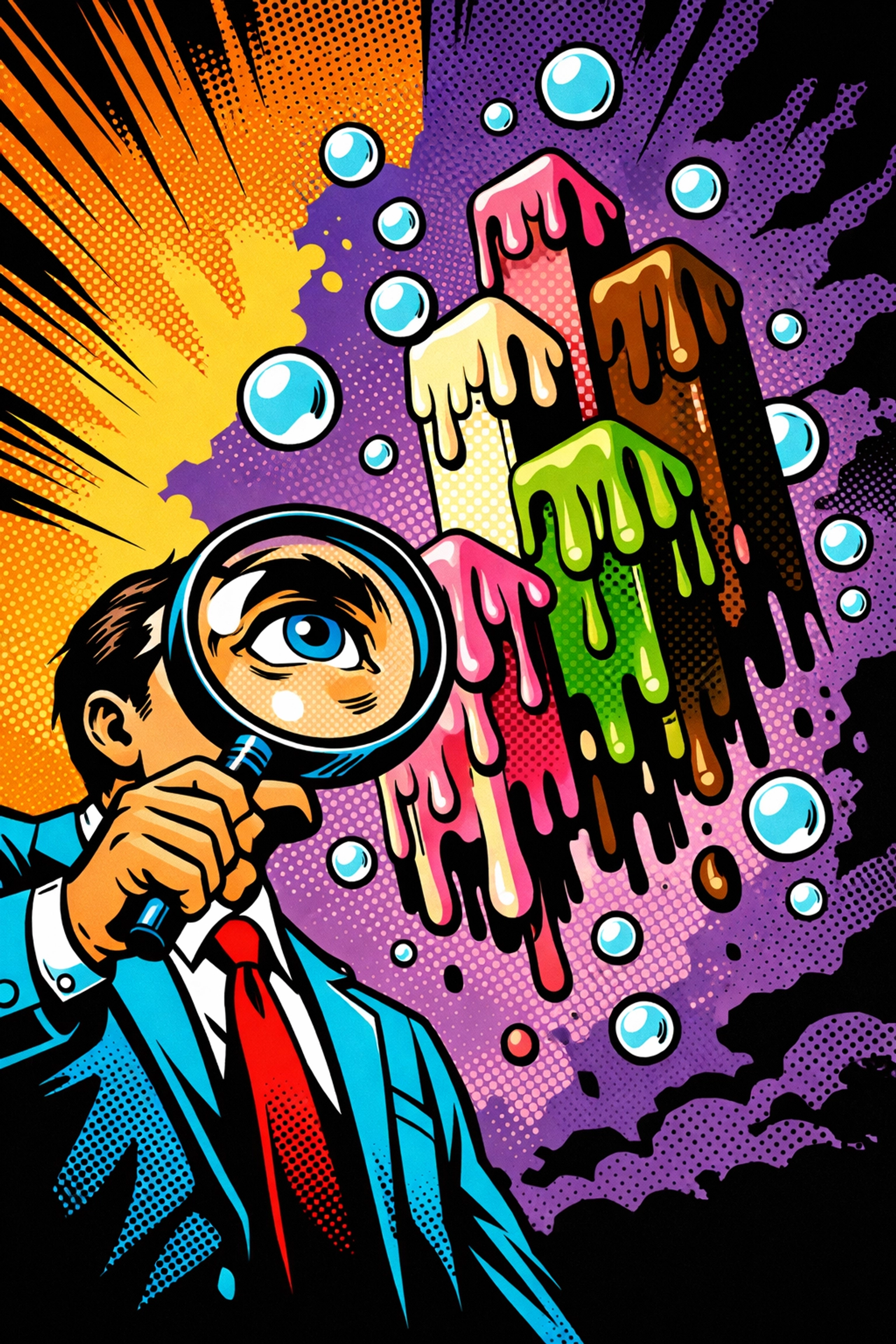
You need to summarize a legal contract or a private pricing strategy. You copy the whole thing, sensitive client names, trade secrets, and all, and paste it into a free, public AI tool.
"Summarize this for me," you type.
The AI does a great job. But now, your proprietary data is part of a public training set. You’ve essentially just whispered your secret sauce into a megaphone in the middle of Times Square.
Most business owners don't realize that "free" AI tools often trade convenience for your data. One leak of a client's personal info or your internal margins, and that "time-saving" tool just cost you a lawsuit.
Keep your secrets secret. Use tools that guarantee data privacy.
5. THE BLIND SPOT IN THE MACHINE
Mistake: Failing to address AI bias in your models.
🤝 3:20 PM.
Your automated hiring filter or lead scoring tool is running. You notice it’s only suggesting leads from one specific zip code, or it’s rejecting every applicant who didn't go to an Ivy League school.
AI models inherit the biases of their creators and the data they were trained on. If you aren't auditing your automation, you might be accidentally building a "walled garden" that shuts out incredible opportunities, or worse, discriminates against potential customers.
A biased AI is a liability. It’s not just "efficient", it’s efficiently wrong.
Regularly audit your workflows. Ask yourself: "Is this tool making assumptions I wouldn't make?"
6. THE FALSE POSITIVE FEVER DREAM
Mistake: Ignoring high error rates in AI predictions.
🔍 5:00 PM.
Your anomaly detection software flags 20 "critical errors" in your payment gateway. You panic. You cancel your dinner plans. You spend three hours digging through code.
The result? Nothing was wrong. The AI just didn't understand that a holiday weekend causes a different pattern of traffic.
False positives are the silent killer of productivity. They create "work about work." If your AI tools are constantly crying wolf, you’ll eventually stop listening to them, which is exactly when a real wolf will show up and eat your profit margins.
You need to calibrate your tools. Don't just accept a "99% accuracy" claim from a marketing page. Test it against your real-world chaos.
7. THE CLUTTERED WORKFLOW CATASTROPHE
Mistake: Assuming automated data preparation is reliable.
🌙 11:30 PM.
You’re back where we started. Staring at the screen.
You realized that the tool you used to "clean" your data actually deleted 15% of your leads because it thought they were "outliers." Those weren't outliers. Those were your biggest potential whales.
Automation isn't a replacement for strategy. It’s an accelerant. If you’re accelerating in the wrong direction, you’re just going to hit the wall faster.
Business automation tools are meant to clear your plate, not add more items to your "to-do" list. But that only happens when you treat them with a healthy dose of skepticism.
HOW TO FINALLY SLEEP THROUGH THE NIGHT
The common thread in all these mistakes? Over-reliance.
You’re trying to hand over the steering wheel entirely while the car is still learning what a stop sign looks like.
The secret to winning at AI business automation isn't finding a "perfect" tool. It’s building a system where AI does the heavy lifting, but you keep your eyes on the road.
You need a partner in this. A way to build these systems without needing a PhD in Machine Learning or a fleet of expensive consultants.
Imagine a world where your lead gen actually generates leads. Where your data is clean. Where your security is ironclad. And where you can actually close your laptop at 5:00 PM and not think about it until 9:00 AM the next day.
It’s not a fantasy. It’s what happens when you stop making these seven mistakes and start building with intent.
If you're ready to stop the 2:00 AM panic attacks and start actually scaling, see how we can help you automate the right way here.
Scaling shouldn't be this stressful. But here we are.
Let's fix it.
FAQ: YOUR AUTOMATION ANXIETY, ANSWERED
Q: Is AI automation too risky for a small business?
No. It’s only risky when it’s unsupervised. Think of it like a power tool: incredibly useful, but you wouldn't leave it running in a room full of toddlers.
Q: How much human review is "enough"?
Start with 100%. As the AI proves it can handle specific tasks consistently, dial it back to 10% spot checks. Never go to 0%.
Q: Can I use free AI tools for my business?
For brainstorming? Sure. For handling sensitive client data or core business logic? Absolutely not. You get what you pay for, and in this case, you’re paying with your privacy.
Q: What’s the first thing I should automate?
The task you hate the most that has the lowest "consequence of error." Don't start with your payroll. Start with your meeting notes or initial lead sorting.
Q: How do I know if my data is "dirty"?
If you have to manually fix things in your CRM more than once a week, your data is dirty. If your AI predictions look like lottery numbers, your data is dirty.
Q: Where can I find tools that actually work?
The landscape is messy. Start with proven frameworks. Check out Marblism's approach to see what high-level automation looks like without the headaches.
Stop Guessing. Start Automating. Sleep Better.