
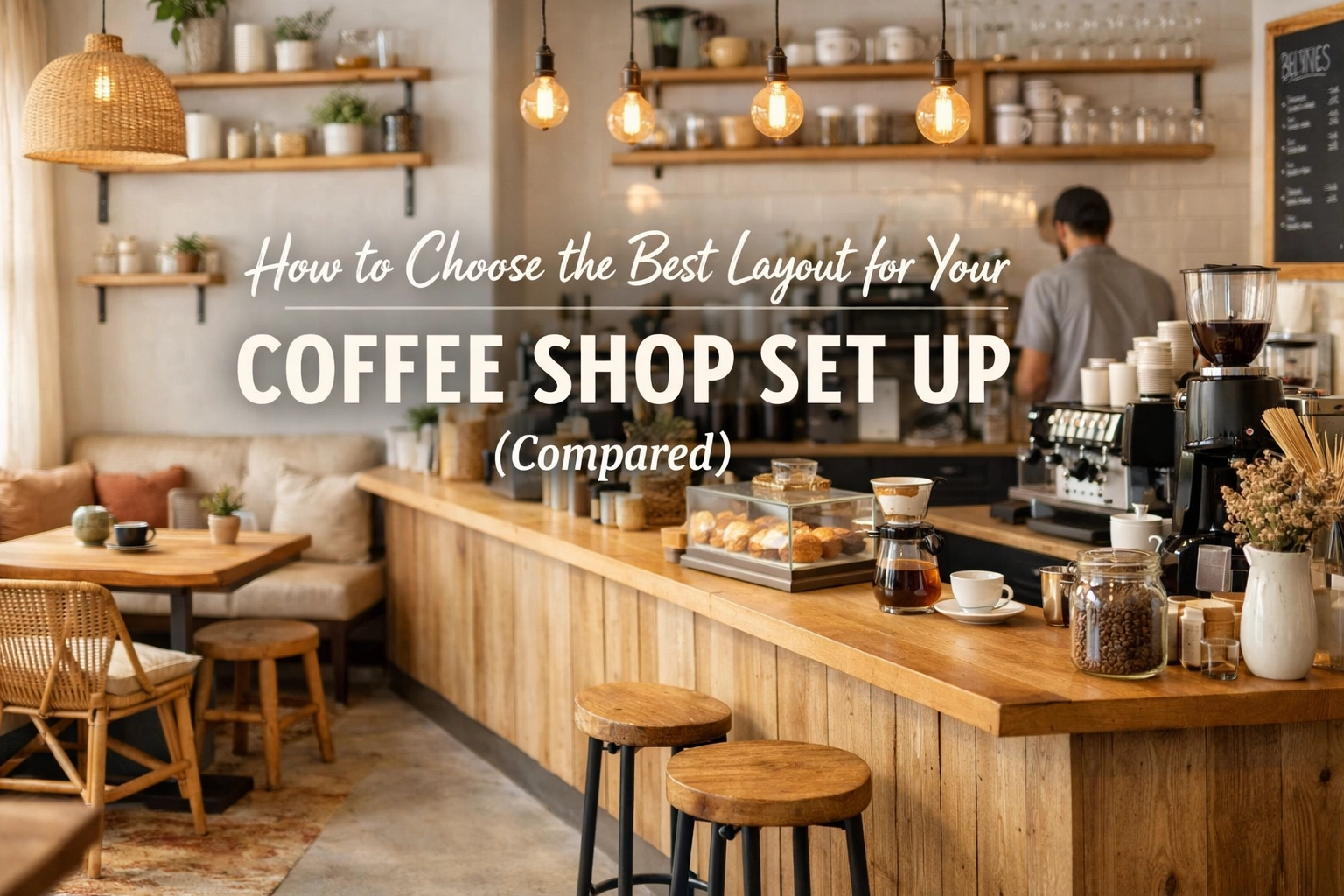
So, you’ve found the perfect location, the lease is signed, and you’ve probably spent late nights scrolling through Pinterest looking at reclaimed wood and industrial lighting. But before you start hammering nails into the wall, we need to talk about the one thing that will actually make or break your business: the layout.
Choosing the right coffee shop set up isn’t just about where the sofa goes. It’s a delicate dance between operational efficiency (how fast your baristas can work) and customer experience (how comfortable your guests feel). If you get it wrong, you end up with "the bottleneck": that awkward huddle of people near the door that makes new customers turn around and walk right back out.
At Limini Coffee, we’ve seen hundreds of shop fits. We’ve seen layouts that purr like a well-oiled La Spaziale and others that feel like a game of Tetris played in the dark.
The Barista Workflow: The Golden Triangle
Why is the behind-the-bar layout so important? Because every extra step your barista takes is time added to the ticket. If your team has to walk three steps to the fridge for every latte, and you serve 200 lattes a day, that’s 600 unnecessary steps. Over a year? That’s a marathon.
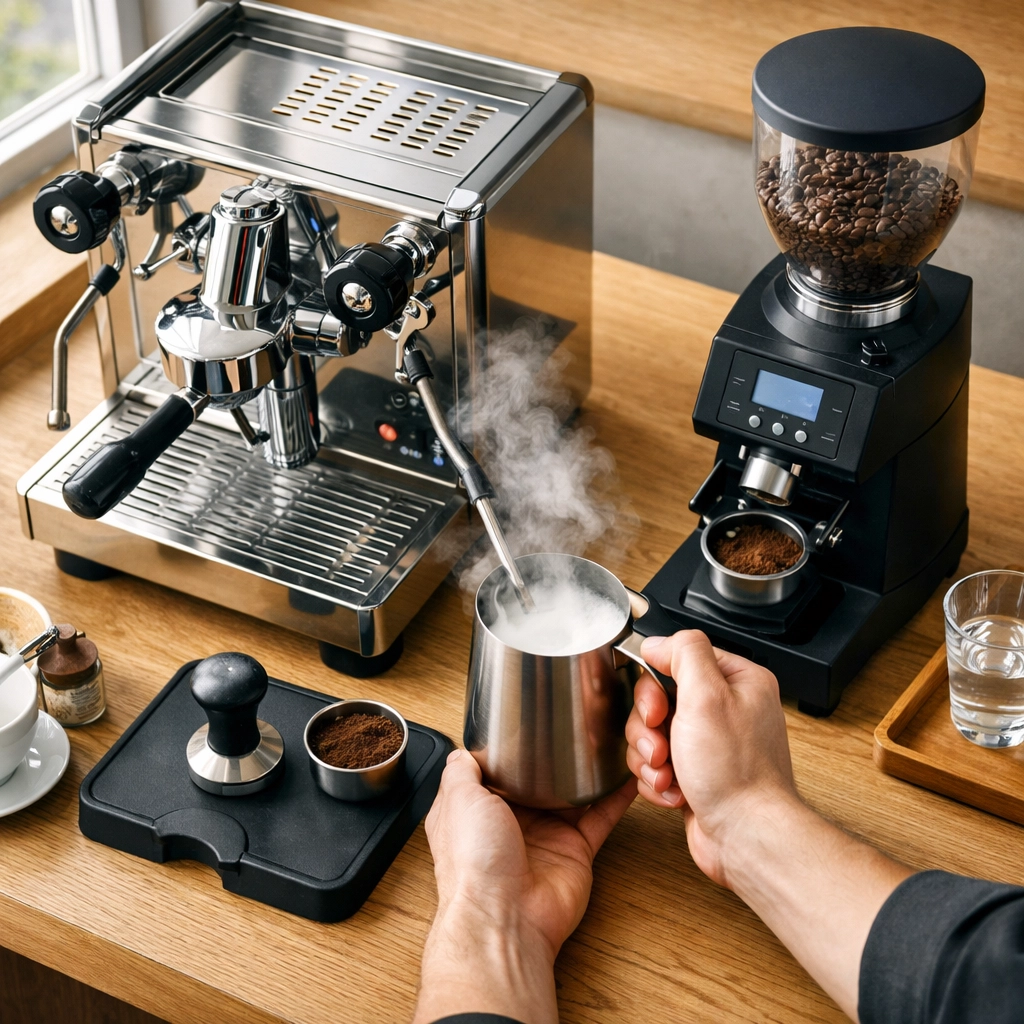
We like to think of the bar layout in terms of the "Work Triangle." This is the relationship between the espresso machine, the grinder, and the milk/sink station.
- The Espresso Machine: This is your anchor. It should be front and centre, often facing the customer so they can see the "theatre" of the pour. (We’re big fans of the theatre of coffee, as it builds value in the cup).
- The Grinder: This needs to be right next to the group head. If a barista has to turn their back or walk to dose the portafilter, the flow is broken.
- The Milk Station: A dedicated fridge under the counter and a rinser sink within arm's reach.
Imagine your barista is standing in one spot. Ideally, they should be able to reach the grinder, the machine, and the milk without moving their feet more than once. This level of efficiency is what keeps the queue moving during the 8:00 AM rush. If you’re just starting out and looking for the right gear to fit your space, our wholesale specialty coffee packages often include advice on how to spec your equipment to fit your counter.
Mapping the Customer Journey: The "Entry to Exit" Path
Have you ever walked into a shop and stood there for five seconds wondering where the queue starts? That’s a layout fail. Your customer should instinctively know where to go the moment they step inside.
Basically, you want a linear flow:
Entry -> Ordering -> Payment -> Waiting/Pickup -> Seating/Exit.
The most common mistake we see in a new coffee shop set up is placing the till too close to the door. This creates a "logjam." If three people are queuing, the fourth person can’t even get inside. We recommend pushing the ordering point further into the shop. This pulls people in, makes the shop look busy (but not blocked), and gives them time to look at your pastries: which, let's be honest, is where the profit is.
The Pickup Point Separation
This is extremely important. Your ordering point and your pickup point should be separate. Why? Because you don’t want people who are waiting for their flat whites to be standing in the way of people trying to pay. A simple 1-metre gap between the till and the pickup area can change the entire vibe of the shop from "stressful" to "slick."
Seating Strategies: Maximizing the "Sq Ft"
You want as many seats as possible, but you don't want your customers to feel like they’re sitting in someone else's lap. It's a tough balance.
We've found that a mix of seating is always the best approach. Not everyone wants a plush armchair.
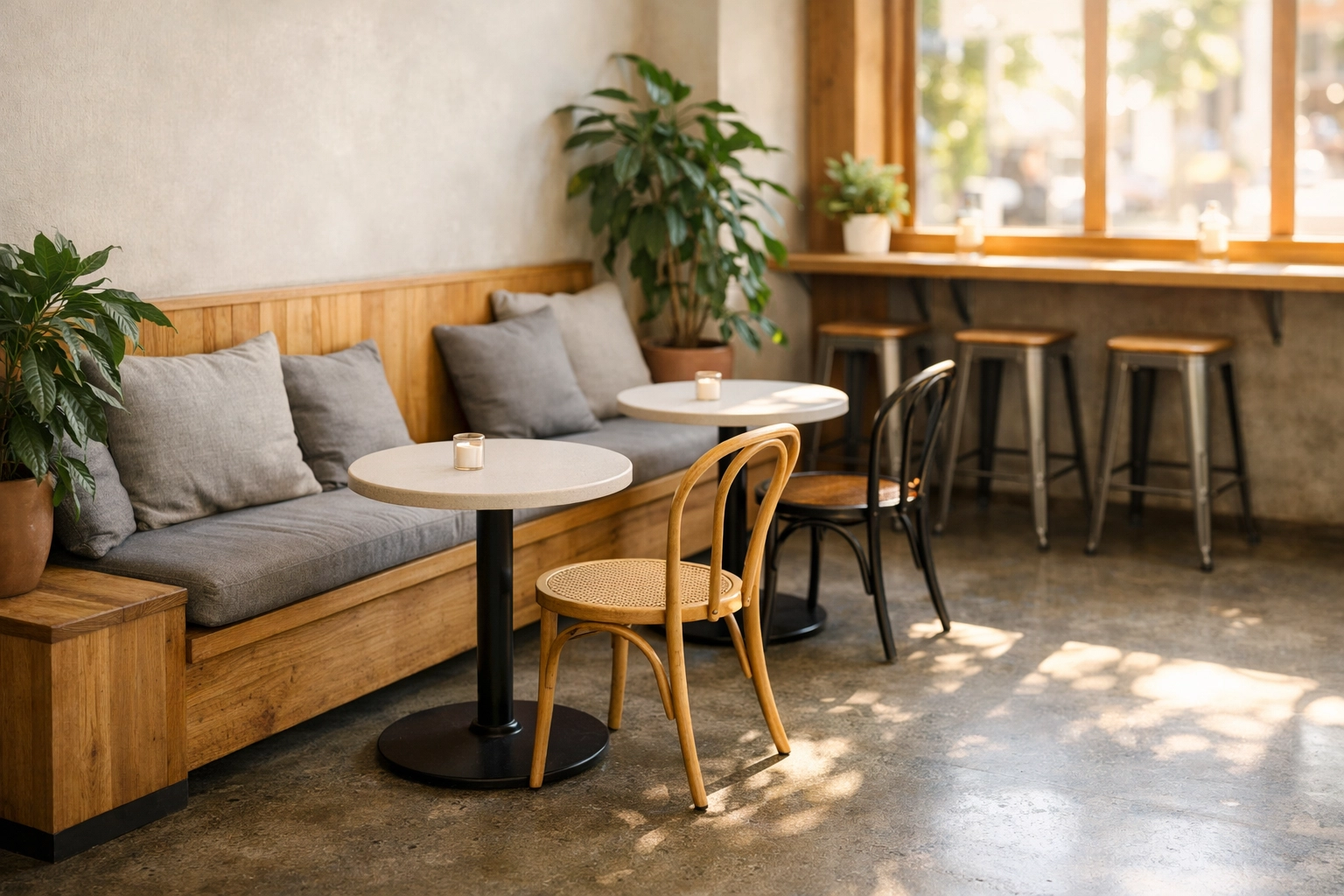
- The "Window Watcher": High bars along the window with stools. These are great for solo drinkers and use very little floor space.
- The "Worker Bee": Small two-top tables. These are the most flexible. If a group of four comes in, you just push two together.
- The "Community": One large table. Believe it or not, people are often happy to share a large table as long as it's big enough that they don't feel "together."
- Bench Seating: This is a secret weapon for small spaces. By using a built-in bench along a wall, you can place tables closer together than you could with individual chairs. Usually, you can save about 200mm (about 8 inches) of floor depth by using a bench instead of chairs.
Remember to keep your pathways clear. You need at least 900mm (36 inches) for a main walkway to ensure people (and staff with trays) can move comfortably.
Technical Details You Can't Ignore
It’s not the most glamorous part of a coffee shop set up, but the "invisible" stuff will haunt you if you get it wrong. We’re talking about plumbing, electrics, and counter heights.
Counter Height
Standard kitchen counters are usually 900mm high. For a coffee shop, we often prefer something slightly higher: around 950mm to 1000mm. This is more ergonomic for baristas who are tamping and steaming milk all day. It also keeps the "work" at eye level for the customer.
Power and Water
Your espresso machine is a beast. Most commercial machines, like the La Spaziale S5, require a dedicated 20-amp or 32-amp power supply and a direct water connection with a high-quality filter.
Wait, what about the milk?
If you're serious about your latte art and milk texture, your layout needs to account for temperature. Don't put your milk fridge right next to a heat source (like an oven or the back of the espresso machine). Keeping your milk at a consistent 4 ºC / 40 ºF is crucial for that glossy, silky microfoam.
The "Vibe" and Visual Sightlines
When a customer sits down, what do they see? If they are staring at a pile of dirty dishes or the back of a bin, they probably won't stay for a second cup.
Use visual tricks to make a small space feel bigger. Mirrors are a classic for a reason: they reflect light and add depth. But also consider sightlines. Can the barista see the door? It’s a small thing, but being greeted with a "Hello!" the moment you walk in makes a huge difference. If your back is turned because the machine is facing the wall, you lose that connection.
We always recommend putting your best foot forward. Show off your beans! Whether you’re sourcing specialty coffee or showing off your retail bags, make sure they are well-lit and at eye level near the queue.

Layout Comparison: Linear vs. Island
Which one is right for you?
| Feature | Linear (Wall-hugger) | Island (The Centrepiece) |
|---|---|---|
| Best For | Small, narrow units | Large, open-plan spaces |
| Workflow | Very efficient, easy to manage | Allows multiple baristas to work 360° |
| Customer Interaction | Traditional, clear queue | Very social, high "theatre" |
| Space Usage | Saves floor space for seating | Takes up a lot of room but acts as a focal point |
Most new owners start with a linear layout because it’s easier to plumb and cheaper to build. However, if you have the space, an island bar can turn your shop into a destination.
Summary: Test Drive Before You Build
Before you commit to your layout, we have one final tip: Tape it out.
Go into your empty unit with a roll of masking tape. Tape out where the counter goes, where the machine sits, and where the tables will be. Then, "walk" the shop. Pretend to be the customer. Pretend to be the barista. Is the bin too far away? Is the coffee cup storage awkward?
Getting the layout right is a process, but it’s the foundation of everything you do. If you're feeling overwhelmed, don't worry. We help our wholesale partners navigate these exact hurdles every day. From barista training to choosing the right equipment, we've got your back.
Opening a coffee shop is a wild ride. But with a solid layout, you’re at least starting the journey on the right foot. (And hopefully, that foot isn't tripping over a poorly placed milk crate!)
If you want to dive deeper into the world of coffee shop ownership, why not check out our guide on building a coffee shop for more technical tips?
Happy planning!