
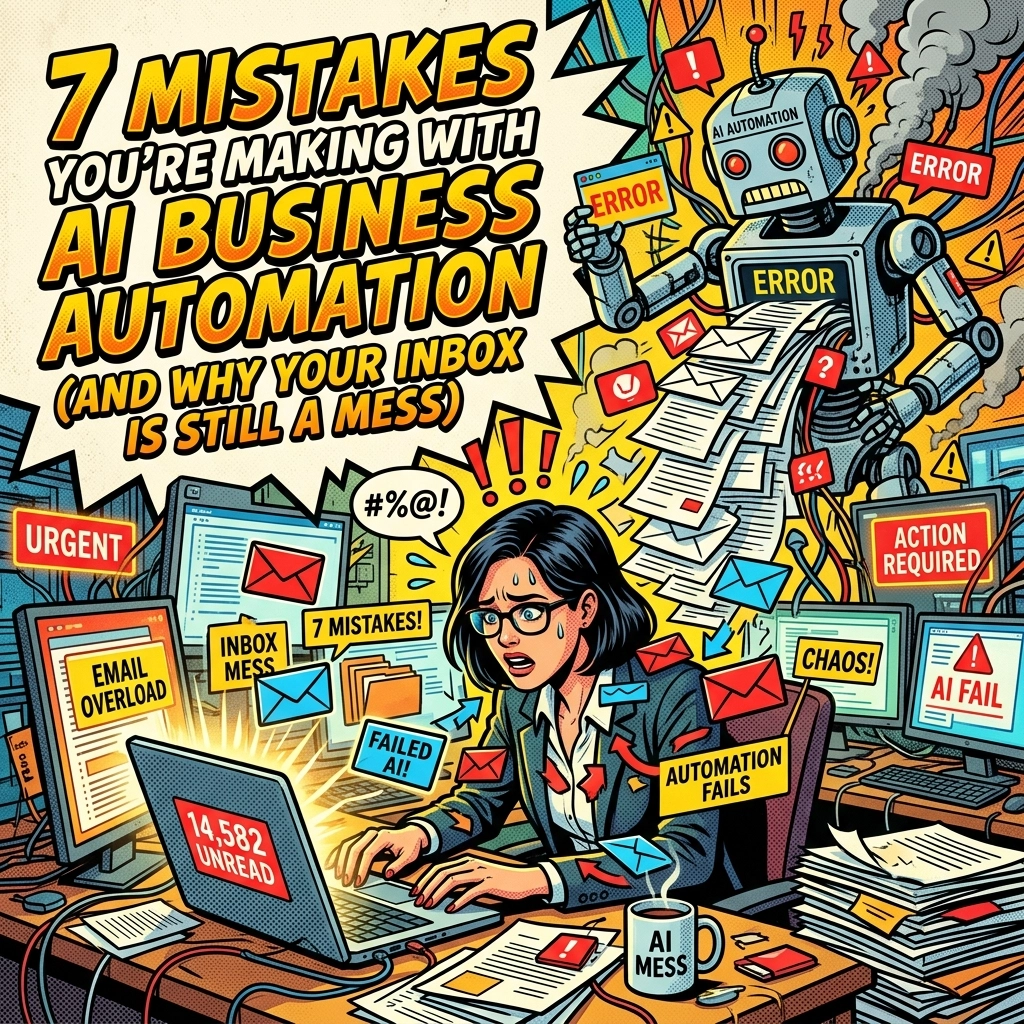
☕ 7:15 AM. You crack open your laptop.
The screen glows with the light of a thousand unread messages. You were promised that ai business automation would fix this. You bought the subscriptions. You watched the YouTube tutorials. You even told your spouse that by March, you’d be working four-hour weeks.
It’s April. You’re still here.
The notifications are mocking you. Your "automated" lead gen system just sent a pitch to your own mother. Your CRM is a graveyard of half-baked data. And your "time-saving" tools are currently taking up four hours of your day just to keep them running.
It’s not the AI’s fault. It’s how you’re using it.
If you want to stop the bleeding and actually start scaling, you need to stop making these seven cardinal sins of automation.
1. THE "SHINY OBJECT" TRAP: AUTOMATING WITHOUT A TARGET
📱 8:30 AM. You’re scrolling through Twitter (or X, whatever) and see a "must-have" AI tool. You buy it. You spend two hours setting it up.
By noon, you realize you don’t actually have a problem that tool solves.
The biggest mistake you can make is implementing AI for the sake of AI. It’s like buying a $5,000 espresso machine when you actually just need a glass of water. You’re chasing the tech, not the result.
Most small business owners try to automate their entire operation in one weekend. They want the "Iron Man" suit before they’ve even learned how to walk.
The fix: Pick one, just one, pain point. Maybe it’s following up with leads. Maybe it’s sorting your support tickets. Solve that first. If you can’t measure the time you saved, you didn’t automate anything. You just added another bill to your credit card statement.
2. FEEDING THE BEAST TRASH (GARBAGE IN, GARBAGE OUT)
🔍 10:15 AM. You check your automated newsletter.
It addressed your top client as "First_Name_Error."
AI is brilliant, but it’s also a mirror. If your data is messy, your automation will be a catastrophe. If your CRM has three different entries for the same person and half your email list is bounce-backs, no amount of business automation tools will save you.
You’re asking a high-performance engine to run on swamp water.
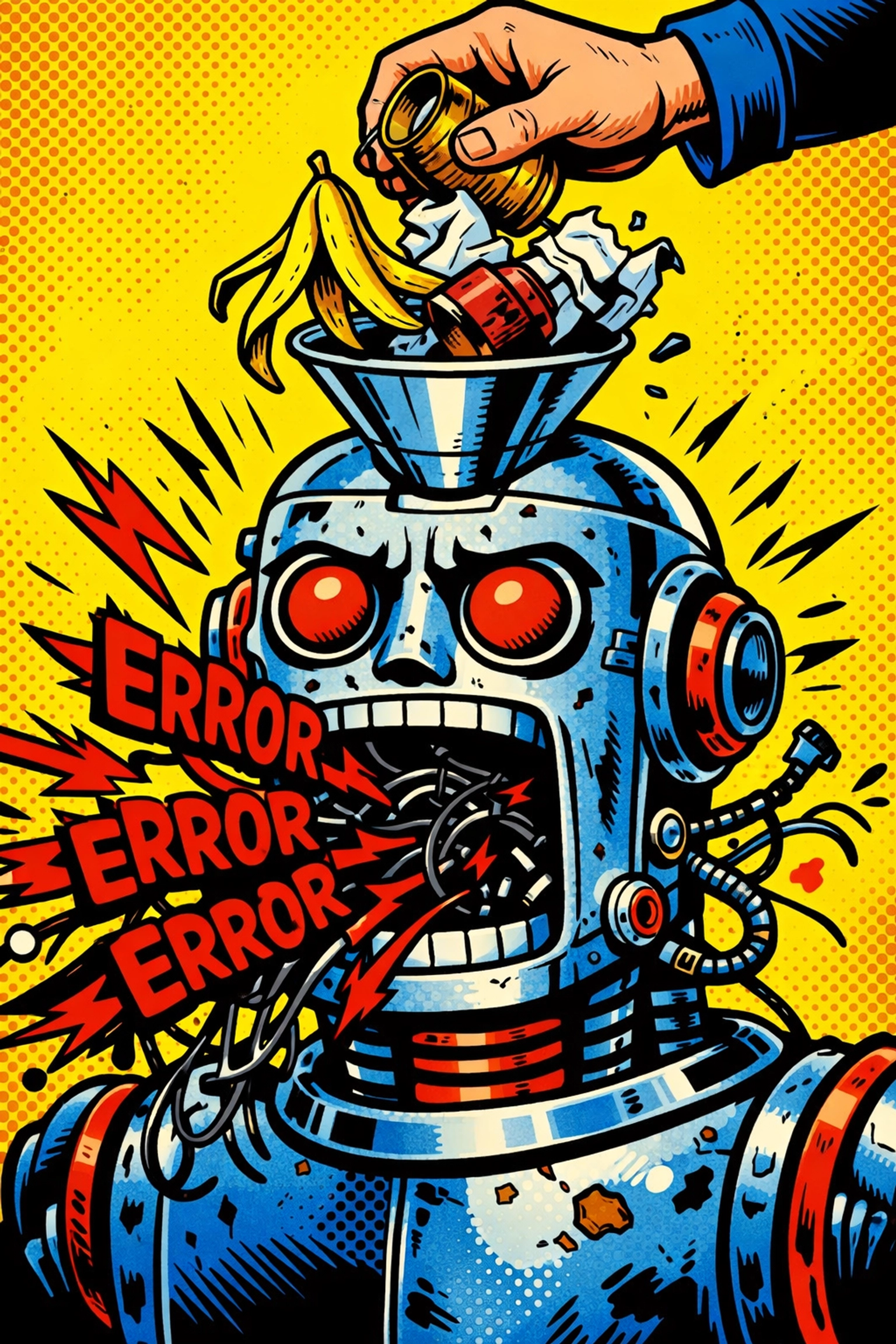
Before you flip the switch on any AI system, you have to audit your data. Clean the duplicates. Standardize the formatting. If you don't trust your data, you can't trust your automation.
3. THE DIY DELUSION: THINKING YOU’RE A DEVELOPER
🤝 11:45 AM. You’ve spent the last three hours trying to get a webhook to talk to a spreadsheet.
You’re a CEO. Why are you doing this?
There’s a weird myth that because AI is "easy," you should build everything yourself. But "easy" is relative. Most business owners end up with a "Frankenstein" system, a dozen different tools held together by digital duct tape and hope.
When it breaks (and it will), you have no idea how to fix it.
This is where most people get stuck. They refuse to get expert help because they think they can prompt their way out of a technical integration.
Stop playing developer. Focus on your zone of genius. If you want a system that actually works without you babysitting it, you need a partner who knows the landscape. That’s exactly why we do what we do at https://marblism.link/scott-bowen. We build the systems so you can actually run the business.
4. THE ISLAND PROBLEM: ISOLATED AUTOMATION
☎️ 1:30 PM. A lead books a call through your AI chatbot.
Great, right? Except the chatbot doesn't talk to your calendar. And the calendar doesn't talk to your CRM. And your CRM doesn't notify your sales team.
Now you’re manually copying and pasting info between three different tabs.
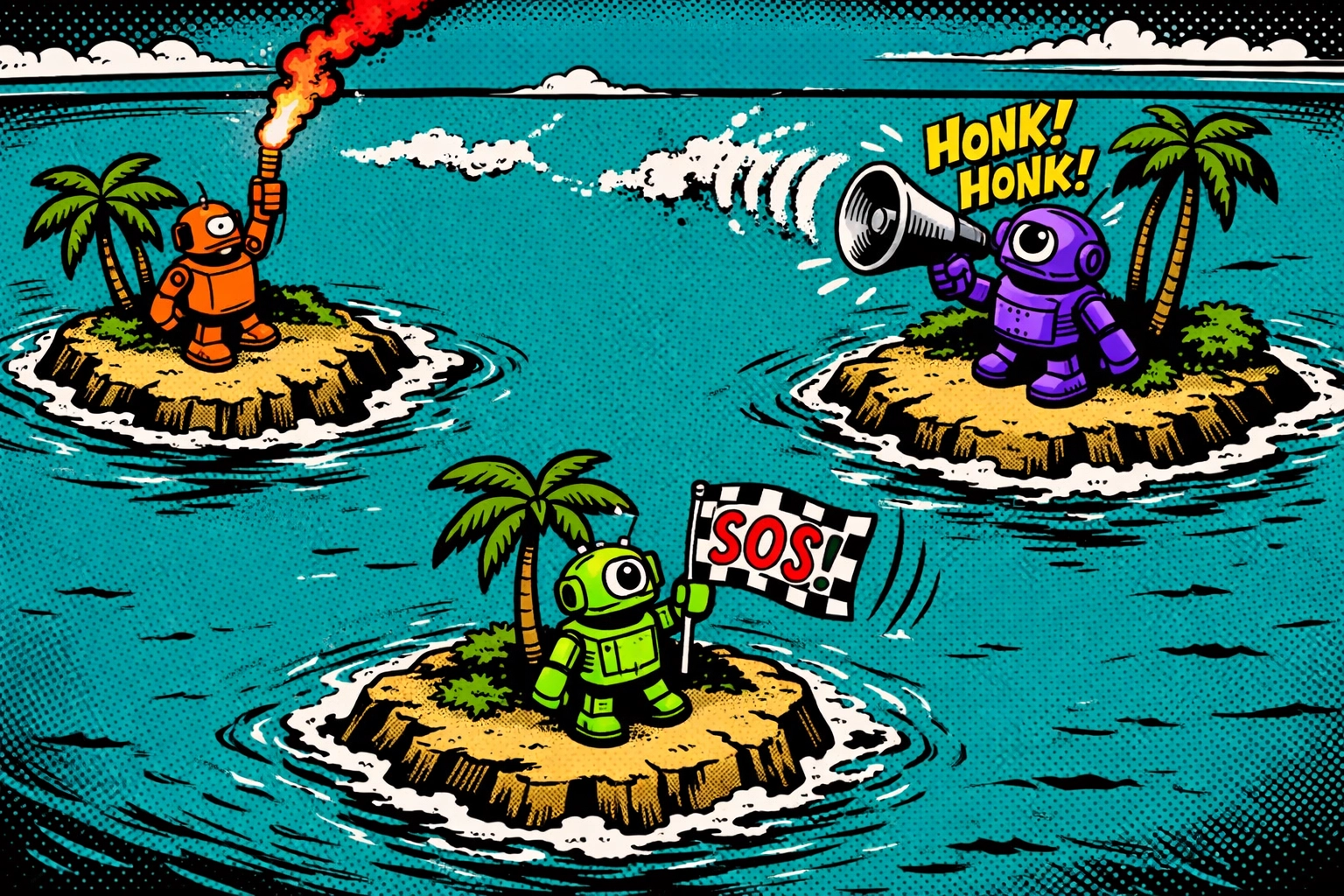
Automation that doesn't integrate with your existing workflow isn't automation, it's just a new chore. If your AI tools are "islands," they’re creating more work, not less.
The fix: Every new tool you bring in must play nice with the others. If it doesn't have an API or a native integration with your core stack, it’s probably not worth your time.
5. THE "ROBOT VOICE" SYNDROME: OVER-AUTOMATING THE HUMAN TOUCH
🌙 3:00 PM. You get a reply from a prospect.
"Is this a bot? This sounds like a bot. Please stop emailing me."
Ouch.
AI is fantastic at processing data, but it’s still learning how to be a human. If you automate your entire customer relationship, you lose the one thing your competitors can't copy: You.
The mistake isn't using AI; it's removing yourself entirely. You should use AI to enhance your judgment, not replace it. Let the AI do the heavy lifting, researching, drafting, sorting, but you stay the final gatekeeper.
If your emails sound like they were written by a toaster, your conversion rates will reflect that. Keep the "soul" in your business.
6. IGNORING THE "FRONT DOOR": SECURITY AND PRIVACY
🔒 4:20 PM. You realize you just pasted sensitive client data into a public AI model to "summarize" it.
Your stomach drops.
In the rush to be efficient, many business owners treat security as an afterthought. They use unverified "free" tools that store data in questionable places. They give AI systems full access to their sensitive accounts without checking the permissions.
Ai business automation requires trust. If you compromise your clients' privacy for the sake of saving five minutes, you’re risking your entire reputation.
Always check the privacy settings. Use enterprise-grade tools. And for heaven’s sake, stop putting your passwords into prompts.
7. THE "INSTANT WIN" FALLACY (NO MEASUREMENT)
📈 5:45 PM. You’re looking at your bank account.
You’ve been "automating" for a month, but your revenue hasn't moved. You feel like a failure.
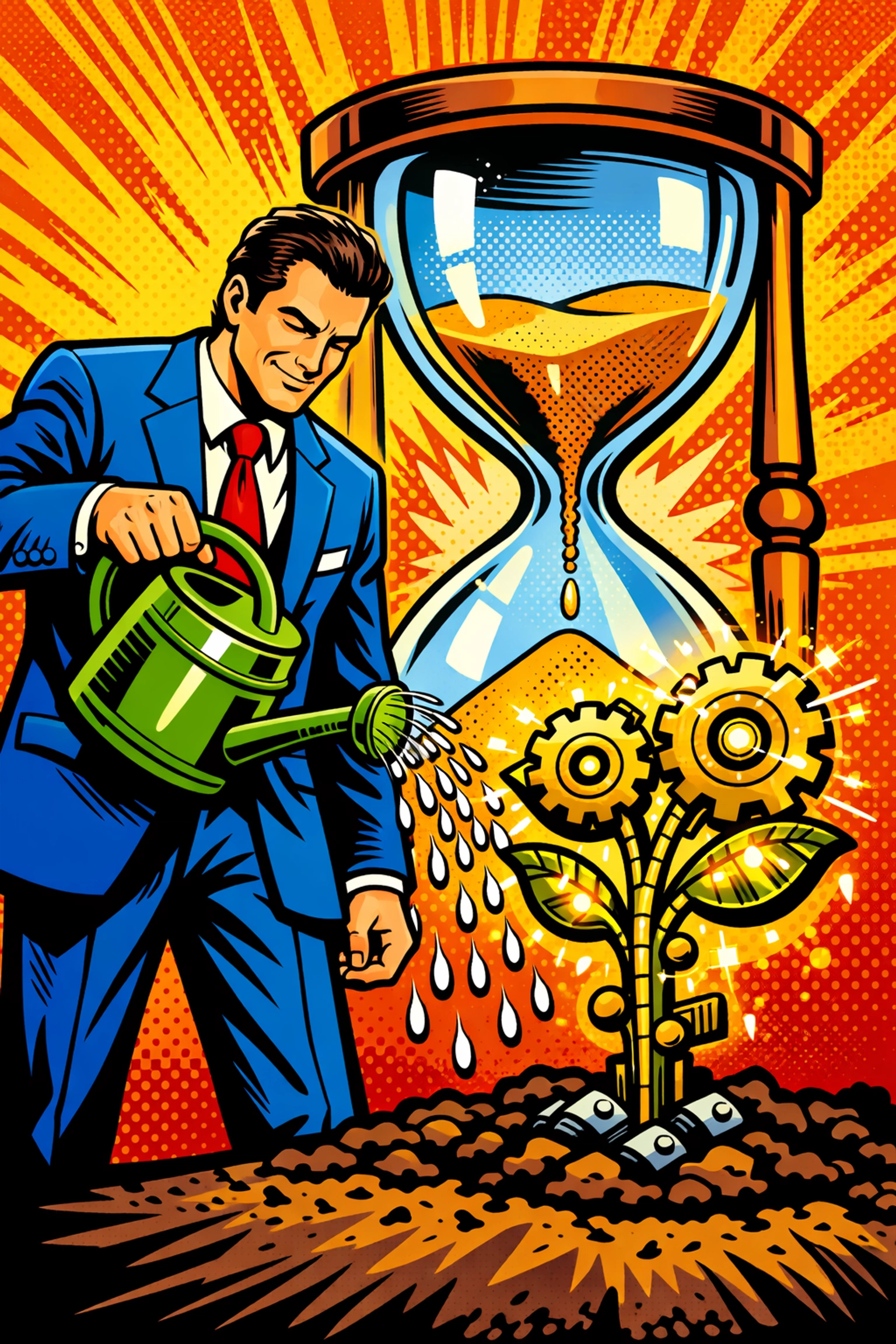
Here’s the truth: AI is a medium-to-long-term play. It takes time to calibrate, time to gather data, and time to see the ROI. Most people quit right before the breakthrough because they expected a "magic button" that prints money on Day 1.
You need to track specific metrics.
- How many hours did you save this week?
- Did your response time go down?
- Did your lead-to-meeting ratio go up?
Without metrics, you’re just guessing. And guessing is a terrible way to run a company.
STOP JUGGLING. START SCALING.
The chaos is optional.
You don't need more tools. You need a better strategy. The reason your inbox is still a mess isn't because the technology failed, it's because the system wasn't built for your specific reality.
You started your business to be free, not to be a slave to a bunch of half-functional software.
It’s time to stop the DIY madness. Imagine waking up at 7:15 AM, opening your laptop, and seeing that your AI has already sorted the junk, pre-drafted your replies, and booked three high-value meetings, all while you were sleeping.
No errors. No "robot voice." No stress.
That’s what happens when you do it right.
If you're ready to stop making these mistakes and actually put your business on autopilot, we should talk. Check out how we can streamline your entire operation at https://marblism.link/scott-bowen.
Scaling shouldn't be this hard.
But it’s quiet, organized, when you have the right team behind you.
FREQUENTLY ASKED QUESTIONS
Is AI business automation expensive for small businesses?
No. In fact, doing things manually is much more expensive when you factor in your hourly rate and the cost of missed opportunities. There are tools for every budget.
Can I automate my customer service without sounding like a robot?
Yes. By using custom-trained models that understand your brand voice and knowing when to hand the conversation off to a human.
Will AI replace my employees?
It won't replace your employees, but employees who use AI will replace those who don't. Think of it as giving your team superpowers.
How long does it take to see results?
You’ll see time savings almost immediately (within the first 2 weeks), but the real revenue impact usually scales over 30 to 90 days as the system gathers data.
Do I need to know how to code?
Not if you work with the right partners. Focus on your business; let the experts handle the technical heavy lifting.
The future of your business is waiting. Don't keep it on hold.