
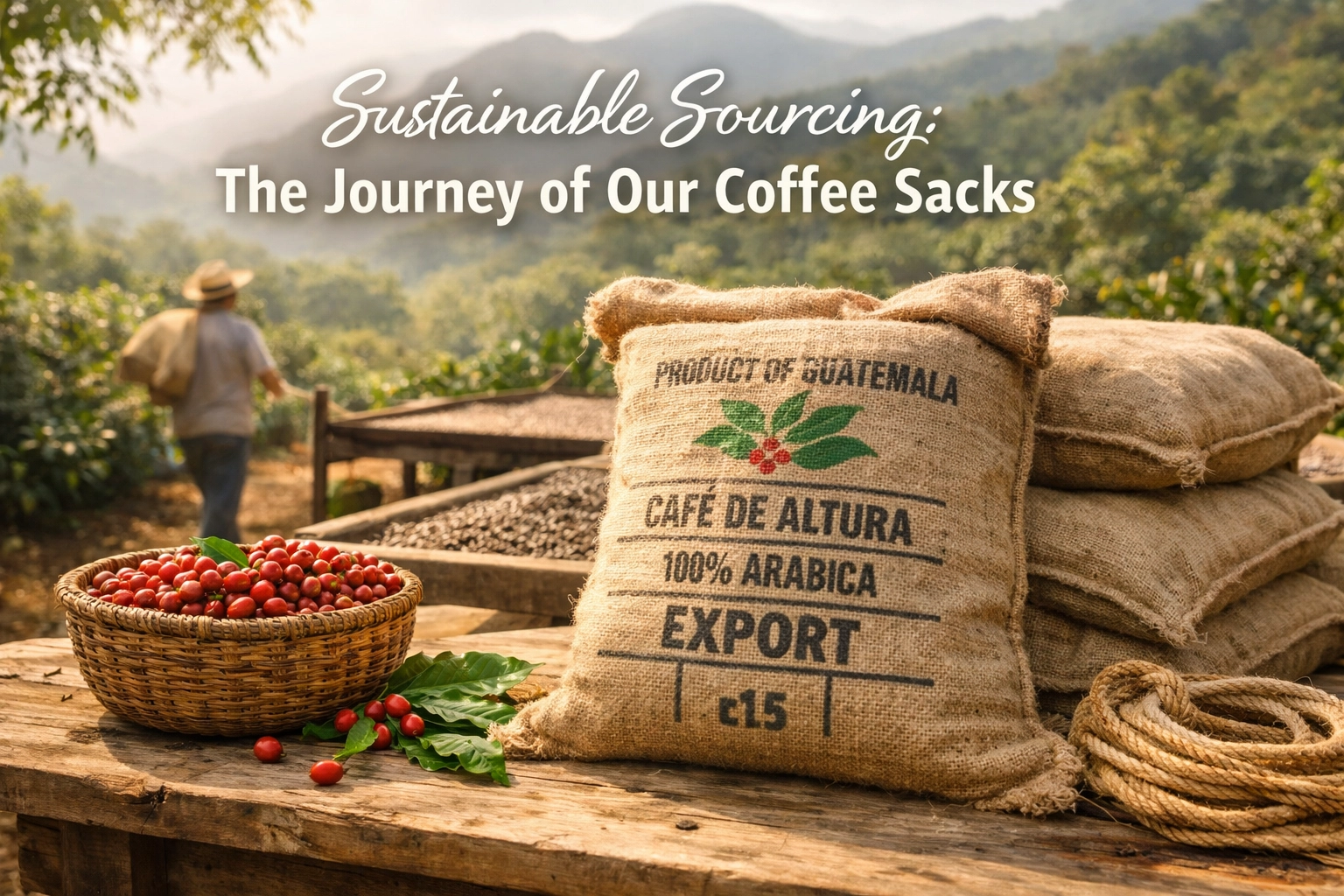
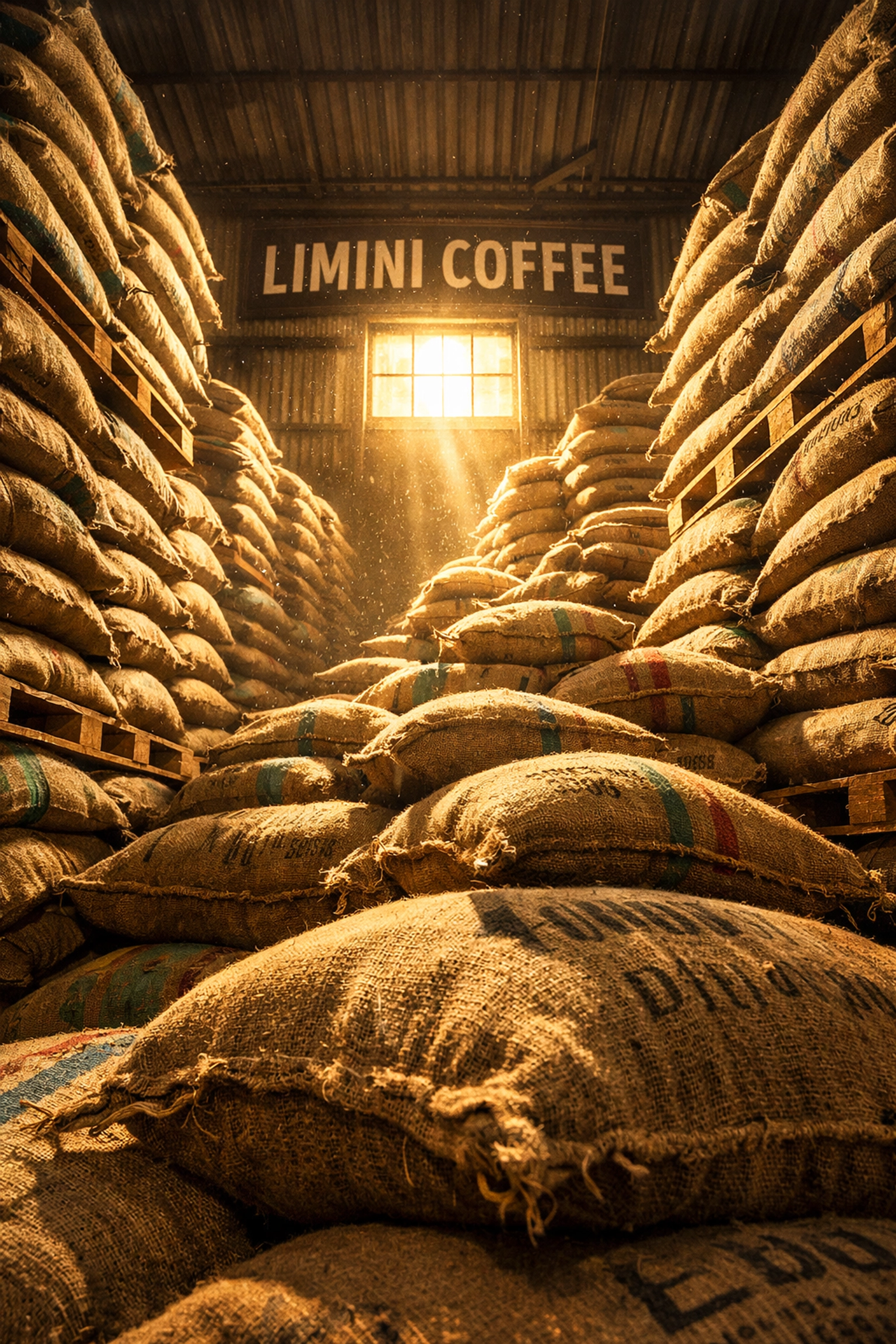
If you’ve ever stepped foot inside our roastery, or really any speciality roastery worth its salt, the first thing you probably noticed, after that heavenly scent of roasting beans, of course, is the towering stacks of rough, rustic, and very cool-looking coffee sacks.
They are the unsung heroes of the coffee world. While we spend a lot of time talking about brew ratios, water chemistry, and the nuances of a light roast versus a medium roast, we often overlook the very vessel that brought those beans across the world to us. These sacks aren’t just for aesthetics or for making the warehouse look "Instagrammable." They are a vital part of the supply chain, and more importantly, they are a massive part of our commitment to sustainable sourcing.
So, let’s take a deep dive into the journey of the humble coffee sack. From the fields where the fibers grow to their second (and third) lives in your garden or living room.
What Exactly Is a Coffee Sack Made Of?
Before we talk about the journey, we need to talk about the material. Most traditional coffee sacks are made from jute or sisal.
Jute is a long, soft, shiny vegetable fiber that can be spun into coarse, strong threads. It’s actually one of the most affordable natural fibers out there, and it’s second only to cotton in terms of the amount produced and the variety of uses.
The beauty of jute? It’s incredibly sustainable. It’s a rain-fed crop that requires little to no fertilizer or pesticides. It grows fast, usually ready for harvest in just four to six months, and it consumes carbon dioxide while releasing oxygen at a rate much higher than most trees.
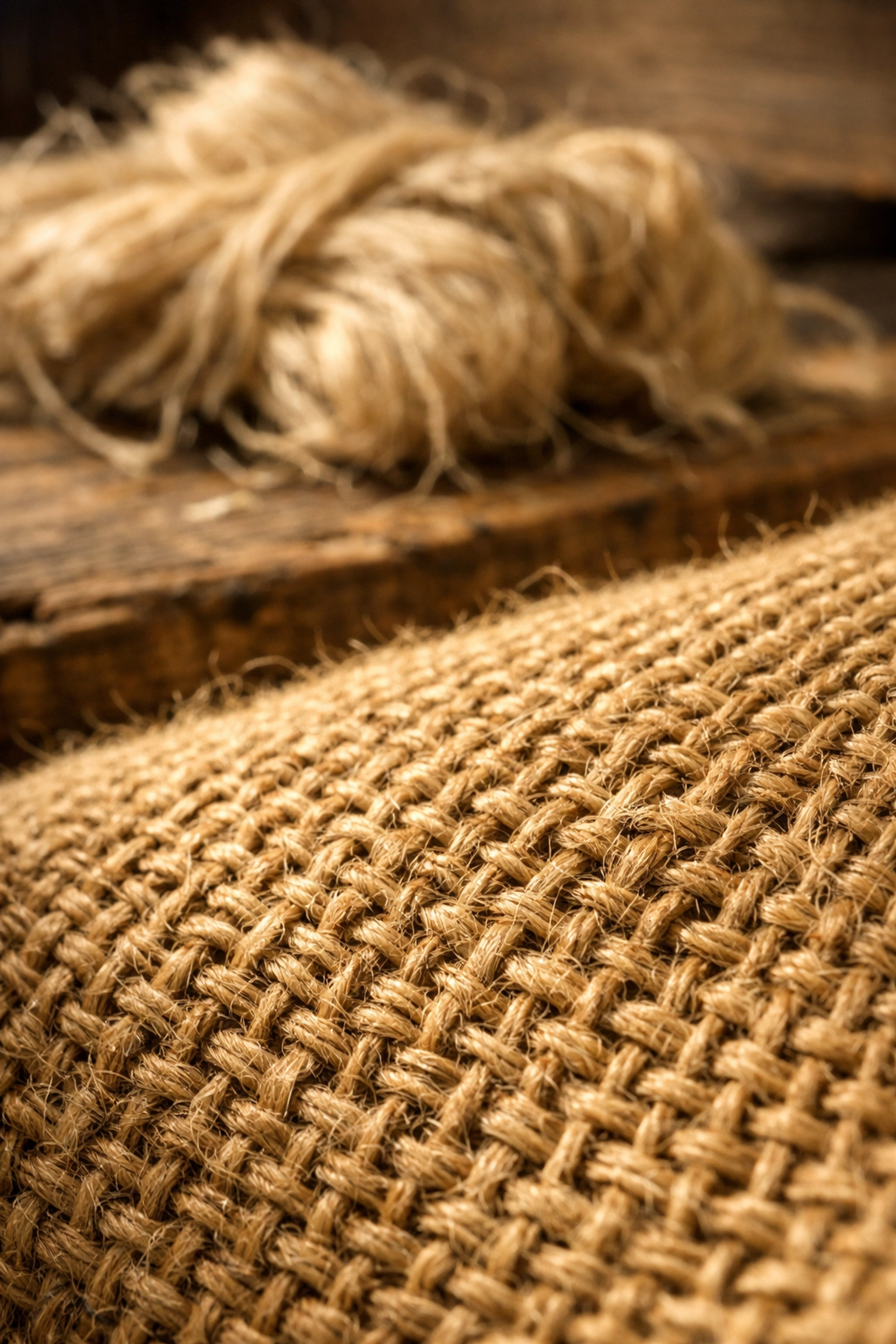
When we talk about sourcing our coffee, we aren't just looking at the quality of the bean; we’re looking at the impact of the entire package. Because jute is 100% biodegradable and compostable, it fits perfectly into a circular economy. Unlike synthetic bags made from polypropylene (basically plastic), a jute sack will eventually return to the earth without leaving a trace of microplastics behind.
From Farm to Port: The First Leg
Imagine a hillside in Ethiopia or a plateau in Brazil. Once the coffee cherries have been harvested, processed, and dried, they become "green coffee." These green beans are tough, stable, and ready for their long voyage.
But they can't just be shoved into a shipping container loose. They need protection.
This is where the coffee sacks come in. Each sack is typically designed to hold either 60kg or 69kg of green coffee (depending on the country of origin). Why these specific weights? It’s a historical standard that allows for manual handling, though, let’s be honest, hoisting a 60kg bag onto your shoulder is a serious workout. We’ve seen many a delivery driver earn their stripes moving these around!
The sacks are filled, sewn shut with heavy-duty twine, and marked with "shipping marks." These marks are like a passport for the coffee. They tell us the producer, the country of origin, the weight, and the unique ICO (International Coffee Organization) number. It’s total transparency in a very old-school format.
The Modern Twist: Keeping It Fresh
Now, there is a bit of a dilemma when it comes to traditional jute coffee sacks. Jute is breathable. This is great because it prevents moisture from getting trapped and causing mold. However, it also means the coffee is exposed to the elements, humidity, sea air, and smells.
To combat this while keeping the sustainability factor high, most speciality coffee now uses a "GrainPro" or "Ecotact" liner inside the jute sack.
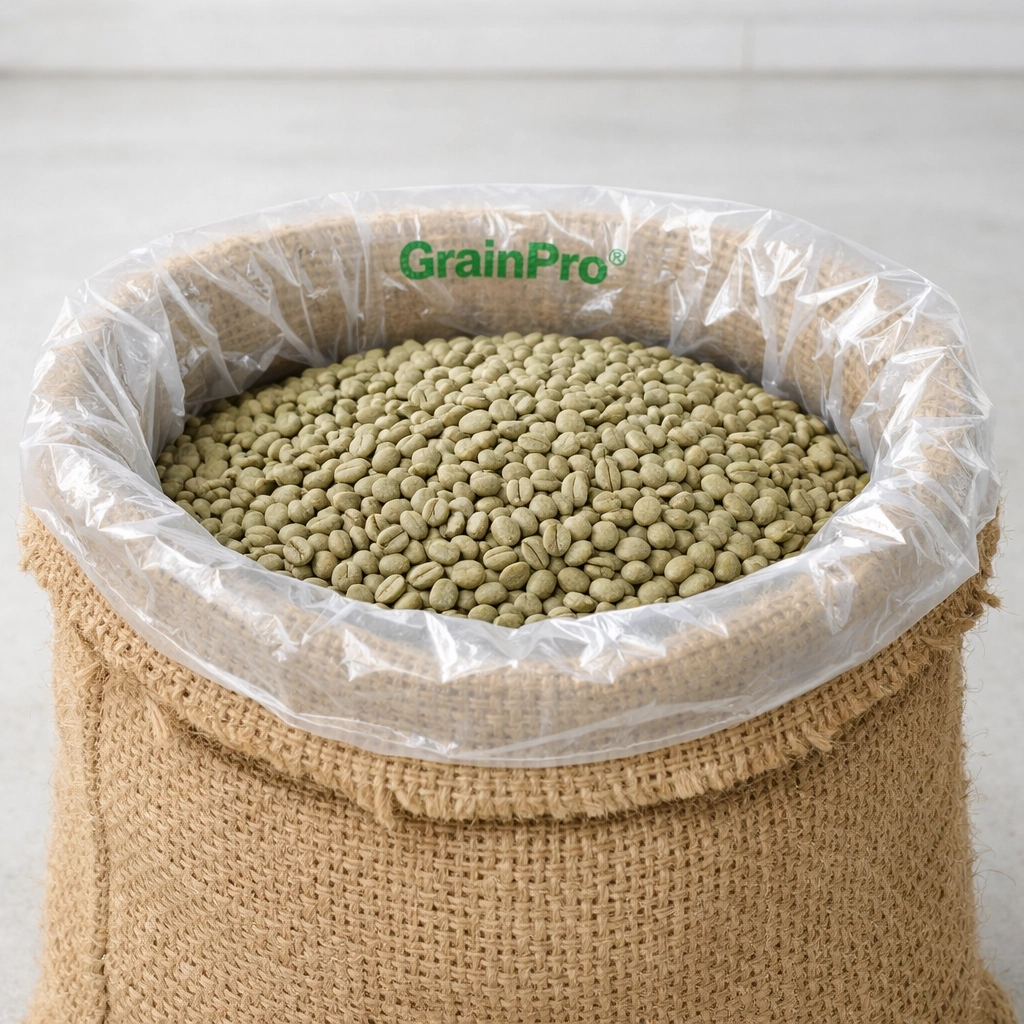
These are high-barrier plastic liners that create a hermetic seal. They keep the moisture levels stable and protect the delicate aromatics of the green coffee. While we’d love to avoid plastic altogether, these liners are essential for maintaining the quality we demand for our wholesale partners. The good news? These liners are increasingly recyclable, and because they are protected by the tough jute exterior, they rarely get punctured.
Arriving at Limini Coffee
Once those sacks arrive at our roastery in the UK, they’ve already traveled thousands of miles. They’ve been on trucks, in warehouses, and on giant container ships.
When they get to us, we treat them with respect. Every time we open a new sack to tip the beans into the roaster, we’re careful not to shred the jute. Why? Because we know that the sack’s journey is far from over.
We believe that sustainable sourcing doesn't stop once the coffee is in our hands. It extends to how we manage our waste. If you’re looking to start your own coffee journey, whether it’s at home or opening a shop, you can check out Scott’s link here for some great equipment and beans.
The Afterlife: Upcycling Coffee Sacks
So, what happens to the thousands of coffee sacks we go through every year? It would be a tragedy to just throw them in the bin. Jute is far too useful for that.
Here are some of the ways our sacks continue their journey:
1. Gardening and Allotments
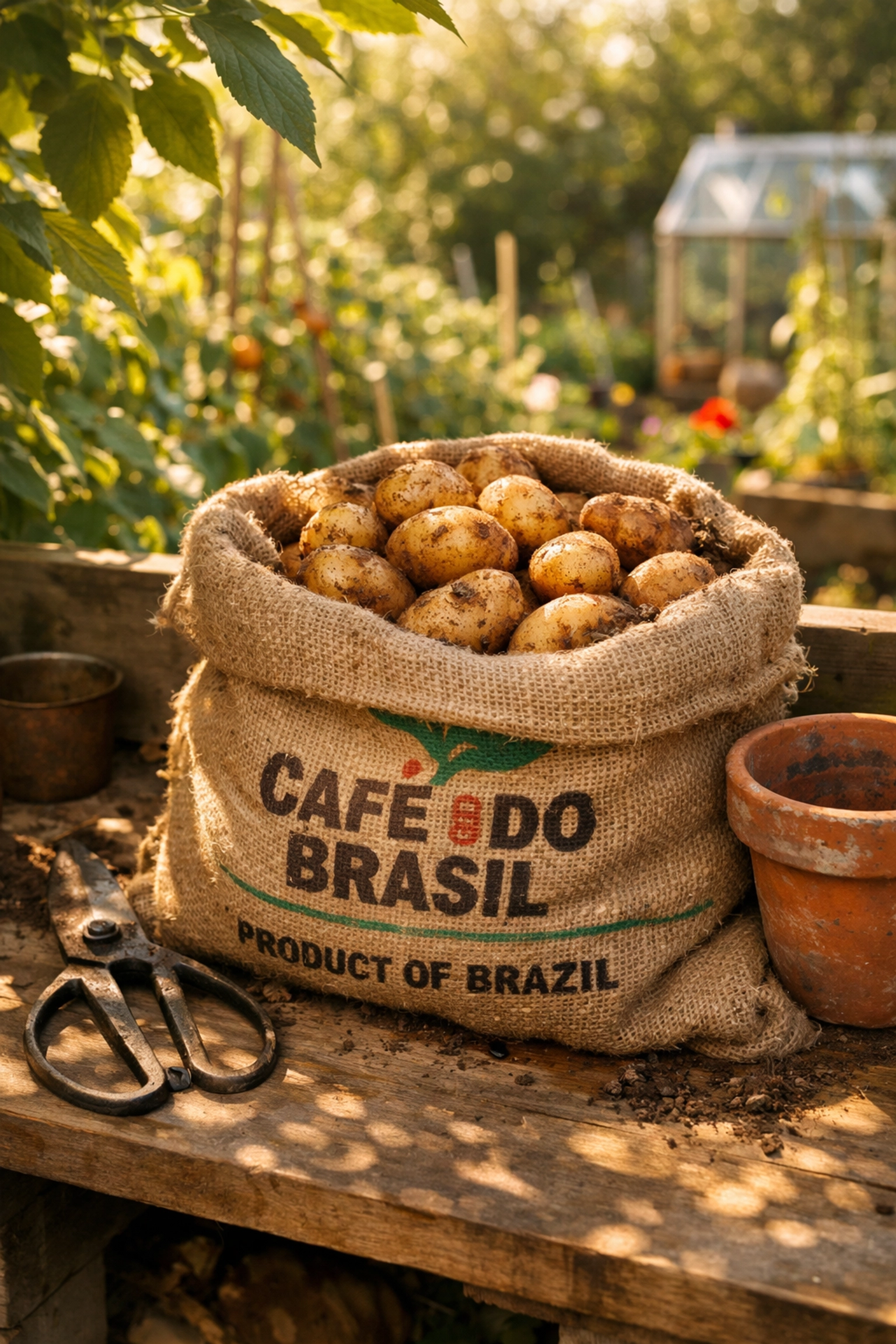
This is by far the most popular use. Gardeners love coffee sacks. They are perfect for:
- Suppressing weeds: Lay them down under a layer of mulch.
- Storing potatoes: The breathability of the jute keeps root veg fresh and dark.
- Protecting plants from frost: Wrapping a sack around a delicate shrub can save it during a cold UK winter.
- Compost heaps: Because they are biodegradable, you can actually use them as a "lid" for your compost to keep the heat in, and eventually, they’ll just become part of the soil.
2. Interior Design and Crafts
Have you ever seen those cool cushions or footstools covered in burlap? Chances are, they started life as a coffee sack. The printed logos from farms in Colombia, El Salvador, or Indonesia are beautiful pieces of art. We’ve seen people turn them into:
- Wall hangings for cafes.
- Durable tote bags.
- Upholstery for rustic furniture.
- Aprons for baristas (if you don't mind a bit of a scratchy texture!).
3. Training and Events
Us here at Limini Coffee are big on education. We use sacks during our barista training sessions to show students where the coffee comes from. There’s something special about touching the raw material that came from a farm halfway across the world. It builds a connection between the barista and the farmer.
Why Is This Important?
You might be wondering, "It’s just a bag, why the big deal?"
Well, in the world of speciality coffee, every detail matters. If we claim to care about the environment and the farmers we work with, we have to care about the materials we use to transport our product.
By choosing jute coffee sacks, the industry supports a massive agricultural sector in countries like India and Bangladesh. By upcycling them, we reduce the amount of waste going to landfills. It’s a small part of a much larger picture of understanding the coffee shop world.
Sustainability Is a Practice, Not a Destination
At Limini Coffee, we aren't perfect, but we are always trying to improve. Whether it's choosing the right espresso equipment that saves energy or finding new ways to reuse our shipping materials, every step counts.
The journey of the coffee sack is a reminder that coffee is a global effort. It’s a chain of hands: the farmer who grew the jute, the worker who sewed the bag, the farmer who filled it with beans, the sailor who navigated the ship, and finally, the roaster who brings out the flavor.
And then, eventually, it’s you. The person enjoying that morning cup.
If you’re interested in learning more about the technical side of coffee: everything from tamping to milk science: we’ve got plenty of resources for you. But for today, just take a second to appreciate the rustic brown bag that made your coffee possible.
Want to Grab a Piece of the Journey?
If you're a local gardener or a DIY enthusiast in the area, feel free to give us a shout. We often have stacks of coffee sacks looking for a new home.
And if you’re looking to stock your shelves with coffee that is sourced with care and roasted with passion, check out our full range of beans. Whether you need wholesale for your business or just a bag for your home kitchen, we’ve got you covered.
Remember, the best coffee tastes even better when you know it’s been treated with respect every step of the way. From the sack to the cup. 🙂