
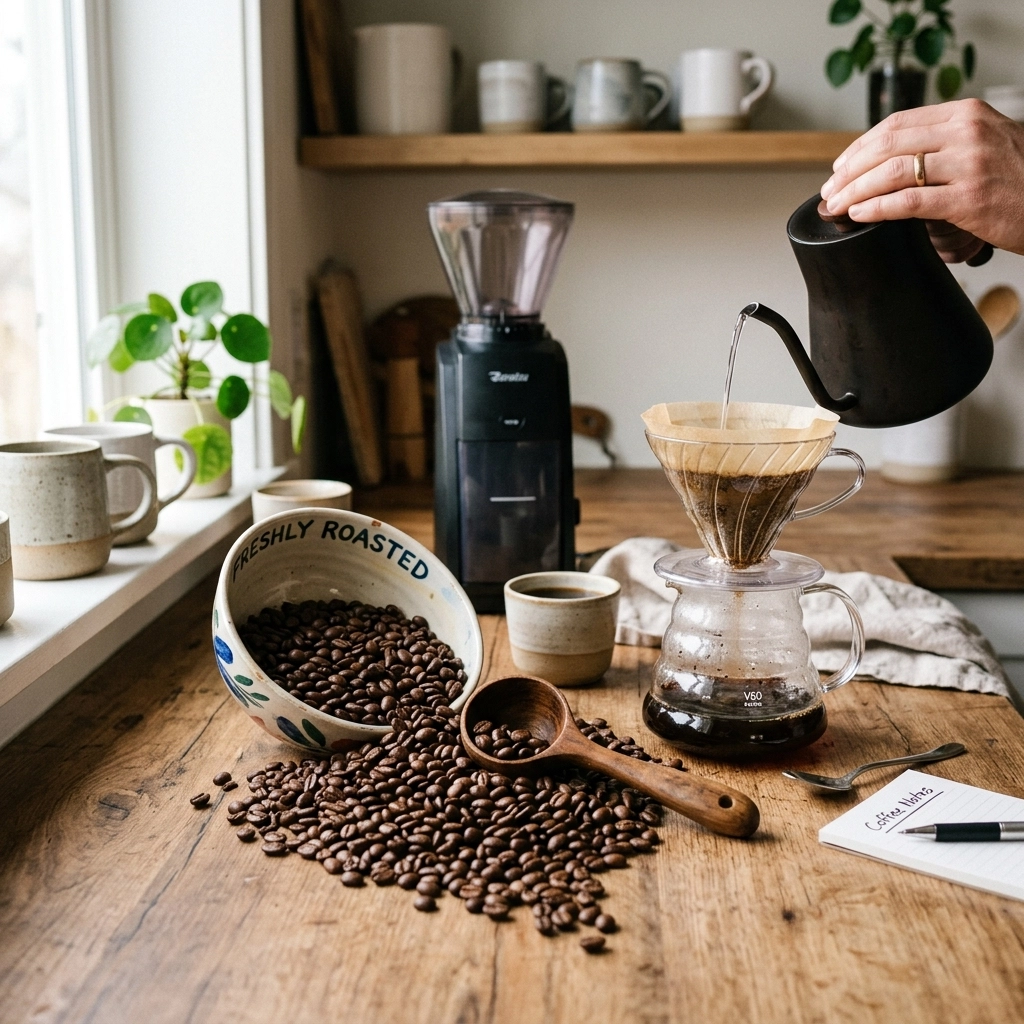
Let’s be honest: we’ve all been there. You walk down the supermarket aisle, pick up a bag of coffee with a shiny label promising "dark, intense flavour," and head home, expecting a cafe-quality experience. But when you brew it? It’s… fine. Maybe a bit bitter, definitely a bit flat, and mostly just tastes like "brown."
If you’ve ever wondered why your home brew doesn't have those vibrant notes of blueberry, chocolate, or jasmine that you get at your local speciality shop, the answer almost always comes down to one thing: freshness.
At Limini Coffee, we believe that the journey to a perfect cup starts long before the water hits the grounds. It starts at the roaster. Understanding freshly roasted beans is the single biggest "level up" you can give your morning routine. So, grab a mug, and let’s dive into the science, the timing, and the magic of fresh beans.
If you want to skip the stale supermarket stuff right now, you can find our latest seasonal roasts through Scott’s affiliate link here.
What Actually Happens During Roasting?
To understand why "fresh" matters, we have to look at what happens inside the bean when it's in the roaster. Before roasting, coffee is a green, hard, pebble-like seed that smells more like grass or hay than coffee.
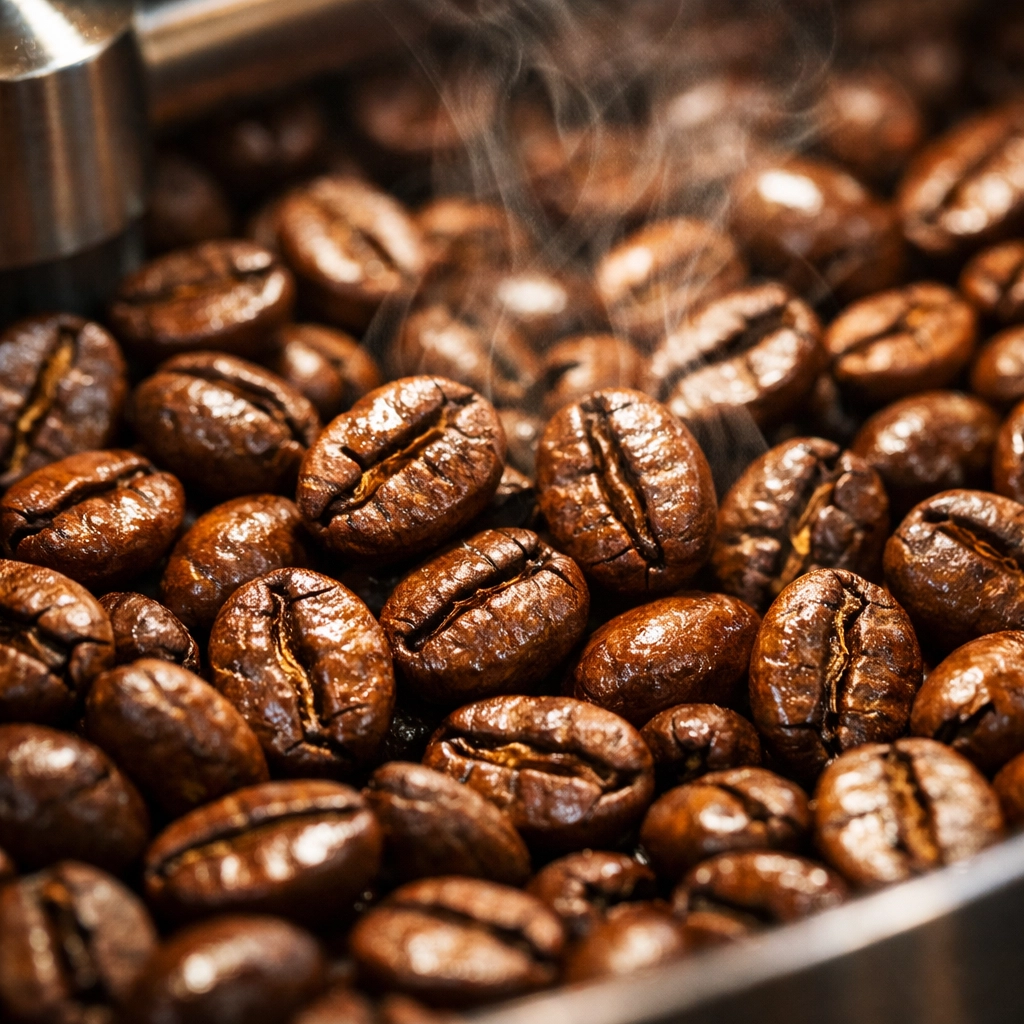
When we roast these beans at temperatures exceeding 200°C (392°F), a series of complex chemical reactions occur. The most famous is the Maillard reaction: the same process that browns your steak or toasts your bread. Sugars caramelize, moisture evaporates, and the bean’s cellular structure literally expands and becomes porous.
But here is the kicker: during this process, the beans produce a massive amount of Carbon Dioxide (CO2). In fact, CO2 makes up about 1% of the roasted bean's weight. This gas is trapped inside the bean, and the moment the roast is finished, it starts trying to escape. This is a process we call degassing.
The Degassing Dilemma: Why "Too Fresh" Can Be a Thing
You might think that the absolute best time to brew coffee is the second it drops out of the roaster. Surprisingly, that’s not usually the case.
Because there is so much CO2 trapped in the beans initially, brewing them immediately can be a bit of a disaster. When hot water hits super-fresh grounds, the gas escapes so violently that it creates a barrier between the water and the coffee solids. This prevents the water from properly extracting the flavours we want. In espresso, this often results in a "fizzy" crema that collapses quickly and a cup that tastes metallic or overly acidic.
So, when is the "peak" window? It actually depends on the roast profile. Here’s a rough guide we use here at Limini:
- Dark Roasts (Peak: 1-5 days): Darker roasts are more porous because they’ve been subjected to heat for longer. They degas quickly. You can often enjoy these almost immediately, though we find they settle nicely after 48 hours.
- Medium Roasts (Peak: 5-14 days): These are the all-rounders. They need a bit more time for the CO2 to settle so the sweetness can really shine. If you’re brewing as a filter or pour-over, day 7 is often the "sweet spot."
- Light Roasts (Peak: 7-21 days): Light roasts are denser. They hold onto their gas like a secret. We’ve had some light roasts that didn't truly "open up" until two or three weeks after the roast date.
If you’re curious about how we select these beans to begin with, you can read more about sourcing our coffee.
The Enemies of Freshness: Oxygen, Light, and Heat
Once the coffee has degassed and reached its peak, the countdown begins. While the CO2 leaving the bean is a natural part of aging, the real enemy is oxidation.
As soon as the protective CO2 leaves the bean, oxygen moves in. Oxygen causes the delicate oils in the coffee to go rancid. This is why supermarket coffee often has that "dusty" or "stale" aroma: it’s been sitting on a shelf for months, and the oxygen has completely stripped away the volatile aromatic compounds.
To keep your beans in the "Goldilocks zone," you need to protect them from the "Big Four":
- Oxygen: Keep them in an airtight container.
- Light: UV rays break down organic compounds. No clear glass jars on the windowsill!
- Heat: Store them in a cool, dry place (but not the fridge: more on that in a second).
- Moisture: Coffee is hygroscopic, meaning it absorbs moisture and smells from its environment.
A note on the fridge: We don't recommend storing beans in the fridge. Every time you take the bag out, condensation forms on the beans, which accelerates staling. A dark cupboard is your best friend.
For those looking to get the best equipment to handle these fresh beans, check out our guide on choosing espresso equipment.
Grinding: The Final Frontier of Freshness
If there is one hill we are willing to die on, it's this: Grind your coffee immediately before you brew it.
Think of a whole coffee bean like a protective capsule. It keeps the flavours locked inside. When you grind the coffee, you increase the surface area by thousands of percent. Instead of one bean, you now have hundreds of tiny particles. This allows oxygen to attack the coffee much faster.
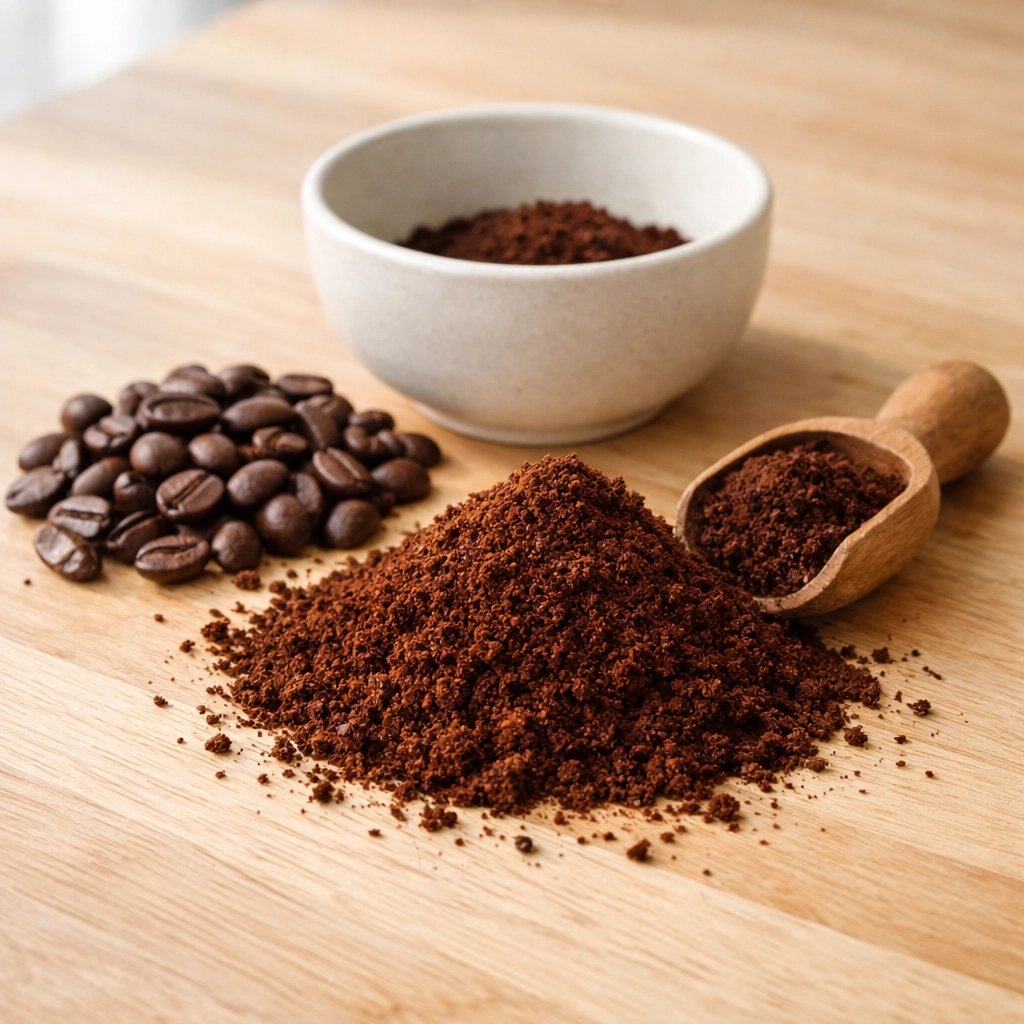
Pre-ground coffee begins to lose its peak flavour within minutes of being ground. If you’re buying pre-ground coffee, even the freshest roast will taste "old" by the time you get halfway through the bag. Investing in a decent burr grinder is the single best investment you can make for your home setup.
How to Brew Fresh Beans (The "Bloom")
When you’re working with freshly roasted coffee, especially in a pour-over or French Press, you’ll notice something called the Bloom.
When you first pour a small amount of hot water over the grounds, they will bubble and swell. This is the CO2 escaping. It’s a beautiful sight, and it’s the sign of a healthy, fresh bean. We recommend pouring about double the weight of the coffee in water, then waiting 30-45 seconds for the bubbling to stop before continuing your pour. This "clears the way" for the water to extract the delicious oils and sugars.
If you’re struggling with your ratios, we’ve actually built a coffee brewing calculator to help you get the math right every time.
For espresso lovers, fresh beans are even more critical. Fresh beans produce that thick, tiger-striped crema we all love. However, if your beans are too fresh (less than 3 days old), you might find your shots are inconsistent. If you want to learn the art of the perfect shot, our coffee barista training covers everything from tamping to milk texture.
Why Buy from a Speciality Roaster?
You might wonder, "Is it really worth the extra few pounds to buy from a roaster like Limini instead of the grocery store?"
To us, the answer is a resounding yes. When you buy from a speciality roaster, you aren't just getting "coffee." You're getting:
- A Roast Date: We print the exact day the beans were roasted on every bag. Supermarkets usually only provide a "Best Before" date, which could be a year after the roast.
- Traceability: We can tell you exactly which farm or washing station your beans came from.
- Quality Control: We roast in small batches to ensure every bean meets our standards.
It’s about moving away from coffee as a caffeine delivery system and toward coffee as a culinary experience. You wouldn't buy a loaf of bread that was baked six months ago, so why do the same with your coffee?
If you’re ready to taste the difference that a fresh roast makes, you can browse our full range of single origins and blends via Scott’s affiliate link. Whether you like a fruity Ethiopian or a chocolatey Brazilian, we’ve got something that will make your morning.
Summary: Your Checklist for Better Coffee
Mastering better coffee at home doesn't have to be intimidating. If you follow these basic principles, you'll be ahead of 90% of the population:
- Check the Roast Date: Aim to use your beans between 7 and 21 days after roasting.
- Buy Whole Bean: Only grind what you need, right before you brew.
- Store Correctly: Use an airtight, opaque container in a cool cupboard.
- Master the Bloom: Give those fresh gases a chance to escape during your brew.
- Experiment: Every coffee is different. Don't be afraid to adjust your grind size or water temperature to find what tastes best to you.
Coffee is a journey, and your palate will change as you try more varieties. That is the beauty of it! There is always a new origin to explore or a new brewing method to try.
If you're just starting out and feeling a bit overwhelmed by the technical side: like understanding milk or the difference between a latte and a cappuccino: don't worry. We have plenty of resources to help you along the way.
Ready to start your fresh coffee journey? Head over to the Limini Coffee shop and let’s get brewing. Happy drinking!