So, you’ve decided to step into the wonderful, slightly obsessive world of single-origin coffee. Welcome to the club! We think you’re going to like it here. If you’ve spent most of your life drinking supermarket "house blends" or generic "Italian roast" (which, to be honest, is usually just code for "very burnt"), your first sip of a high-quality single-origin bean is going to be a revelation.
It’s the difference between drinking a generic "red wine" and a specific, punchy Malbec from a single vineyard in Mendoza. One is a drink; the other is an experience.
At Limini Coffee, we live and breathe these nuances. But we also know that for a beginner, the terminology can feel a bit like learning a new language. "Washed process," "terroir," "tasting notes of bergamot", it’s a lot. Don't worry, though. We’re going to break it all down so you can master the art of brewing these incredible beans right in your own kitchen.
What Exactly is Single-Origin Coffee?
Basically, single-origin coffee is coffee that comes from one specific place. This could be a single country, a single region within that country, or even a single farm (often called a "microlot").
Why does this matter? Traceability. When coffee is blended, the goal is consistency, the roaster wants the coffee to taste the same every month. But when you buy single-origin beans, you’re celebrating the unique characteristics of that specific soil, climate, and altitude. This is what we call terroir.
A bean from Ethiopia might taste like delicate blueberries and jasmine, while a bean from Sumatra might be earthy, spicy, and heavy-bodied. When you brew single-origin, you aren't just drinking caffeine; you’re tasting a map. You can learn more about how we find these gems on our sourcing page.
The Essential Gear for Home Brewing
If you want to do justice to freshly roasted single-origin beans, you need the right tools. You don’t need to spend thousands of pounds on a commercial setup, but a few key items are non-negotiable.
1. The Grinder (The Most Important Part!)
We cannot stress this enough: please, put down the blade grinder. Blade grinders chop the beans into uneven chunks, some dust, some boulders. This leads to "uneven extraction," where the tiny bits make your coffee bitter and the big bits make it sour.
You need a burr grinder. Burr grinders crush the beans to a uniform size. Whether you choose a manual hand grinder or an electric one, consistency is king. Fresh is best, so always grind right before you brew.
2. A Digital Scale
Coffee is a science, and volume is a liar. A tablespoon of a dark roast weighs differently than a tablespoon of a light roast. To get that perfect cup every morning, you need to weigh your coffee and your water in grams.
3. A Gooseneck Kettle
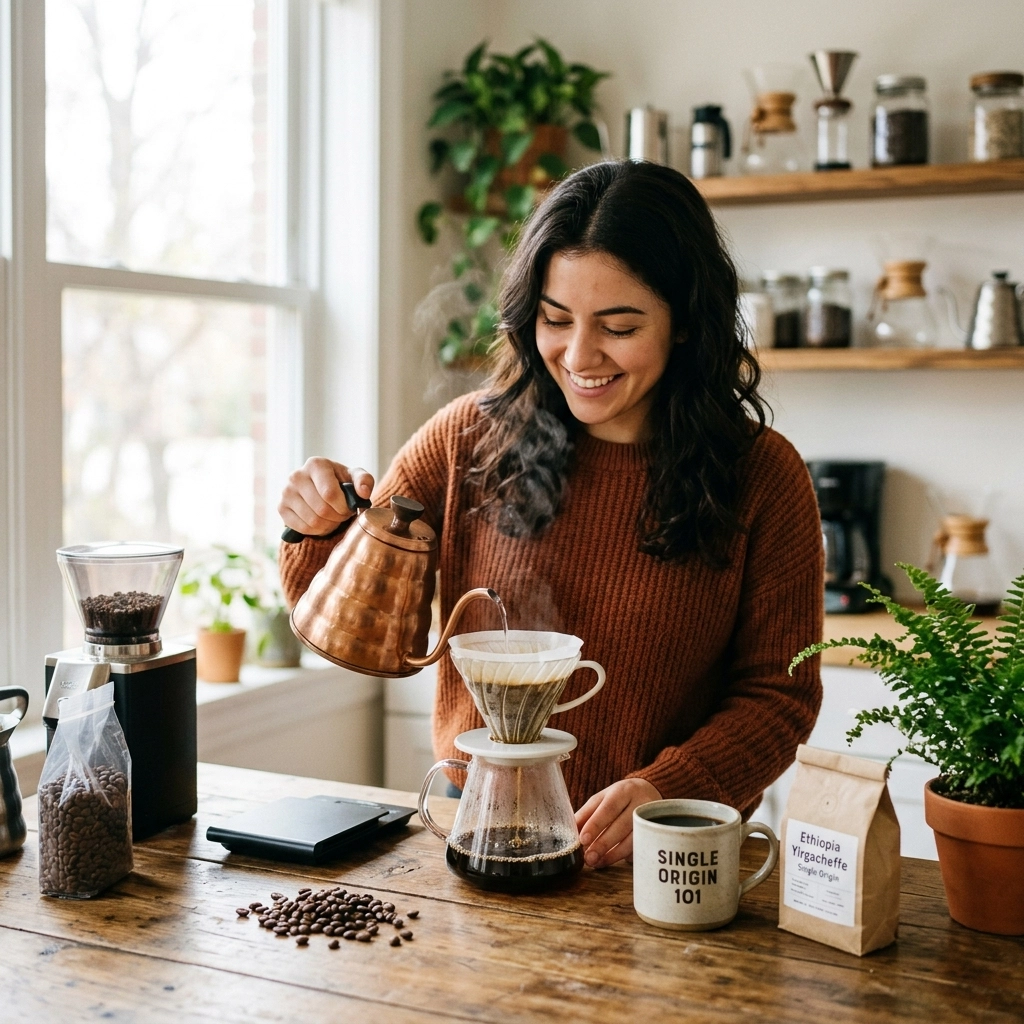
While not strictly essential for a French Press, if you’re venturing into pour-over territory (like the V60 or Chemex), a gooseneck kettle is a game-changer. It allows you to control the flow of water with precision, ensuring you saturate all the grounds evenly.

Choosing Your Beans: A Beginner’s Roadmap
When you’re browsing the Limini Coffee shop, you’ll see a lot of information on the labels. Here is how to decode it:
- The Roast Level: For single origins, we generally prefer a light to medium roast. Why? Because roasting is like cooking a steak. If you char it to "well done," you lose the flavour of the meat and just taste the fire. Light roasts preserve the fruit and floral notes of the origin.
- The Process: You’ll see "Washed," "Natural," or "Honey."
- Washed coffees are clean, bright, and acidic.
- Natural coffees are dried with the fruit still on the bean, resulting in wild, funky, fruit-forward flavours.
- The Altitude: Generally, the higher the altitude (measured in metres above sea level or MASL), the denser the bean and the more complex the flavour.
If you’re feeling overwhelmed, check out our latest reviews to see what other home brewers are loving right now.
The Golden Rules of Brewing
Before we get into the "how-to," let’s talk about the variables that will make or break your cup.
The Ratio
The "Golden Ratio" is usually around 1:16 or 1:17. This means for every 1 gram of coffee, you use 16 or 17 grams of water. If you want a bit more help with the maths, we’ve built a handy coffee brewing calculator to do the heavy lifting for you.
Water Temperature
Boiling water (100 °C / 212 °F) is actually a bit too hot and can scald the coffee, leading to a bitter taste. We recommend a range between 92 °C to 95 °C (198 °F to 203 °F). If you don’t have a temperature-controlled kettle, just let your boil sit for about 30–60 seconds before pouring.
Water Quality
Coffee is roughly 98% water. If your tap water tastes like chlorine or is very "hard" (full of minerals), your coffee will taste flat or metallic. Use a simple water filter jug; your taste buds will thank you.

Step-by-Step: The Perfect Pour-Over
The pour-over method is the best way to highlight the delicate notes of a single-origin coffee. It’s clean, elegant, and gives you total control.
- Prep your filter: Place your paper filter in the dripper and rinse it with hot water. This removes the "papery" taste and warms up your carafe.
- Add your coffee: Weigh out 15g of medium-fine ground coffee (about the consistency of table salt) and level it out.
- The Bloom: Start your timer. Pour about 30g of water over the grounds, just enough to wet them. You’ll see bubbles rising; this is the "bloom." It’s the coffee releasing CO2. Wait 30 seconds.
- The Pour: Slowly pour the remaining water (up to 250g) in steady, concentric circles. Avoid pouring directly onto the edges where the water might bypass the coffee.
- The Draw-down: The water should finish dripping through by the 2:30 or 3:00 minute mark. If it takes 5 minutes, your grind is too fine. If it takes 1 minute, your grind is too coarse.
Troubleshooting Your Brew
Is your coffee not tasting like the "notes of stone fruit and caramel" promised on the bag? Don't panic. Coffee brewing is an iterative process.
- If it tastes sour or salty: This usually means "under-extraction." The water didn't get enough flavour out of the beans. Next time, try a finer grind or hotter water.
- If it tastes bitter or dry: This is "over-extraction." You took too much out. Try a coarser grind or slightly cooler water.
- If it tastes weak: You might need to change your ratio. Try using a bit more coffee next time.
Remember, even the pros have to dial in a new bag of beans. It’s part of the fun!

Why Freshness is King
You can have the best technique in the world, but if your beans were roasted six months ago, they’re going to taste like cardboard. Coffee is a fresh agricultural product. Once it’s roasted, it starts to lose its aromatic oils and flavours.
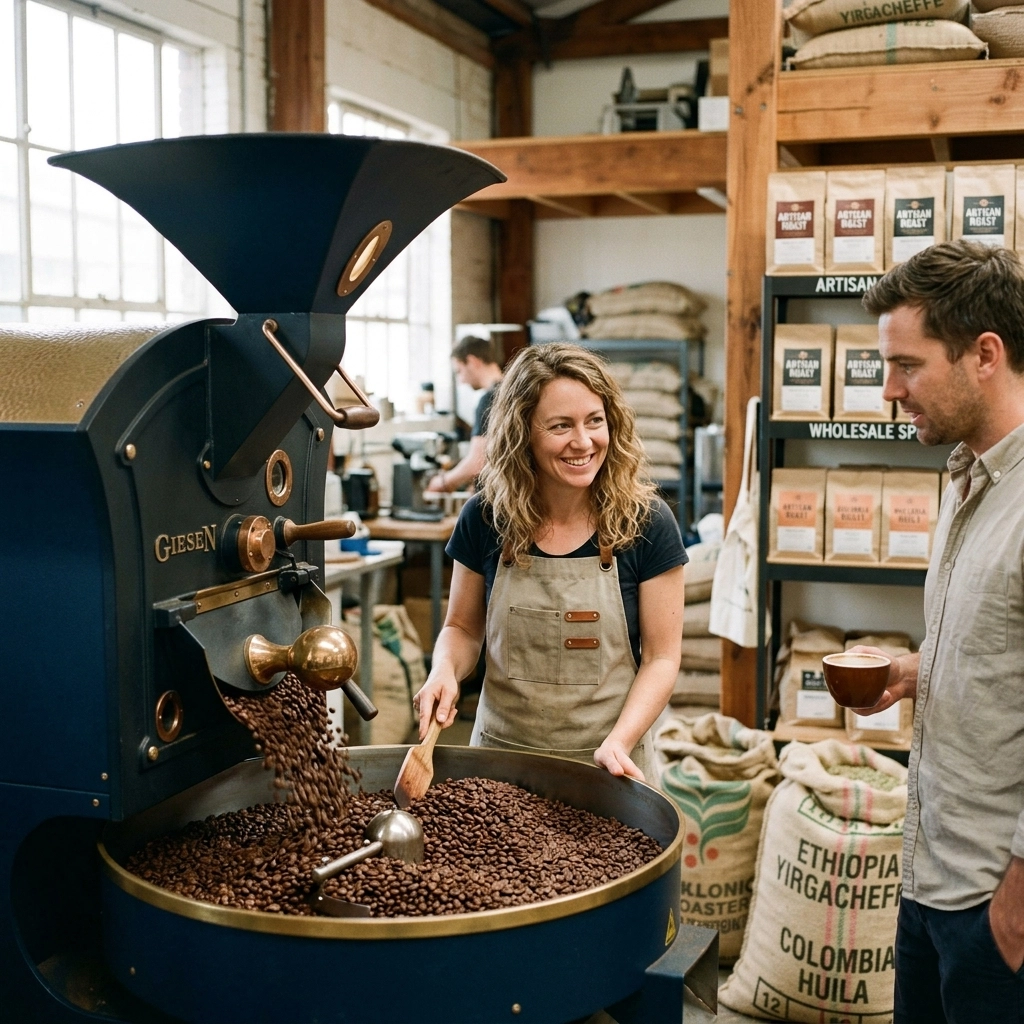
We recommend using your beans within 4 weeks of the "roast date" on the bag. This is why we roast to order at Limini Coffee. When you buy from us, you’re getting coffee that was likely in the roaster just a day or two before it hit your doorstep.
Expanding Your Horizons
Once you’ve mastered the pour-over, there is a whole world of equipment to explore. You might want to dive into the world of espresso equipment or learn the secrets of tamping.
But honestly? There is something incredibly satisfying about the simplicity of a single-origin bean and a manual brewer. It forces you to slow down, smell the aromatics, and appreciate the hard work of the farmers who grew those beans thousands of miles away.
If you’re ready to start your journey, head over to the Limini Coffee shop and pick up a bag of our current favourite single origin. Whether you're looking for a bright Kenyan or a chocolatey Brazilian, we've got something that will blow your hair back.
Happy brewing, and remember, the best cup of coffee is the one you enjoy drinking. There are no "wrong" answers, only delicious discoveries! 🙂