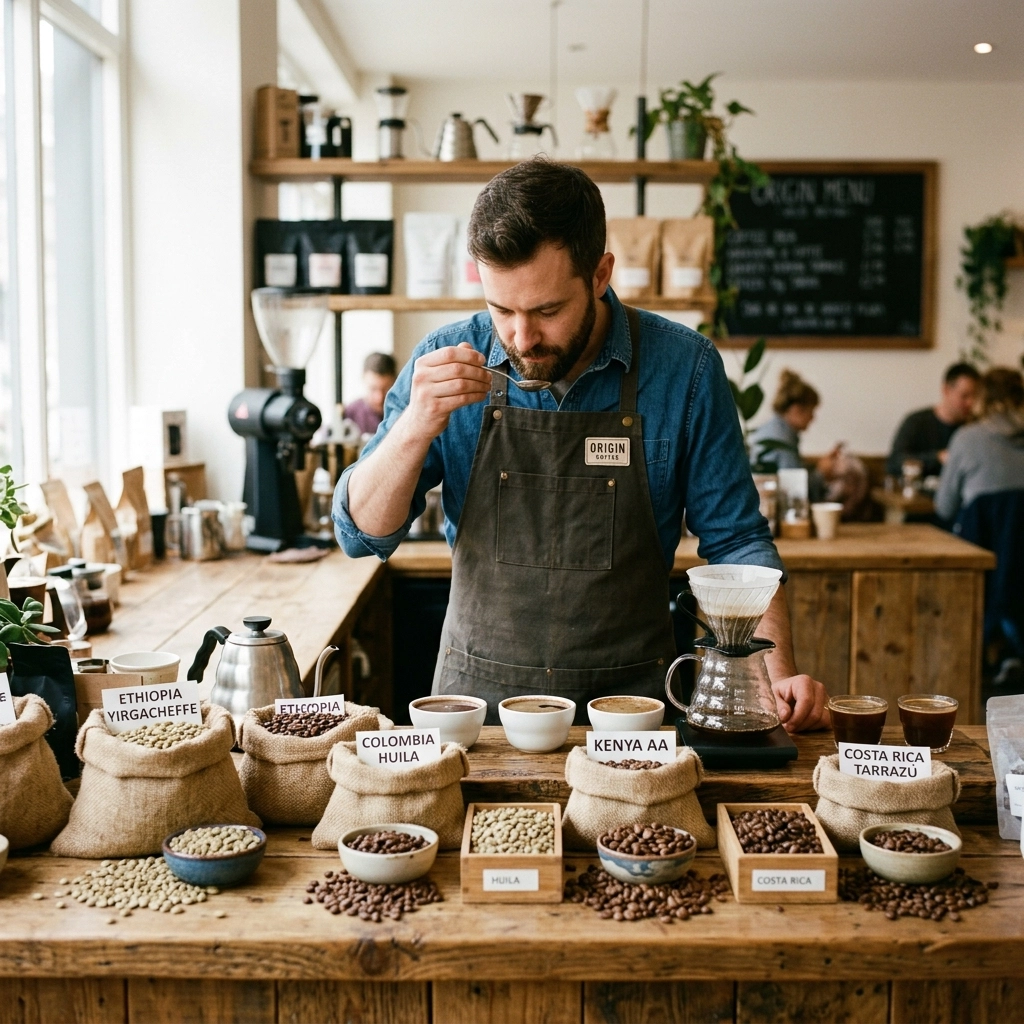
So, you’ve decided to take the plunge into the world of specialty coffee at home. Welcome to the club! We think it’s one of the most rewarding hobbies you can pick up. There is something deeply satisfying about waking up, weighing out your beans, and crafting a cup of coffee that actually tastes like blueberries, chocolate, or jasmine, rather than just "burnt."
But let’s be honest: the world of home brewing can feel a little intimidating at first. You see people talking about "refractive indexes," "agitation," and "bloom times," and you start to wonder if you need a PhD in chemistry just to have breakfast.
The good news? You don't. While we love the science behind it, brewing incredible coffee at home is actually quite simple once you understand the core principles. We’ve spent years at Limini Coffee perfecting the art of the roast and the brew, and we’re here to walk you through the basics.
What Exactly is "Specialty Coffee"?
Before we get into the "how," let's talk about the "what." You’ve probably seen the term "specialty" thrown around a lot. It’s not just a marketing buzzword. In the industry, specialty coffee refers to beans that have been graded 80 points or higher on a 100-point scale by certified tasters (Q-Graders).
But for you, at home, specialty coffee means transparency and quality. It means knowing where your beans came from: down to the specific farm or washing station. It means the beans were picked at peak ripeness and roasted with care to highlight their unique character. When you buy from a dedicated roaster, you're getting a product that hasn't been sitting on a supermarket shelf for six months losing its soul.
If you're curious about how we find these gems, you can read more about sourcing our coffee to see the journey from farm to cup.
The Essential Toolkit: What You Actually Need
You don’t need to spend thousands of pounds to get started, but there are a few non-negotiables. If you want to brew like a pro, you need to measure like one.
1. The Burr Grinder
If you take one thing away from this guide, let it be this: Throw away your blade grinder. Blade grinders (the ones with the spinning metal wings) don't actually grind coffee; they smash it into uneven chunks and fine dust. This leads to an uneven extraction where some of the coffee is bitter and some is sour.
A burr grinder uses two revolving abrasive surfaces to "crush" the beans into a uniform size. Consistency is the single most important variable in brewing. We always recommend grinding fresh right before you brew. Why? Because as soon as coffee is ground, it starts to oxidise and lose those beautiful aromatic compounds.
2. A Digital Scale
Stop using scoops. Imagine trying to bake a cake by measuring flour with "a handful." It wouldn’t work, right? Coffee is the same. Different beans have different densities. A scoop of a dark roast might weigh 12g, while a scoop of a light roast might weigh 16g.
Using a digital scale allows you to keep your ratio consistent every single morning. We usually aim for a ratio of about 60g of coffee per 1 litre of water.
3. A Gooseneck Kettle
If you’re planning on doing pour-overs (like a V60 or Chemex), a gooseneck kettle is a game-changer. The thin, curved spout gives you total control over the flow of water. If you dump a gallon of water onto your coffee grounds all at once, you’ll end up with a muddy, over-extracted mess. Precision matters.

The Holy Trinity of Variables
Once you have your gear and some freshly roasted beans, there are three main variables you can control: the grind, the water, and the ratio.
The Grind: Finding the Sweet Spot
The size of your coffee grounds determines how fast the water can pull the flavour out.
- Too Coarse (like sea salt): The water rushes through too fast. The result? Under-extraction. Your coffee will taste sour, thin, and salty.
- Too Fine (like powdered sugar): The water struggles to get through. The result? Over-extraction. Your coffee will taste bitter, astringent, and dry.
Water: It’s 98% of Your Cup
If your tap water tastes like chlorine or is very "hard" (full of minerals), your coffee will suffer. We recommend using a simple water filter jug at the very least.
Then there’s temperature. We generally recommend brewing between 190 °F and 205 °F (88 ºC to 96 ºC). If the water is boiling (212 °F / 100 ºC), you risk "scorching" the grounds and bringing out unpleasant bitterness. If it’s too cool, you won’t extract the sweetness.
The Ratio: The Golden Rule
As we mentioned, a great starting point is 60g of coffee for every 1000g (1 litre) of water. This is a 1:16.7 ratio. If you prefer a stronger, more intense cup, try 1:15. If you want something lighter and tea-like, try 1:17.
To make it easy, you can use our coffee brewing calculator to get your numbers perfect every time.
Choosing Your Brewing Method
There is no "best" way to brew coffee: only the way you enjoy most. Here are the big three for beginners:
The Pour-Over (V60 / Kalita Wave)
This is the darling of the specialty coffee world. It produces a clean, bright cup that highlights the delicate acidity and floral notes of single-origin beans. It requires a bit of technique, but the rewards are high.
The French Press (Immersion)
The French Press is the most forgiving method. Because the coffee sits in the water (immersion), it produces a heavy-bodied, textured cup. It’s perfect for those who like a more traditional, "bold" coffee flavour.
The AeroPress
The AeroPress is a bit of a cult favourite. It’s indestructible, portable, and incredibly versatile. You can make anything from a concentrated espresso-style shot to a clean filter-style cup. It’s also very easy to clean (a huge plus in our book!).

Step-By-Step: Mastering the Pour-Over
Let’s walk through a standard V60 pour-over technique. It’s a great way to start your specialty coffee journey.
- Prepare the filter: Place your paper filter in the dripper and rinse it with hot water. This removes any "papery" taste and warms up your vessel.
- Add your coffee: Add 15g of medium-fine ground coffee (think table salt consistency) and tap it to level the bed. Tare your scale.
- The Bloom: Start your timer and pour about 30g of water over the grounds. You’ll see bubbles rising: this is "blooming." The coffee is releasing CO2 gases. If your coffee is fresh (which it should be!), it will puff up beautifully. Wait about 30 seconds.
- The Main Pour: Slowly pour the remaining water (up to 250g total) in circular motions. Avoid pouring directly onto the edges where the water might just bypass the coffee.
- The Draw Down: Let the water filter through. The total brew time should be between 2:30 and 3:00 minutes. If it’s faster, grind finer next time. If it’s slower, grind coarser.
Understanding the Results
Don't be discouraged if your first cup isn't perfect. Even we have "off" days! The beauty of specialty coffee is the tweaking.
If your coffee is a bit too sharp or sour, it’s under-extracted. Next time, try a slightly finer grind or hotter water. If it’s lingeringly bitter or tastes a bit "ashy," it’s over-extracted. Try a coarser grind or slightly cooler water.
We’ve written a whole piece on understanding crema if you eventually move into espresso, but for filter coffee, just focus on that balance of sweetness, acidity, and body.

Final Thoughts: The Journey is the Destination
Brewing specialty coffee at home is a ritual. It’s a moment of calm before the day gets hectic. Whether you’re geeking out over the different types of milk for your latte or simply enjoying a black pour-over, the most important thing is that you enjoy the process.
If you’re looking to stock up on gear or grab some of the freshest beans in the UK, head over to the Limini Coffee store. We take huge pride in our roasting process, ensuring every bag that leaves us is at its absolute peak.
Ready to take it even further? If you find yourself getting really obsessed (don't worry, it happens to the best of us), you might want to look into professional barista training. It’s not just for pros: we love teaching home enthusiasts how to get the most out of their machines.
Happy brewing! Remember, the best cup of coffee is the one you enjoy most.
Quick Home Brewing Checklist:
- Freshly roasted specialty beans (check the roast date!)
- Burr grinder (consistency is king)
- Filtered water at 94 ºC
- A reliable scale
- A curious palate and a bit of patience!