So, you’ve finally done it. You’ve opened the doors to your very own coffee shop. The smell of freshly roasted beans is in the air, the machine is gleaming, and you’re ready to conquer the world, one flat white at a time. But then, reality hits. The queue is out the door, but somehow people are waiting twenty minutes for a latte. Your baristas are bumping into each other like a bad comedy sketch, and your "perfect" marble counter is already stained with espresso.
It’s a common story. At Limini Coffee, we’ve seen it all. We’ve helped hundreds of shops get off the ground, and we’ve noticed that most "setup" problems aren't about the coffee beans themselves, it’s about the environment in which they’re brewed. If your shop feels like it’s fighting you every step of the way, it’s time to look at the bones of your operation.
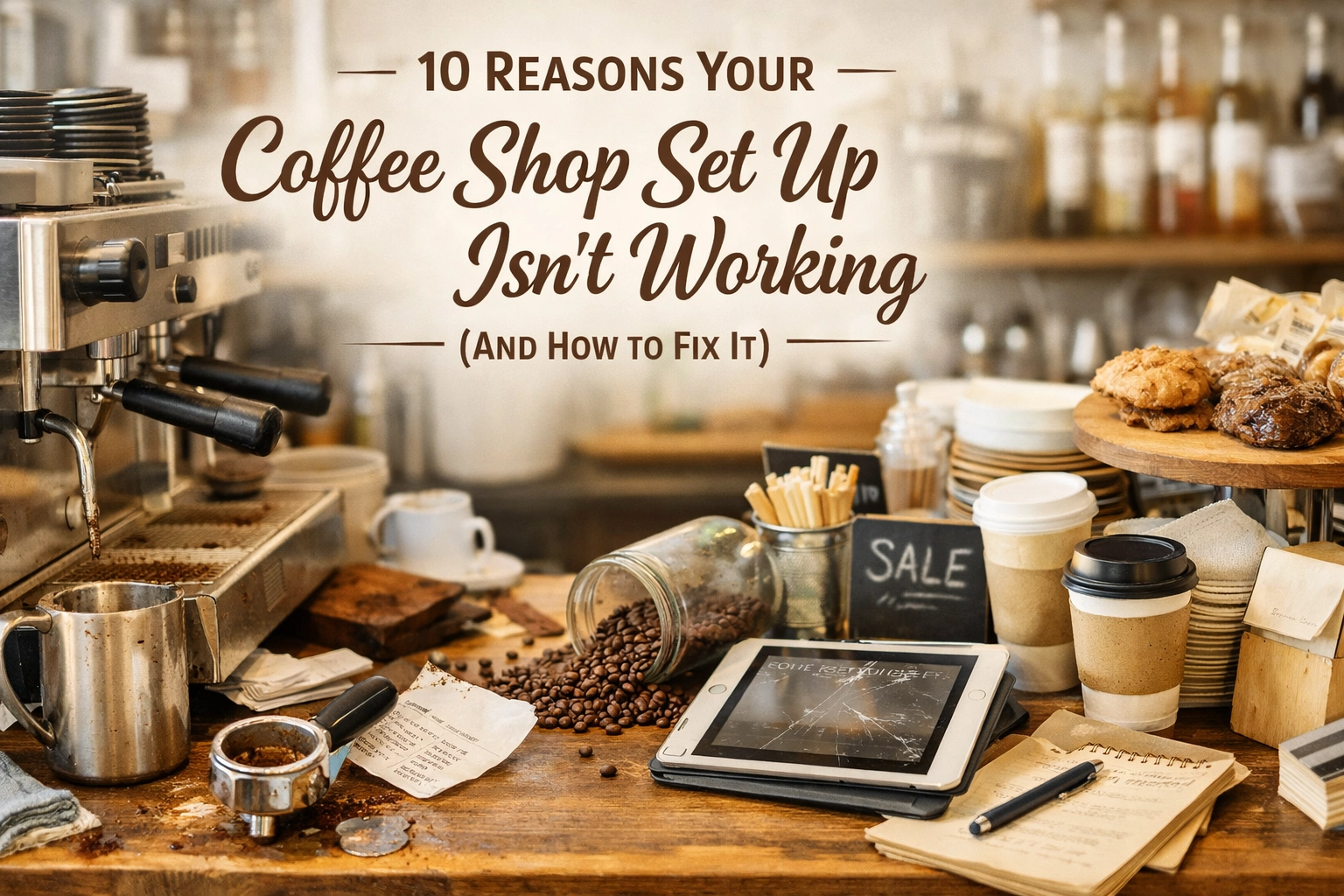
Here are 10 reasons your coffee shop setup might be failing you, and exactly how we think you should fix it.
1. You Prioritised Instagram Over Efficiency
We get it. You want the "wow" factor. You want the hanging plants, the neon signs, and the expensive mirrors. But here’s the thing: beauty doesn't pull shots. Many new owners spend their entire budget on shop fitting aesthetics without considering how a barista actually moves.
If your beautiful counter is too high for a barista to tamp comfortably, or if your expensive artwork blocks the menu, you’ve got a problem. Customers might come in once for the photo, but they won’t come back if the service is a mess because the layout is clunky.
How to fix it: Focus on the "Barista Triangle." Just like a kitchen has a triangle between the fridge, stove, and sink, your baristas need a flow between the grinder, the machine, and the milk fridge. Before you commit to that marble finish, map out the workflow. Comfortable chairs and clear menus matter more for long-term profit than a designer lamp.

2. The "Barista Bump" (Inefficient Workflow)
Have you ever watched two baristas try to work in a space designed for half a person? It’s painful. Common layout mistakes include counters that are too narrow or placing the knock-box in a spot that requires the barista to turn 180 degrees every time they finish a shot.
If your pick-up zone is right next to the entrance, you’re creating a bottleneck that makes the shop look busier (and more stressful) than it actually is. This increases your labour costs because everything takes twice as long.
How to fix it: Leave enough space for two baristas to stand back-to-back or side-by-side without touching. Ensure your milk fridge is right under the steam wand. And please, position your pick-up area away from the door. It keeps the flow moving and stops the "is this mine?" confusion.
3. Buying "Prosumer" Instead of Commercial
We’ve seen people try to run a busy high-street shop on a machine designed for a kitchen. It’s a disaster waiting to happen. Semi-professional or "prosumer" equipment is great for home, but it simply cannot handle the heat and pressure of back-to-back 9 BAR extractions all morning.
Using non-commercial equipment won't just lead to breakdowns; it can actually stop you from getting health department approval. If you want to be taken seriously as a wholesale partner, you need the right tools. We always recommend checking out our guide on choosing espresso equipment before you swipe that credit card.
How to fix it: Invest in a true commercial-grade system. Yes, the upfront cost is higher, but it avoids the "emergency repair" bills that crop up three months in. If you're looking for the gold standard, we believe the La Spaziale range offers the best balance of reliability and performance. And if you need a hand deciding, Scott's affiliate link is a great place to start your journey with us.

4. You’re Ignoring the Water
Coffee is roughly 98% water. If your water tastes like a swimming pool or is full of minerals (hard water), your coffee will taste flat, bitter, or just plain weird. Even worse, limescale is the number one killer of espresso machines. It clogs up the heat exchangers and ruins your internal components.
How to fix it: Install a high-quality water filtration system from day one. It’s not an "optional extra." You need to monitor your water quality and change filters regularly. Your machine (and your customers) will thank you.
5. The "Quiet Corner" Location Trap
You found a spot with cheap rent, and it’s "just off the main road." The problem? "Just off" might as well be on the moon if there’s no foot traffic. Many owners underestimate how much they’ll need to spend on marketing to pull people away from the main thoroughfare.
How to fix it: Do the "clipboard test." Stand outside your potential location at 8 AM on a Tuesday. Count how many people walk past. Now do it at 11 AM and 3 PM. If you aren’t seeing a steady stream of office workers, students, or locals, that "cheap" rent is going to be very expensive in the long run.
6. You Underestimated the "Boring" Costs
People budget for the machine and the beans, but they forget the plumbing, the grease traps, the 3-phase electricity, and the business rates. We’ve seen shops run out of cash before they’ve even bought their first bag of speciality coffee.
How to fix it: Create a "contingency fund" that is at least 20% of your total budget. Unexpected electrical upgrades: like needing to jump from 100 to 200 amps: can cost thousands. Use a brewing calculator to understand your margins early on so you know exactly how many lattes you need to sell to keep the lights on.

7. A Menu That’s Too Clever for Its Own Good
If your menu has twenty different syrups, four types of "superfood" lattes, and a food menu that requires a full kitchen staff, you’re losing focus. Complexity is the enemy of quality. When the menu is too big, the coffee usually suffers.
How to fix it: Master the basics first. Understand the difference between a latte and a cappuccino at a technical level. Keep your coffee as the hero. If you’re using incredible beans from a speciality roaster, let that quality shine through rather than burying it under caramel sauce.
8. The Infrastructure Iceberg
This is the big one. You sign a lease on a beautiful old building, only to find out it doesn't have the electrical capacity to run a 3000-watt espresso machine, three fridges, and a dishwasher at the same time. Or worse, the drainage is in the wrong place.
How to fix it: Before you sign that lease, bring in an electrician and a plumber who understand commercial setups. Most cafés need significantly more power than a standard retail unit. Make sure you check the machine maintenance requirements and utility specs before committing.

9. Lack of Training and Consistency
You can have the best machine in the world, but if your barista doesn't know how to tamp correctly or understand crema, the coffee will be inconsistent. If a customer gets a great coffee on Monday and a sour one on Tuesday, they won’t come back on Wednesday. Consistency is what builds a business.
How to fix it: Training is not a one-time event. It’s an ongoing culture. Whether it’s basic barista training or a full training overview for your whole team, you need standardized procedures. Every drink should look and taste the same, regardless of who is behind the machine.
10. Forgetting the "Third Space" Experience
In the age of remote work, your shop isn't just selling caffeine; it's selling a workspace. If you don't have enough power outlets, or if your WiFi is slower than a dial-up connection from 1998, you’re alienating a huge portion of your potential market.
How to fix it: Think about the "theatre" of coffee. Use proper cups that feel good in the hand. Create an environment that feels like theatre: where people can watch the craft but also feel comfortable staying for an hour. If you provide the right environment, people will stay longer and spend more.
Setting up a coffee shop is a massive undertaking, and it’s okay to feel a bit overwhelmed. We’ve been through this journey with countless owners, and the secret is always the same: focus on the fundamentals. Get your equipment right, get your workflow smooth, and never stop training your team.
If you’re feeling like your current setup is holding you back, or if you’re just starting and want to avoid these pitfalls, we’d love to help. We’re more than just roasters; we’re partners in your success. You can check out our wholesale options or even see what our other partners think of us on our reviews page.
And remember, if you want to start your equipment journey with a bit of extra support, Scott's link is always there to get you connected with us. Let’s get that setup working for you, not against you. 🙂