So, you want to open a coffee shop?
It’s the dream, isn’t it? The rhythmic hiss of the steam wand, the intoxicating aroma of freshly roasted beans, and a space filled with happy people enjoying the perfect flat white. We get it. Here at Limini Coffee, we live and breathe this every single day.
But let’s be honest for a second. While the dream is beautiful, the reality of setting up a coffee shop is a mountain of hard work, logistics, and late-night spreadsheets. It’s not just about being a "people person" or knowing your way around an espresso machine. It’s about building a sustainable business that survives the first year (and the many years after that).
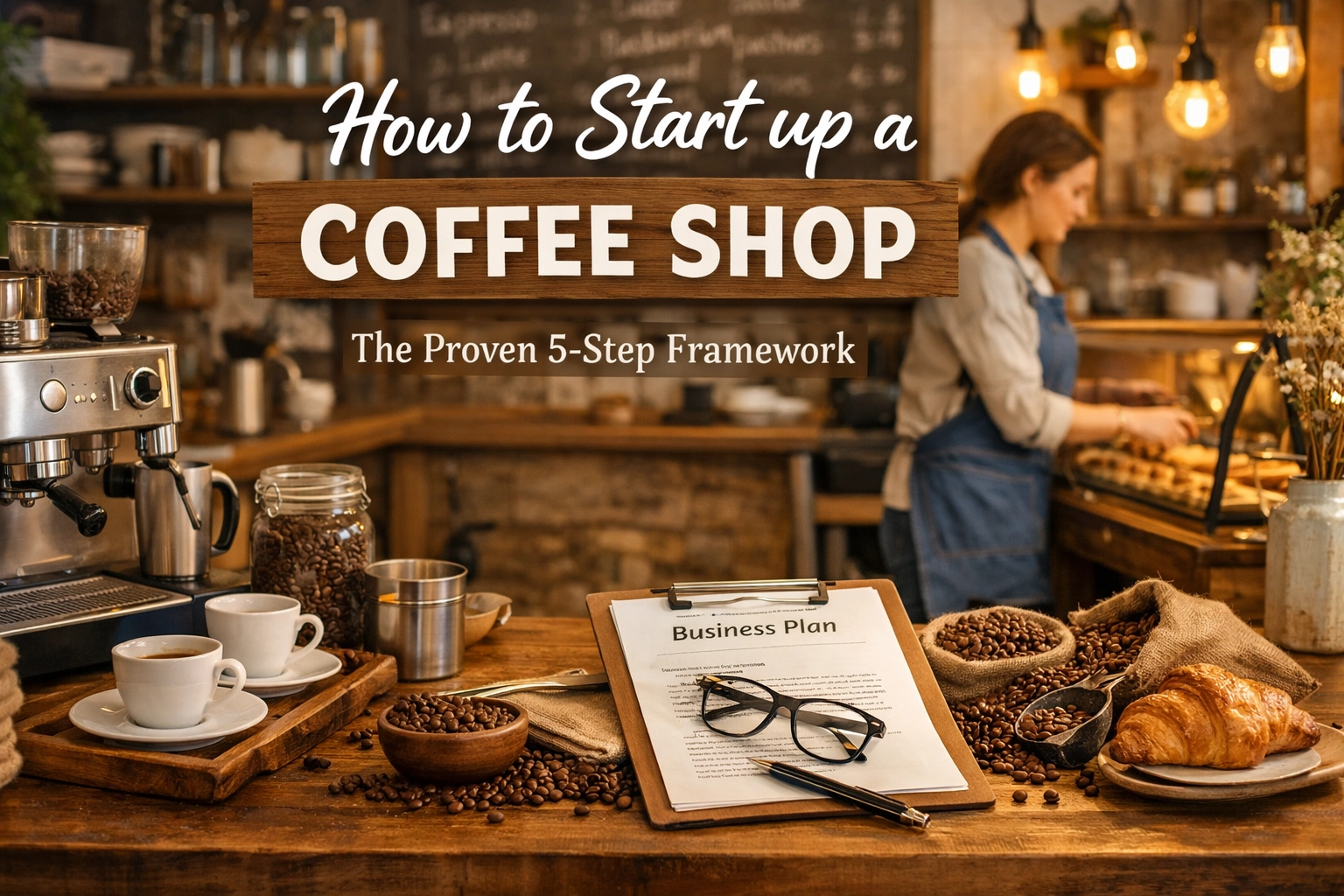
If you’re feeling a bit overwhelmed by the "where do I even start?" of it all, don't worry. We’ve helped hundreds of people transition from dreamers to shop owners. To make things simple, we’ve distilled the process into our proven 5-step framework.
Grab a brew, and let’s dive in.
Step 1: Research, Vibe, and the "Who"
Before you buy a single teaspoon, you need to know exactly what you’re building. You might think you're just selling coffee, but you're actually selling an experience.
Are you a "grab-and-go" kiosk for commuters? A cosy sanctuary for freelancers? Or a high-end temple of speciality coffee where people come for a 15-minute chat about tasting notes?
Market Research is Non-Negotiable.
You need to spend time in the area where you plan to open. Sit in the local competition. What are they doing well? What are they missing? Maybe they have great coffee but terrible seating. Or perhaps they have a lovely vibe but the milk is consistently scorched (which is just a real shame, honestly).
And then there's your target customer. We call this the "Who."
- Who is walking past your door at 7:30 AM?
- Who is looking for a place to eat lunch at 1:00 PM?
- What is their budget?
Understanding your niche helps you make every other decision, from your menu to your interior design. If you're looking for a partner to help you navigate these early stages, our team here at Limini Coffee is always happy to chat about your vision.
Step 2: The Blueprint (Your Business Plan)
We know, we know. Writing a business plan feels like homework. But listen, it is the most important document you will ever create for your business.
A solid plan for starting up a coffee shop isn't just for the bank (though they’ll definitely want to see it). It’s for you. It forces you to look at the cold, hard numbers.
What needs to be in there?
- Executive Summary: The "elevator pitch" of your shop.
- Financial Projections: Be realistic. Factor in rent, rates, electricity (it’s more than you think!), staff wages, and coffee waste.
- The Menu: Keep it simple to start. A massive menu usually leads to massive waste. Focus on doing the basics exceptionally well.
- Marketing Strategy: How will people know you exist? (Spoiler: A sandwich board isn't enough).

Step 3: Location and Legalities
You’ve probably heard it a thousand times: location, location, location. In the coffee world, this is gospel.
You need footfall. You can have the best coffee in the world, but if people have to go five minutes out of their way to find you, you're making life very difficult for yourself.
The "Search" Phase
When looking at properties, don't just look at the floor space. Check the plumbing. Check the power supply. Coffee machines are thirsty and power-hungry beasts. A standard three-group espresso machine might need a 32-amp single-phase supply or even three-phase power. If the building can't handle it, your "perfect" location just became a very expensive storage unit.
The Red Tape
This is the part everyone hates, but it's vital. You'll need:
- Business registration.
- Food premises registration (usually 28 days before opening).
- Health and safety assessments.
- PPL/PRS licenses (if you want to play music, which you definitely do).
While you're waiting for the council to get back to you, it's a great time to start thinking about your shop fitting and layout. You want a flow that makes sense for both the barista and the customer.
Step 4: The Core – Equipment and Beans
This is where we get excited. This is the heart of your coffee shop set up.
If you want to serve speciality coffee, you cannot compromise on two things: your equipment and your beans.
The Espresso Machine
We have a massive soft spot for La Spaziale machines. Why? Because they are absolute workhorses with incredible temperature stability. In a busy shop, consistency is king. If your water temperature fluctuates between 88 °C and 95 °C (190 °F to 203 °F) during a rush, your coffee will taste different every single time.
Whether you choose a lever or automatic machine, make sure it fits your volume. You can learn more about how these machines actually work on our La Spaziale workings page.
The Grinder
Do not skimp on the grinder. We repeat: do not skimp on the grinder. The grinder is actually more important than the espresso machine. If the particle size isn't uniform, your extraction will be a mess.
The Beans
This is where your soul is. You want beans that are ethically sourced, freshly roasted, and, most importantly, delicious. We pride ourselves on sourcing our coffee with care and roasting it to perfection.

When you work with a wholesale partner like us, you're not just buying a bag of beans. You're buying a support system. We believe that your success is our success, which is why we offer everything from equipment advice to full barista training.
Step 5: Training and The "Theatre" of Coffee
The final step in your coffee shop set up is the human element.
You can have a £15,000 machine and the world's best beans, but if your barista doesn't know how to properly tamp or understand milk chemistry, the coffee will be average at best.
Barista Training is an Investment, Not a Cost.
We strongly recommend that you and your staff undergo professional training. It’s about more than just making a heart in the foam (though latte art is great for Instagram!). It’s about understanding extraction, knowing how to "dial in" the grinders every morning, and maintaining the equipment so it doesn't break down on a Saturday morning.
The Theatre
We often talk about the "theatre" of coffee. Customers love to watch the process. The way the portafilter is locked in, the sound of the milk being aerated, the careful pour. This is your chance to shine. It builds value and justifies the price of a speciality coffee.

The Soft Launch
Before you open the doors for real, do a soft launch. Invite friends, family, and local business owners. Give coffee away for free for a few hours. This is your "dress rehearsal." It helps you find the bottlenecks in your service and gives your staff a chance to work under pressure without the fear of a bad Tripadvisor review hanging over them.
Bringing it All Together
Starting a coffee shop is a wild, exhausting, and incredibly rewarding journey. There will be days when the milk delivery is late and the dishwasher breaks, but there will also be days when the shop is humming, the coffee is tasting sweet and balanced (thanks to that perfect crema), and you realize you’ve built something special.
Remember, you don't have to do this alone. At Limini Coffee, we love helping new businesses get off the ground. Whether you need the best beans in the UK, reliable equipment, or just some friendly advice on choosing the right cups, we're here for you.

If you’re ready to take the first step towards your dream, come and say hello to us. We’d love to be a part of your story.
So, what are you waiting for? Let’s get brewing. ☕