Automate your operations. Elevate guest experiences. Reclaim your time.
Choosing a Property Management System (PMS) used to be about finding a digital filing cabinet for reservations. In 2026, it’s about finding a brain for your business. The right hotel management software doesn't just track who’s in Room 302; it optimizes your entire ecosystem, from dynamic pricing to personalized guest journeys, all from one innovative platform.
The guest-centric shift
We believe the front desk should be a welcome point, not a barrier. For too long, hoteliers have been tethered to desktop monitors, typing in passport details while guests stare at the back of a laptop. The modern standard has shifted. It’s no longer about managing rooms; it’s about managing people.
When you look for a PMS, you aren't just buying software. You’re choosing how your staff interacts with the world.
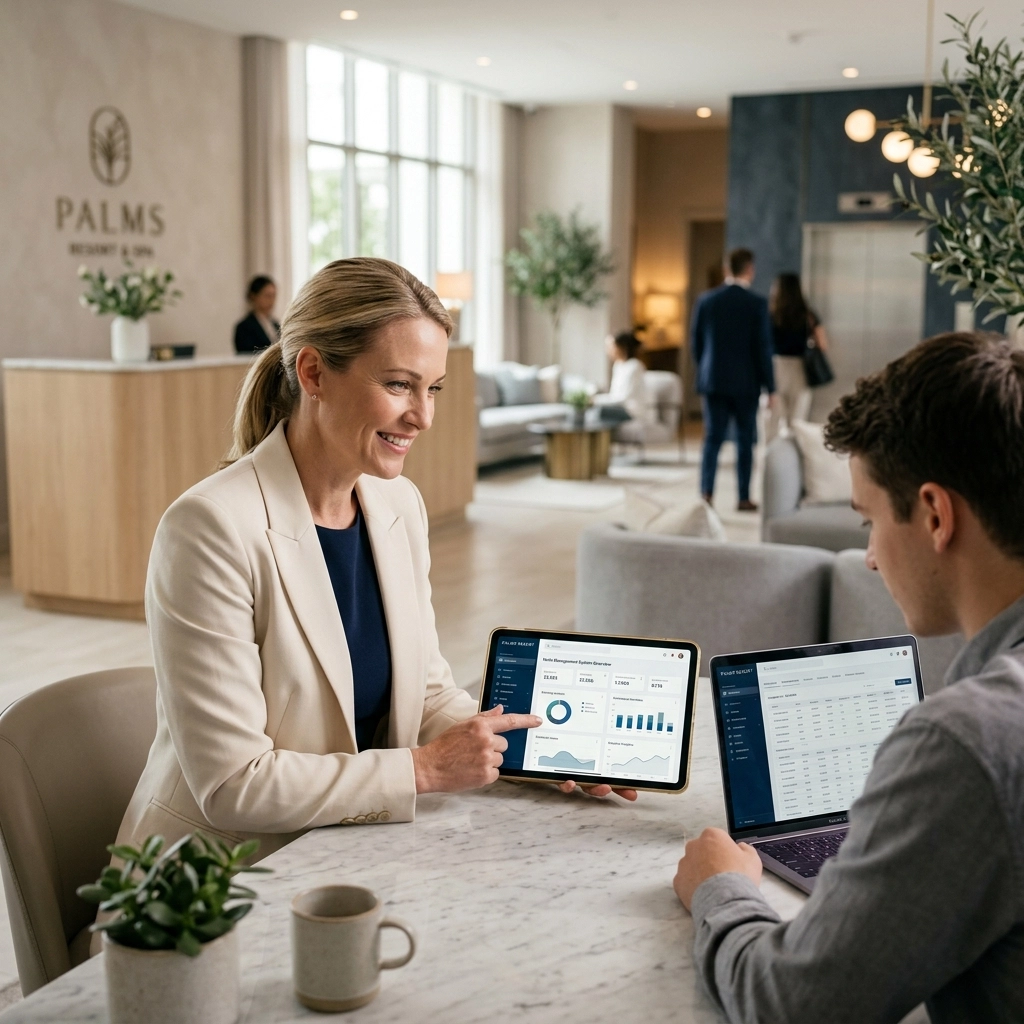
- Mobility first. Untether your staff so they can check guests in from a tablet in the lobby or a sofa in the lounge.
- Self-service options. Give guests the freedom to check in on the train or order a late-night snack from their own device.
- Zero friction. Payments, upgrades, and digital keys should happen in the background.

What to look for: The three pillars
The hospitality tech landscape is crowded. To cut through the noise, focus on the three pillars of operational excellence: connectivity, automation, and intelligence.
1. Open Connectivity
A PMS that doesn't play well with others is a liability. Your software should act as a hub, connecting seamlessly to your POS, your CRM, and your favorite local tour operator.
- API-first design. Look for platforms that offer an open API, allowing you to plug in the latest tech without a six-month integration project.
- Marketplace access. You should be able to browse and connect apps as easily as you do on your smartphone.
- Data flow. Real-time synchronization across all channels, from Booking.com to your direct booking engine, is non-negotiable.
2. Radical Automation
We think your team’s talent is wasted on manual data entry. Automated workflows transform the "administrative burden" into "operational flow."
- Automated payments. Say goodbye to manual card swipes and the high risk of chargebacks.
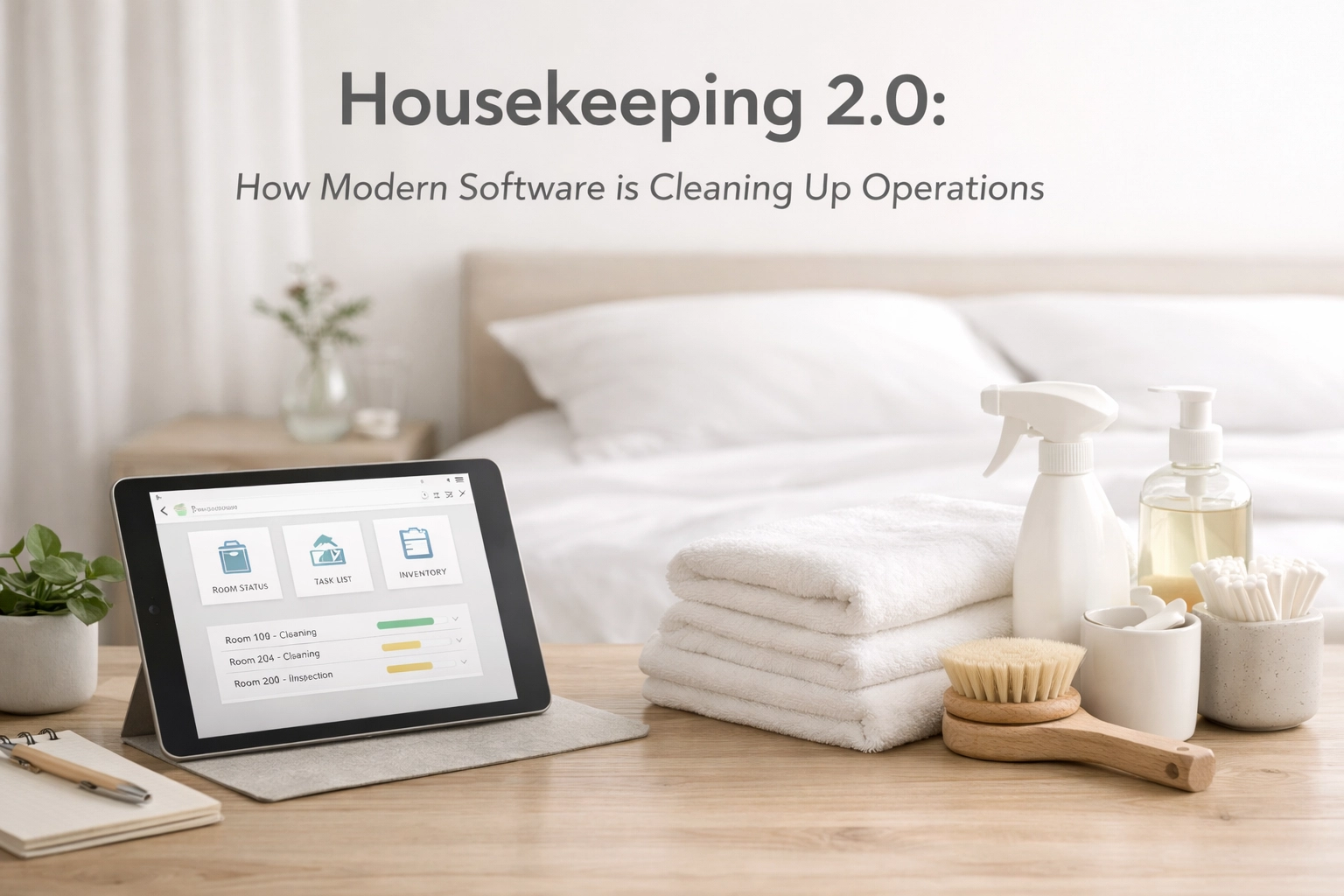
- Smart housekeeping. Housekeeping status should update the moment a guest checks out via their phone.
- Night audits. The dreaded "night audit" should be a relic of the past, happening automatically while you sleep.
3. Applied Intelligence
AI in hospitality has moved past the "chatbot that doesn't understand you" phase. Today, it’s about predictive analytics and personalized service at scale.
- Dynamic pricing. Adjust your rates in real-time based on market demand, local events, and competitor data.
- Guest insights. Understand guest preferences before they arrive, allowing you to suggest the right upgrade or the perfect bottle of wine.
- Operational forecasting. Predict staffing needs based on occupancy trends and flight arrival data.

Comparing the contenders
Not all hotel management software is created equal. The market generally splits into three categories: legacy giants, entry-level tools, and cloud-native innovators.
The Legacy Giants
Names like Oracle Hospitality OPERA have dominated the market for decades. They are incredibly powerful and feature-rich, built for massive enterprise chains with complex needs. However, they often come with high overheads, complex training requirements, and a "closed" feel that can make innovation slow.
The Entry-Level Tools
Platforms like Little Hotelier or RoomRaccoon are fantastic for small B&Bs or independent guest houses. They are affordable, often ranging from $30 to $150 per month, and easy to set up. The trade-off? You may outgrow them quickly as you look for deeper integrations or more advanced guest experience features.
The Cloud-Native Innovators (Mews)
This is where Mews lives. We believe in a hospitality world where technology disappears into the background. Unlike legacy systems, cloud-native platforms are built for agility. They update weekly, not yearly. They prioritize the guest experience over the back-office process. For properties looking to lead the market, this is the only logical choice.
"Switching to a modern PMS saved our front office team 10 hours a week on admin alone. We finally have time to actually talk to our guests." , Sarah, Boutique Hotel Manager.

The ROI of the right choice
Choosing the "cheaper" option often costs more in the long run. When evaluating software, look at the potential for revenue growth, not just the monthly subscription fee.
- +15% RevPAR. High-performing systems use AI to optimize rates, consistently outperforming manual pricing.
- 40% faster check-ins. Digital guest journeys reduce queues and increase the likelihood of positive reviews.
- Higher staff retention. Modern, intuitive tools make the job easier and more enjoyable for your team.
We believe that happy staff lead to happy guests, and happy guests lead to a healthy bottom line. It’s a simple cycle, but it requires the right engine to drive it.
Making the move
Switching systems can feel daunting. But the cost of staying on an outdated platform is higher than the effort of migrating.
- Audit your current stack. Identify which tools you use, which you hate, and which you actually need.
- Define your guest journey. Map out exactly how you want a guest to feel from the moment they book to the moment they leave.
- Request a tailored demo. Don't just watch a generic video. Ask the provider to show you how they handle your specific pain points.
- Check the support. You need a partner, not just a vendor. Look for 24/7 support and a robust community.

See what the future looks like
The hospitality industry is changing faster than ever. AI, contactless technology, and the "experience economy" are no longer just buzzwords, they are the baseline for success. Your software should be your greatest competitive advantage, not your biggest bottleneck.
Ready to see how a modern, innovative PMS can transform your property? Explore how Mews is redefining the guest experience and giving hoteliers the freedom to be hosts again.
Discover the Mews platform here and get started with a solution that grows with you.
Summary Checklist
Before you sign that contract, ask yourself:
- Can I access the system from my phone while I'm at a coffee shop?
- Does it integrate with my existing tech stack in under 30 minutes?
- Will it automate my payments so I never have to touch a credit card terminal again?
- Does it offer a guest-facing web app for check-in and out?
If the answer to any of these is "no," you haven't found the best software yet. Keep looking. Your guests (and your sanity) will thank you.

Final thoughts
The best hotel management software is the one you don't have to think about. It’s the invisible hand that makes sure the rooms are clean, the rates are right, and the guests are smiling. In an era where travel trends shift overnight, agility is your best friend.
Choose a platform that doesn't just manage your hotel as it is today, but prepares it for what it will become tomorrow. That’s not just smart management: that’s operational excellence.
For more insights on the latest hospitality tech and how to streamline your operations, stay tuned to our blog. We're here to help you navigate the future of travel, one innovation at a time. All from one visionary platform.