So, you’ve finally ditched the supermarket instant and invested in a decent grinder. Or maybe you’ve been brewing at home for years and you’re starting to wonder why that expensive bag of beans you bought online tastes like… well, not much.
Choosing the best fresh roasted coffee beans is an art form, but it’s also a bit of a science. To be honest, the "best" bean is entirely subjective, what we love might not be what you love. However, there are some non-negotiable rules when it comes to quality, freshness, and sourcing that will help you narrow down the field from "meh" to "wow."
In this guide, we’re going to walk you through everything you need to know to pick the perfect beans for your morning ritual. And if you’re looking for a shortcut to the good stuff, you can always browse the selection of fresh roasted coffee beans at Limini Coffee, where we obsess over every single roast.
Why Freshness is the Only Rule That Matters
Why is everyone so obsessed with "fresh roasted" coffee? Because coffee is a perishable agricultural product. Once those beans come out of the roaster, the clock starts ticking.
The primary enemy of coffee is oxygen. As soon as beans are roasted, they begin to release carbon dioxide (a process we call "degassing") and start absorbing oxygen (oxidation). This is why supermarket coffee often tastes flat or "stale." It’s been sitting in a warehouse for months.
The Roast Date vs. The Best Before Date
Always look for a Roast Date. If a bag only has a "Best Before" date, it’s a red flag. Most speciality roasters, including us here at Limini, will tell you exactly when the beans were roasted.
Ideally, you want to use beans that are between 7 and 21 days old. Why not day 1? Well, very fresh coffee has too much gas. This can lead to an uneven extraction and a bit of a "fizzy" mouthfeel in espresso. If you want to dive deeper into why this happens, check out our article on understanding coffee crema.

Single Origin vs. Blends: Which One for You?
This is the big debate in the home brewing world. Do you go for a single origin or a carefully crafted blend?
Single Origin
This means the coffee comes from a single producer, crop, or region in one country. Think of it like a single malt whisky. You get to taste the terroir, the unique characteristics of the soil, altitude, and climate.
- The Pros: Unique, often adventurous flavours (think blueberries, jasmine, or bright citrus).
- The Cons: Can be inconsistent or even a bit polarizing if you aren't used to high acidity.
Blends
A blend is a mix of two or more single origin beans. We create blends to achieve a specific flavour profile that is consistent year-round.
- The Pros: Reliable, balanced, and usually designed to cut through milk perfectly.
- The Cons: You lose some of those wild, specific "micro-lot" flavours.
If you’re brewing espresso and want a thick, chocolatey latte, a blend is usually your best friend. If you’re using a V60 or Chemex and want to explore the nuances of Ethiopian coffee, go single origin. You can see how we approach our own sourcing here.
Understanding Roast Levels (Without the Jargon)
We’ve all seen the labels: Light, Medium, Dark. But what do they actually mean for your cup?
| Roast Level | Flavour Profile | Best For… |
|---|---|---|
| Light Roast | High acidity, floral, tea-like, fruity notes. | Pour-over, Aeropress, black coffee. |
| Medium Roast | Balanced, caramel, nutty, medium body. | Everything! The crowd-pleaser. |
| Dark Roast | Bold, smoky, chocolatey, low acidity. | Espresso, French Press, milk-based drinks. |
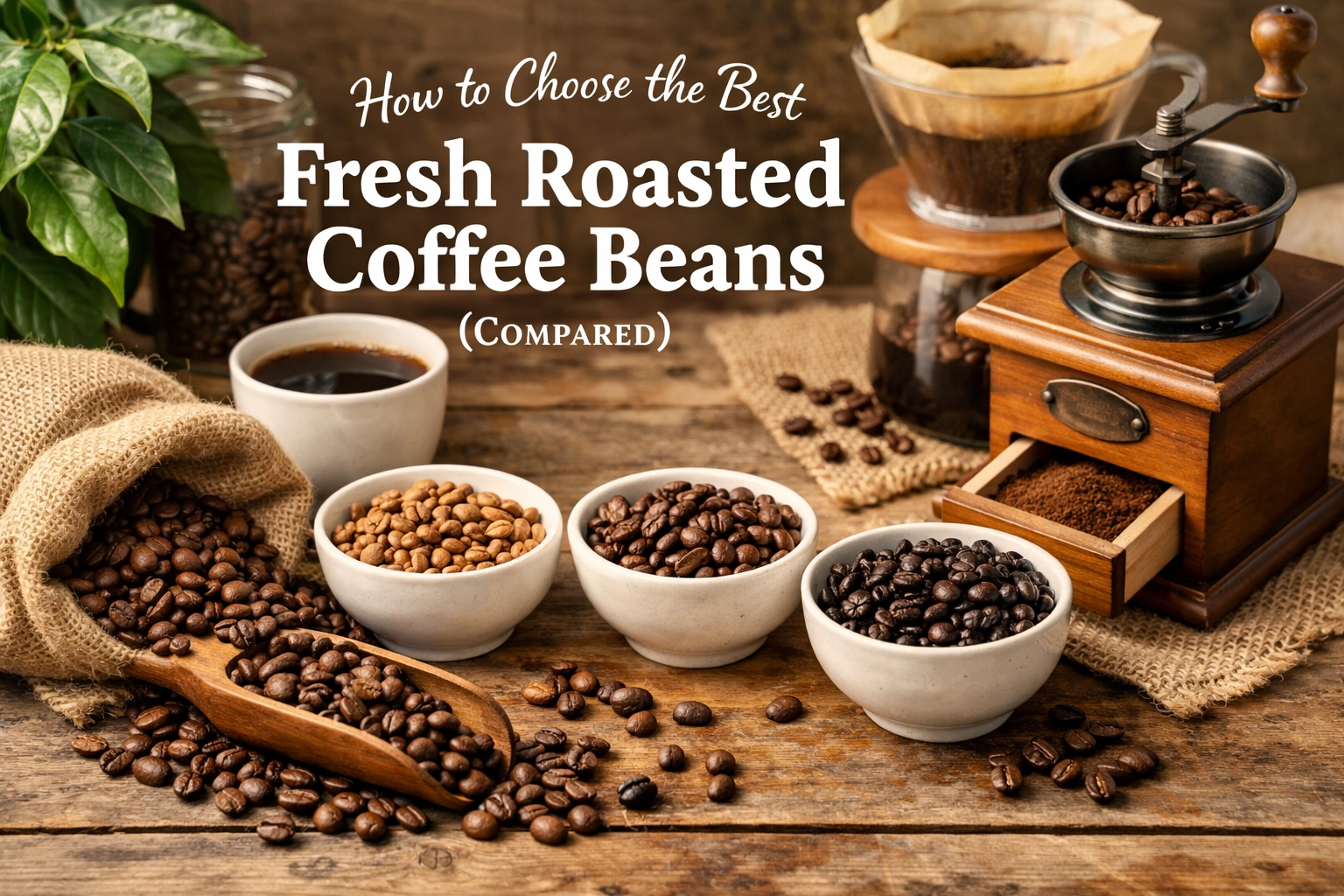
Light Roasts are roasted to just after the "first crack." They preserve the most original flavour of the bean. If you like your coffee to taste like juice, this is for you.
Medium Roasts (like most of what we offer) aim for the sweet spot. We’re looking for that Maillard reaction, where the sugars in the bean start to caramelise.
Dark Roasts go further, often into the "second crack." Be careful here; a bad dark roast just tastes like ash. A good one, however, is incredibly comforting.

Processing Methods: Washed, Natural, and Honey
This is where things get a bit technical, but bear with us. How the coffee cherry is removed from the bean (the seed) changes everything.
- Washed (Wet Process): The fruit is stripped off before drying. This results in a "clean" cup with bright acidity. It’s the most common method.
- Natural (Dry Process): The bean is dried inside the fruit. This leads to heavy bodies and intense fruit flavours (often strawberry or tropical notes). They can be a bit "funky," which some people love and others… not so much.
- Honey Process: Somewhere in the middle. Some of the sticky fruit (mucilage) is left on during drying. It creates a very sweet, syrupy cup.
We believe that understanding these methods is essential for any passionate home brewer. If you’re struggling to get your brew right despite having great beans, our coffee brewing calculator can help you dial in your ratios.
Transparency and Ethics: Why They Matter
When you buy cheap coffee, someone, somewhere, is paying the price. Usually, it’s the farmer.
The best fresh roasted coffee beans are those that have been sustainably sourced. This isn’t just about feeling good; it’s about quality. Farmers who are paid a premium (often way above Fairtrade prices) have the resources to take better care of their crops, resulting in speciality-grade beans that taste significantly better.
At Limini, transparency is one of our core values. We want you to know exactly where your coffee comes from. If you’re interested in the business side of things or looking to level up your skills, you might find our barista training overview quite useful.
How to Read a Coffee Bag Like a Pro
When you’re looking at a bag of Limini Coffee, you’ll see several key pieces of information. Here is how to decode them:
- Altitude (MASL): Meters Above Sea Level. Generally, higher altitude (1,500m+) means slower growth, which results in denser beans and more complex flavours.
- Varietal: Just like grapes for wine (Merlot, Malbec), coffee has varietals (Bourbon, Typica, Caturra).
- Tasting Notes: These aren't added flavours! They are the natural nuances our roasters have identified. If it says "notes of milk chocolate and orange," it means the coffee naturally reminds us of those things.

Equipment: Don't Let Good Beans Go to Waste
You can buy the most expensive, fresh roasted coffee beans in the world, but if you’re using a blade grinder from the 90s and boiling water to 100 ºC (212 °F), you’re going to have a bad time.
We recommend brewing with water between 88 ºC and 95 ºC (190 °F to 203 °F). Anything hotter will scorch the coffee and make it bitter. Also, please, we beg you: grind your beans fresh right before you brew. The surface area increases exponentially once ground, meaning the coffee goes stale in minutes, not days.
If you’re still setting up your home station, take a look at our guide on choosing espresso equipment. It’s a bit of a minefield out there, and we’ve done the hard work of testing the gear for you.
The Final Verdict
Choosing the best fresh roasted coffee beans comes down to three things:
- Freshness: Look for a roast date within the last 4 weeks.
- Transparency: Know the origin and the roast level.
- Personal Preference: Do you like fruity/acidic or chocolatey/bold?
There is no "wrong" answer as long as the quality is there. The beauty of coffee is the exploration. Try a bag from Brazil one month and one from El Salvador the next. See how the flavours shift.
If you want to start your journey with beans that are roasted with love and scientific precision, head over to the Limini Coffee shop. Whether you are a home brewing enthusiast or looking for wholesale coffee for your business, we’ve got you covered.
Happy brewing! 🙂