So, you’ve decided to take the plunge into the world of pour-over coffee. We think that is a brilliant decision. There is something deeply satisfying about the ritual of manual brewing, the steam rising, the aroma filling the kitchen, and that first, clean sip of a perfectly extracted single-origin bean. It is quite a unique and brilliant system that allows you to taste the nuances of the coffee in a way that a standard auto-drip machine simply cannot match.
But we know it can be a bit intimidating. You see baristas with their fancy scales, weirdly shaped kettles, and precise movements, and it might feel like you need a degree in chemistry to get a decent cup. Good news: you don't. While there is a lot of science happening behind the scenes, mastering the pour-over is mostly about consistency and understanding a few key variables.
At Limini Coffee, we live and breathe this stuff. We believe that everyone should be able to enjoy cafe-quality coffee at home, and we are here to help you get there. If you’re looking to grab some world-class beans to start your journey, you can check out our latest roasts right here: Limini Coffee.
What Exactly is Specialty Coffee?
Before we get into the "how," let’s talk about the "what." You’ll hear the term "specialty coffee" thrown around a lot. Basically, it refers to coffee that has been graded 80 points or above on a 100-point scale by certified coffee tasters (Q Graders). This isn't just marketing fluff; it’s a standard of excellence that covers everything from how the beans were grown to how they were processed and roasted.
When we talk about sourcing our coffee, we’re looking for those unique flavour profiles that tell a story of a specific region or farm. This is why pour-over brewing is so popular in the specialty world. Because the water passes through the coffee bed using only gravity, it produces a much lighter body and a cleaner finish than espresso or a French press. This "cleanliness" allows the delicate floral, fruity, or acidic notes of the bean to really shine.

The Essential Gear List
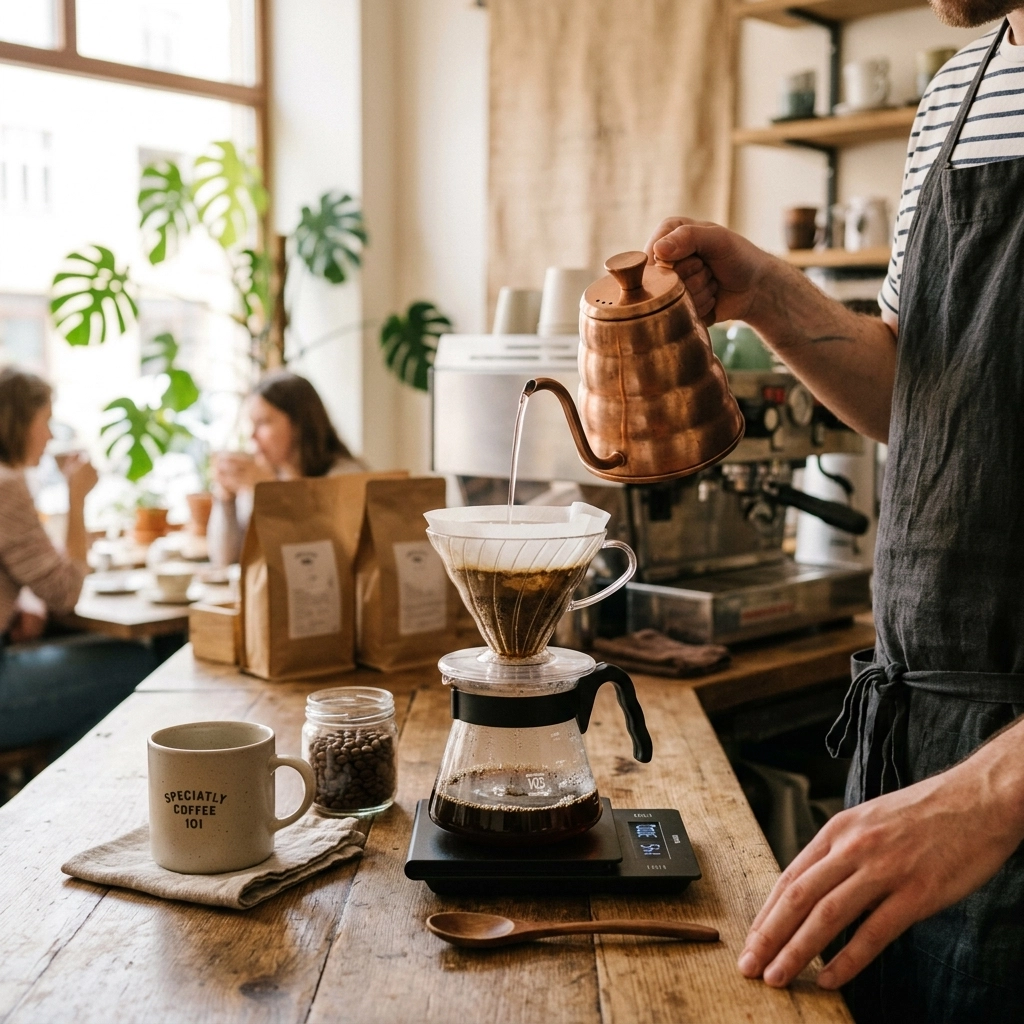
To master the pour-over, you need the right tools. You don't need to spend a fortune, but there are a few non-negotiables if you want consistent results.
1. The Dripper
There are dozens of options out there. The Hario V60 is a classic (it has those spiral ridges and a large hole at the bottom), while the Chemex is famous for its thick filters and elegant glass design. For beginners, we often recommend something like the Kalita Wave because its flat-bottom design is a bit more forgiving.
2. A Burr Grinder
If you take one thing away from this guide, let it be this: Fresh is best. Coffee starts to lose its volatile aromatics within minutes of being ground. More importantly, you need a burr grinder, not a blade grinder. A burr grinder crushes the beans into uniform particles, whereas a blade grinder chops them into a mix of "fines" (dust) and "boulders" (chunks). This leads to uneven extraction, some of your coffee will be over-extracted (bitter) and some will be under-extracted (sour). Not something we would recommend.
3. A Gooseneck Kettle
Do you need one? Technically, no. But will it make your life a thousand times easier? Yes. The long, thin neck allows you to control the flow and placement of the water with precision. This is vital for ensuring all the coffee grounds are saturated evenly.
4. A Digital Scale with a Timer
Coffee brewing is a game of ratios. We don't do "scoops" here; we do grams. Using a scale ensures that if you make a mind-blowing cup of coffee today, you can make the exact same cup tomorrow. If you’re curious about how to dial in your numbers, our coffee brewing calculator is a great place to start.
The Variables: Dialing It In
Before we pour, we need to set the stage. There are four main variables you can control: the ratio, the grind, the water temperature, and the time.
The Ratio
We generally suggest a starting ratio of 1:16. That means for every 1 gram of coffee, you use 16 grams of water.
- Example: 15g of coffee to 240g of water (a standard mug).
- Example: 30g of coffee to 480g of water (a large Chemex for two).
If you prefer a stronger, more intense cup, you might drop down to 1:15. If you want something lighter and more tea-like, try 1:17.
The Grind Size
For most pour-over methods, you’re looking for a medium-fine grind. It should look roughly like table salt or slightly coarser. If the water drains through too fast and the coffee tastes sour, your grind is too coarse. If it takes forever to drain and tastes bitter or "ashy," your grind is too fine.
Water Temperature
We believe the sweet spot for specialty coffee is between 195°F and 205°F (90°C to 96°C). If you don't have a temperature-controlled kettle, just bring your water to a boil and let it sit for about 30 to 60 seconds before pouring. Boiling water can sometimes scorch the delicate grounds, leading to a harsh taste.

Step-by-Step: The Perfect Pour
Ready? Let’s brew. For this guide, we’ll assume you’re using a standard dripper like a V60.
Step 1: Prep the Filter
Place your paper filter in the dripper and rinse it thoroughly with hot water. This does two things: it washes away any "papery" taste and it preheats your dripper and carafe. Don't forget to dump the rinse water out of the carafe before you start!
Step 2: Add Your Coffee
Add your freshly ground coffee (we suggest 20g for a medium cup) to the filter. Give the dripper a gentle shake to level out the grounds. You want a flat "bed" of coffee so the water moves through it evenly.
Step 3: The Bloom
Start your timer and pour about 40g to 50g of water over the grounds (roughly double the weight of the coffee). You want to make sure all the grounds are wet. Now, wait. You’ll see the coffee "bloom": it will swell up and release bubbles. This is CO2 escaping from the beans. If the beans are fresh (like the ones you’ll find at Limini Coffee), the bloom will be quite active. This step is extremely important because CO2 can repel water, preventing proper extraction. Wait until the timer hits 30-45 seconds.
Step 4: The Main Pour
Now, begin pouring in steady, concentric circles starting from the center and moving outward (but avoid pouring directly onto the paper filter walls). Keep your pour slow and controlled. We like to pour in "stages." For a 320g total brew, we might pour up to 150g, wait 10 seconds, then pour the rest up to 320g.
Step 5: The Draw Down
Once you’ve reached your total water weight, give the dripper a very gentle stir or a small "swirl" to knock any grounds off the sides of the filter. Now, let gravity do the rest. The water should drain through, leaving a flat (not domed or divoted) bed of grounds.
Total Brew Time: Your timer should ideally be between 2:30 and 3:30 minutes.
Troubleshooting Your Brew
So, you’ve taken a sip. How is it?
- If it tastes sour, salty, or "thin": This usually means it is under-extracted. The water didn't pull enough flavor out of the beans. Next time, try a finer grind or slightly hotter water.
- If it tastes bitter, dry, or astringent: This is over-extraction. You’ve pulled out too many of the organic compounds, including the unpleasant ones. Try a coarser grind or cooler water.
- If it tastes "just okay": Check your water quality. Since coffee is 98% water, if your tap water tastes like chlorine, your coffee will too. Using filtered water can make a massive difference.

Why We Love the Pour-Over
The beauty of coffee is that it is a journey. You might find that you prefer the bright, citrusy notes of an Ethiopian Yirgacheffe on a summer morning, but crave the chocolatey, nutty depth of a Brazilian roast in the winter. Mastering the pour-over gives you the keys to the kingdom. You are no longer at the mercy of a machine's pre-set temperature or flow rate; you are the one in control.
It's worth mentioning that while equipment matters, the most important factor will always be the beans. You can have a £500 kettle, but if your beans were roasted six months ago and sat on a supermarket shelf, they won't taste like much. We take immense pride in our roasting process, ensuring that every bag we send out is at its peak flavor profile. Whether you are a seasoned pro or just starting your barista training, using high-quality, specialty-grade beans is the single best upgrade you can make.
If you’re ready to start experimenting, grab a bag of our current favorites here: Fresh Roasted Coffee Beans.
Final Thoughts
Don't get discouraged if your first few attempts aren't "perfect." Even the best baristas in the world are constantly tweaking their recipes. The goal isn't just to make a drink; it's to enjoy the process of learning. Imagine sitting down with a cup that you crafted by hand, knowing exactly why it tastes the way it does. That is the specialty coffee experience.
So, go ahead: get your scale out, heat up that water, and start pouring. We think you're going to love it.
If you have any questions about equipment or which beans might suit your palate, feel free to reach out to us. We’re always happy to chat about all things caffeine. Happy brewing!