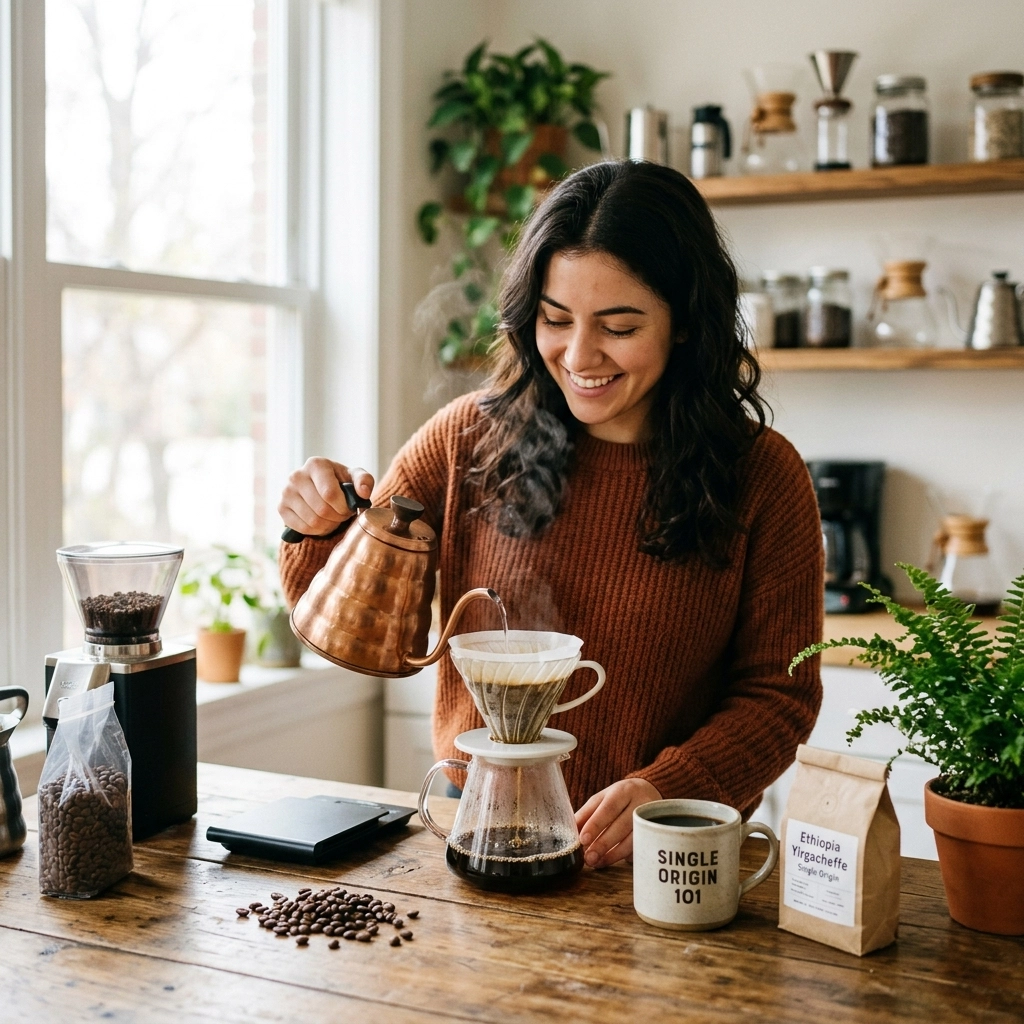
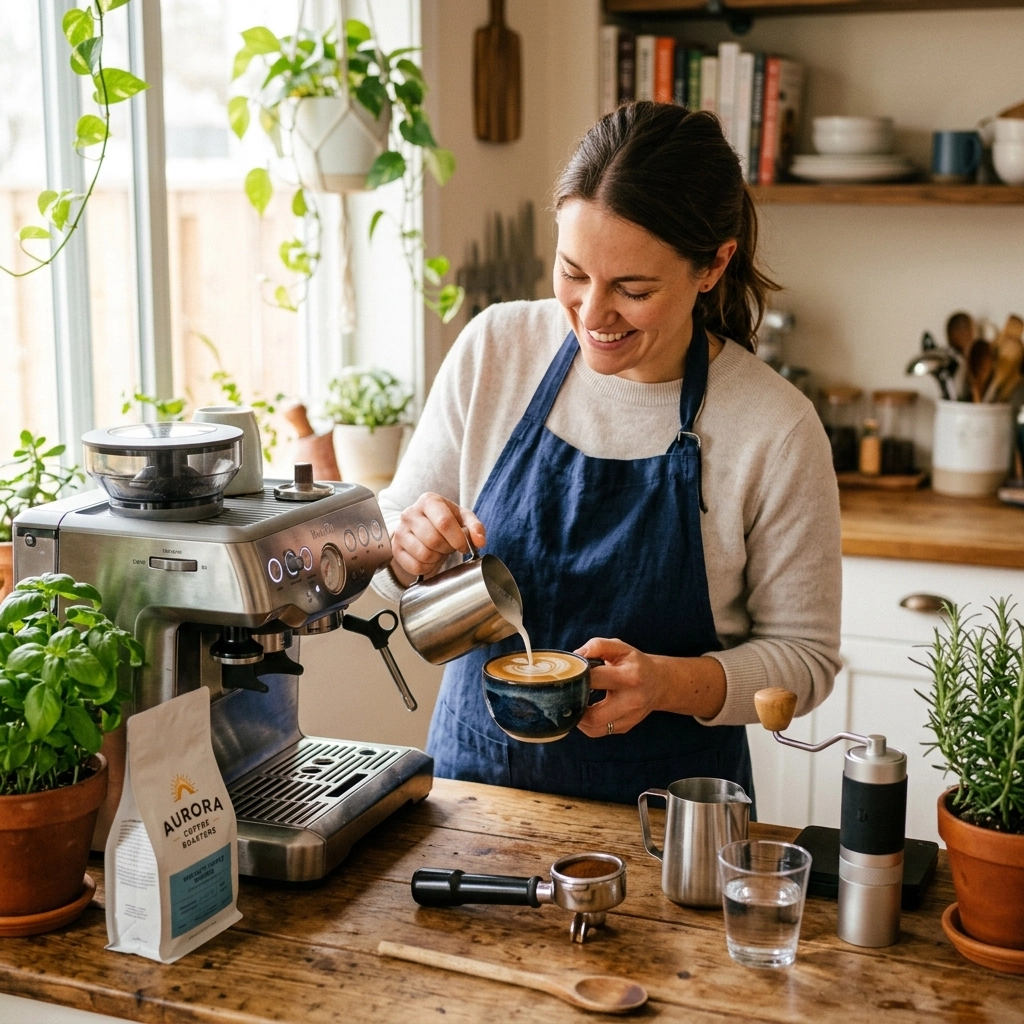
We have all been there. You are standing in your kitchen at 7:00 AM, staring at a bag of pre-ground supermarket coffee, wondering why it never tastes quite as good as the flat white you get from your favorite local haunt. You might think it is because you don’t have a multi-thousand-pound espresso machine or a dedicated barista with a handlebar mustache.
But here is a little secret we like to share with our friends: you don’t need any of that to drink world-class coffee.
In fact, we believe you can create a cup that rivals any specialty café in exactly five minutes, right in your own kitchen. It isn’t magic, and it isn’t even particularly difficult. It just requires focusing on the few things that actually matter and ignoring the fluff.
So, how do we get there? Let's break down the "5-minute barista" routine that will change your mornings forever.
1. The Golden Rule: Freshness is Non-Negotiable
If you start with stale beans, you have already lost the battle. It doesn’t matter if you have the best technique in the world; physics simply won't be on your side.
When coffee is roasted, it begins to release carbon dioxide. This process, which we call "degassing," is essential. However, once those gases leave, oxygen moves in. This is oxidation, and it is the enemy of flavor. Most supermarket coffee has been sitting on a shelf for months. By the time you open it, the vibrant notes of blueberry, chocolate, or jasmine have vanished, leaving behind nothing but a bitter, woody husk.
We always recommend buying from a speciality coffee roaster that roasts to order. This ensures you are getting beans at their absolute peak. For the best results, you should look for a "roasted on" date rather than a "best before" date.
And here is the kicker: you need to grind them yourself.
Grinding coffee increases the surface area by thousands of percent. This means oxidation happens almost instantly. If you want that cafe-quality "punch," you need to grind within seconds of brewing. If you are looking to stock up on the good stuff, you can find our full range of fresh beans right here at Limini Coffee.
2. The Setup: Choosing Your 5-Minute Weapon
You don’t need a La Spaziale to make great coffee, although they are admittedly brilliant machines. For a fast, high-quality home brew, we usually point people toward three specific methods:
- The Aeropress: This is arguably the most versatile tool in the coffee world. It is fast, nearly indestructible, and incredibly easy to clean.
- The French Press (Cafetière): The old reliable. If you want a heavy body and a rich mouthfeel, this is your best bet.
- The Moka Pot: For those who want something close to espresso without the expensive pump-driven machine.

Which one should you choose? It depends on your taste. If you like a clean, tea-like cup that highlights the delicate notes of a single-origin bean, go with the Aeropress. If you want a big, bold, morning "wake up" coffee, the French Press is your friend.
Choosing the right kit can be a bit overwhelming, so we’ve put together a guide on choosing espresso equipment and home brewing gear to help you navigate the options.
3. The Math (Don't Panic, It’s Simple)
Precision is what separates a "decent" cup from a "barista" cup. Baristas don't "eyeball" it. We weigh everything.
The standard ratio we suggest starting with is 60g of coffee per 1 litre of water. Since most of us are just making one mug, that usually works out to about 15g to 18g of coffee for 250ml to 300ml of water.
Why is this important?
Because if you use too much coffee, you will likely under-extract, leading to a sour, salty taste. Use too little, and you will over-extract, resulting in a bitter, dry sensation. Using a simple digital kitchen scale will change your life.
If you want to get really nerdy with it (and we hope you do), check out our coffee brewing calculator. It does the heavy lifting for you so you can focus on the drinking.
4. Temperature Control: Don't Burn Your Beans
One of the biggest mistakes we see people make is using boiling water.
Water that is 100 ºC (212 ºF) is generally too hot for coffee. It extracts the bitter compounds too quickly, leaving you with a cup that tastes like ash. On the flip side, water that is too cool won’t extract enough flavor.
We recommend a temperature range between 90 ºC and 96 ºC (194 ºF to 205 ºF).
If you don't have a temperature-controlled kettle, don't worry. Just let your kettle sit for about 60 to 90 seconds after it finishes boiling. This will naturally bring the temperature down into that "sweet spot." It is a small change that makes a massive difference in the clarity of the final cup.
5. The Workflow: Your 5-Minute Masterclass
Here is how to put it all together in a seamless 5-minute routine. Let’s use the Aeropress as our example, as it’s the king of the 5-minute window.
- 0:00 – 0:30: Boil your water. While that is happening, weigh out 16g of fresh Limini beans and grind them to a medium-fine consistency (think table salt).
- 0:30 – 1:00: Place a paper filter in the cap and rinse it with hot water. This removes any papery taste and warms up your mug.
- 1:00 – 1:15: Add your coffee to the Aeropress.
- 1:15 – 1:45: Pour in 250g of water (which should have cooled slightly by now). Give it a gentle stir to make sure all the grounds are saturated.
- 1:45 – 3:30: Let it steep. This is where the magic happens.
- 3:30 – 4:15: Place the plunger on and press down slowly. If you feel too much resistance, your grind is too fine. If it falls through too easily, your grind is too coarse.
- 4:15 – 5:00: Clean the Aeropress (it takes 10 seconds) and enjoy your coffee.

6. Understanding Milk (If You Take It)
If you are a latte or cappuccino fan, the "5-minute" goal becomes slightly more challenging, but only slightly.
The key to cafe-quality milk isn't just bubbles; it’s microfoam. You want that glossy, wet-paint look. At home, you can achieve this by heating your milk in the microwave or on the hob to about 60 ºC to 65 ºC (140 ºF to 150 ºF).
Why that temperature? Because at 65 ºC, the sweetness of the milk is at its peak. Go any higher, and you start to scald the proteins, which creates a "cooked" flavor that masks the coffee.
For the texture, a simple handheld battery-operated whisk can work wonders. If you want to understand the science of what is actually happening to those proteins and fats, we have a deep dive on understanding milk that is well worth a read.
7. Troubleshooting Like a Pro
Even with the best intentions, sometimes the coffee just doesn't taste right. When that happens, we use a simple mental checklist:
- Is it too bitter? Your grind is probably too fine, or your water was too hot. Coarsen the grind next time.
- Is it too sour? Your grind is likely too coarse, or your water was too cool. Fine up the grind.
- Is it weak? You might have used too much water or not enough coffee. Check your ratios.
- Is it "flat" or boring? The beans are likely old. This is the most common issue.
We honestly believe that once you start using fresh, properly sourced coffee, 90% of your problems will disappear.

8. Why This Matters
You might think, "It’s just coffee, Scott. Why all the fuss?"
But we think coffee is one of the few affordable luxuries we have left. Taking five minutes out of a chaotic morning to focus on a craft, to smell the aromatics of a freshly ground Ethiopian Yirgacheffe, and to sip something you actually made with intention… well, that is a powerful thing.
It is also worth noting that once you master the basics at home, you start to appreciate the work that goes into professional brewing even more. If you ever find yourself wanting to take the leap from "home enthusiast" to "pro," we offer comprehensive barista training that covers everything from espresso theory to advanced latte art.
Ready to Elevate Your Morning?
Creating barista-quality coffee at home isn't about having the most expensive shiny toys. It is about understanding the relationship between the bean, the water, and the time.
Start with the best raw materials. That means fresh beans, filtered water, and a little bit of patience. If you are ready to ditch the supermarket stuff and taste what coffee is supposed to taste like, head over to Limini Coffee and grab a bag of our latest roast.

We promise your 5-minute morning routine will never be the same.
Happy brewing! If you have any questions about which beans would suit your specific brewing method, feel free to reach out to us. We love talking shop. And if you’re curious about the difference between a latte, a cappuccino, and a flat white, check out our handy guide to clear up the confusion.
So, what are you waiting for? The kettle is almost boiled. Get to it!