
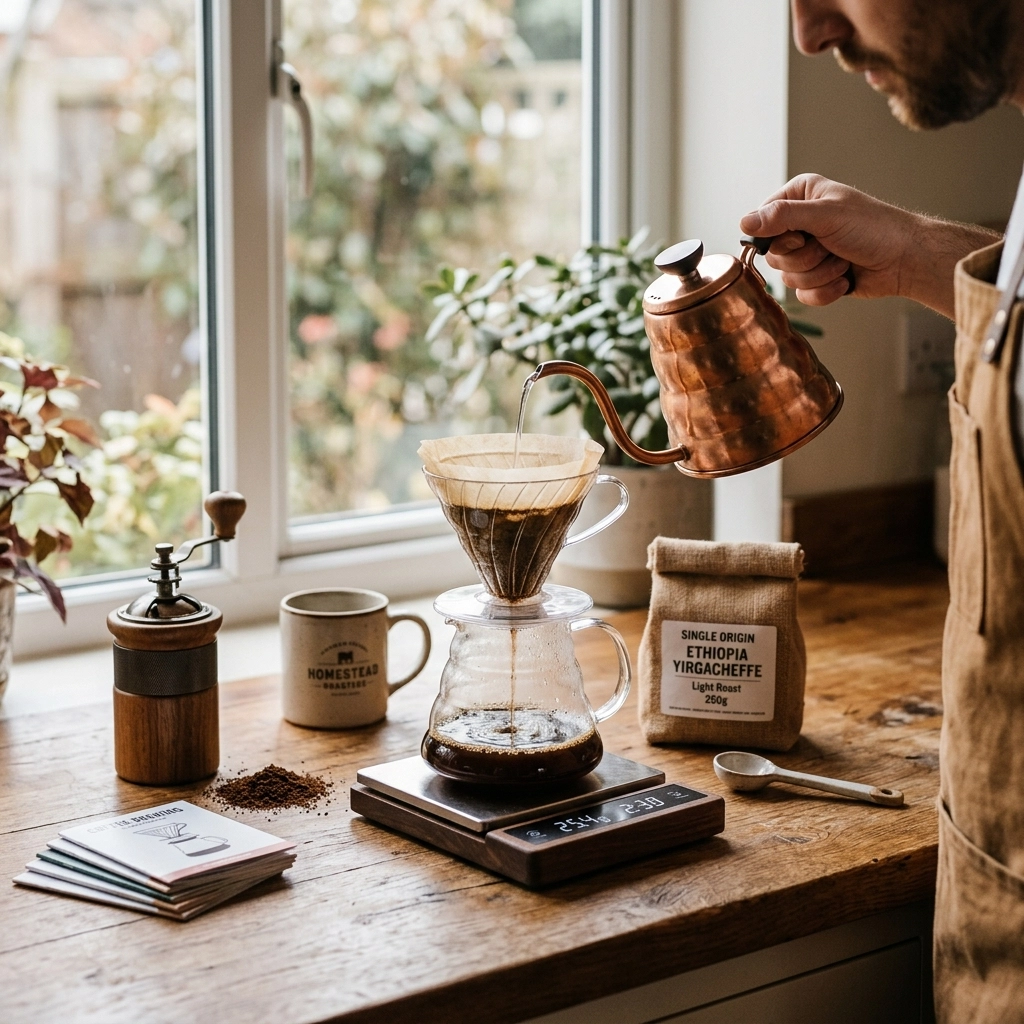
So, you’ve decided to take the plunge into the world of specialty coffee. Maybe you’re tired of that bitter, "coffee-flavored" mud from the supermarket, or perhaps you’ve visited a high-end cafe and wondered why their Ethiopian Yirgacheffe tasted more like Earl Grey tea and blueberries than actual coffee.
Welcome to the rabbit hole. It’s deep, it smells incredible, and honestly? It’s one of the most rewarding hobbies you can pick up.
At Limini Coffee, we live and breathe this stuff. But we also know that when you first start looking at bags of beans covered in words like "washed process," "1800 MASL," and "Heirloom varietal," it can feel a bit like you’re trying to read a foreign language without a dictionary.
Don't worry. We’re going to break down exactly what single origin coffee is, why it matters, and how you can master the art of brewing it in your own kitchen.
What Exactly is "Single Origin"?
The term gets thrown around a lot, but the concept is actually quite simple. In the simplest terms, single origin coffee is coffee that comes from a single producer, a single harvest, or a single region in one country.
Think of it like wine. You have your "table wine" which is a blend of various grapes from all over the place (that’s your supermarket coffee blend). Then you have a Single Vineyard Malbec from a specific estate in Mendoza. The latter tells a story of the soil, the weather that year, and the specific hands that picked the grapes.
When you buy a bag of single origin beans from us, you aren't just getting "coffee." You’re getting a snapshot of a specific place on Earth.
Why is Traceability Important?
Traceability is the backbone of the specialty industry. When we know exactly where the coffee comes from, we can ensure that the farmers are being paid fairly and that the environmental practices meet high standards. If you’re curious about how we handle this, you can read more about sourcing our coffee here.
But for you, the home brewer, traceability means consistency and flavor. Because all the beans in that bag come from the same farm or cooperative, they are generally the same size, density, and moisture content. This means they roast more evenly and, more importantly, they extract more evenly when you brew them.

Understanding the Flavor Profile: The Power of Terroir
Why does a Kenyan coffee taste like blackcurrant while a Brazilian coffee tastes like peanut butter and chocolate? The answer is terroir.
Terroir (a French term borrowed from the wine world) refers to the environmental factors that affect a crop's phenotype. In coffee, this includes:
- Altitude: Measured in MASL (Meters Above Sea Level). Generally, higher altitudes produce slower-growing cherries, which leads to denser beans and more complex, acidic flavors.
- Soil Chemistry: Volcanic soil, for example, is rich in nutrients that often result in vibrant, "bright" coffees.
- Climate: The amount of rainfall and the temperature fluctuations between day and night.
A Quick Cheat Sheet for Coffee Origins
If you're just starting out, here is a very general guide to what you might expect from different regions:
- Africa (Ethiopia, Kenya, Rwanda): Expect high acidity, floral aromas, and tea-like bodies. These are often the "wildest" coffees.
- Latin America (Colombia, Guatemala, Costa Rica): These are usually the crowd-pleasers. Think balanced sweetness, caramel, nuts, and a crisp apple-like acidity.
- Asia (Sumatra, Vietnam): Often lower in acidity with heavy bodies and earthy, spicy, or even tobacco-like notes.
Decoding the Label: Washed vs. Natural
When you’re browsing for your next bag of fresh roasted coffee beans, you’ll see the "Process" listed. This is extremely important because it drastically changes how the coffee tastes.
The Washed Process
In this method, the fruit (the cherry) is removed from the bean almost immediately after picking, and the beans are scrubbed clean with water.
- The Result: A "clean" cup. You taste the bean itself, not the fruit. Washed coffees are usually bright, acidic, and very clear in their flavor notes.
The Natural Process
The cherries are left to dry in the sun with the fruit still on the bean. The sugars in the fruit ferment and soak into the seed.
- The Result: A "funky" cup. These coffees are often heavy-bodied, very sweet, and have intense fruit flavors (like dried strawberries or blueberries).

Essential Gear for the Aspiring Home Barista
You don’t need to spend thousands of pounds to make incredible coffee at home, but you do need a few specific tools. If you’re looking into more serious setups later, check out our guide on choosing espresso equipment.
For now, here is your starter kit:
- A Burr Grinder: This is the most important piece of gear. Blade grinders chop beans into uneven shards. A burr grinder crushes them into uniform particles. Consistency is the secret to great coffee.
- Digital Scales: We measure in grams, not spoons. Coffee is a science of ratios.
- A Kettle: Preferably a gooseneck kettle if you’re doing pour-overs, as it gives you control over the flow of water.
- Fresh Beans: This is non-negotiable. Coffee is a fresh produce item. It peaks around 7-14 days after roasting. Always check the roast date on your Limini Coffee bag.
The Golden Rules of Brewing Single Origin
Now that you’ve got your beans and your gear, let’s talk about the actual brewing. Single origin coffees are delicate. If you use boiling water or an old, dirty machine, you’ll destroy the very nuances you paid for.
1. Water Quality
Coffee is 98-99% water. If your tap water tastes like chlorine or is very "hard" (full of minerals), your coffee will taste flat or metallic. Use a simple water filter jug; it makes a world of difference.
2. Temperature (The 92°C Sweet Spot)
Never use boiling water (100°C) directly onto coffee grounds; it can scorch the delicate oils. We find that most single origins shine between 90°C and 94°C (194°F – 201°F). If the coffee tastes too bitter, drop the temperature. If it tastes sour or salty, raise it.
3. The Ratio
A standard starting point is a 1:16 ratio. That’s 1 gram of coffee for every 16 grams of water.
- Example: 15g of coffee to 240g of water.
To make this easier, we’ve actually built a coffee brewing calculator to help you get the math right every time.

Which Brewing Method Should You Use?
While you can use single origins for anything, certain methods highlight different characteristics.
- Pour-Over (V60, Chemex): Best for highlighting acidity and floral notes. It produces a light, clean body.
- Aeropress: incredibly versatile and great for bringing out sweetness and "punchy" flavors.
- French Press: If you prefer a heavy, creamy mouthfeel, this is the one. However, the sediment can sometimes mask the more delicate floral notes of a high-end Ethiopian.
- Espresso: Challenging but rewarding. Single origin espresso is often very bright and acidic (what some call "third wave" espresso). If you're struggling with your shots, our barista training can help you master the craft.
How to Taste Coffee Like a Pro
When you take your first sip, don't just gulp it down. Coffee professionals use a process called "cupping," but you can do a simplified version at home.
- Smell the dry grounds: What do you notice? Chocolate? Lemon? Grass?
- Slurp (Yes, really): Slurping sprays the coffee across your entire palate and aerates it, which helps you pick up more flavors.
- Let it cool: This is the most important tip. High-quality specialty coffee actually tastes better as it cools down to room temperature. As the heat decreases, your tongue can perceive more sweetness and acidity.
If you find that your coffee has a strange "bubbly" look on top, don't worry: that's usually just the crema or the "bloom." You can learn more about what crema actually is here.
Why Freshness is the Ultimate Goal
The enemy of coffee is oxygen. As soon as coffee is roasted, it begins to "degas" (release CO2) and oxidize. Once you grind it, that process speeds up by a factor of ten.
This is why we always recommend buying whole beans and grinding them right before you brew. It might seem like a chore at first, but the aroma that fills your kitchen and the explosion of flavor in the cup are worth the extra 60 seconds of effort.
At Limini, we roast in small batches to ensure that when your order arrives, it's at the absolute peak of its flavor profile. Whether you're looking for a bright Kenyan or a chocolatey Guatemalan, you can find our current selection of single origins here.

Final Thoughts: It's a Journey, Not a Destination
Mastering specialty coffee at home isn't about being a snob; it's about appreciation. It’s about taking five minutes out of your busy morning to engage with something that was grown with care thousands of miles away.
Don't be afraid to experiment. Change your grind size, try a different water temperature, or swap your V60 for a French Press. There is no "perfect" cup of coffee: only the cup that you enjoy the most.
If you're ever feeling stuck or want to dive deeper into the technical side of things, feel free to check out our reviews or even join us for some training.
So, what are you waiting for? Grab a bag of something new, fire up the kettle, and let's start brewing.
Happy sipping!
Looking to stock up on the best beans for your home setup? Shop our latest Single Origin roasts here and experience the Limini difference.