So, you’re looking for the “best” coffee origin for your shop. We get asked this all the time. "Which country produces the ultimate bean?" Honestly? There is no single answer. If there were, every coffee shop in the world would be serving the exact same thing, and the industry would be pretty boring, wouldn't it?
The truth is, the "best" origin depends entirely on what your customers like, what equipment you’re using, and, let’s be real, your budget. A delicate, floral Ethiopian Yirgacheffe might be a dream for a pour-over enthusiast, but it might get totally lost in a 12oz latte. On the flip side, a heavy, chocolatey Brazilian bean is a crowd-pleaser for milk-based drinks but might lack the "wow" factor for a black coffee purist.
At Limini Coffee, we spend a huge amount of time sourcing our coffee, and we’ve learned that every origin brings something unique to the table. In this guide, we’re going to break down the heavy hitters of the coffee world to help you decide which beans deserve a spot on your hopper.
Brazil: The Heavyweight Champion
If you’ve ever had a "classic" espresso, there’s a very high chance it contained Brazilian beans. Brazil is the largest producer of coffee in the world, and for good reason. They have the infrastructure and the climate to produce massive volumes of high-quality Arabica.
The Flavour Profile: Think nutty, chocolatey, and buttery. Brazilian coffees generally have lower acidity and a heavy body. They are the backbone of many espresso blends because they provide that rich, creamy mouthfeel that people love in their morning flat white.
Why it’s great for your shop: It’s reliable. Because Brazil produces so much coffee, you can often find great value here. If you want a house blend that everyone from your regulars to the occasional visitor will enjoy, a Brazilian base is a safe bet. We use a lot of Brazilian beans in our wholesale specialty coffee offerings because they are just so dependable.

Ethiopia: The Birthplace of Coffee
If Brazil is the reliable worker, Ethiopia is the eccentric artist. As the biological birthplace of Arabica coffee, Ethiopia has thousands of heirloom varieties that you won't find anywhere else.
The Flavour Profile: This is where things get exciting. Ethiopian coffees are famous for their floral and fruity notes. You’ll often taste things like jasmine, bergamot, blueberry, or even strawberry. They tend to have a higher acidity, that bright, "zingy" feeling on the tongue, and a tea-like body.
Why it’s great for your shop: If you want to show your customers that coffee can be more than just "coffee-flavoured," an Ethiopian single origin is the way to do it. It’s perfect as a guest espresso or a filter option. Just a heads up: the high acidity can sometimes be a bit shocking for customers used to darker, traditional roasts, so it’s worth a little bit of barista training to help your team explain these flavours to your guests.
Colombia: The All-Rounder
Colombia is perhaps the most famous coffee-producing country in the world (thanks, Juan Valdez!). They have an incredible geography with various micro-climates, which means they can produce coffee year-round.
The Flavour Profile: Balanced is the keyword here. Colombian coffees usually sit right in the middle of the spectrum. You get a nice medium body, a pleasant acidity (often like red apples or citrus), and plenty of caramel and brown sugar sweetness.
Why it’s great for your shop: It’s incredibly versatile. A medium-roast Colombian bean works beautifully as a single-origin espresso and holds its own in milk, but it’s also clean enough to be enjoyed as a black coffee. It’s the "goldilocks" of coffee origins, not too funky, not too heavy, just right.

Vietnam: The Robusta Powerhouse
We can't talk about coffee origins without mentioning Vietnam. While they do grow some Arabica, Vietnam is famous for being the world's leading producer of Robusta.
The Flavour Profile: Robusta is a different species than Arabica. It has more caffeine (about double!), less sugar, and a much bolder, earthier, and sometimes bitter flavour. Think dark chocolate, toasted nuts, and a "woody" finish.
Why it’s great for your shop: Traditionally, specialty coffee roasters stayed away from Robusta, but that’s changing. High-quality "Fine Robusta" is becoming a thing. It adds incredible crema and a massive caffeine kick to espresso blends. If your customers want a coffee that "really wakes them up" and cuts through a lot of milk, a blend with a touch of Vietnamese Robusta might be exactly what you need.
Indonesia: Earthy and Intense
Coffee from Indonesia, particularly Sumatra, is processed in a very specific way called Giling Basah (wet-hulling). This gives the beans a very distinct look and taste.
The Flavour Profile: These are the "heavy" hitters. Expect earthy, spicy, and smoky notes. Some people even pick up hints of tobacco or forest floor (in a good way, we promise!). They have very low acidity and a thick, syrupy body.
Why it’s great for your shop: It’s a love-it-or-hate-it origin. For customers who find bright, acidic coffees "sour," an Indonesian bean is a revelation. It’s bold, dark, and intense. It’s also fantastic for milk-based drinks because the flavour is so strong it never gets drowned out.

Kenya: The Acid King
Kenyan coffee is often considered the "Champagne" of the coffee world. The volcanic soil and high altitudes produce some of the most intense and complex coffees on the planet.
The Flavour Profile: High, bright, wine-like acidity. Kenyan coffees are famous for their "blackcurrant" note. They are juicy, tart, and incredibly clean. If you like your coffee to taste like a bowl of berries, Kenya is for you.
Why it’s great for your shop: It’s a premium product. Because of the way the Kenyan auction system works, high-quality Kenyan beans are often more expensive. This makes them perfect for a special "limited edition" pour-over or a high-end guest espresso. It’s a great way to elevate your coffee shop's reputation among coffee nerds.
Central American Gems: Guatemala & Costa Rica
We’re grouping these together because they often share a similar "vibe," though they are distinct. Central American countries are known for their meticulous processing and clean flavour profiles.
- Guatemala: Often offers a wonderful cocoa-powder sweetness and a hint of spice.
- Costa Rica: Known for innovation. They use "honey processing" (leaving some of the fruit on the bean while drying) to create amazing sweetness and body.
Why they are great for your shop: These origins are perfect for shops that want to bridge the gap between "traditional" and "modern" coffee. They are approachable but have enough complexity to keep things interesting.

How to Choose the Right Origin for Your Business
So, how do you actually decide? It’s not just about what tastes best in a cupping bowl. You need to think about the practicalities of running a shop.
1. Know Your Audience
Who are your customers? If you’re located in a business district where people want a quick, comforting latte on their way to the office, a Brazilian/Colombian blend is your best friend. If you’re a trendy weekend spot where people come to experience new flavours, you need to be looking at Ethiopia, Kenya, or funky processed Central American beans.
2. Consider Your Brew Method
If you are mainly doing espresso, you need a bean that is easy to dial in and consistent. Some of the more delicate light-roasted origins can be a nightmare to get right on an espresso machine if your tamping technique or water temperature isn't spot on. If you’re doing filter coffee, you have more room to experiment with those bright, acidic origins.
3. Think About the Milk
Most coffee sold in the UK is served with milk. A delicate Ethiopian bean might taste amazing as a black coffee, but once you add 200ml of steamed milk, it can taste like… well, hot milk with a hint of something. For milk drinks, you need beans with a bit of "punch": think Brazil, Indonesia, or a well-developed Colombian. If you’re interested in how milk interacts with different coffees, check out our guide to understanding milk.
4. Cost and Sustainability
Specialty coffee isn't just about flavour; it's about the people behind it. Some origins are more expensive due to labor costs, transport, or scarcity. We believe it's important to build long-term relationships with coffee suppliers for coffee shops who pay farmers fairly. It's worth paying a little more for beans that have a positive impact.

Our Selection at Limini Coffee
Us here at Limini, we’re a bit obsessed with origin. We don’t just buy whatever is cheapest on the market. We spend time tasting, testing, and tweaking our roasts to make sure each origin shines.
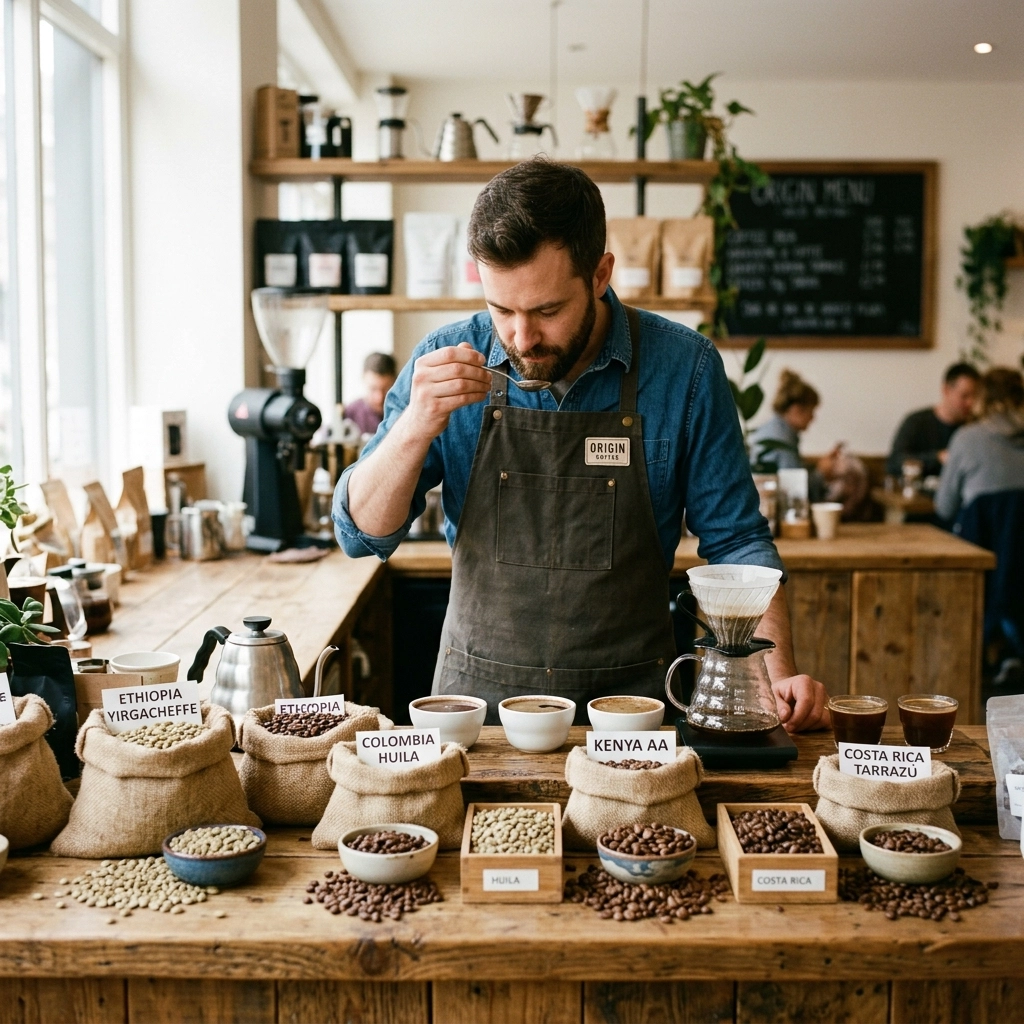
Whether you’re looking for a chocolatey Brazilian for your house espresso or a zesty Ethiopian for your V60 bar, we’ve got you covered. We love helping shop owners find that "perfect" bean that makes their customers keep coming back. If you’re feeling a bit overwhelmed by all the choices, why not come down for some training? We can taste through different origins together and find the one that fits your brand perfectly.
Final Thoughts
The world of coffee origin is massive, and we’ve only scratched the surface. The "best" country is the one that produces the beans that make you: and your customers: happy. Don't be afraid to experiment. Try a guest roast once a month. Ask your customers for feedback.
Coffee is a journey, not a destination. And honestly, that’s the beauty of it 🙂
If you’re ready to level up your coffee game or need help sourcing your next favorite origin, give us a shout. We’d love to chat beans with you!