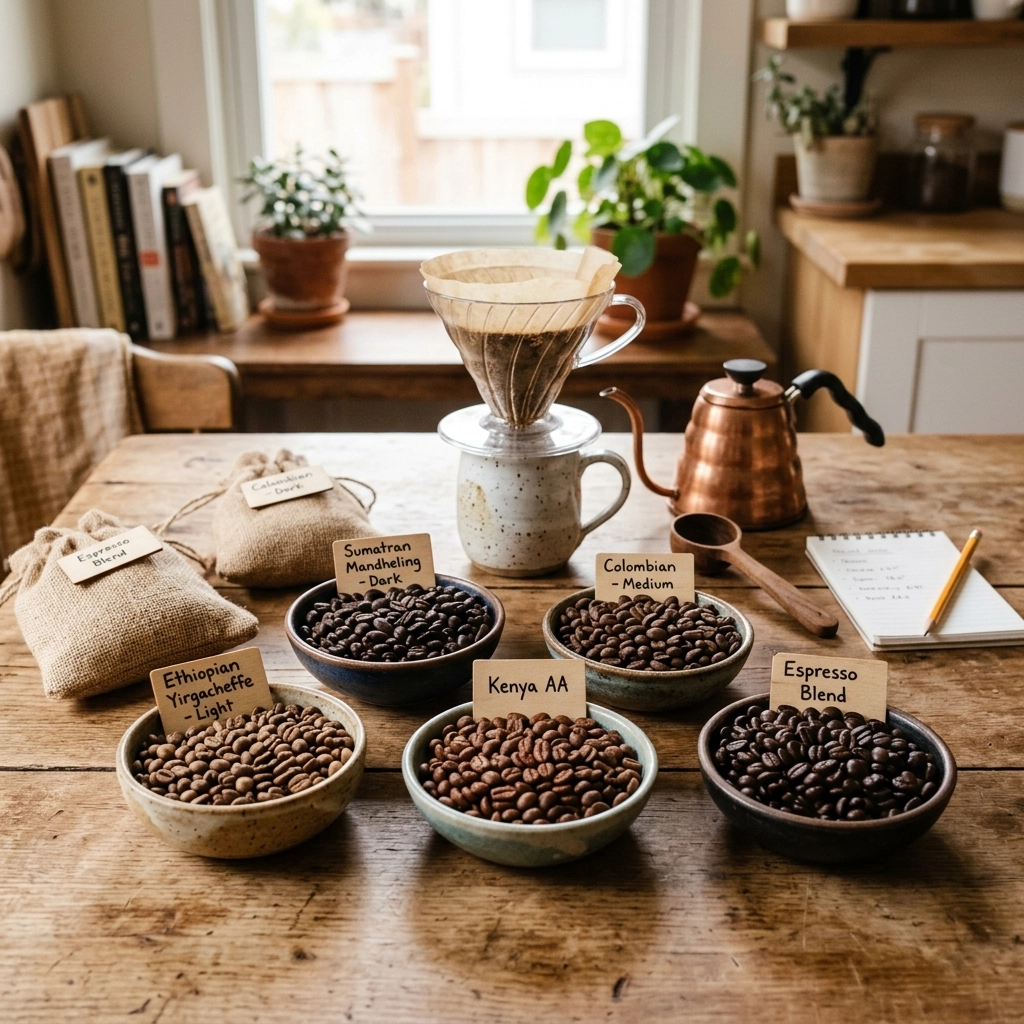
So, you’ve finally done it. You’ve invested in a decent setup, cleared some space on the kitchen counter, and you’re ready to transition from "person who drinks coffee" to "home barista extraordinaire." But then you walk into a shop or browse online and realize there are approximately ten thousand different bags of beans staring back at you.
Which one do you choose? Does "Single Origin" actually mean anything, or is it just fancy marketing? Why does one bag taste like blueberries while the other tastes like a campfire?
Choosing the right beans is arguably more important than the machine you use. You can have a five-thousand-pound setup, but if you put stale, over-roasted beans into it, the result is going to be, well, a bit rubbish. At Limini Coffee, we spend our days obsessing over these details so you don't have to, but understanding the basics will transform your home brewing game.
The Golden Rule: Freshness is Non-Negotiable
Before we even talk about flavors or origins, we need to talk about the "Roasted On" date.
If a bag of coffee doesn't have a roast date, put it back. Coffee is a fresh agricultural product. Once those beans leave the roaster, they start losing their aromatic compounds and oils. We believe that for most home brewing methods, the "sweet spot" is between 7 to 21 days after roasting.
Why is this important? Because old coffee loses its soul. It becomes flat, woody, and loses that vibrant acidity that makes speciality coffee so exciting. When you buy from a speciality coffee roaster, you’re getting beans that were likely roasted just a few days ago.
Fresh is best. Period.

Understanding Roast Levels: The Spectrum of Flavour
Roast level is the biggest indicator of how your coffee is going to taste. It’s the difference between a zingy, tea-like morning cup and a heavy, bold espresso that can cut through a gallon of milk.
Light Roasts: The Terroir Express
Light roasts are all about the bean’s origin. Because the beans haven't been in the roaster for long, you’re tasting the soil, the altitude, and the variety of the plant. Expect notes of citrus, jasmine, berries, or even tea.
Best for: Pour-over (V60, Chemex), AeroPress, and anyone who likes black coffee with complexity.
The downside: They can be quite acidic. If you’re looking for that "classic" coffee taste, a light roast might surprise you (and not always in a good way if you're expecting bitterness).
Medium Roasts: The Sweet Spot
This is where we spend a lot of our time. Medium roasts offer a beautiful balance between the natural acidity of the bean and the sweetness developed during the roasting process. Think milk chocolate, toasted nuts, and caramel.
Best for: Pretty much everything. They make excellent espresso and fantastic cafetiere (French Press) coffee.
Why we love them: They are incredibly forgiving. If your technique isn't perfect, a medium roast will still usually taste pretty great.
Dark Roasts: Bold and Traditional
Dark roasts are roasted longer until the oils start to surface on the bean. The origin flavors are mostly gone, replaced by "roast flavors", smoke, dark chocolate, and a pleasant bitterness.
Best for: Traditional espresso, Moka pots, and heavy milk-based drinks like Lattes or Cappuccinos.
Keep in mind: Truly dark roasts can sometimes be oily, which isn't great for the grinders inside some automatic machines.
Single Origin vs. Blends: Which One for You?
You’ll see these terms everywhere. But what’s the actual difference in the cup?
Single Origin beans come from one specific place, a single farm, a single estate, or a specific region within a country. They are like a single malt whisky. They have a very distinct "personality." One week you might have a floral Ethiopian Yirgacheffe, and the next, a nutty Brazilian Mogiana.
We love single origins because they tell a story. You can check out how we handle sourcing our coffee to see the care that goes into selecting these unique lots.
Blends, on the other hand, are a mixture of different beans designed to create a consistent flavor profile. Our goal with a blend is balance. We might take a Brazilian bean for body and sweetness and mix it with a bit of Kenyan for a touch of acidity.
If you want your coffee to taste the same every single morning, go for a blend. If you want an adventure, go for a single origin.

Matching the Bean to Your Brewing Method
Not all beans are created equal when it comes to how you brew them. While you can use any bean for any method, some pairings are just made in heaven.
For the Espresso Lovers
Espresso is a high-pressure extraction. It intensifies everything, the sweetness, the bitterness, and the acidity. If you use a very light, acidic roast, your espresso might taste like a lemon-sucking experience.
We generally recommend medium to dark roasts for espresso. You want something with enough body to produce a beautiful crema. If you're still figuring out your setup, have a look at our guide on choosing espresso equipment.
For the Filter and Pour-Over Fans
Methods like the V60 or Chemex use gravity to pull water through the grounds. This is a much gentler process that excels at highlighting delicate flavors. This is the perfect playground for light to medium-light single origins.
For the Cafetiere (French Press)
The cafetiere is an immersion method. The coffee sits in the water for several minutes (usually around 4 minutes). This produces a heavy, textured cup. We find that medium-dark roasts with chocolatey or nutty profiles work best here.
Does the Origin Country Actually Matter?
Yes, immensely! While every farm is different, countries tend to have "flavor signatures" due to their climate and processing methods.
| Region | Common Flavor Profiles | Best Brewing Method |
|---|---|---|
| Brazil | Chocolate, peanut, caramel, low acidity | Espresso, Cafetiere |
| Ethiopia | Floral (jasmine), blueberry, citrus, tea-like | Pour-over, AeroPress |
| Colombia | Balanced, red apple, caramel, medium body | All-rounder |
| Sumatra | Earthy, spicy, herbal, very heavy body | Dark roast espresso, French Press |
| Kenya | Intense acidity, blackcurrant, wine-y | Pour-over (if you like a punch!) |
So, if you know you hate "sour" coffee, you might want to steer clear of light-roasted East African beans and head straight for South America.

The Processing Method: Washed vs. Natural
This is a bit more technical, but it’s a huge factor in flavor. "Processing" is how the coffee cherry is removed from the bean inside.
- Washed Process: The fruit is stripped off immediately using water. This leads to a "clean" cup where you taste the bean itself. Expect bright acidity and clarity.
- Natural Process: The cherry is left to dry on the bean in the sun. This allows the sugars in the fruit to ferment slightly and soak into the bean. These coffees are often "funkier," sweeter, and have heavy fruit notes (like dried strawberries or tropical fruit).
If you see "Natural" on a bag at Limini Coffee, expect a fruit bomb!
A Note on Grinding
We always, always recommend buying whole-bean coffee and grinding it right before you brew. Why? Because ground coffee has more surface area exposed to oxygen, meaning it goes stale in minutes rather than weeks.
However, we know life happens. If you don't have a grinder yet, make sure you choose a grind size that matches your method. Too coarse for espresso and it’ll run through like water; too fine for a cafetiere and it’ll be a muddy, bitter mess.
If you're unsure about your ratios, give our coffee brewing calculator a spin. It takes the guesswork out of the morning haze.

How to Read a Coffee Label Like a Pro
When you’re looking at a bag of Limini beans (or any speciality roaster), look for these key indicators:
- Roast Date: (Within the last month? Perfect.)
- Tasting Notes: (These aren't added flavors! They are what the coffee naturally reminds the roaster of. If it says "Milk Chocolate and Hazelnut," expect a crowd-pleaser. If it says "Bergamot and Lemongrass," expect something wild.)
- Altitude: (Generally, higher altitude = slower growth = more complex sugars = better coffee.)
- Process: (Washed for clarity, Natural for fruitiness.)
Final Thoughts: The Best Bean is the One You Like
At the end of the day, coffee is subjective. We might rave about a high-altitude, honey-processed Gesha, but if you prefer a dark, smoky blend that reminds you of an Italian piazza, then that is the best coffee for you.
Don't be afraid to experiment. Buy small bags. Try an origin you've never heard of. Change your brew ratio slightly. That’s the beauty of home brewing: you are the head roaster and the head barista in your own kitchen.
If you ever find yourself stuck or your coffee just doesn't taste right, we're always here to help. Check out our reviews to see what other home brewers are loving right now, or dive into our training overview if you want to take your skills to the professional level.
Ready to find your new favorite? Browse our current selection at Limini Coffee and let's get brewing.
Happy caffeinating!