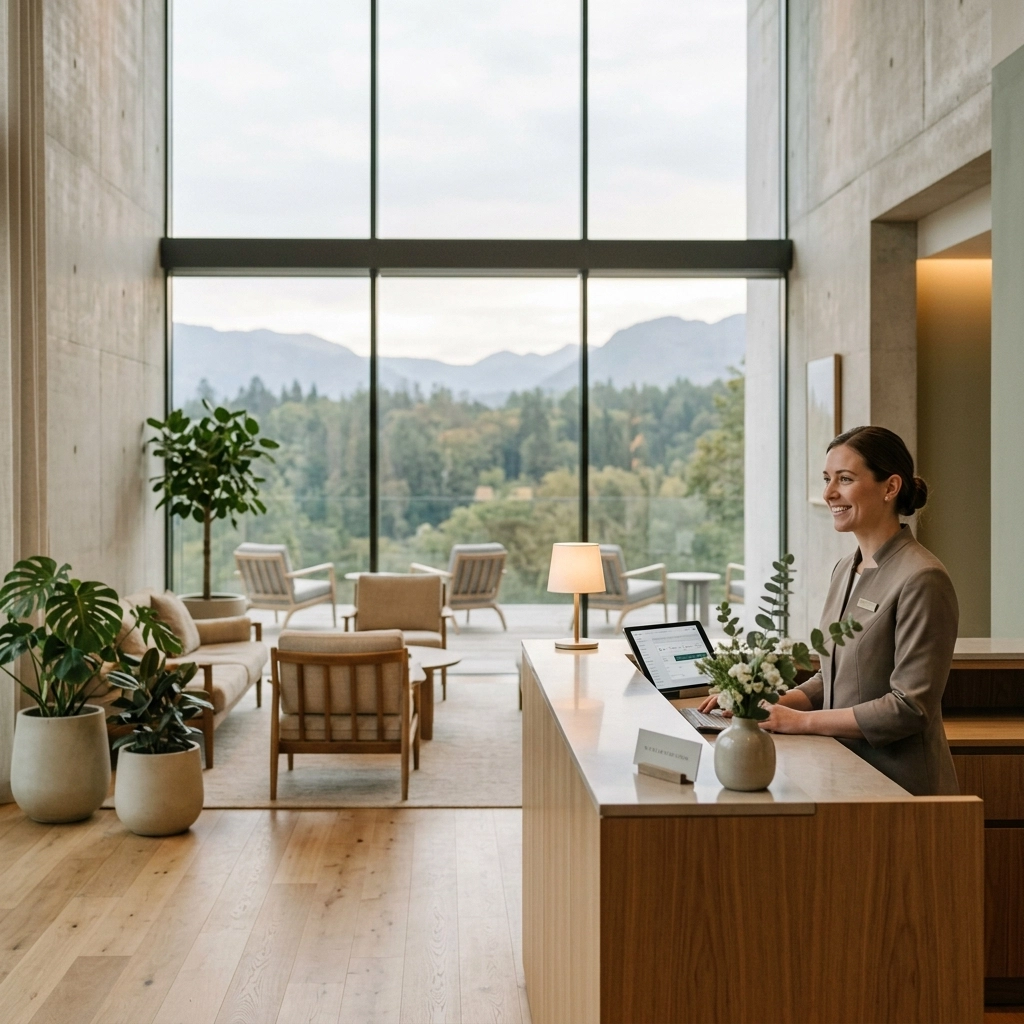
Automate the routine. Elevate the human. Transform the stay.
The hospitality landscape in 2026 isn’t just about having a faster Wi-Fi connection or a sleek lobby. It’s about a fundamental shift in how we define service. With over 12,500 properties already moving toward a more tech-enabled future, the industry has reached a tipping point. We’ve moved past the "digital transformation" buzzwords and into the era of the autonomous hotel.
If you’re still managing your property like it’s 2019, you’re not just behind: you’re invisible to the modern traveler. Here are the 10 trends defining 2026 and how you can stay ahead of the curve, all from one innovative platform.
1. AI Agents: The Invisible Coworkers
We’ve graduated from basic chatbots that can’t understand a typo. In 2026, AI agents are sophisticated, autonomous entities integrated into your Property Management System (PMS). They don’t just answer questions; they solve problems.
These agents handle the heavy lifting: reassigning housekeeping schedules in real-time when a guest requests an early check-in, or automatically adjusting room rates based on a sudden local event. They work in the background, making decisions that used to take a revenue manager three hours: now done in three seconds.
- Autonomous decision-making. AI agents now execute tasks, not just flag them.
- Operational fluency. They understand the context of your specific property.
- Zero-latency service. Guests get what they need before they even realize they need it.
2. Personalization at Scale (For Real This Time)
We’ve been talking about personalization for a decade, but 2026 is when it actually scales. Thanks to deeper data integration, hotels can now offer "Hyper-Personalization-as-a-Service."
Imagine a guest walks into their room. The temperature is exactly 21 degrees, their favorite jazz playlist is subtly humming from the speakers, and the mini-bar is stocked with the specific brand of oat milk they mentioned in a review three stays ago: at a different property. This isn't magic; it’s Mews-level data connectivity. By analyzing vast datasets, you can provide tailored experiences to every single guest without increasing your headcount.

3. The Death of Traditional Search
The way guests find you has changed. Nearly 40% of travelers are now using Large Language Models (LLMs) and Generative AI tools to plan their entire trips. They aren't typing "hotels in London" into a search bar; they’re telling an AI, "Find me a boutique hotel in East London with a great gym and a focus on sustainability for under £300."
If your data isn't structured to be read by these AI "travel agents," you don’t exist. Your online presence needs to be more than just a website: it needs to be a rich data source that AI can parse and recommend.
4. Human-Centric Leadership and the Labor Fix
The labor shortage isn't going away, but the way we fight it has evolved. In 2026, the most successful hotels are those that prioritize "Human-Centric Leadership." We believe that technology shouldn't replace people; it should make their jobs worth doing.
By automating the soul-crushing administrative tasks: data entry, manual billing, repetitive emails: you free your staff to actually be hosts. When your team spends less time behind a screen and more time interacting with guests, retention rates skyrocket. It’s simple: happy staff lead to happy guests.
5. The Total Guest Experience (Beyond the Bed)
A room is a commodity. An experience is a premium. In 2026, the leading properties are those that view themselves as community hubs rather than just places to sleep. We’re seeing a massive rise in "Total Guest Experience" models.
This means your PMS needs to handle more than just RevPAR. It needs to manage co-working spaces, wellness memberships, long-term stays, and local event bookings: all in one bill. Guests want a seamless transition from "tourist" to "local," and your property is the gateway.
- Diversified revenue streams. Turn your lobby into a high-end co-working space.
- Unified guest profiles. One profile for the gym member, the coffee shop regular, and the overnight guest.
- Integrated billing. No more manual reconciliation for external services.

6. Hyper-Local-as-a-Service
Authenticity is the currency of 2026. Travelers are no longer satisfied with generic luxury; they want to experience the specific culture of their destination. This has led to the rise of "Local-as-a-Service," where hotels partner with neighborhood artisans, chefs, and guides to provide exclusive, curated experiences.
Whether it’s a private pottery class with a local master or a "hidden gem" food tour, these experiences are booked and managed directly through your guest app. It’s about building a brand that feels like a part of the neighborhood, not an interloper. If you're looking to bridge the gap between tech and local charm, check out how we help.
7. Predictive Operations: Thinking Ahead
Housekeeping shouldn't be a guessing game. Predictive operations use AI to forecast exactly when a room will be ready, which linens will be needed, and when a boiler is likely to fail.
By moving from reactive to proactive maintenance and cleaning, you save thousands in operational costs and avoid the dreaded "room not ready" conversation at the front desk. We think the best operations are the ones you never have to think about.
8. The Immersive Experience Economy
Hospitality is merging with entertainment. We’re seeing hotels implement augmented reality (AR) tours of their history, or interactive digital art installations that change based on the guest’s mood.
While it sounds futuristic, the goal is grounded: engagement. In a world of infinite distractions, an immersive stay ensures your brand sticks in the guest’s memory long after they’ve checked out.

9. Economic Agility and Pivot-Ready Pricing
With economic polarization becoming more pronounced, hospitality brands must be agile. The "one size fits all" pricing strategy is dead. 2026 demands "Pivot-Ready Pricing": the ability to instantly shift your target demographic or offer structure based on real-time economic shifts.
If international travel dips, your system should automatically pivot to attract "staycationers" with tailored packages. It’s about being resilient in the face of uncertainty. Our platform is built to give you that freedom.
10. Eco-Innovation: Sustainability is the New Luxury
In 2026, sustainability isn't a checkbox on a corporate social responsibility report; it’s a guest requirement. However, it’s moved beyond "don't wash my towel." It’s now about "Eco-Innovation."
This includes real-time energy tracking for guests (who can see their carbon footprint during their stay) and zero-waste kitchen operations powered by AI inventory management. Guests are willing to pay a premium for properties that aren't just "greenwashed" but are fundamentally designed to be sustainable.
"We moved to Mews and saved our front desk team 10 hours a week on admin. Now, they actually talk to the guests. Our guest satisfaction scores have never been higher." : Boutique Hotel Owner, Amsterdam
See what Mews can do
We believe that the future of hospitality belongs to the innovators. The ones who aren't afraid to let technology handle the "management" so they can focus on the "hospitality."
Getting started with a modern, cloud-native PMS is easier than you think. You can transition your entire operation and get your team up to speed in weeks, not months. It’s about giving you the freedom to run your hotel your way.
Ready to see how these trends can work for your property? Start your journey here and get yourself earning more revenue in no time.
The Bottom Line
2026 is the year of the "Intelligent Stay." By embracing AI agents, hyper-personalization, and human-centric tech, you aren't just keeping up with the competition; you’re defining the new standard. The tools are here. The guests are waiting. Are you ready?