
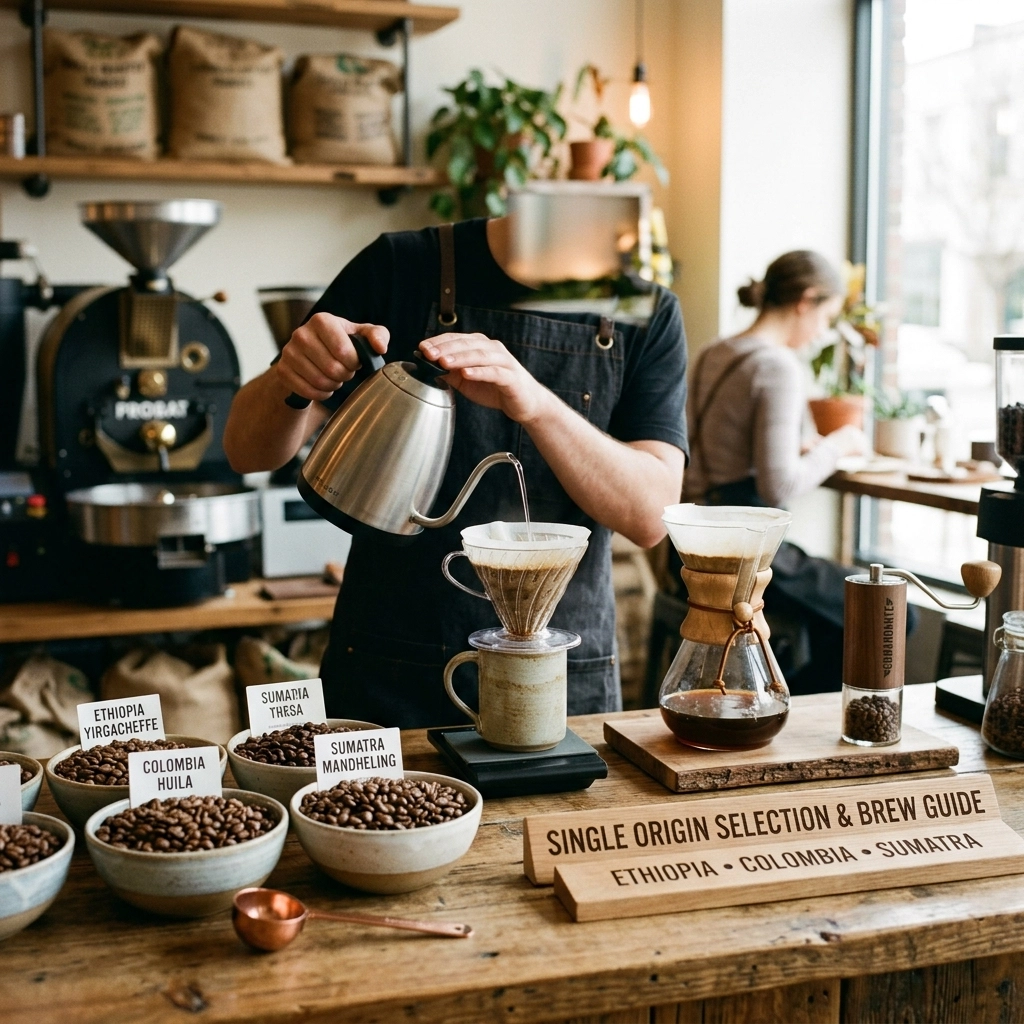
So, you’ve decided to take the plunge into the world of single-origin coffee. Honestly, we think it’s one of the best decisions a home brewer can make. While blends are designed for consistency: that familiar, dependable "morning hug" in a mug: single origins are all about the story of a specific place. It’s about tasting the soil of a hillside in Ethiopia or the volcanic earth of Guatemala.
But here is the catch: not every bean is a superstar in every brewing device. That delicate, floral Gesha that tastes like jasmine tea when brewed in a Chemex might taste like a sour battery if you try to pull it as a traditional espresso. Choosing the right bean for your specific gear is the secret sauce to a better cup.
At Limini Coffee, we spend a lot of time exploring these nuances. We believe that understanding how your brew method interacts with the bean's origin is the fastest way to stop wasting expensive coffee and start drinking the best brews of your life. If you're looking for fresh roasted single origins to start your journey, you can browse our current selection here.
What Exactly Is Single Origin?
Before we dive into the "how-to," let’s clear up the "what." In the simplest terms, single-origin coffee comes from a single producer, crop, or region in one country. This allows the unique characteristics of that specific environment: the "terroir": to shine through without being balanced out by other beans.
Imagine you’re buying wine. A blend is like a nice table wine: it’s reliable. A single origin is like a specific vintage from a specific vineyard in Bordeaux. It has a personality, and just like that wine, it needs to be handled with a bit of care to get the most out of it.
The Pour-Over: Clarity and Brightness
If your morning ritual involves a V60, a Chemex, or a Kalita Wave, you are looking for clarity. Pour-over methods use paper filters that trap most of the coffee oils and fine sediment. This results in a clean, light-bodied cup that highlights the "high notes" of the coffee: things like acidity, floral aromas, and delicate fruit flavors.
Best Origins for Pour-Over:
- Ethiopia: Specifically regions like Yirgacheffe or Sidamo. These are often described as tea-like, with heavy floral notes (think jasmine or bergamot) and bright citrus.
- Kenya: Known for its intense, wine-like acidity and blackcurrant sweetness. It’s a "loud" coffee that thrives in the clean environment of a pour-over.
- Colombia: A well-processed Colombian single origin offers a beautiful balance of citrus acidity and caramel sweetness.
Why it works: Because pour-over is a manual, gravity-fed process, it allows for a very gentle extraction. You aren't forcing the water through the grounds with high pressure, which means those delicate floral compounds don't get crushed.

The Espresso: Intensity and Body
Espresso is a completely different beast. You are using roughly 9 BAR of pressure to force water through a compact puck of coffee in about 25 to 30 seconds. This is intense. This method amplifies everything: the sweetness, the bitterness, and especially the acidity.
If you use a very high-acid bean (like a light-roast Kenyan), your espresso might end up tasting "sharp" or sour. That’s why we usually recommend origins with a bit more "bass" for espresso.
Best Origins for Espresso:
- Brazil: Brazilian beans are the kings of espresso. They typically have low acidity and heavy notes of chocolate, roasted nuts, and caramel. They produce a thick, beautiful crema (the golden foam on top). You can learn more about what crema actually is here.
- Guatemala: These often have a "spicy" or cocoa-heavy profile with just enough stone-fruit acidity to keep things interesting without being overwhelming.
- Sumatra: For those who love a heavy, earthy, and almost creamy espresso, Sumatran beans are a fantastic choice.
If you are just starting out with home espresso, choosing the right equipment is just as important as the beans. And remember, the grind is everything!
The French Press: Richness and Texture
The French Press is an immersion method. The coffee sits in the water for the entire brew time (usually around 4 minutes). Because there is no paper filter: only a metal mesh: all the oils and fine particles end up in your cup. This gives you a heavy, velvety mouthfeel.
Best Origins for French Press:
- Sumatra: The earthy, herbal, and chocolatey notes of Indonesian coffees are perfectly suited for the "weight" of a French Press.
- Costa Rica: These beans often have a honey-like sweetness and a rounder body that feels incredibly satisfying in an immersion brew.
- Mexico: Mexican single origins are often underrated. They can be very nutty and chocolate-forward, which makes for a very "comforting" French Press.
Why it works: Immersion brewing is great at extracting the heavier, sugary compounds of the coffee. Since you aren't filtering out the oils, you want a bean that has a "big" flavor profile that can stand up to that texture.

The AeroPress: The Great All-Rounder
The AeroPress is a bit of a hybrid. It uses pressure (like espresso) but also immersion (like a French Press) and a paper filter (like pour-over). It is incredibly forgiving and versatile.
Honestly, we haven't found a single-origin coffee that doesn't taste decent in an AeroPress. However, we think it really shines with Central American coffees like those from El Salvador or Honduras. These beans often have a "red fruit" sweetness (think cherries or plums) and a balanced chocolate base that the AeroPress extracts beautifully.
Cold Brew: The Smooth Operator
Cold brew is made using cold water over a long period (12 to 24 hours). This process leaves behind most of the acids and bitter oils that hot water usually extracts. The result is a naturally sweet, low-acid concentrate.
Best Origins for Cold Brew:
- Ethiopia (Natural Process): When coffee is "natural processed" (dried inside the fruit), it takes on massive berry flavors. In cold brew, an Ethiopian natural can taste like blueberry juice. It’s incredible.
- Brazil: If you prefer a cold brew that tastes like a melted chocolate bar, a Brazilian single origin is the way to go.
If you’re brewing at home and want to make sure your ratios are spot on, we highly recommend using a coffee brewing calculator. It takes the guesswork out of the process, which is especially helpful when you're working with premium single-origin beans.
Understanding Roast Levels (The Penny Perspective)
It’s not just about the country; it’s about how we roast them. Generally speaking:
- Light Roasts preserve the most origin character (the floral and fruity bits). Best for pour-over and AeroPress.
- Medium Roasts balance origin character with developed sweetness (caramel and chocolate). Great for everything, especially espresso and French Press.
- Dark Roasts are more about the "roast" flavor than the "bean" flavor. We tend to avoid very dark roasts for single origins because they can mask the very qualities you’re paying for!
We take great pride in our sourcing process to ensure that every bean we roast is treated with the respect it deserves, bringing out those specific regional notes we've been talking about.

Regional Flavor Cheat Sheet
If you’re standing in a shop (or browsing our site) and feeling overwhelmed, here’s a quick mental map:
| Region | Common Flavor Notes | Best Brew Methods |
|---|---|---|
| Africa | Floral, Citrus, Berry, Tea-like | Pour-over, AeroPress, Cold Brew |
| Central America | Nutty, Chocolate, Stone Fruit, Balanced | Espresso, AeroPress, Pour-over |
| South America | Caramel, Cocoa, Low Acid, Nutty | Espresso, French Press, Drip |
| Asia / Pacific | Earthy, Spicy, Tobacco, Heavy Body | French Press, Espresso |
A Note on Water Temperature
One tiny technical detail that makes a huge difference: water temperature. We usually recommend brewing between 190 °F to 205 °F / 88 ºC to 96 ºC.
If you have a very bright, light-roast Ethiopian, you might want to use water at the higher end of that scale (205 °F / 96 ºC) to help pull out the sweetness. If you have a darker Brazilian bean for your French Press, maybe drop it down to (195 °F / 90 ºC) to avoid extracting any bitter notes. It sounds "geeky," but we promise your taste buds will notice.
Why Freshness Matters
We can't emphasize this enough: fresh is best. Single-origin coffees are full of volatile aromatic compounds. These are the things that make your kitchen smell like heaven when you open the bag. Once the coffee is roasted, those aromatics start to disappear.
That’s why we roast to order here at Limini Coffee. When you buy through this link, you’re getting beans that were likely in the roaster just a few days ago. It makes a world of difference, especially for delicate brew methods like the V60.
Practical Next Steps
So, how do you choose? Here is our "cheat sheet" for your next purchase:
- Identify your primary brew method. (Are you an espresso lover or a pour-over enthusiast?)
- Pick a flavor profile you enjoy. (Do you like "bright and fruity" or "rich and chocolatey"?)
- Check the roast date. (Always aim for coffee roasted within the last 2–4 weeks.)
- Experiment! The beauty of coffee is that there are no "wrong" answers: only preferences.
If you're ever in doubt, feel free to contact us. We love chatting about beans and helping people find their perfect match. Whether you're a home barista or looking for wholesale options for your cafe, we're here to help.
Choosing the right single origin is a journey, not a destination. You might find that your tastes change with the seasons: a bright Kenyan for a sunny afternoon, and a heavy Sumatran for a rainy morning. That is the beauty of coffee 🙂
Happy brewing!