So, you want to open a coffee shop in 2026? It’s a bold move, and honestly, we love that for you. But let’s address the elephant in the room: the big green sirens and the massive red-branded chains sitting on every corner. They have massive budgets, global supply chains, and apps that do everything except drink the coffee for you.
How does an independent survive, let alone thrive, against that?
The secret isn't trying to out-chain the chains. If you try to be a faster, cheaper version of a multi-national corporation, you’ll lose. Instead, you beat them by being everything they aren't: agile, local, transparent, and: most importantly: obsessed with quality.
Setting up a coffee shop that actually stands out requires a blend of strategic "boring" work and creative flair. Here are five actionable steps to ensure your coffee shop set up is ready to take on the giants.
1. Define Your "Why" Before You Buy a Single Spoon
We’ve seen it happen a hundred times. Someone finds a cute shop, signs a lease, and then starts wondering what kind of coffee they should serve. That is exactly backwards.
Before you even look at floor plans, you need to define your concept. Why would someone walk past a chain to come to you? Is it because you offer the best speciality coffee in the county? Is it the vibe? Or maybe it's the fact that you actually know your customers' names?
Start with the smallest viable version of your idea. If you want to be a high-volume takeaway spot, your equipment and layout needs will be vastly different than if you’re building a slow-bar sanctuary for coffee nerds.
Ask yourself these questions:
- Who is your neighbor? Are you surrounded by offices (fast-paced) or retirees (leisurely)?
- What’s the "gap"? Visit every competitor within three miles. What are they missing? Maybe nobody does a proper flat white, or maybe their seating is uncomfortable.
- Can the location pay for itself? Don't just look at the rent; look at the foot traffic at 8:00 AM on a rainy Tuesday. If the street is empty, the shop will be too.

2. Master the "Theatre" of the Bar Layout
The big chains are designed for "throughput." They want you in and out as fast as possible. Their machines are often hidden behind high counters, and the baristas are just cogs in a machine.
To beat them, you need to embrace theatre.
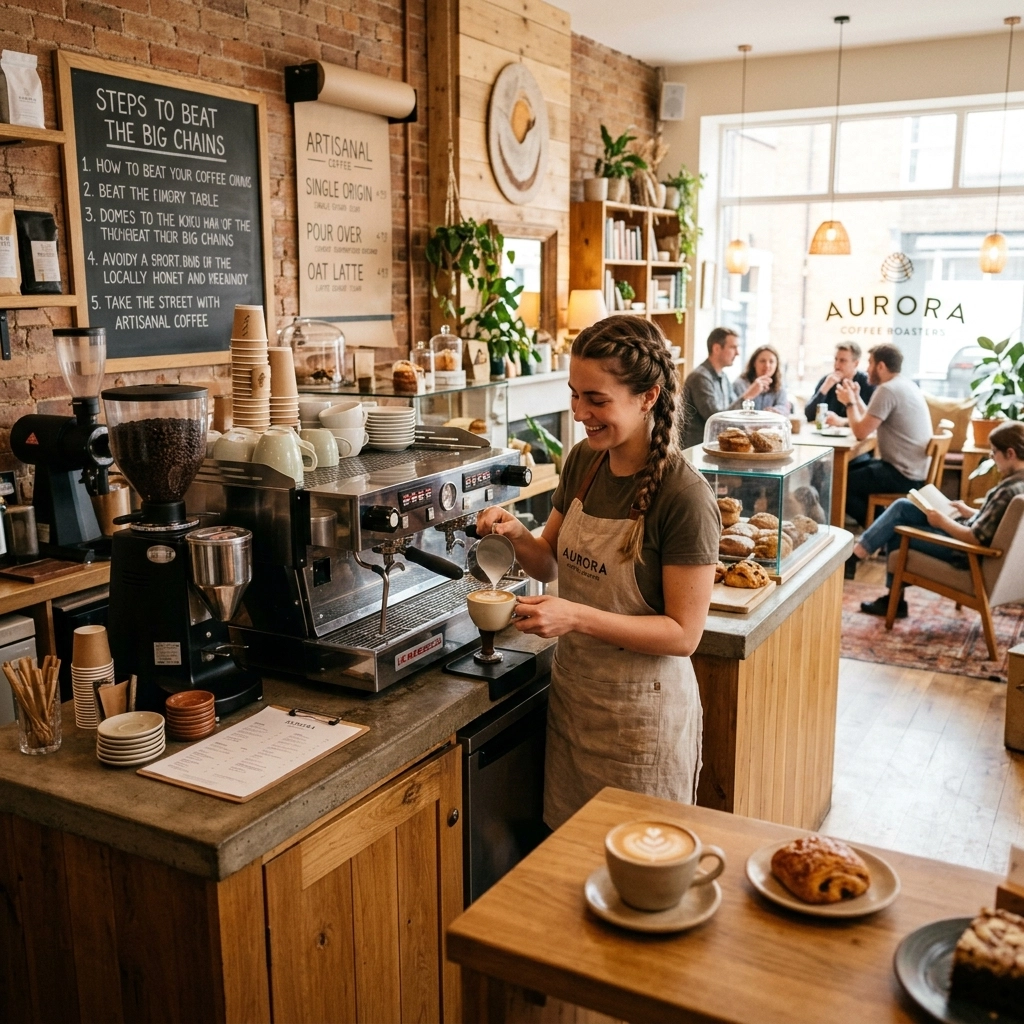
When setting up a coffee shop, your bar layout is your stage. You want your customers to see the steam, hear the milk stretching, and smell the freshly ground beans. We recommend a lower counter height where possible. It removes the physical barrier between the barista and the customer, making the experience feel more personal and less transactional.
The Golden Triangle of Workflow:
Just like a kitchen, your bar needs a logical flow. The "fridge -> grinder -> espresso machine -> sink" path should be as short as possible. If your barista has to walk five steps to get milk for every latte, you’re losing minutes every hour. Those minutes add up to frustrated customers and lost revenue.
Think about your shop fitting early. Where do the dirty cups go? Where does the queue form? You don't want your waiting customers blocking the sugar station or the door.
3. Invest in Gear That Delivers Consistency (Without Breaking the Bank)
This is where most new owners lose their shirts. You don't necessarily need a £20,000 custom-painted Italian masterpiece to make great coffee, but you do need reliability.
Chains use "super-automatic" machines because they don't trust their staff to pull a decent shot. You win by using traditional equipment and actually training your team.
When choosing espresso equipment, look for features like PID temperature control. Coffee is a science; being able to hold your water at exactly 93 ºC (approx 199 °F) is the difference between a sweet, balanced espresso and a bitter mess.
Our advice on the "Essentials":
- The Grinder: This is actually more important than the machine. A poor grinder produces uneven particles, leading to "channeling" and sour coffee. Invest in a high-quality "on-demand" grinder.
- The Machine: Look for a workhorse. We’re big fans of La Spaziale machines because they are incredibly reliable and easy to service. You want 9 BAR of pressure and a stable boiler.
- Water Filtration: Do not skip this. Hard water will kill your machine in months and make your coffee taste like chalk.

4. Don’t Just Buy Beans: Partner with the Right Coffee Suppliers
In 2026, customers are savvy. They know the difference between a commercial-grade roast that’s been sitting in a warehouse for six months and fresh, ethically sourced speciality beans.
Your choice of coffee suppliers is a statement of your values. Big chains often roast for "darkness" to hide imperfections in cheap beans. You should be looking for a roaster that focuses on sweetness, clarity, and traceability.
When you work with us at Limini Coffee, we don't just send you a bag of beans and wish you luck. We see it as a partnership. Whether you’re looking for a chocolatey, crowd-pleasing house blend or a funky single-origin, your supplier should provide the support you need to serve it perfectly.
What to look for in a supplier:
- Freshness: Coffee is a fresh product. It should ideally be used within 4-6 weeks of roasting.
- Training Support: Will they help you understand milk or teach your staff the art of tamping?
- Reliability: You cannot run a business if your beans don't show up on a Thursday morning.
If you're ready to level up your coffee game, we’d love to chat about how our wholesale coffee can help your shop stand out.
5. The "Human" Factor: Service as a USP
Finally, the most powerful weapon in your arsenal: your people.
A chain barista is often there for a paycheck, following a rigid script. Your baristas should be brand ambassadors. They should be able to explain what crema is, why the flat white is different from a latte, and why your cups are the size they are.
Education shouldn't be snobbish; it should be welcoming. If a customer asks for a "large extra hot latte," don't roll your eyes. Make the best damn extra hot latte they’ve ever had, but maybe explain why 60 ºC (140 °F) is the sweet spot for milk sugars before the proteins start to break down and taste like boiled eggs. (Actually, maybe don't mention the eggs, but you get the point!).
Training is an ongoing investment.
Don't just do one session and call it a day. Use a brewing calculator to keep your recipes dialed in. Constantly taste your coffee. If your team is excited about the product, your customers will be too.

Why Independence Wins in 2026
The world is becoming increasingly automated and "samey." In that environment, the independent coffee shop becomes a vital community hub. By focusing on a meticulous coffee shop set up, choosing the right coffee suppliers, and obsessing over the details that chains ignore, you aren't just opening a business: you're creating a destination.
Remember, the big chains have the scale, but you have the soul. And in the world of coffee, soul always tastes better.
Need some help getting started?
From barista training to finding the perfect espresso machine, we’ve helped hundreds of shops find their feet. If you’re looking for a roaster that cares as much about your margins as your microfoam, check out what we do at Limini Coffee. Let’s make 2026 the year your coffee shop becomes the talk of the town!