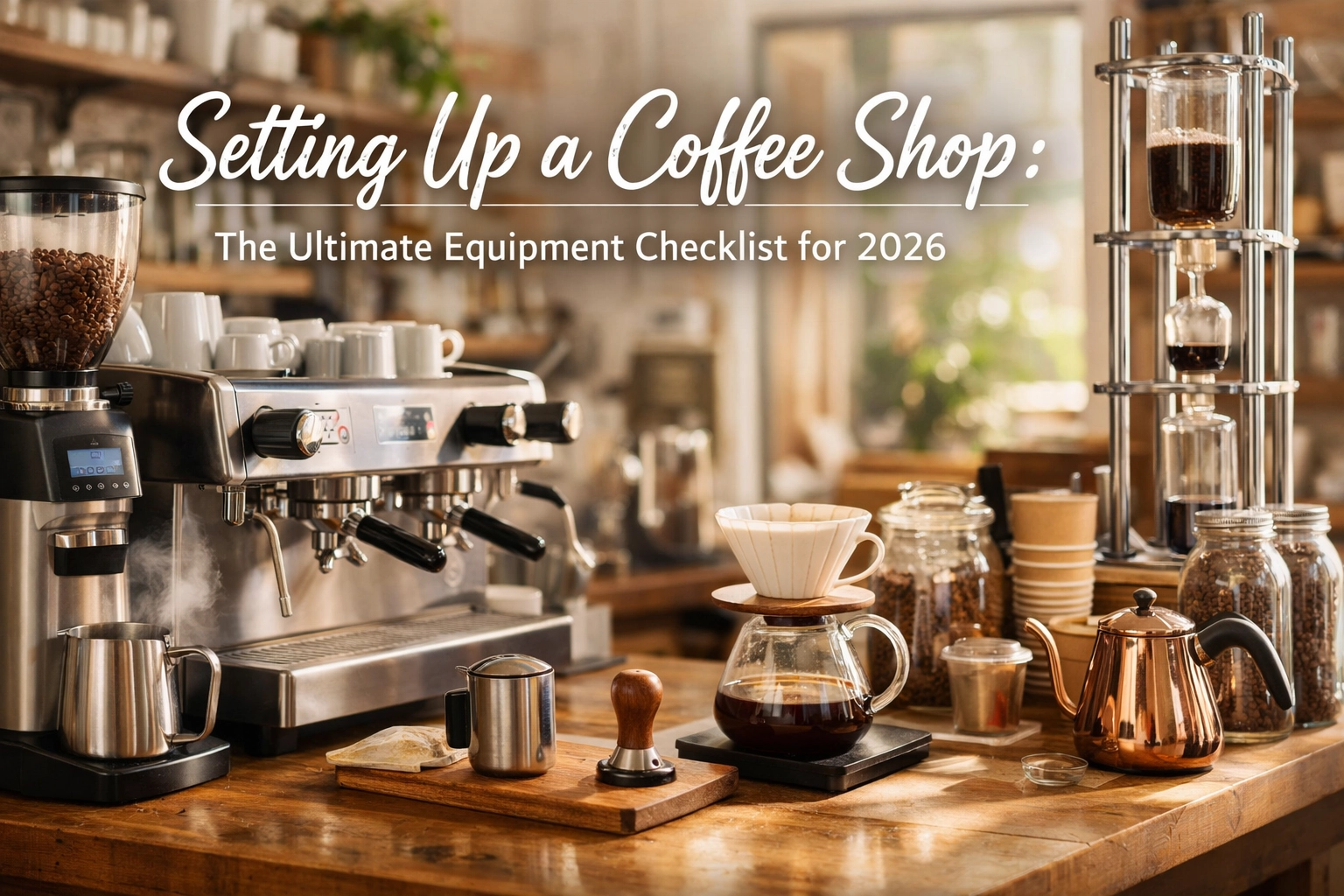
So you're setting up a coffee shop. Exciting times ahead.
But let's be honest, walk into any equipment supplier's showroom and you'll be overwhelmed within minutes. Shiny espresso machines, grinders that cost more than a second-hand car, and a bewildering array of pitchers, tampers, and mysterious gadgets you've never seen before.
We've helped countless cafés get their equipment right from day one, and we know exactly where new owners get stuck. This isn't about buying everything. It's about buying the right things, in the right order, within a budget that doesn't make your accountant weep.
Let's break it down.
The Espresso Machine: Your Centrepiece Investment
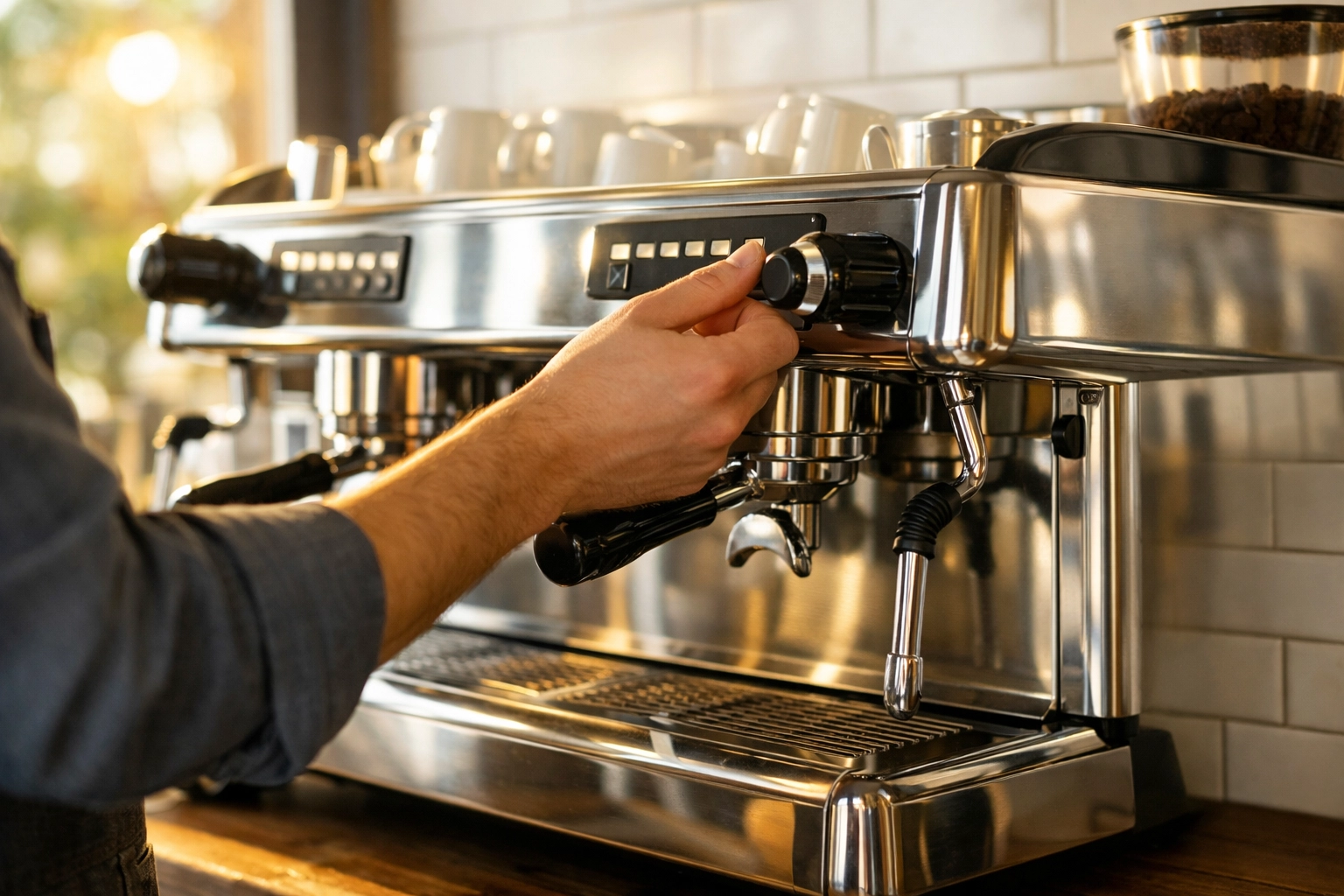
This is your biggest single expense, and rightfully so. The espresso machine is the beating heart of your coffee shop, and skimping here is false economy.
For most cafés starting out, a two-group espresso machine hits the sweet spot. It gives you the capacity to handle morning rushes without leaving customers queuing forever, but it won't bankrupt you or dominate your counter space like a three-group beast.
What to look for:
- Programmable dosing for consistency (your baristas will thank you)
- Dual steam wands so you can steam milk for two drinks simultaneously
- PID temperature control, this is basically cruise control for your brew temperature
- A reliable brand with local service support (a broken machine on Saturday morning is your worst nightmare)
Budget between £5,000 and £15,000 depending on whether you go new or refurbished. We've written a detailed guide on choosing espresso equipment if you want to dive deeper into the technical side.
Grinders: Never Compromise Here
Here's something we tell every new café owner: your grinder matters more than your espresso machine.
Controversial? Perhaps. But it's true.
A brilliant machine with a rubbish grinder will produce mediocre coffee. A decent machine with an exceptional grinder will produce excellent coffee. The grind is where consistency happens, or doesn't.
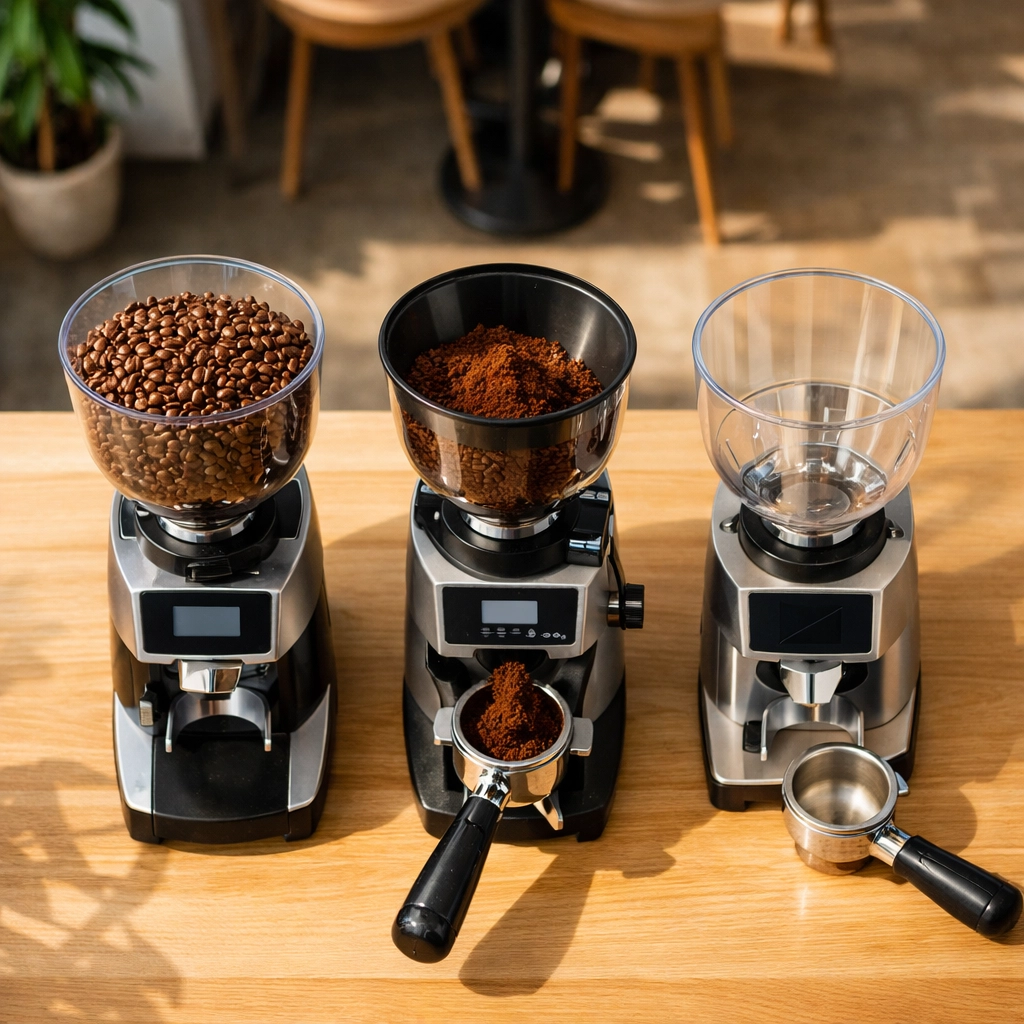
You'll need at least two commercial burr grinders:
- Primary grinder for your main espresso blend
- Secondary grinder for decaf (never mix them, the flavour contamination is real)
If you're planning on offering single origins or guest roasts, budget for a third. Some cafés even run four grinders during peak specialty seasons.
Look for:
- Stepless grind adjustment for precision
- Low retention (minimal coffee left in the grinder between doses)
- Consistent particle distribution
- Easy cleaning access
Budget £800–£2,500 per grinder. And yes, that seems like a lot. But remember: these workhorses will grind thousands of shots. Quality here pays back quickly.
Batch Brewing Equipment: Speed When You Need It
Not every customer wants to wait for a pour-over at 8:15 AM on a Monday. Batch brewers are your secret weapon during rush periods.
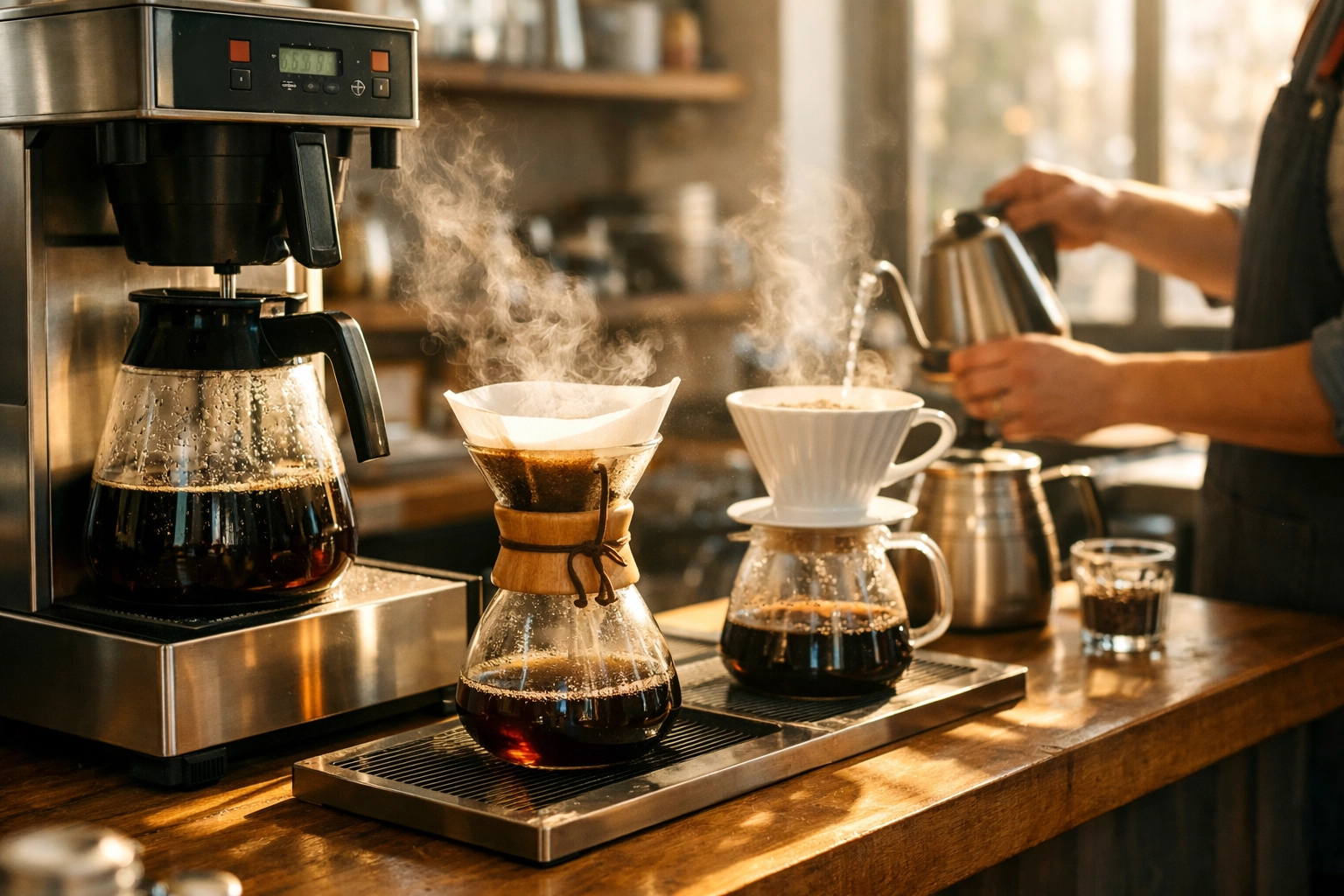
A commercial drip coffee maker or batch brewer lets you produce quality filter coffee at volume. During morning rushes, you can serve customers quickly while your baristas focus on the espresso bar.
We recommend having both batch brewing and manual brewing options. The batch brewer handles speed and volume. Manual methods like V60, Chemex, or AeroPress showcase your specialty offerings and give your baristas room to shine when things slow down.
Budget £600–£1,500 for a reliable batch brewer.
The Supporting Cast: Barista Tools That Matter
These might seem like small items, but they're the difference between frustrated baristas and smooth service:
Essential barista tools:
- Stainless steel milk pitchers (at least three, in various sizes)
- Proper tampers (sized correctly for your portafilter baskets)
- Digital scales (accurate to 0.1g for dosing consistency)
- Shot glasses for dialling in
- Knockbox for spent pucks
- Steaming thermometers
- Distribution tools
- Gooseneck kettles for manual brewing
Don't buy the cheap versions. Your team uses these tools hundreds of times daily. Quality here means efficiency, consistency, and baristas who aren't constantly battling their equipment.
Budget around £800–£1,200 for a complete set of professional-grade tools.
Cold Equipment: Ice, Refrigeration, and Storage
Iced drinks aren't a summer novelty anymore: they're year-round revenue generators. Which means your cold equipment needs serious thought.
You'll need:
A commercial ice machine that can actually keep pace with demand. Domestic ice makers won't cut it. During a summer afternoon rush, you'll blast through ice faster than you'd believe possible. Size it generously.
A commercial refrigerator for milk, syrups, and perishables. Undercounter models save space but limit capacity. Walk-in fridges are brilliant if you have the room and budget.
A commercial dishwasher (high-temperature sanitising) for health regulations and efficiency. Hand-washing during busy periods is neither practical nor hygienic at commercial volume.
Budget £3,000–£6,000 for commercial-grade cold equipment.
Water: The Ingredient Everyone Forgets
Coffee is 98% water. Your water quality directly impacts every cup you serve.
A proper water filtration system is non-negotiable. It protects your expensive espresso machine from scale buildup, and more importantly, it ensures your coffee tastes as the roaster intended.
You'll need:
- Professional filtration system
- Regular replacement filters (budget for ongoing costs)
- Water testing kit
- Possibly a water softener depending on your local water hardness
This isn't glamorous spending, but it's utterly essential. Budget £500–£1,500 for installation, and factor in ongoing filter costs.
Cleaning and Maintenance: The Unsexy Essential
Equipment maintenance prevents disasters. A clogged group head or scaled-up boiler can shut you down during your busiest period.
Daily cleaning requirements:
- Espresso machine backflush disks and cleaning powder
- Steam wand brushes
- Grinder cleaning tablets
- Microfibre cloths (lots of them)
- Pitcher rinsers
- Food-safe sanitiser
Schedule professional machine servicing quarterly minimum. The cost of prevention is always less than the cost of emergency repairs and lost revenue.
Budget £300–£500 for initial cleaning supplies, plus ongoing costs.
The Coffee Itself: Your Most Important Ingredient
Here's where everything comes together. You can have the finest equipment money can buy, but if you're serving stale, poorly roasted coffee, none of it matters.
We're obviously biased, but we believe sourcing freshly roasted specialty coffee from a dedicated roaster makes all the difference. At Limini Coffee, we work with cafés to develop custom blends, provide staff training, and ensure you're always serving coffee at its peak.
Wholesale partnerships mean consistent supply, technical support, and often better pricing than buying retail. It's worth having that conversation early in your planning. You can explore our wholesale offerings to see how we support café partners.
Optional Equipment (Menu Dependent)
Planning to serve food? You'll need:
- Commercial oven or combi oven
- Toaster and microwave
- Baking equipment if you're making pastries in-house
- Additional prep space and storage
Planning cold brew? You'll need:
- Cold brew brewing system
- Adequate cold storage (this takes up serious fridge space)
- Kegging equipment if you're serving on tap
Only buy what your menu actually requires. You can always expand later once you've established what sells.
Budget Reality Check
For a complete café setup with quality equipment, expect £20,000–£50,000 for everything covered here. That's a wide range because your exact needs depend on:
- Size of your operation
- Whether you're serving food
- New versus quality refurbished equipment
- Your menu complexity
- Local plumbing and electrical requirements
Getting Started: What to Buy First
If budget is tight, prioritize in this order:
- Espresso machine and primary grinder (these are your foundation)
- Water filtration (protects your investment)
- Batch brewer (handles volume efficiently)
- Ice machine and refrigeration (required for operations)
- Essential barista tools (for quality and consistency)
- Secondary grinder and specialty equipment (when cash flow allows)
Starting lean is fine. Plenty of successful cafés began with the basics and expanded as revenue grew.
Final Thoughts
Setting up a coffee shop is equal parts exciting and terrifying. The equipment investment is significant, but it's also your toolkit for building something special.
Focus on quality where it matters most: your coffee-making equipment. These are the tools that directly impact every cup. Everything else can be functional rather than fancy, at least to start.
And remember: equipment is just equipment. What matters is the coffee you serve and the experience you create. Get the fundamentals right, source exceptional coffee, train your team properly, and the rest follows.
If you'd like specific guidance on equipment selection for your café project, or if you're looking for a wholesale coffee partner who understands the realities of running a coffee shop, we're always happy to chat. That's what we're here for.
Good luck with your new venture. The coffee world needs more cafés that care about getting it right.