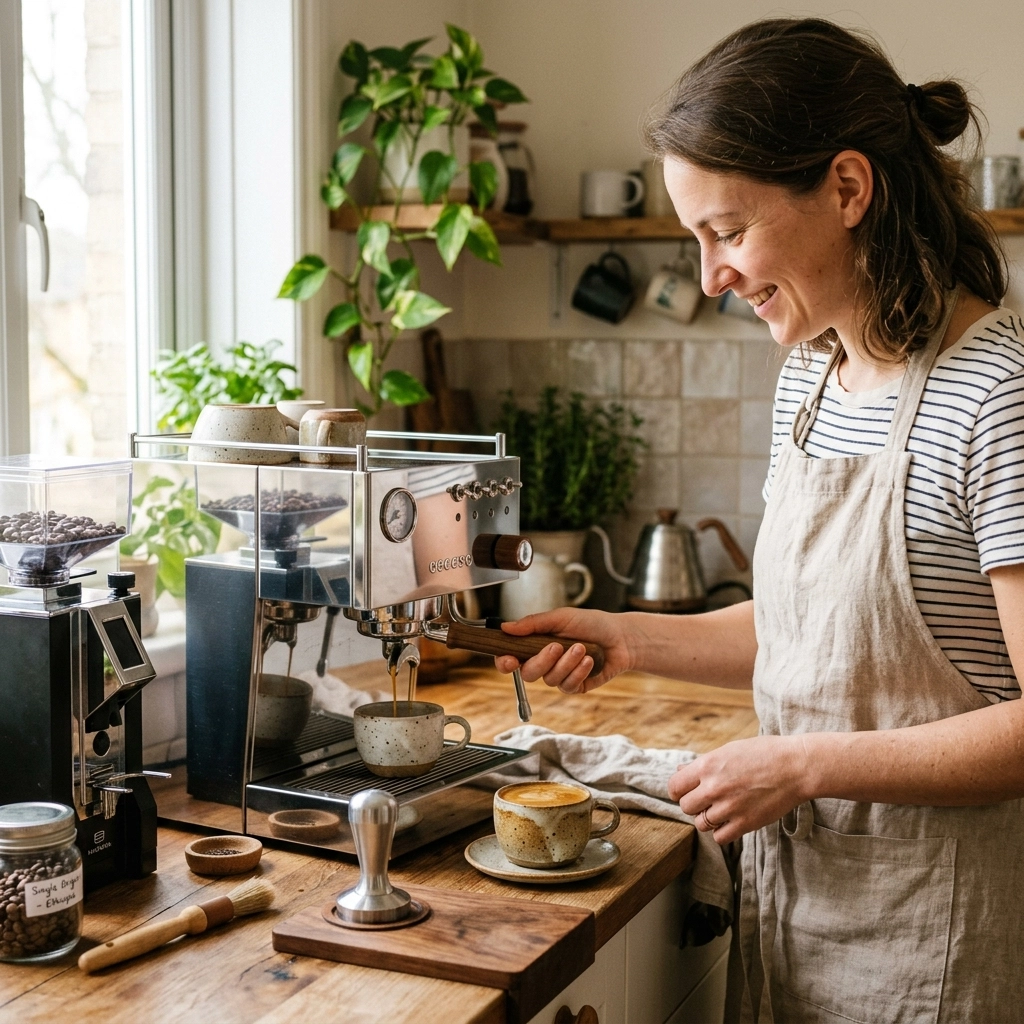
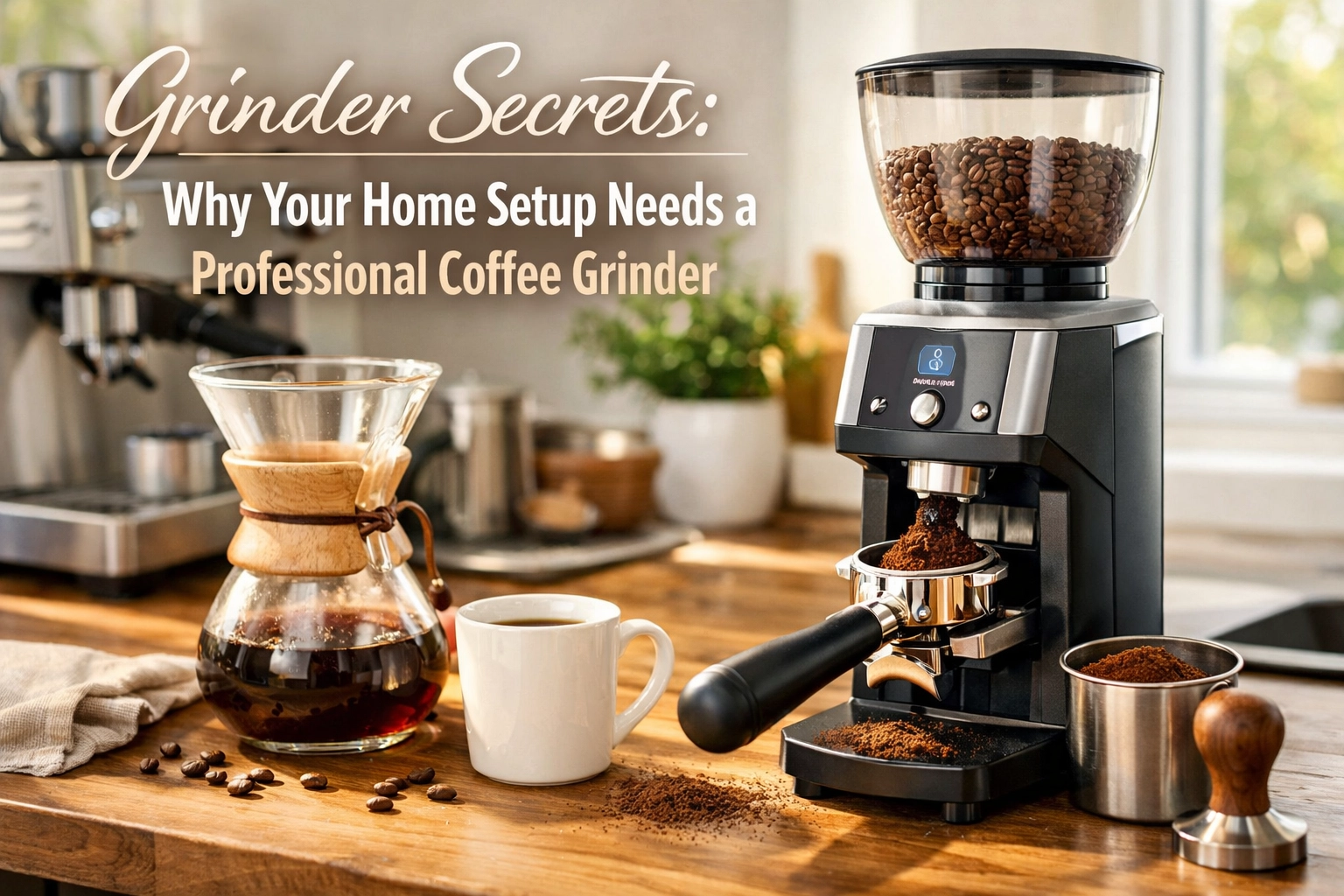
Here's a truth that might sting a little: if you've invested in a fancy espresso machine or a beautiful pour-over setup but you're still using that blade grinder you got as a gift five years ago, you're doing it wrong.
We know, we know. Grinders don't have the same sexy appeal as a gleaming espresso machine. They're not the Instagram star of your coffee corner. But here's the thing: your grinder is actually the most important piece of equipment in your entire setup. Not your machine. Not your kettle. Your grinder.
Let us explain why.
The Grinder Matters More Than Your Brewer
You could have a £3,000 espresso machine sitting on your counter, but if you're grinding your beans inconsistently, you're still going to pull mediocre shots. An exceptional grinder can actually compensate for a less expensive espresso machine or brewing device. But the reverse? Not true.
Even the most expensive, temperature-stable, PID-controlled espresso machine cannot produce a decent shot if your grinder is churning out inconsistent particle sizes.
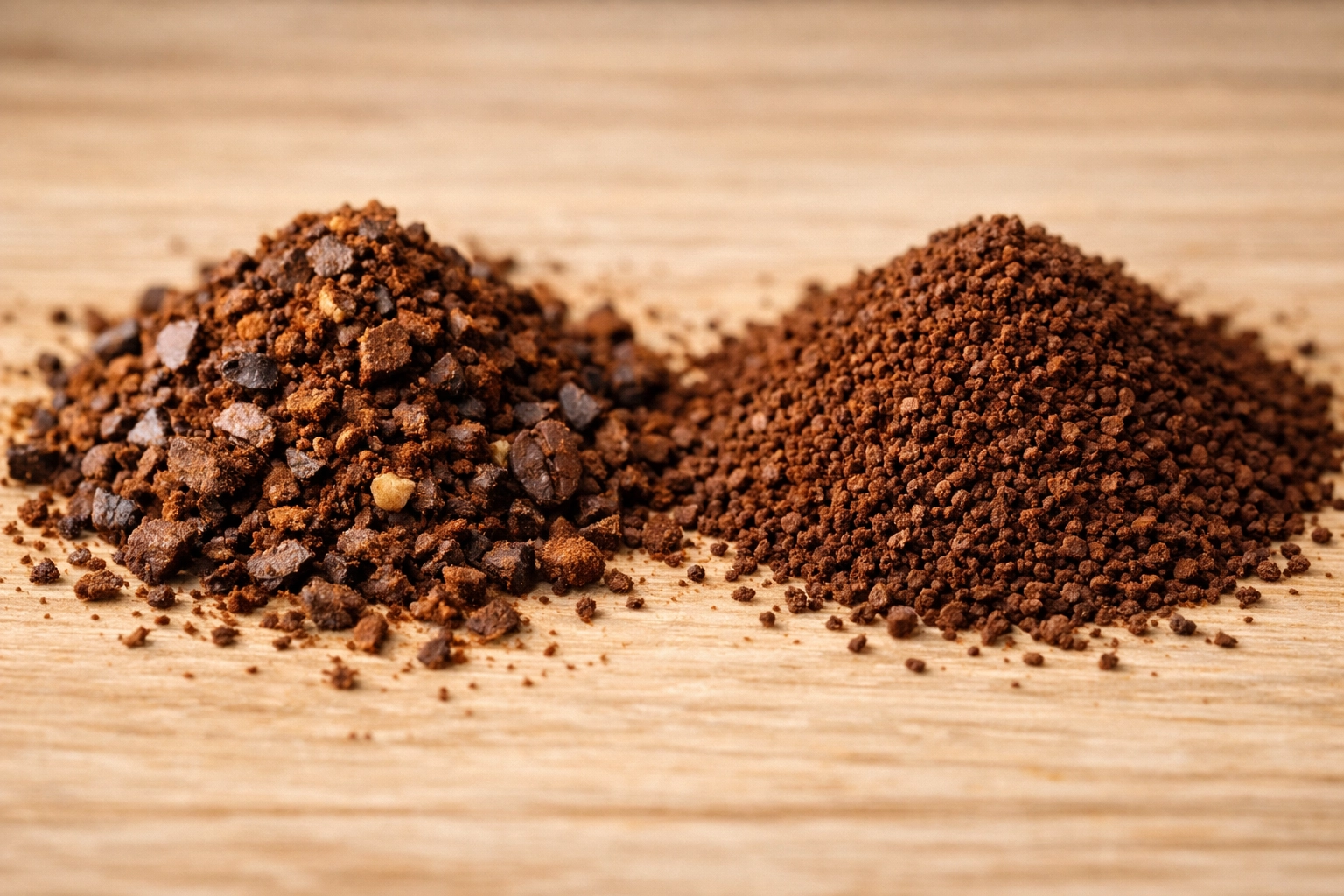
So what's happening here? It comes down to extraction. When you brew coffee, you're extracting soluble compounds from ground beans. The size and uniformity of those ground particles directly determine how evenly water can extract flavor. If your grind is all over the place: some dust, some boulders, everything in between: you get uneven extraction.
The tiny particles over-extract and turn bitter. The large chunks barely extract any flavor at all. What you end up with is a muddled, confused cup that's simultaneously sour and bitter. Not ideal.
Why Blade Grinders Are Sabotaging Your Coffee
Let's talk about blade grinders for a moment. You know the ones: they look like a little food processor, with a spinning blade that chops your beans into submission.
They're cheap. They're compact. And they're absolutely ruining your coffee.
Blade grinders don't actually grind coffee: they chop it. Randomly. Violently. With no regard for consistency whatsoever. You get powder mixed with chunks, and there's no way to control the outcome. You just hold down the button and hope for the best.
Plus, that spinning blade generates heat, which can actually start cooking your coffee before you even brew it. The result? Flat, stale-tasting coffee that lost its nuance somewhere between the bean and the cup.
What Makes a Professional Grinder Different
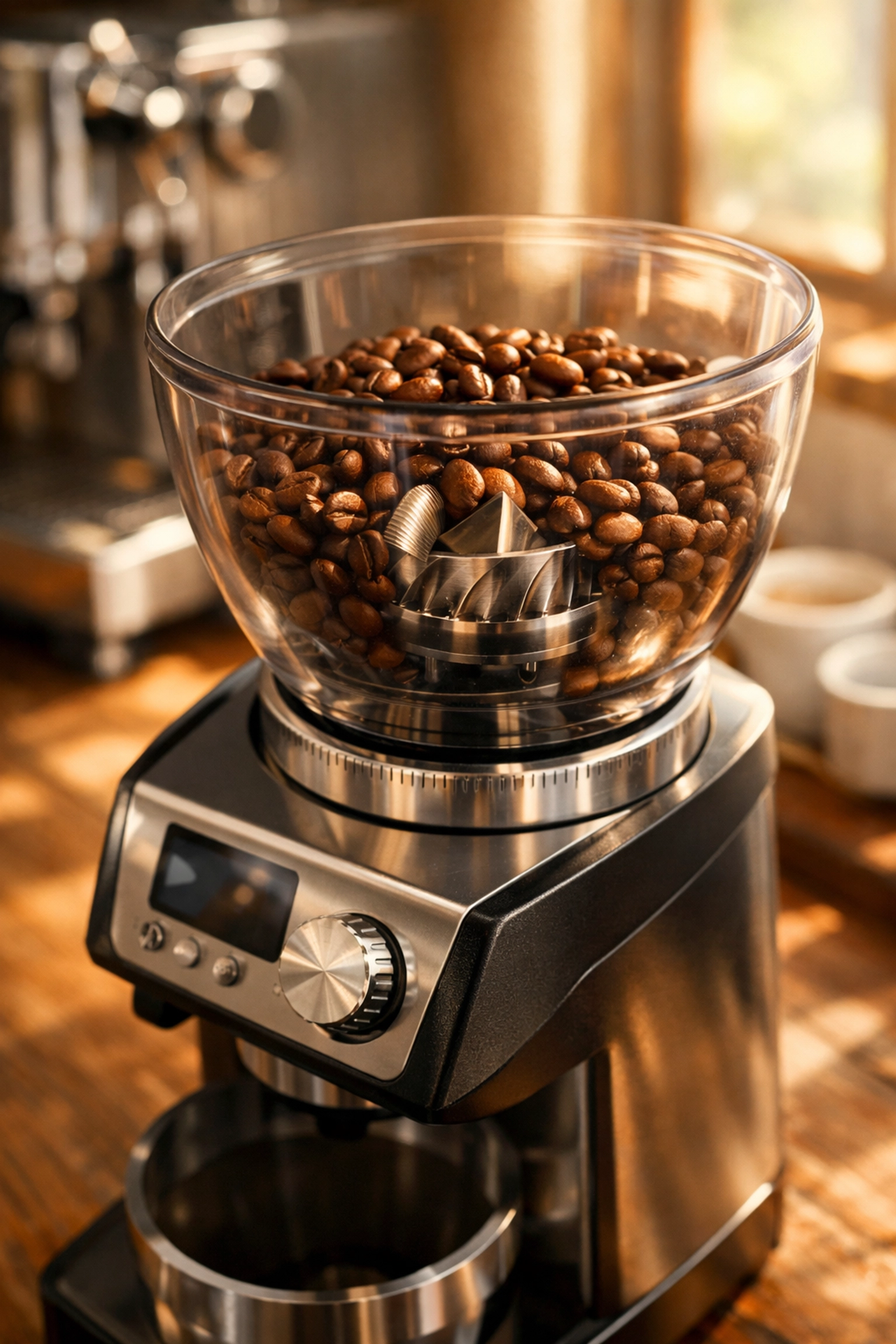
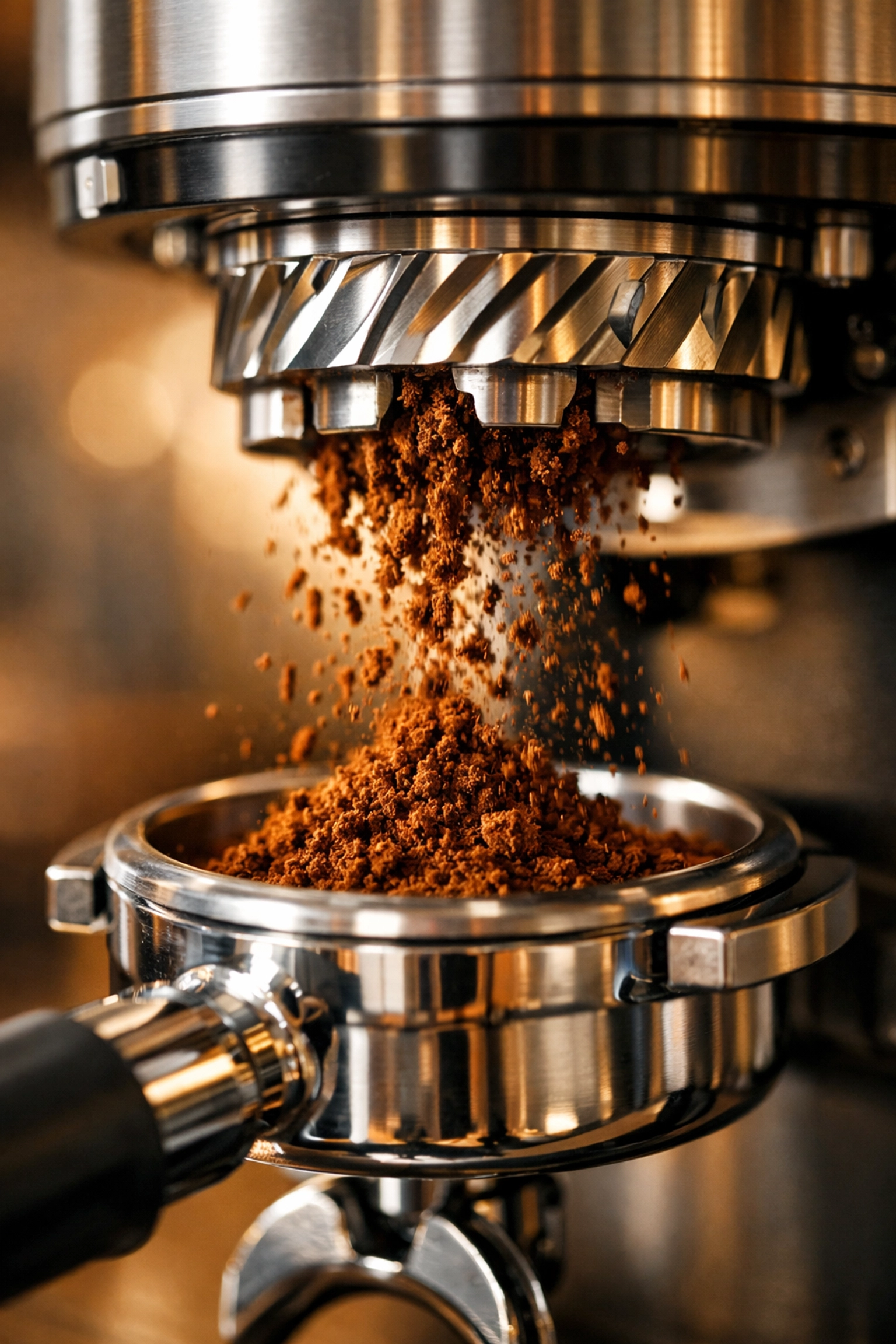
Professional-grade grinders: or prosumer grinders designed for home use: use burrs instead of blades. There are two revolving burrs (either flat or conical) that crush the beans evenly between them, creating uniform particle sizes.
This is where the magic happens.
Consistency and Uniformity
Burr grinders deliver remarkably consistent particle sizes. Whether you're going for a coarse grind for French press or a fine grind for espresso, the burrs ensure that every particle is roughly the same size. This means even extraction, balanced flavor, and a cup that actually tastes like the coffee you paid for.
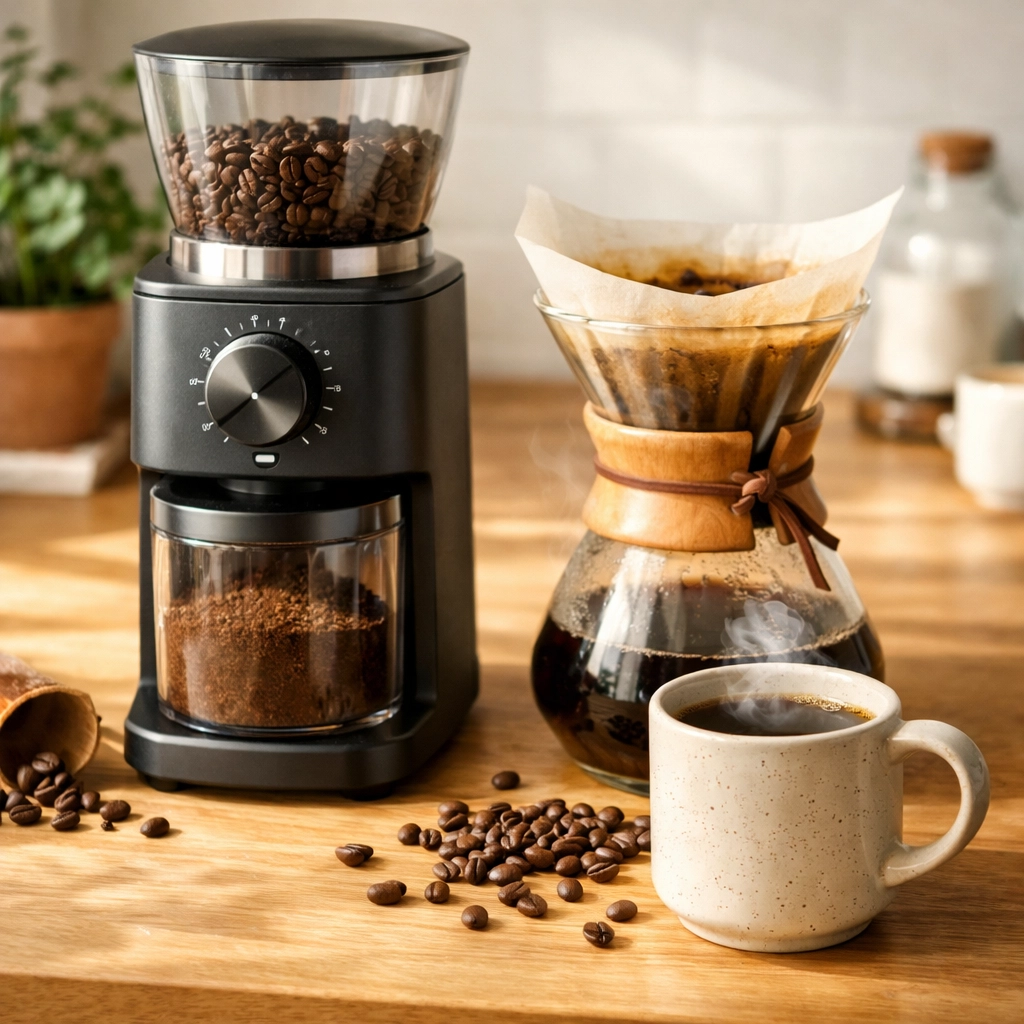
Manual burr grinders use hand-cranked burrs and generate virtually no heat during grinding, which preserves the delicate aromatics and oils in your beans. They're brilliant for pour-over, AeroPress, or French press methods where you have a bit more time and want maximum control.
Electric burr grinders do the same job at the push of a button. They're essential if you're pulling espresso shots, where grind precision can make or break your extraction.
Precision Control
A quality grinder gives you granular control over your grind size. We're talking dozens: sometimes hundreds: of adjustment settings. The Baratza Vario, for example, offers 230 easily repeatable grind settings with both macro and micro adjustments. That's the kind of precision that rivals what you'd find in a commercial café.
Why does this matter? Because different brewing methods require different grind sizes. Espresso needs a fine, almost powdery consistency. Pour-over sits somewhere in the middle. French press wants a coarse, chunky grind. If you can't dial in your grind size precisely, you're guessing. And guessing rarely leads to great coffee.
The Real-World Benefits You'll Actually Notice
Let's get practical. What does investing in a professional grinder actually do for your daily coffee routine?
Better Flavor, Immediately
This is the big one. The first time you brew coffee with freshly, evenly ground beans from a quality burr grinder, you'll taste the difference. It's not subtle. You'll notice clarity, sweetness, and complexity that simply wasn't there before. Those tasting notes on the bag that seemed like marketing nonsense? You'll actually start tasting them.
Faster, Fresher Results
Electric burr grinders are fast. You dose your beans, press a button, and within seconds you have a perfectly consistent grind ready to brew. No more shaking a blade grinder for 30 seconds hoping you've hit the right consistency.
Some advanced grinders even weigh as they grind, eliminating the need for a separate scale. They'll dose to within 0.1 grams, which is the kind of accuracy that serious home baristas dream about.
Consistency, Day After Day
Once you dial in your grind setting for a particular coffee and brewing method, you can return to it again and again. This repeatability means you're not starting from scratch every morning. You know exactly where to set your grinder, and you get the same excellent results every single time.
That's the kind of convenience that makes investing in a professional grinder worth it.
It's About Respecting Your Beans
Here's something we think about a lot: specialty coffee doesn't just happen. It's the result of farmers, processors, exporters, and roasters all doing their jobs exceptionally well. Those beans have traveled thousands of miles and passed through dozens of hands before landing in your kitchen.
If you're buying freshly roasted, traceable specialty coffee: say, from Limini Coffee: you're already investing in quality. You're supporting better farming practices, better roasting, and ultimately better flavor.
But if you grind those beautiful beans in a blade grinder, you're undoing all of that work. You're taking a meticulously crafted product and obliterating it into inconsistent dust.
A professional grinder respects your beans. It treats them with the care they deserve and unlocks the flavors that the roaster worked so hard to develop.
What to Look For
So you're sold on the idea. What should you actually look for in a professional-grade home grinder?
Burr Type: Flat burrs or conical burrs both work brilliantly. Flat burrs tend to produce slightly more uniform particles, while conical burrs generate less heat and are often quieter. Both will absolutely transform your coffee compared to a blade grinder.
Grind Settings: Look for a grinder with stepless or micro-adjustable settings. The more control you have, the better you can dial in each coffee and brewing method.
Grind Retention: This is how much coffee gets stuck inside the grinder after grinding. Low retention is ideal: it means less waste and fresher grounds every time.
Build Quality: A grinder is an investment. Look for metal burrs, solid construction, and a motor that can handle daily use without overheating or wearing out.
Ease of Cleaning: Coffee oils and fines build up inside grinders over time, which can affect flavor. Choose a grinder that's easy to disassemble and clean periodically.
The Investment That Changes Everything
We get it: professional grinders aren't cheap. You're looking at anywhere from £150 to £600+ depending on features and build quality. That's a significant investment.
But here's the thing: your grinder will outlast most other pieces of coffee equipment. A well-maintained burr grinder can serve you for a decade or more. And unlike an espresso machine, which might be overkill if you prefer pour-over or AeroPress, a quality grinder benefits every single brewing method.
It's the one piece of equipment that universally improves your coffee, no matter how you brew it.
And honestly? Once you experience what freshly ground, consistently sized coffee tastes like, there's no going back. You'll wonder how you ever tolerated anything less.
Start With the Grinder
If you're building a home coffee setup from scratch, or you're looking to upgrade what you already have, start with the grinder. Not the machine. Not the kettle. The grinder.
Pair that grinder with freshly roasted beans from a reputable roaster, and you're 90% of the way to café-quality coffee at home. Everything else is just refinement.
Your coffee deserves better than a blade grinder. And so do you.