
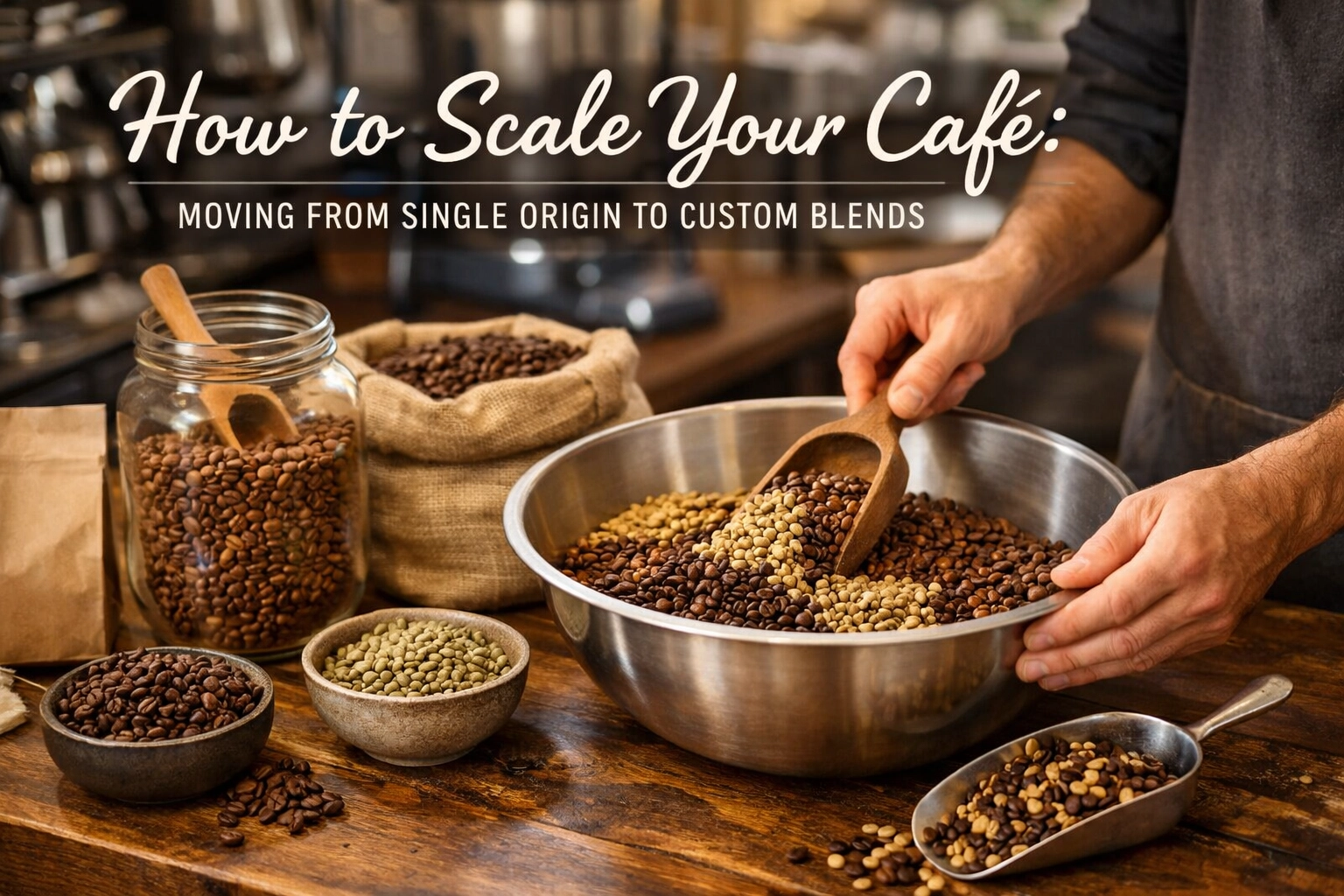
You've built something special. Your café has a loyal following, your baristas pull consistent shots, and customers keep coming back for that single origin Ethiopian you're so proud of. But now you're thinking bigger, maybe a second location, or ramping up volume at your current spot, or finally creating something that feels uniquely yours.
This is where the conversation about custom blends usually starts.
Moving from single origins to custom blends isn't just about the coffee itself. It's about operational maturity, brand identity, and, honestly, whether you're ready to scale in a way that maintains quality while giving you more control over your offering.
Let's talk through how to make this transition thoughtfully, without losing what made your café special in the first place.
Why Custom Blends Make Sense When You're Scaling
Single origins are brilliant. They tell a story, they showcase terroir, they give your customers something to geek out about. But they also come with challenges when you're trying to grow.
Supply chain vulnerability is the big one. If your entire espresso program relies on a single farm's harvest and that crop has issues, you're scrambling. Seasonal availability shifts. Prices fluctuate. And if you're opening a second location or significantly increasing volume, sourcing enough of that specific single origin becomes complicated.
Custom blends solve this beautifully.
They give you consistency across multiple locations, flexibility when specific origins become scarce, and, perhaps most importantly, a signature product that customers can't get anywhere else. It's your recipe. Your creation. Something that can become synonymous with your brand.
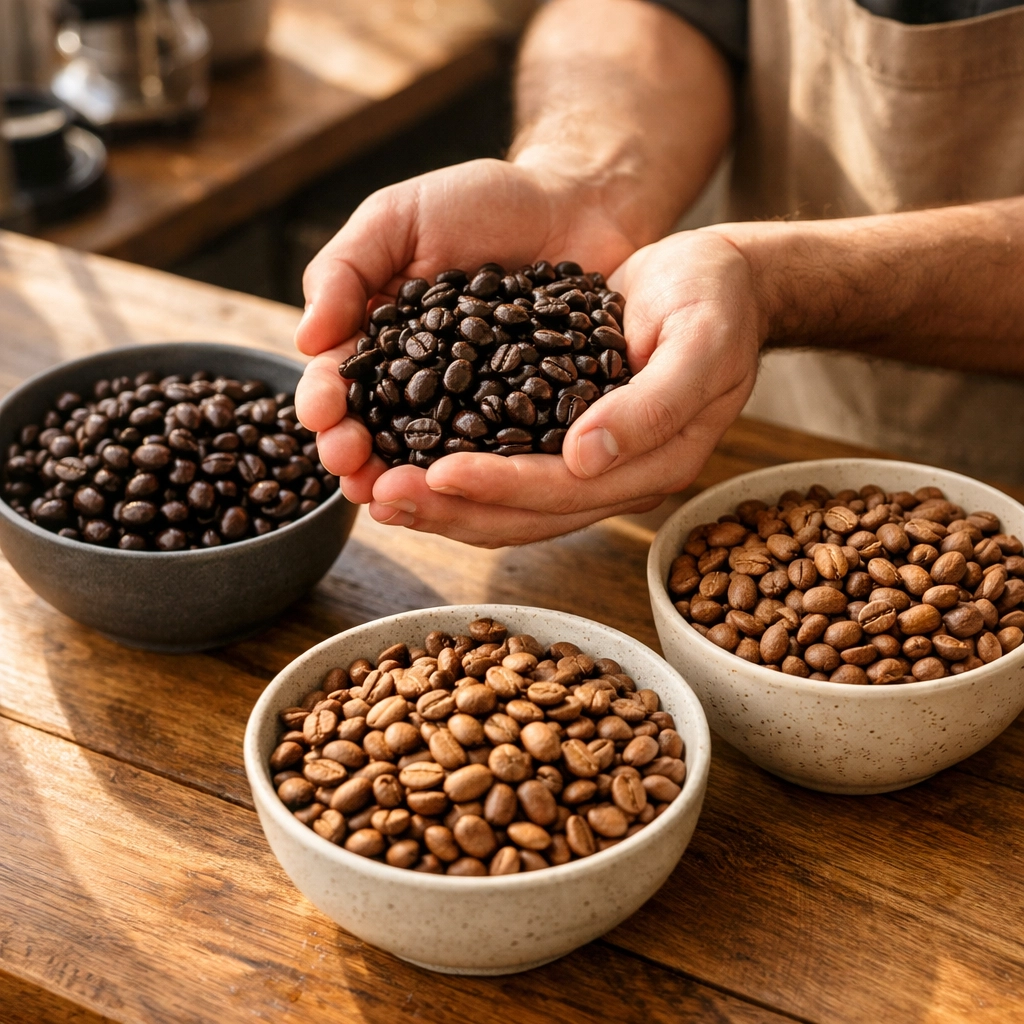
Before You Make the Move: Are You Actually Ready?
Here's the thing we need to address first: have you fully optimized your current operation?
If you're still dealing with long wait times, inconsistent shot quality, or haven't maximized the customer capacity at your existing location, adding complexity to your coffee program might not be the right move yet. Sort those operational foundations first. Automate where you can. Train your team to excellence. Make sure your current setup is humming.
Custom blends work best when you've got the basics absolutely locked down.
You should also ask yourself: are you pulling enough volume to justify this? Custom blends typically make the most sense when you're going through serious quantities of coffee, multiple kilos per week at minimum. If you're still a small single-site operation, you might find that working with a roaster's existing house blend gives you better value and consistency than developing something custom.
Working With Your Roaster: This Is a Partnership
Developing a custom blend isn't something you do alone in your kitchen with a couple of bags from different origins. This is where your relationship with your wholesale coffee supplier becomes absolutely critical.
At Limini Coffee, we work with cafés on custom blends all the time, and the best results always come from collaborative partnerships. You bring your vision, we bring technical expertise and sourcing knowledge.
Start by having an honest conversation about what you're trying to achieve. Are you looking for something fruit-forward and bright? Chocolatey and full-bodied? Specifically designed for milk-based drinks? Do you need it to perform well in both espresso and batch brew?
Your roaster can guide you on origin selection, maybe a Brazilian base for body and sweetness, a Colombian component for balance, and an Ethiopian element for complexity. Or perhaps a blend that shifts seasonally while maintaining a consistent flavour profile.
The key is consistency in quality. Your roaster needs the capacity and sourcing relationships to maintain that blend composition over time, even when specific micro-lots run out. This requires backup suppliers and flexibility in the recipe (substituting a similar Guatemalan when the original runs short, for example).
And here's where scaling gives you an advantage: increased purchasing power. When you're committing to larger volumes, you can negotiate better pricing, secure priority access to sought-after origins, and sometimes even influence how a roaster develops their seasonal offerings.
Building Your Blend: Balance vs. Complexity
There's a tendency when developing custom blends to overcomplicate things. You don't need seven different origins. In fact, you probably don't want seven different origins.
We typically recommend starting with three components, four maximum. This gives you enough complexity to create something interesting without making the blend fragile or impossible to replicate consistently.
Think about balance:
- A base origin that provides body, sweetness, and stability (often Brazilian, Colombian, or Guatemalan naturals)
- A supporting origin that adds brightness, acidity, or specific flavour notes
- An accent origin that provides complexity or a signature character
Each component should serve a purpose. If you can't articulate why something's in the blend, it probably doesn't need to be there.
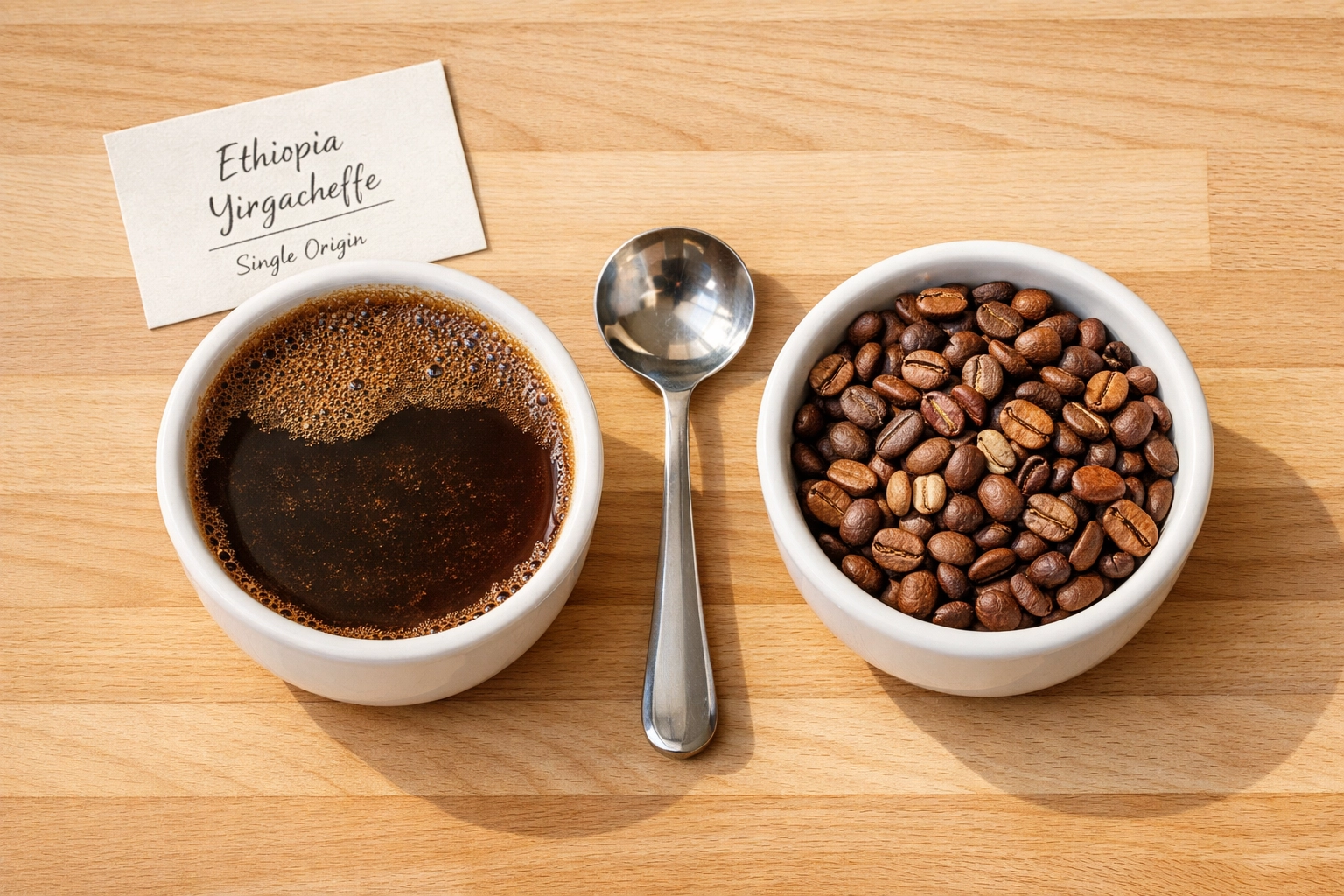
Testing is crucial. You'll want to cup multiple iterations, pull them as espresso, test them in milk. How does it perform at different ratios? Does it hold up when your morning barista is slammed and extractions get a bit rushed? Does it taste good in a flat white and a black Americano?
This development process usually takes weeks, not days. Be patient with it.
Staff Training: Your Team Needs to Sell the Story
So you've developed this beautiful custom blend. Your baristas need to be able to talk about it.
Investing in barista training becomes even more important when you're moving to a signature product. Your team should understand not just how to dial it in, but what makes it special. Where do the components come from? Why did you choose this particular combination? How does it differ from what you were serving before?
Customers notice when staff can speak authentically about what they're serving. It's the difference between "yeah, it's our house blend" and "this is actually a combination of a Brazilian natural for sweetness, a washed Colombian for balance, and just a touch of Ethiopian to give it this lovely berry note on the finish, we developed it specifically for milk drinks."
That second approach sells coffee. It builds brand loyalty. It makes customers feel like they're part of something.
Train your team to dial it in correctly, grind size, dose, extraction time, temperature. Custom blends often have a sweet spot that's slightly different from what you were doing with single origins. Document your recipe. Make it consistent across all your baristas and locations.
The Multi-Location Advantage
If you're scaling to multiple sites, custom blends become even more valuable. They're a unifying element that ties your locations together.
Customers should be able to walk into any of your cafés and get the same espresso experience. Same blend, same training standards, same dialled-in recipes. This consistency is what turns occasional visitors into regulars, and regulars into advocates.
But you need robust systems to support this. Your coffee supplier needs to be able to deliver to multiple locations with reliable schedules. You need quality control measures to ensure each site is extracting properly. You might want to implement regular barista check-ins or even standardized equipment across locations to reduce variables.
Some cafés we work with have one "flagship" barista who's responsible for recipe development and then trains leads at each location. Others bring everyone together quarterly for calibration sessions. Find what works for your operation.
Maintaining Single Origins Alongside Your Blend
Here's something worth considering: moving to custom blends doesn't mean abandoning single origins entirely.
Many successful cafés run a custom house blend as their primary espresso offering while rotating single origins as filter options or seasonal espresso features. This gives you the best of both worlds, operational consistency from your blend, plus the storytelling and variety that single origins provide.
You might even develop multiple blends for different applications. An espresso blend optimized for milk drinks. A filter blend designed for batch brew. Maybe a decaf blend that actually tastes good (yes, they exist).
The key is having a wholesale coffee partner who can support this level of sophistication without you drowning in complexity.
Pricing and Positioning Your Custom Blend
One question that always comes up: should custom blends cost more than single origins?
It depends on how you position them. If you're framing your blend as a premium signature product, something developed specifically for your café, refined over months of testing, then yes, you can absolutely charge a premium for it. You're selling exclusivity and expertise.
But if you're using blends primarily for operational efficiency and cost management, they might actually allow you to maintain better margins while keeping customer pricing competitive.
Either way, be transparent. Customers appreciate knowing that what they're drinking was created specifically for your café. That's a story worth telling, and one worth paying for.

The Practical Implementation Timeline
So you've decided to make the move. What does the actual transition look like?
Months 1-2: Development and testing with your roaster. Multiple cupping sessions, espresso trials, feedback loops. Getting your recipe locked in.
Month 3: Staff training begins. Your baristas start pulling shots, learning the blend's characteristics, developing their talking points. You might run it as a limited offering or "soft launch" to gather customer feedback.
Month 4: Full rollout. Your custom blend becomes the house espresso. Marketing materials get updated. You're training new staff on your signature product rather than whatever you were pouring before.
Ongoing: Regular quality checks with your roaster, seasonal adjustments if needed, continuous staff development.
This isn't something you rush. Take the time to get it right.
Final Thoughts: Build Something That Lasts
Moving from single origins to custom blends is about more than just coffee. It's about creating something sustainable, scalable, and distinctly yours.
The cafés we see succeed with this transition are the ones who approach it as a partnership: with their roaster, with their staff, with their customers. They don't see it as settling for "just a blend" but as graduating to something more sophisticated and intentional.
Your custom blend becomes part of your brand identity. It's what customers remember. It's what brings them back. And when you're ready to scale: whether that's more locations, wholesale accounts of your own, or just serving more people better coffee: it's the foundation that makes it all possible.
If you're thinking about making this move, start the conversation with your roaster now. At Limini Coffee, we love working with ambitious café owners on creating something special. Because the best custom blends aren't just recipes: they're collaborations that tell your story in every cup.