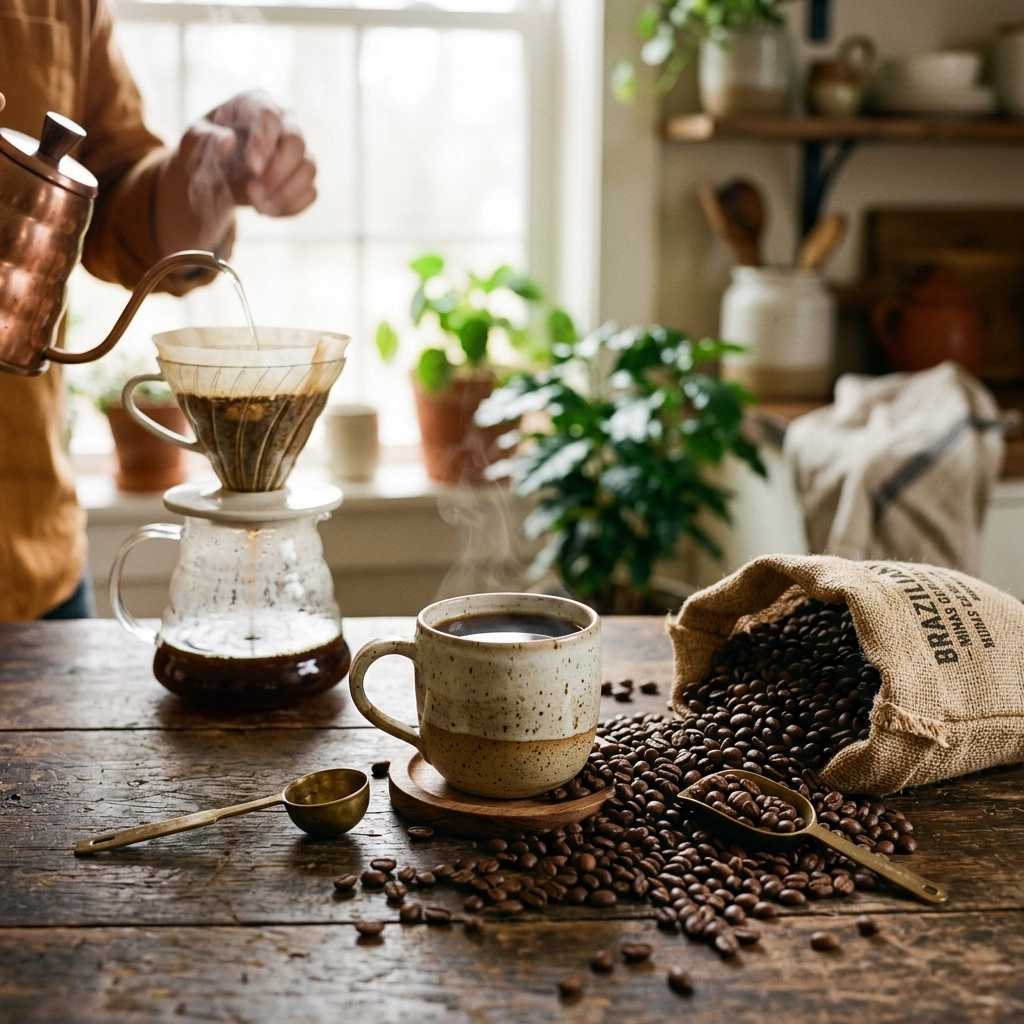
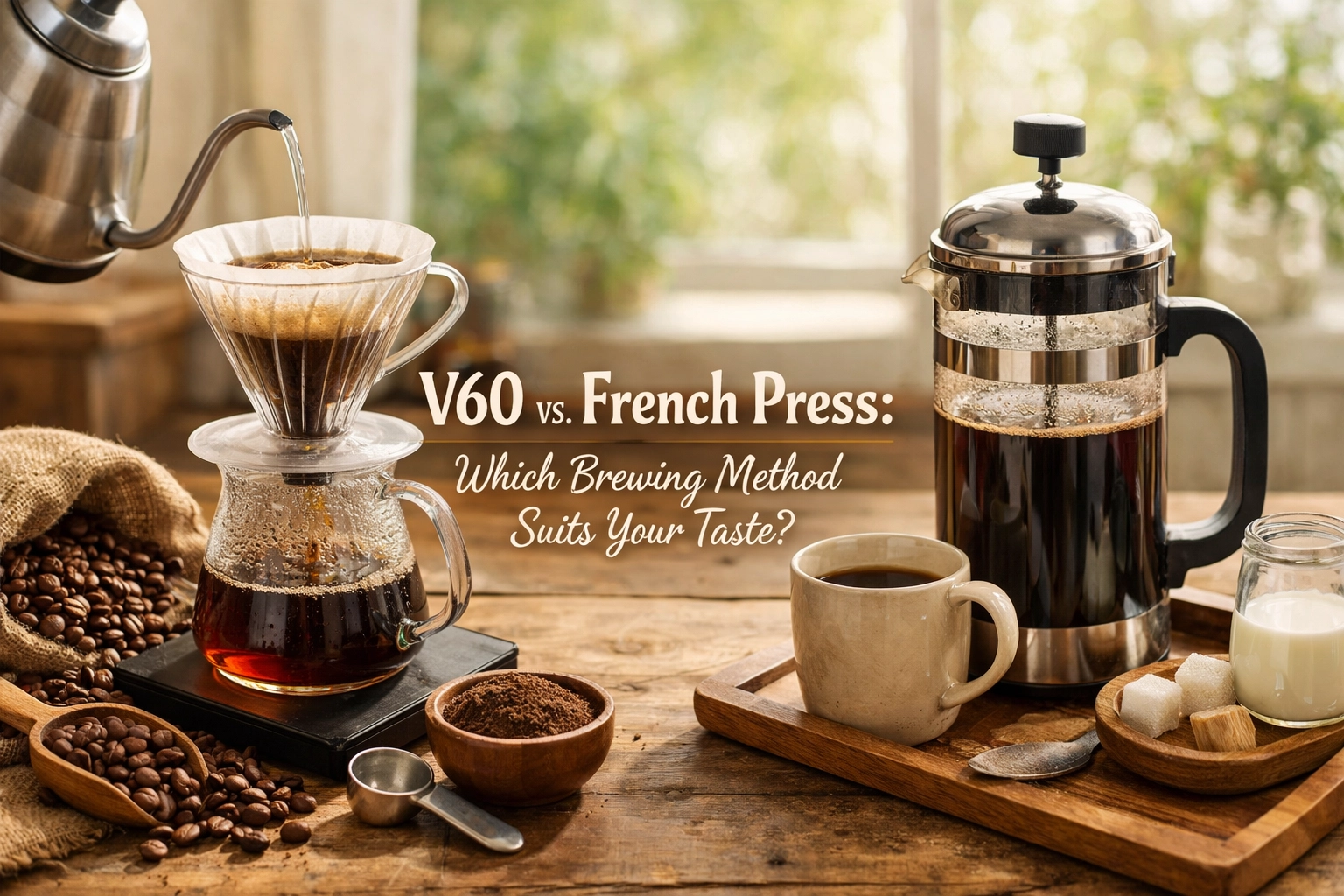
So you're standing in your kitchen, staring at your coffee setup, wondering which brewing method deserves counter space. Maybe you've been a loyal French Press fan for years, or perhaps you've been eyeing those elegant V60 pour-overs all over Instagram. Here's the thing: these two methods produce wildly different cups of coffee, and choosing between them really comes down to what you're after in your morning brew.
Let's break down exactly what makes each method special, which beans shine brightest in each brewer, and ultimately, which one suits your taste buds.
The Fundamentals: Immersion vs. Pour-Over
Before we dive into taste profiles, let's talk about how these brewers actually work. The difference is more important than you might think.
French Press is an immersion brewer. This means your coffee grounds are completely submerged in hot water for several minutes, steeping like tea. You add your coarse grounds, pour in hot water, wait about four minutes, then press down the plunger to separate the grounds from the liquid. The metal mesh filter keeps the grounds at the bottom but allows all those natural coffee oils to pass through into your cup.
V60, on the other hand, is a pour-over brewer. Water flows through a bed of coffee grounds and drains directly into your cup through a paper filter. You're not steeping here: you're extracting flavor as water passes through. The cone shape and spiral ridges of the V60 create a unique flow pattern that, when done right, produces exceptional clarity.
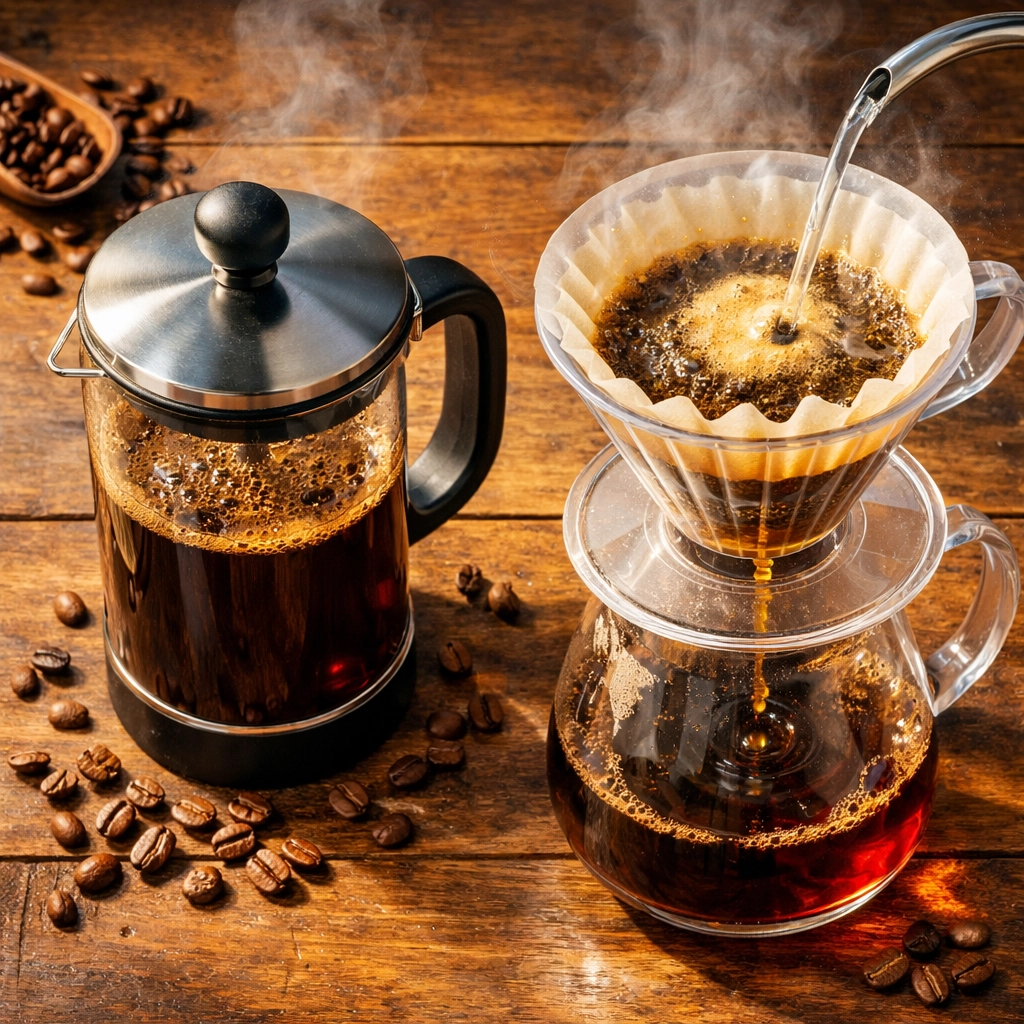
The brewing method fundamentally shapes what ends up in your cup, which is why coffee geeks get so passionate about their preferred technique.
What's in Your Cup: Taste Profiles
Here's where things get interesting.
French Press gives you the full coffee experience: oils and all. Because that metal mesh filter doesn't trap the natural oils from the beans, you get a rich, heavy-bodied cup with an almost velvety mouthfeel. It's intense. Bold. Some might say a bit rough around the edges, and they wouldn't be wrong. Those oils carry flavor, but they also dull some of the more delicate notes. You'll notice at the bottom of your cup there's often a bit of fine sediment: that's just part of the French Press experience. Some love it, some don't.
V60 is the polar opposite. That paper filter absorbs the oils, which means you're left with a clean, bright cup that practically sparkles with clarity. This is where you taste all those tasting notes roasters love to put on their bags: the floral hints, the citrus brightness, the delicate fruit notes. If a coffee has complex acidity or interesting flavor nuances, the V60 will bring them front and center. The downside? If you're someone who likes adding milk, many of those delicate flavors get overwhelmed.
We believe both have their place. It really depends on what you're in the mood for.
The Technique Factor
Let's be honest about the learning curve here.
French Press is wonderfully forgiving. Get yourself some medium-coarse grounds (about the texture of breadcrumbs), add water just off the boil, wait four minutes, and press. That's it. Sure, there are ways to optimize it: decanting immediately after pressing to stop extraction, getting your grind size just right: but even a slightly imperfect French Press brew is usually pretty decent. It's hard to completely mess up.
V60 is a different beast entirely. This brewer is sensitive. Grind size matters. Water temperature matters. Pour technique matters. The speed of your pour matters. If you're off on any of these variables, you'll taste it. Too fast and your coffee's weak and sour. Too slow and it's bitter and over-extracted. You'll want a burr grinder for consistency and ideally a gooseneck kettle for controlled pouring.
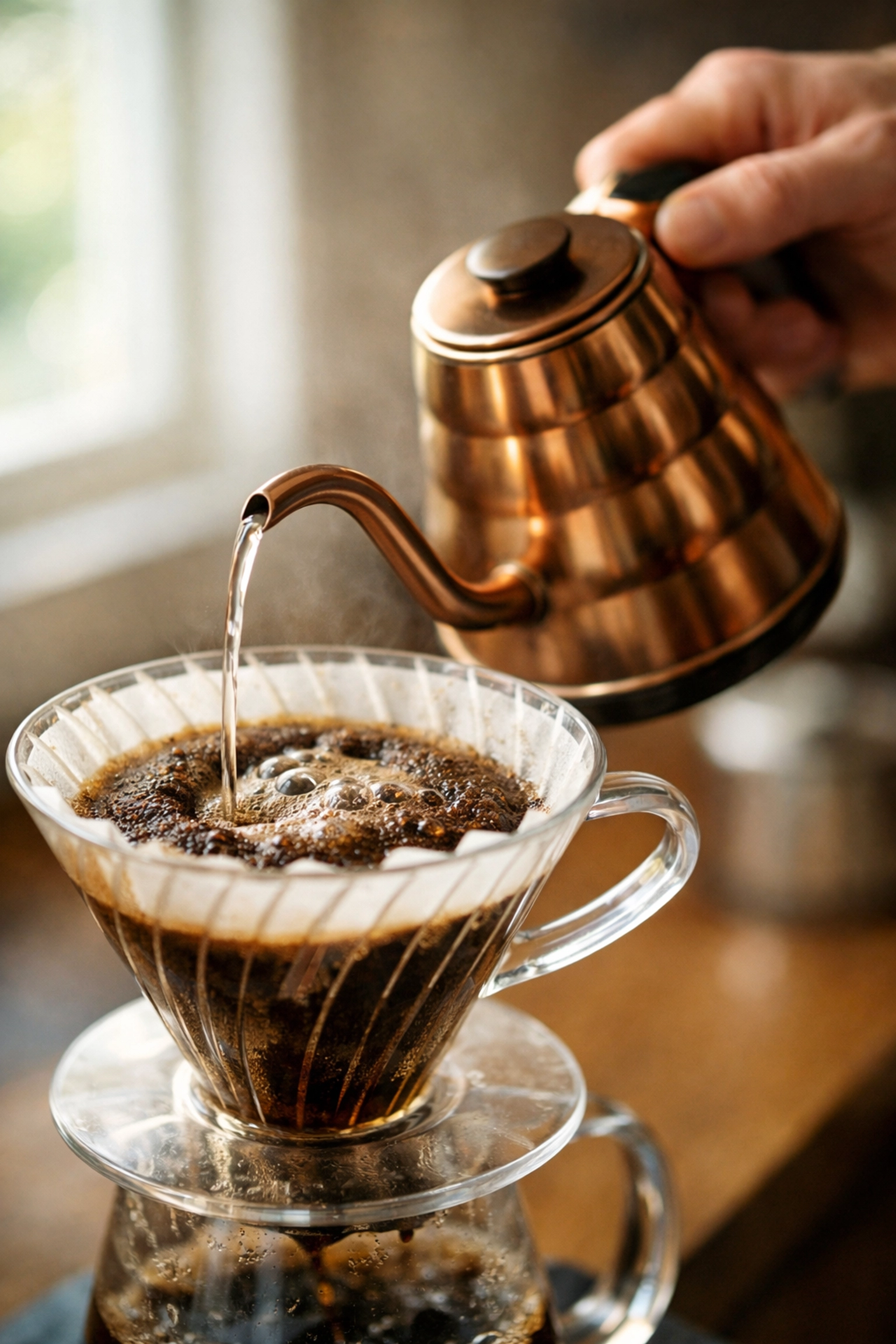
Does this mean V60 is "harder"? Not exactly. It just requires more attention and practice. Some people find that ritual meditative. Others find it annoying before they've had their coffee. Know yourself.
Bean Recommendations: What Works Best Where
This is where we can really help you get the most from your brewing method. At Limini Coffee, we think carefully about which beans suit which brewing methods.
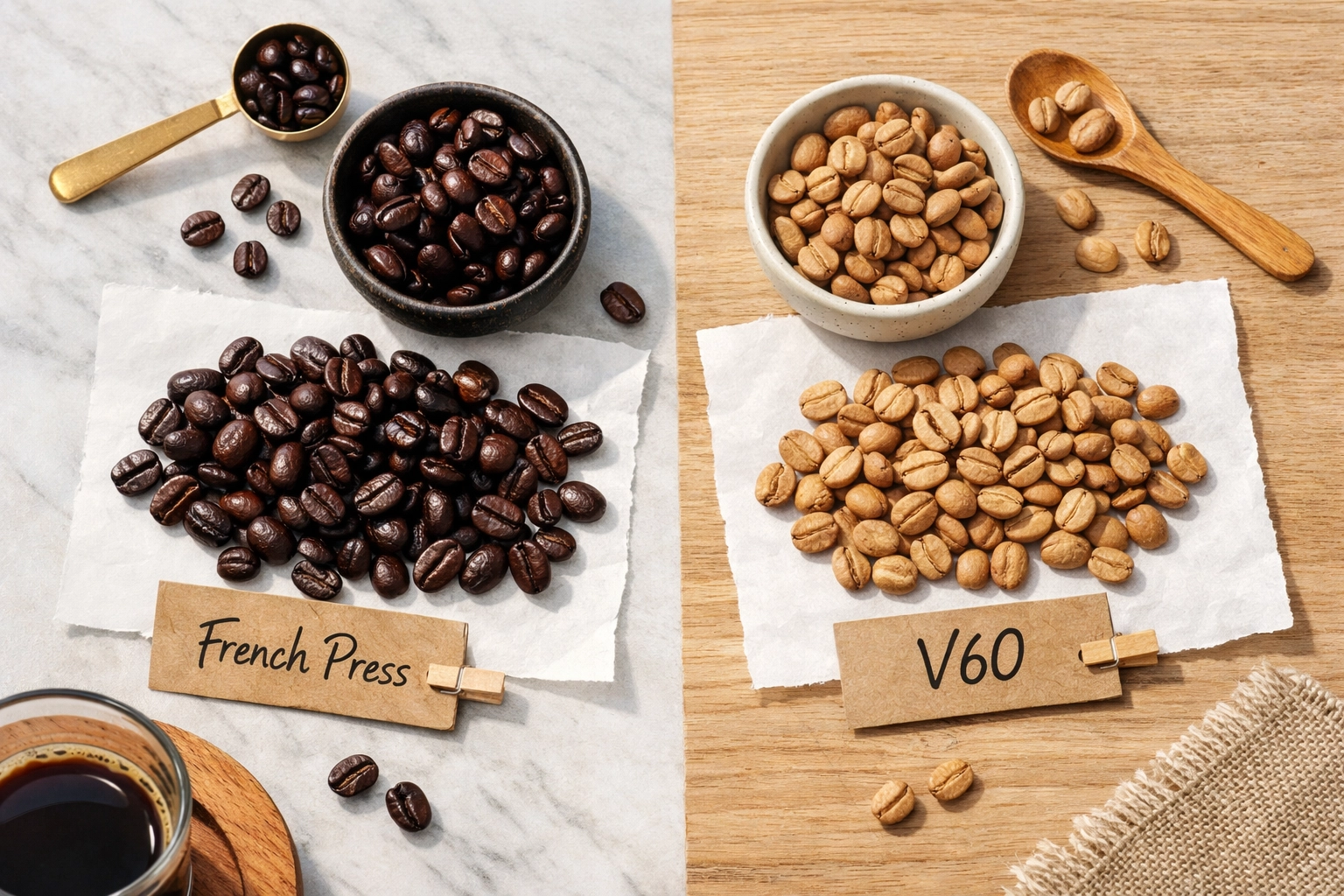
For French Press, you want coffees that can stand up to that bold, full-bodied extraction. Think:
- Dark to medium-dark roasts that bring chocolatey, nutty, caramel notes
- Brazilian or Sumatran single origins with low acidity and heavy body
- Blends designed for body and depth rather than brightness
- Natural processed coffees that already have big, fruity flavors
The French Press amplifies body and mouthfeel, so choose beans that play to those strengths. A bold blend with chocolate and hazelnut notes? Absolutely perfect in a French Press.
For V60, you want to showcase clarity and complexity:
- Light to medium roasts that preserve acidity and delicate flavors
- Ethiopian or Kenyan single origins with bright, fruity characteristics
- Washed process coffees that highlight clean, crisp flavors
- Anything with floral or tea-like qualities you want to explore
The V60 is your magnifying glass for interesting coffees. That Ethiopian natural with blueberry and jasmine notes? The V60 will make those flavors sing. You can explore our full range of single origins and decide which ones match your taste profile at Limini Coffee.
Practical Considerations
Beyond taste, there are practical factors worth considering.
Cleanup: French Press wins here. Dump the grounds (they're in a compact puck if you've brewed properly), rinse, done. The V60 requires disposing of the paper filter and rinsing the brewer, but it's still pretty quick.
Brewing for multiple people: French Press takes this one easily. You can brew multiple cups at once. V60 is generally a single-cup affair, though larger V60 brewers do exist.
Travel-friendliness: Both are reasonably portable, though the French Press glass carafe is more fragile. The V60 just needs something to sit on top of.
Cost: Both are relatively inexpensive compared to espresso equipment. Paper filters for V60 are an ongoing cost, but we're talking pennies per brew.
So Which One Suits You?
Let's get practical about this decision.
Choose French Press if:
- You want rich, full-bodied coffee with intense flavor
- You prefer simplicity and consistency over experimentation
- You're brewing for more than one person regularly
- You like adding milk or cream to your coffee
- You want minimal fuss in the morning
- You appreciate the ritual of pressing down that plunger
Choose V60 if:
- You love exploring subtle flavors and complexity in single origins
- You enjoy the process and don't mind the learning curve
- You're brewing single cups and want them perfectly tailored
- You prefer clean, bright, tea-like coffees
- You get excited about dialing in variables for the perfect brew
- You want to really taste what the roaster intended
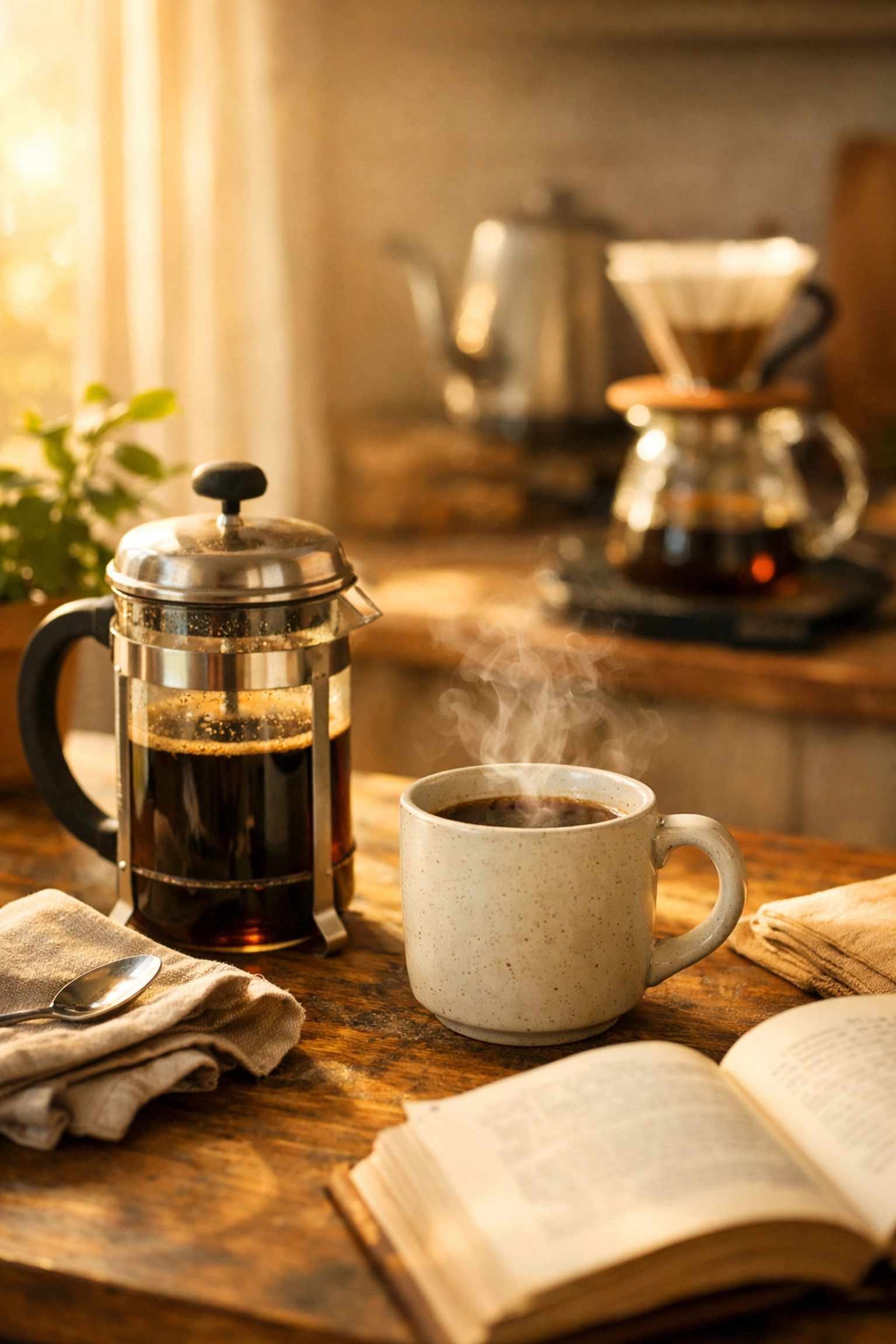
Honestly? We think most serious home brewers end up with both. They serve different purposes. Your Saturday morning might call for a leisurely French Press while you read the paper. Tuesday's rush to work might need a quick V60 highlighting that new Ethiopian you picked up.
The Beauty of Choice
Here's what we love most about specialty coffee: there's no single "right" answer. The best brewing method is the one that makes you excited to wake up and make coffee.
We've spent years here at Limini working with both wholesale partners and home brewers, and we've seen passionate advocates for both methods. The French Press faithful swear by its simplicity and full-bodied results. The V60 enthusiasts love the clarity and the craft of getting everything just right.
The real question isn't which is "better": it's which matches your morning vibe, your taste preferences, and how you want to experience coffee. Some mornings call for bold and straightforward. Others invite you to slow down and appreciate complexity.
Whatever you choose, start with freshly roasted beans from Limini Coffee. Both methods will only be as good as the coffee you put in them, and fresh roasted specialty coffee makes all the difference: whether it's pressed or poured.
Now go brew something delicious.