
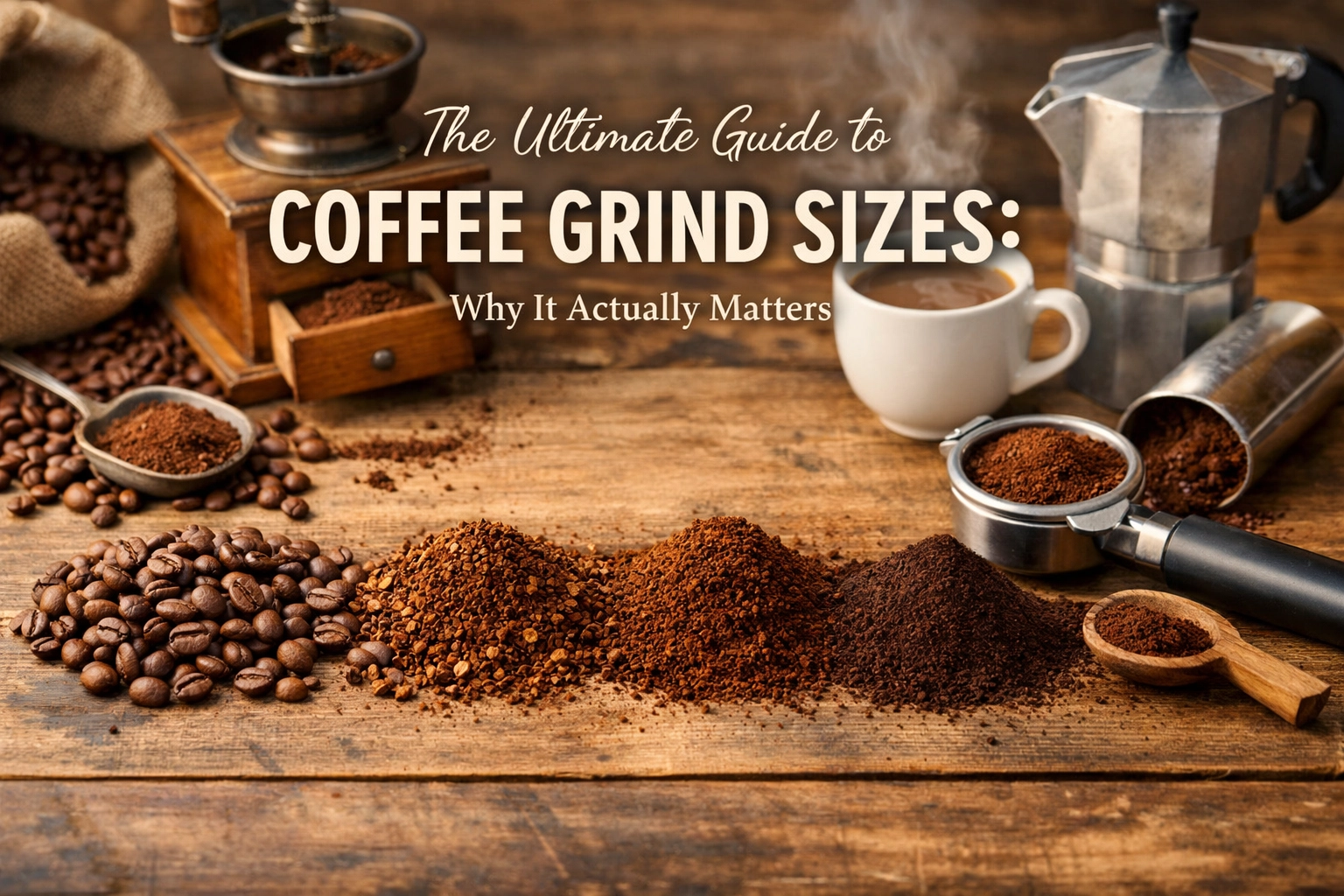
If you've ever brewed a cup of coffee that tasted weirdly sour or unpleasantly bitter, chances are your grind size was the culprit. Not the beans, not the water temperature, not even your brewing technique. The grind.
We know it sounds a bit dramatic, but grind size is genuinely the most important variable in brewing great coffee at home. You can have the most beautiful, freshly roasted beans in the world, but if they're ground incorrectly, you're setting yourself up for disappointment.
So let's talk about why grind size matters so much, what the different sizes actually are, and how to dial in your brewing to get the most delicious cup possible.
Why Grind Size Controls Everything
Here's the science bit (don't worry, we'll keep it simple): grind size directly controls extraction. Extraction is just the process of water pulling all those delicious flavors, oils, and compounds out of your coffee grounds.
When you change the grind size, you're changing two critical things:
Surface area. Finer grinds have more surface area exposed to water. More surface area means more extraction happens, faster. Coarser grinds have less surface area, so extraction happens more slowly.
Water flow. Finer grinds pack together more tightly, which slows down how quickly water can pass through them. Coarser grinds create more gaps, letting water flow through faster.
This means that grind size affects both how much flavor gets extracted and how quickly it happens. Get it wrong, and you end up with either under-extracted coffee (sour, weak, thin-tasting) or over-extracted coffee (bitter, harsh, burnt-tasting).
The sweet spot? That's what we're after.
The Grind Size Spectrum: From Powder to Pebbles
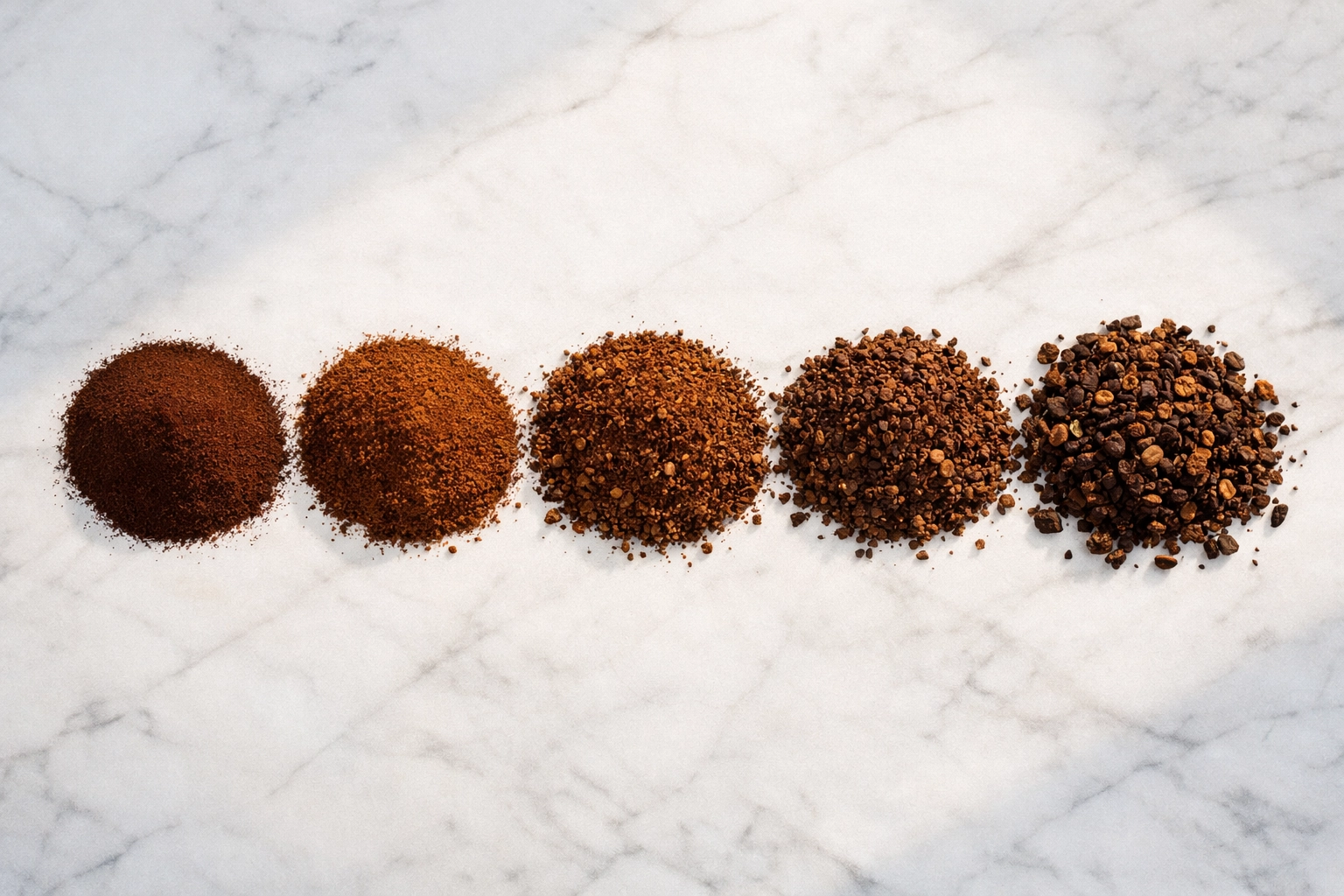
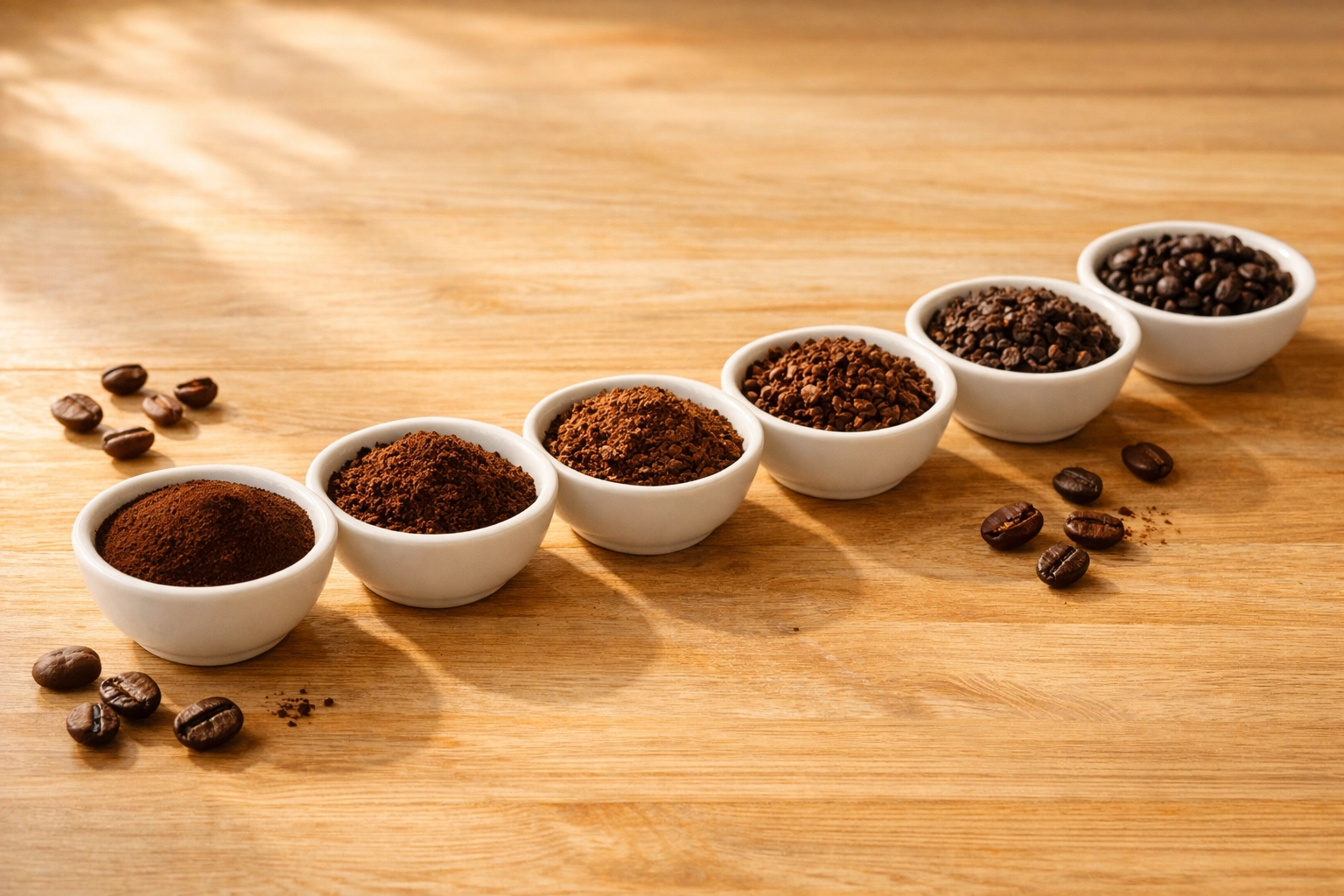
Grind sizes are usually categorized into a spectrum, from super fine (almost like flour) to extra coarse (like chunky sea salt). Here's how we think about them:
Extra Fine (Turkish Coffee): This is powder territory. It feels like flour between your fingers. Used for Turkish coffee where the grounds are actually suspended in the drink.
Fine (Espresso): Still powdery but slightly more granular. Think somewhere between flour and table salt. This is what you want for espresso, where high pressure and short brew time demand maximum extraction in minimal time.
Medium-Fine (Moka Pot, Some Pour Overs): A bit grittier now, like very fine sand. This works well for Moka pots and certain pour over methods like the V60 (depending on your recipe).
Medium (Drip Coffee, AeroPress): This is regular beach sand texture. Smooth but granular. Great for auto-drip machines and AeroPress (though AeroPress is flexible).
Medium-Coarse (Chemex, Some Pour Overs): Getting chunkier now. Like rough sand or fine breadcrumbs. Works beautifully for Chemex and slower pour over methods.
Coarse (French Press, Cold Brew): Think sea salt crystals or coarse breadcrumbs. You can see distinct particles. This is your French press territory, where long steeping time means you need a coarser grind to avoid over-extraction.
Extra Coarse (Cold Brew, Cowboy Coffee): Like small pebbles or cracked peppercorns. Used for very long brewing methods.
The problem? Grinder settings don't standardize across brands. Your Baratza "15" isn't the same as another grinder's "15." This is why we recommend thinking in textures and results rather than numbers.
Matching Grind Size to Your Brewing Method
Let's get practical. Here's how to match your grind size to your brewing method:
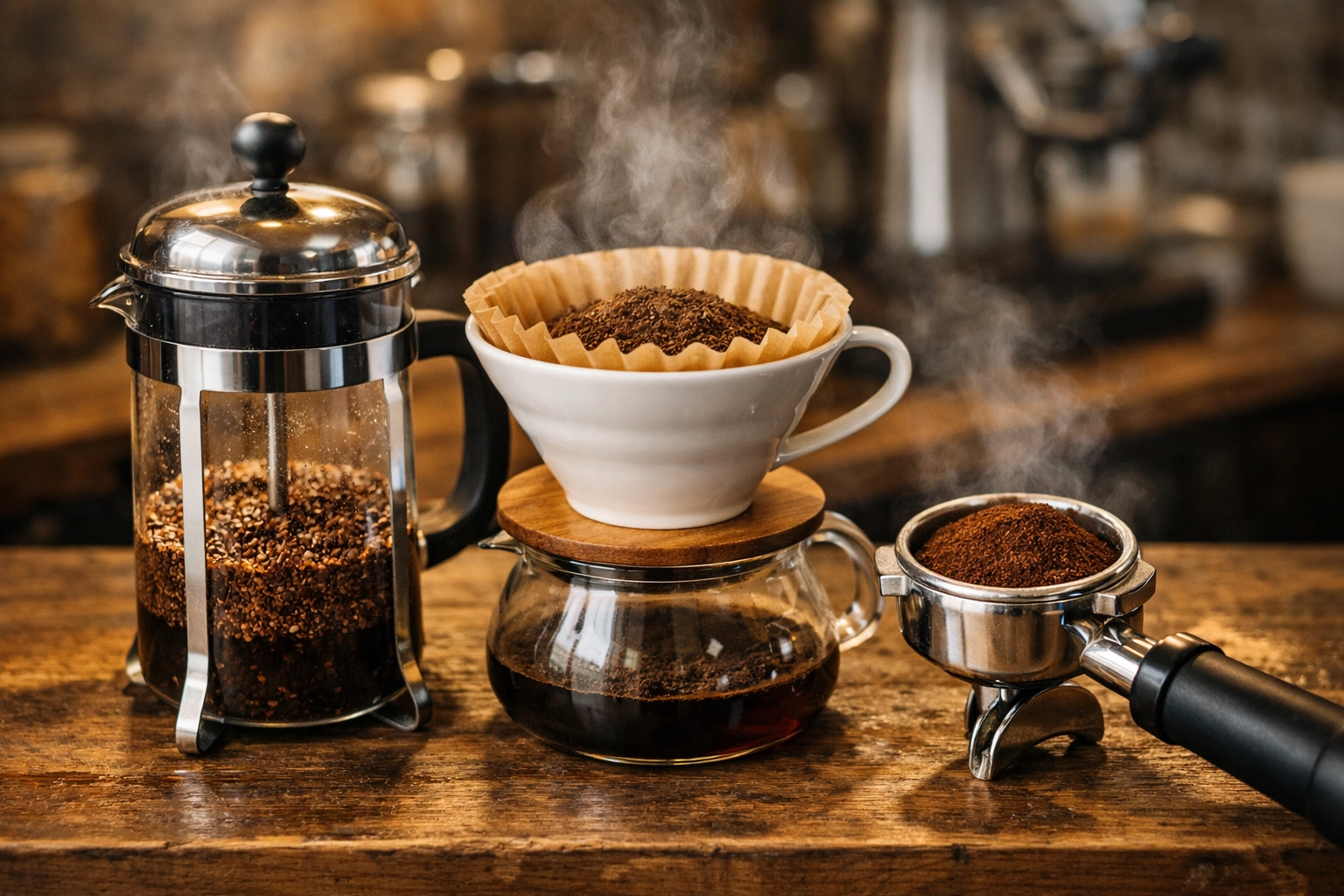
French Press: Coarse
French press needs a coarse grind because the coffee steeps in water for 4-5 minutes. That's a relatively long time. If you use a fine grind, you'll over-extract and end up with bitter, muddy coffee. Plus, finer grounds can slip through the mesh filter and create a gritty cup.
What to look for: Think sea salt crystals. Distinct, chunky particles.
Pour Over (V60, Kalita, etc.): Medium to Medium-Fine
Pour over is where things get interesting. The grind size affects your brew time, and your brew time affects extraction. If water flows through too quickly, you under-extract (sour, weak). Too slowly, you over-extract (bitter, harsh).
Start with a medium grind: regular sand texture. If your brew time is too fast (under 2:30 for a V60), grind finer. If it's too slow (over 3:30), grind coarser.
What to look for: Smooth but granular, like beach sand.
Espresso: Fine
Espresso is the most demanding brewing method when it comes to grind size. You're forcing water through the coffee at 9 BAR of pressure in just 25-30 seconds. This means you need a fine grind to create enough resistance and allow proper extraction in that short time.
Even tiny adjustments matter here. We're talking one or two clicks on your grinder can be the difference between sour and perfect.
What to look for: Powdery but not quite flour. Think table salt or slightly coarser.
AeroPress: Medium (But Flexible)
The beauty of the AeroPress is its versatility. Standard recipes usually call for a medium grind, but you can adjust based on your brew time and pressure. Shorter brew time? Grind finer. Longer steep? Go coarser.
What to look for: Beach sand texture, but experiment from there.
Moka Pot: Medium-Fine
The Moka pot sits somewhere between espresso and pour over. You want a medium-fine grind: finer than pour over but coarser than espresso. Too fine and you'll create too much resistance (and possibly a volcanic eruption of coffee). Too coarse and you'll get weak, under-extracted brew.
What to look for: Fine sand, slightly grittier than espresso.
Cold Brew: Coarse to Extra Coarse
Cold brew steeps for 12-24 hours, which is a very long extraction time. You absolutely need a coarse grind to avoid over-extraction. Even with a coarse grind, you'll get plenty of flavor because of the extended contact time.
What to look for: Chunky, like cracked peppercorns or coarse breadcrumbs.
The Sour vs. Bitter Balance
Understanding extraction helps you troubleshoot your coffee. Here's the quick guide:
Sour, acidic, weak, watery? You're under-extracting. The water isn't pulling enough of the good stuff out of the beans. Solution: Grind finer, brew longer, or use hotter water.
Bitter, harsh, astringent, burnt-tasting? You're over-extracting. The water is pulling out all the good flavors plus the unpleasant ones. Solution: Grind coarser, brew shorter, or use slightly cooler water.
Balanced, sweet, complex, delicious? You've nailed it. This is proper extraction, where you're getting all the fruity, sweet, complex flavors without the harsh bitterness or sour acidity.
The beautiful thing is that once you understand this relationship, you can adjust any brew method to taste better.
Why You Should Invest in a Good Grinder
We're going to be honest: if you're serious about great coffee at home, a good grinder is more important than an expensive brewing device.
Pre-ground coffee starts losing freshness within minutes of grinding. Those aromatic compounds? They're volatile and they evaporate quickly. By the time pre-ground coffee sits on a shelf (or even in your cupboard), it's lost a huge amount of flavor potential.
Grinding fresh right before you brew makes an enormous difference. We're talking night-and-day improvement in flavor.
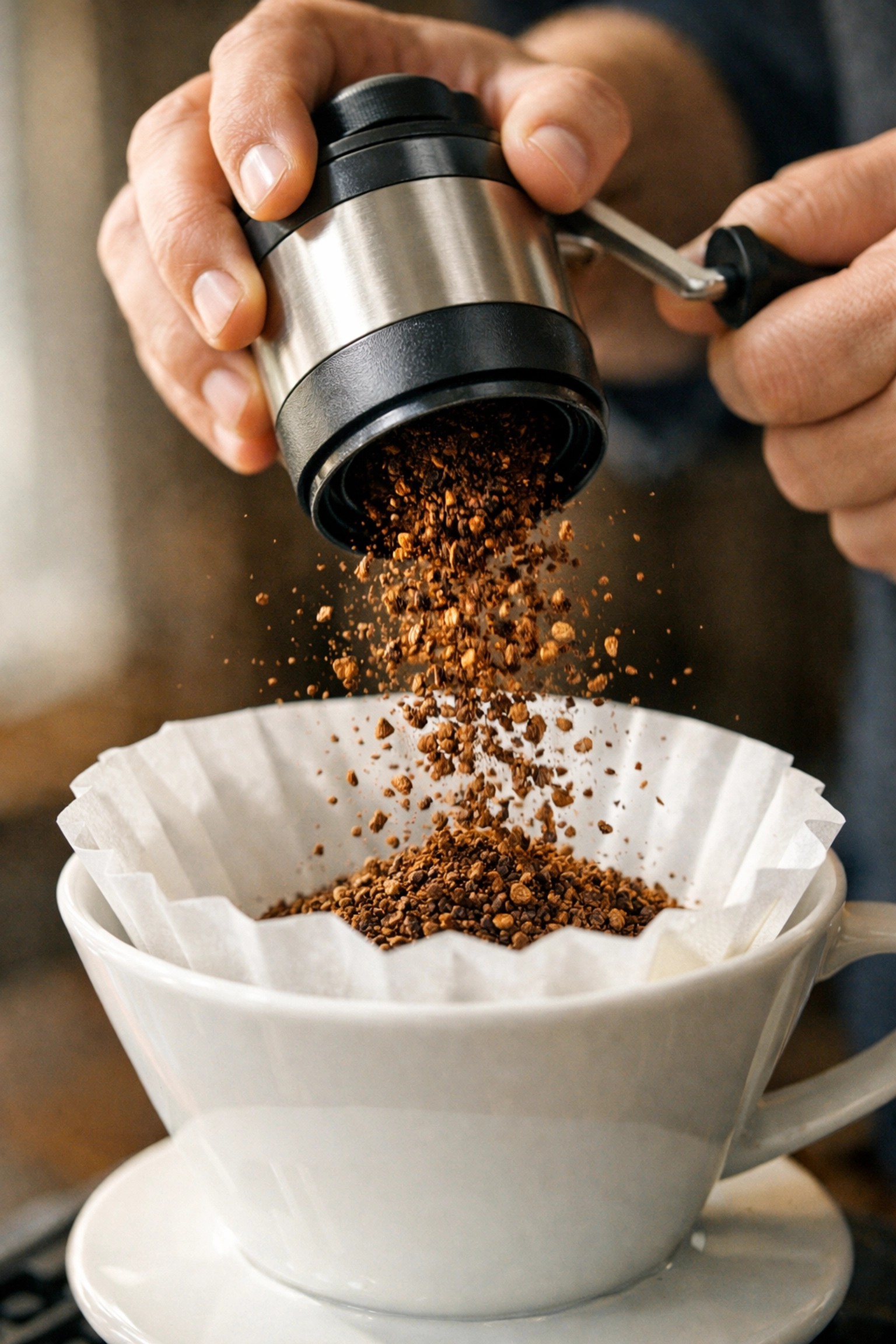
You don't need to spend a fortune, but we do recommend investing in a burr grinder rather than a blade grinder. Blade grinders create inconsistent particle sizes (some powder, some chunks), which leads to uneven extraction. Burr grinders produce uniform particles, which means even extraction and better-tasting coffee.
What About Pre-Ground Coffee?
Look, we get it. Not everyone can invest in a grinder right away. And sometimes convenience matters.
We can grind your beans to order at Limini Coffee. Just let us know your brewing method and we'll dial it in for you. It's definitely better than buying months-old supermarket coffee that was ground who-knows-when.
But. And this is a big but.
If you want the absolute best coffee experience at home, grinding fresh is the way. It's the single biggest upgrade you can make to your daily cup.
Experiment and Adjust
Here's the thing about grind size: there's no perfect universal setting. Different beans, different roast levels, different brewing devices, even different water: they all affect the ideal grind size.
So we encourage you to experiment. Start with the guidelines above, then taste and adjust. Brew a cup, take notes on how it tastes, and make small changes. One click finer, one click coarser. See what happens.
Coffee is forgiving. You're not going to ruin anything by tweaking and testing. That's actually the fun part.
Keep your brewing variables consistent (same ratio, same temperature, same timing) and only change the grind size. That way you'll know exactly what's affecting the flavor.
Final Thoughts
Grind size might seem like a small detail, but it's genuinely the difference between mediocre coffee and exceptional coffee. It controls extraction, which controls flavor, which controls whether you enjoy your morning cup or pour it down the sink.
The good news? Once you understand the basics, it becomes intuitive. You'll start to recognize when coffee tastes under-extracted or over-extracted, and you'll instinctively know which way to adjust.
Start with quality beans (we might know where to find those), grind them fresh if you can, match your grind size to your brewing method, and then taste and adjust from there.
That's really all there is to it. Happy brewing!