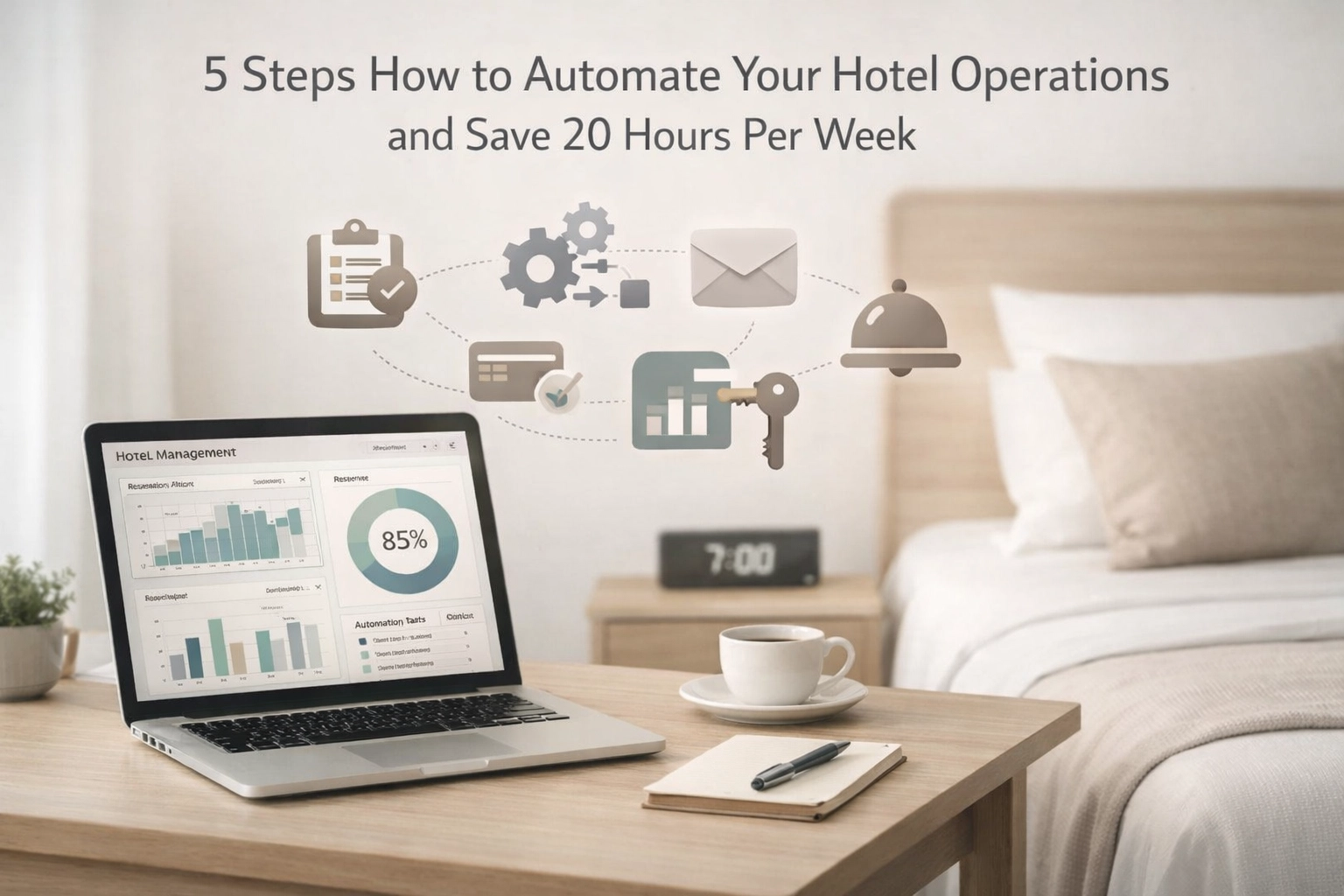
Twenty hours. That's how much time the average hotel staff spends each week on repetitive, manual tasks that could be automated. Tasks like updating room availability across booking channels. Assigning housekeeping schedules. Responding to the same guest questions over and over.
What if you could get those 20 hours back?
Hotel automation isn't about replacing your team: it's about freeing them from grunt work so they can focus on what actually matters: creating memorable guest experiences. The right hotel PMS and automation tools can eliminate the tedious stuff while improving accuracy and guest satisfaction.
Here's how to do it in five strategic steps.
Step 1: Identify Your Biggest Time Drains
Start with the obvious stuff. The tasks that eat up hours but don't require human judgment or creativity.
Walk through your daily operations and ask: Where does your team spend the most time on repetitive work? Common culprits include:
- Processing online reservations and updating availability manually across platforms
- Coordinating housekeeping schedules based on check-ins and check-outs
- Answering the same guest questions about Wi-Fi, checkout times, and amenities
- Managing room assignments and handling last-minute changes
- Reconciling payments and running end-of-day reports
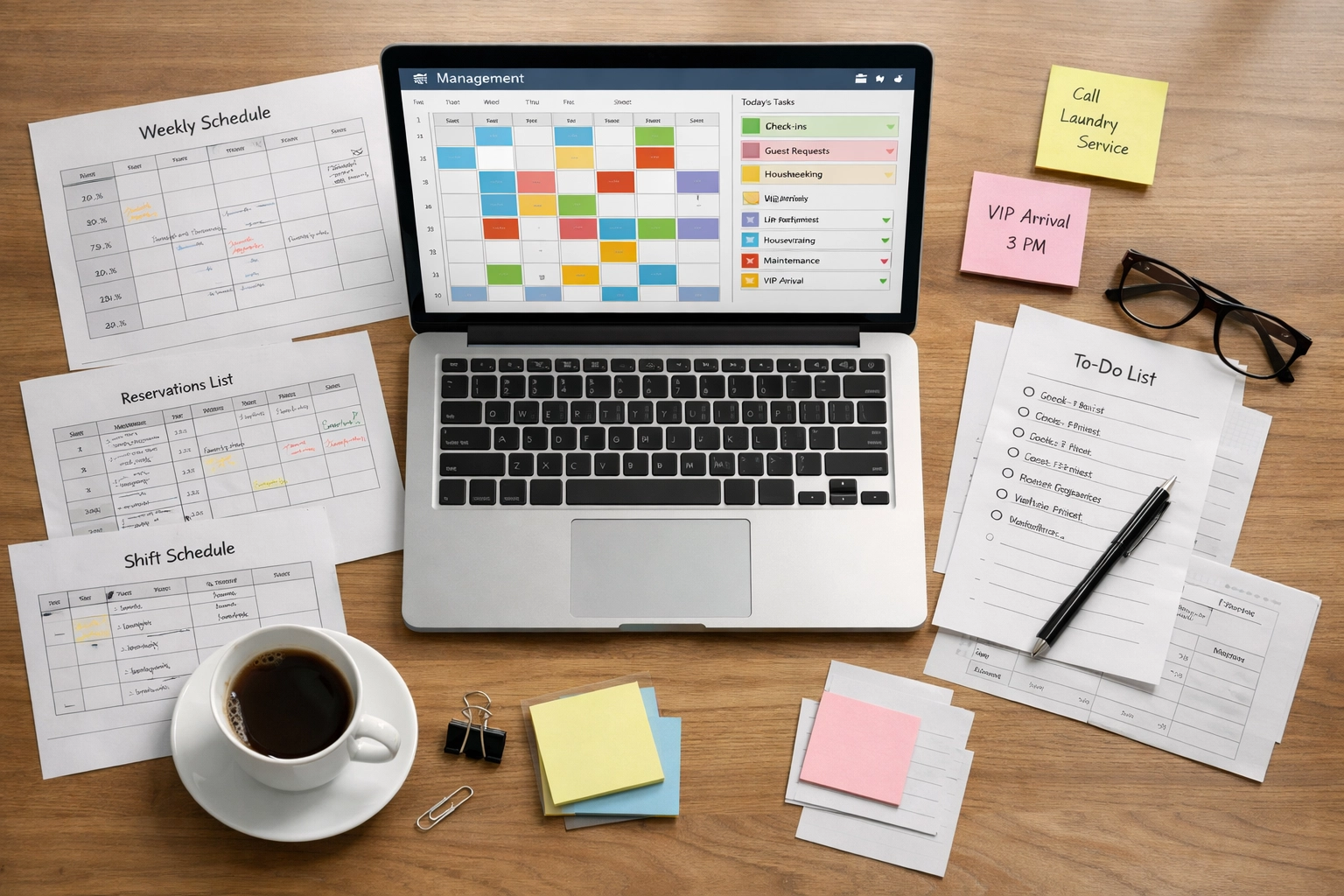
These high-volume, structured tasks are your low-hanging fruit. They're time-consuming, error-prone, and perfect candidates for automation.
Audit one week of operations. Track where your staff spends their time and note which tasks follow predictable patterns. Those patterns are automation opportunities. Focus on the activities that take the most time and happen most frequently: that's where you'll see the fastest ROI.
Step 2: Get Your Team On Board
Automation fails when staff don't buy in.
Your team needs to understand that automation isn't a threat: it's a gift. It eliminates the boring stuff so they can spend more time with guests, solving real problems, and doing work that actually matters.
Start the conversation early. Explain what you're planning to automate and why. Show them the hours they'll get back. Frame it as freeing them from repetitive tasks, not replacing their jobs.
Then assign clear ownership. Who's responsible for managing the booking engine? Who oversees the automated guest communications? When everyone knows their role, adoption becomes smoother and accountability stays high.
Provide hands-on training before launch. Let your team test the new systems, ask questions, and get comfortable with the tools. The more they understand how automation helps them, the more they'll embrace it.
Step 3: Choose Tools That Actually Work Together
Here's where most hotels mess up: they buy separate systems that don't talk to each other. You end up with a channel manager that doesn't sync with your PMS. A booking engine that requires manual data entry. Guest messaging tools that operate in isolation.
That's not automation: that's chaos with more software.
The right approach is to build your tech stack around a cloud-native hotel PMS that integrates everything. Your PMS should connect to:
- Your channel manager to automatically update availability across all OTAs
- Your booking engine for direct reservations that flow straight into your system
- Guest communication tools for automated pre-arrival messages, check-in instructions, and post-stay follow-ups
- Housekeeping systems that trigger cleaning assignments based on real-time occupancy
- Payment processing to eliminate manual reconciliation
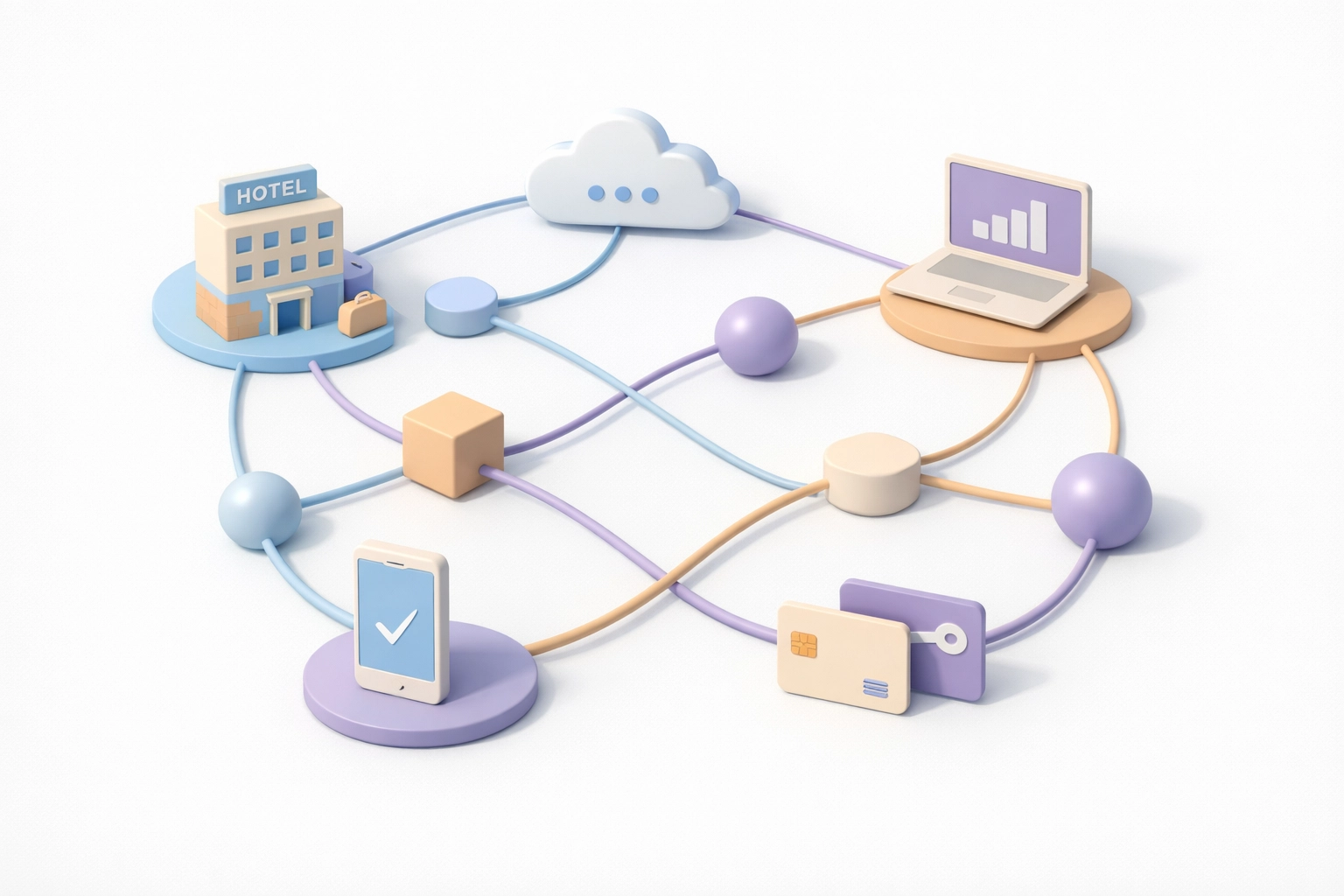
A cloud-native platform like Mews brings all these pieces together in one place. When your systems communicate automatically, you eliminate double-entry, reduce errors, and save hours every single day. Everything syncs in real-time: no manual updates required.
Want to see how a truly integrated system works? Check out Mews here and discover what connected operations actually feel like.
Step 4: Start Small and Expand Strategically
Don't try to automate everything at once. That's a recipe for poor adoption and frustrated staff.
Pick one or two high-impact processes to automate first. Front-desk operations are usually the best starting point because they're highly repetitive and consume the most staff time.
Start with reservation management. Let your booking engine and channel manager automatically update availability across all platforms. No more logging into each OTA individually. No more double-bookings or manual corrections.
Once that's running smoothly, expand to guest communications. Automate pre-arrival emails with check-in instructions. Set up automatic upsell messages for room upgrades or early check-in. Schedule post-stay review requests.
Then move to housekeeping automation. Let your PMS automatically assign cleaning tasks based on check-outs and departures. Send mobile notifications to housekeeping staff so they know exactly which rooms need attention and when.
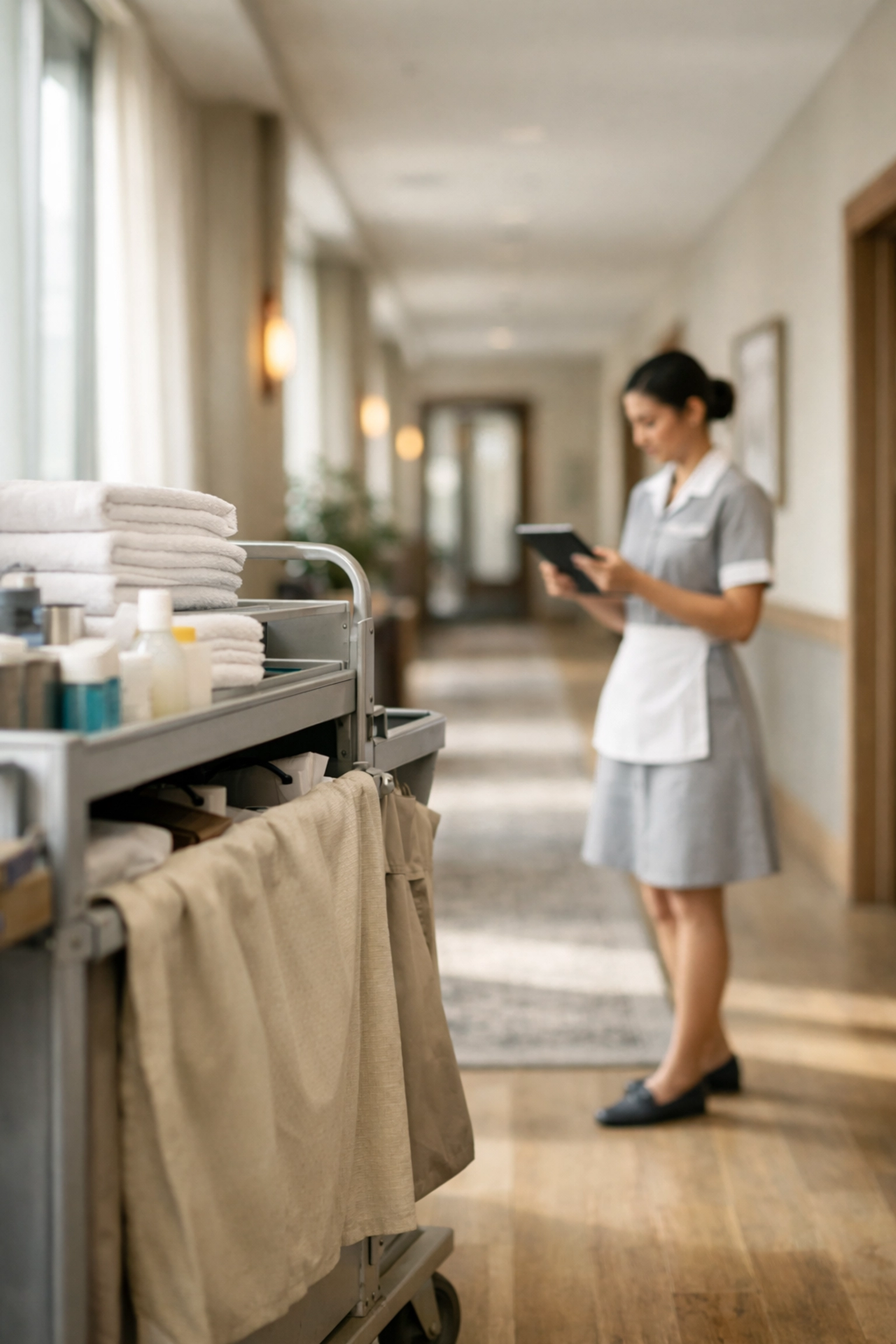
This phased approach gives your team time to adjust. It lets you catch issues early and make adjustments before they become bigger problems. And it builds confidence: once your staff sees automation working in one area, they'll be eager to expand it to others.
Monitor everything closely during rollout. Track time savings, error rates, and guest satisfaction scores. Use those metrics to prove ROI and identify your next automation opportunity.
Step 5: Optimize, Measure, and Scale
Automation isn't set-it-and-forget-it. You need to continuously monitor performance and make adjustments.
Set up dashboards in your PMS to track key metrics:
- How much time are you saving on front-desk tasks?
- Are automated messages improving guest satisfaction scores?
- Is your channel manager reducing booking errors?
- How many manual tasks have been eliminated?
Review these metrics monthly. Look for patterns. If automated upsells aren't converting, tweak the messaging or timing. If housekeeping schedules still require manual intervention, adjust your triggers.
As you establish success with initial automations, identify additional expansion opportunities. Maybe it's automating your inventory management. Or integrating self-check-in kiosks to eliminate front-desk bottlenecks entirely. Or deploying chatbots to handle routine guest inquiries 24/7.
The key is to scale deliberately. Add new automations when your team is comfortable with existing ones. Maintain system stability while continuously improving efficiency.
The 20-Hour Payoff
Here's what 20 hours per week actually means for your hotel:
- Your front desk handles more guests without adding headcount
- Your housekeeping team works more efficiently with real-time task assignments
- Your managers spend less time firefighting and more time on strategy
- Your staff feels less burned out because they're not drowning in repetitive work
- Your guests get faster, more accurate service
That's the real benefit of automation. Not just time savings: though those are significant: but better operations across the board. Fewer errors. Happier staff. More satisfied guests.
And it all starts with the right foundation: a cloud-native hotel PMS that brings your entire operation together.
Modern hotels don't succeed by working harder. They succeed by working smarter. By automating the routine stuff so their teams can focus on what humans do best: creating exceptional guest experiences.
The five steps are straightforward. Identify your biggest time drains. Get your team on board. Choose integrated tools. Start small. Optimize and scale.
The hard part isn't knowing what to do: it's actually doing it. But the hotels that embrace automation are the ones saving 20 hours per week. Reducing errors. Improving guest satisfaction. And giving their teams the freedom to do meaningful work.
Your competitors are already automating. The question is: will you lead or follow?