
Let's address the elephant in the room: decaf coffee has a terrible reputation.
And honestly? For a long time, it deserved it. Cardboard water masquerading as coffee. The drink you ordered at 9 PM when you wanted the ritual without the 2 AM ceiling-staring session. The disappointing backup option.
But here's the thing – that reputation is based on old methods and bad decaf. Modern decaffeination, particularly the Swiss Water Process, has completely changed the game. We're talking about decaf that actually tastes like… coffee. Proper coffee. The kind that makes you question whether they accidentally gave you the full-strength stuff.
So if you've been avoiding decaf because you think it's destined to be rubbish, stick with us. We're about to blow your mind.
Why Did Decaf Get So Bad in the First Place?
The problem isn't decaffeination itself – it's how most coffee gets decaffeinated.
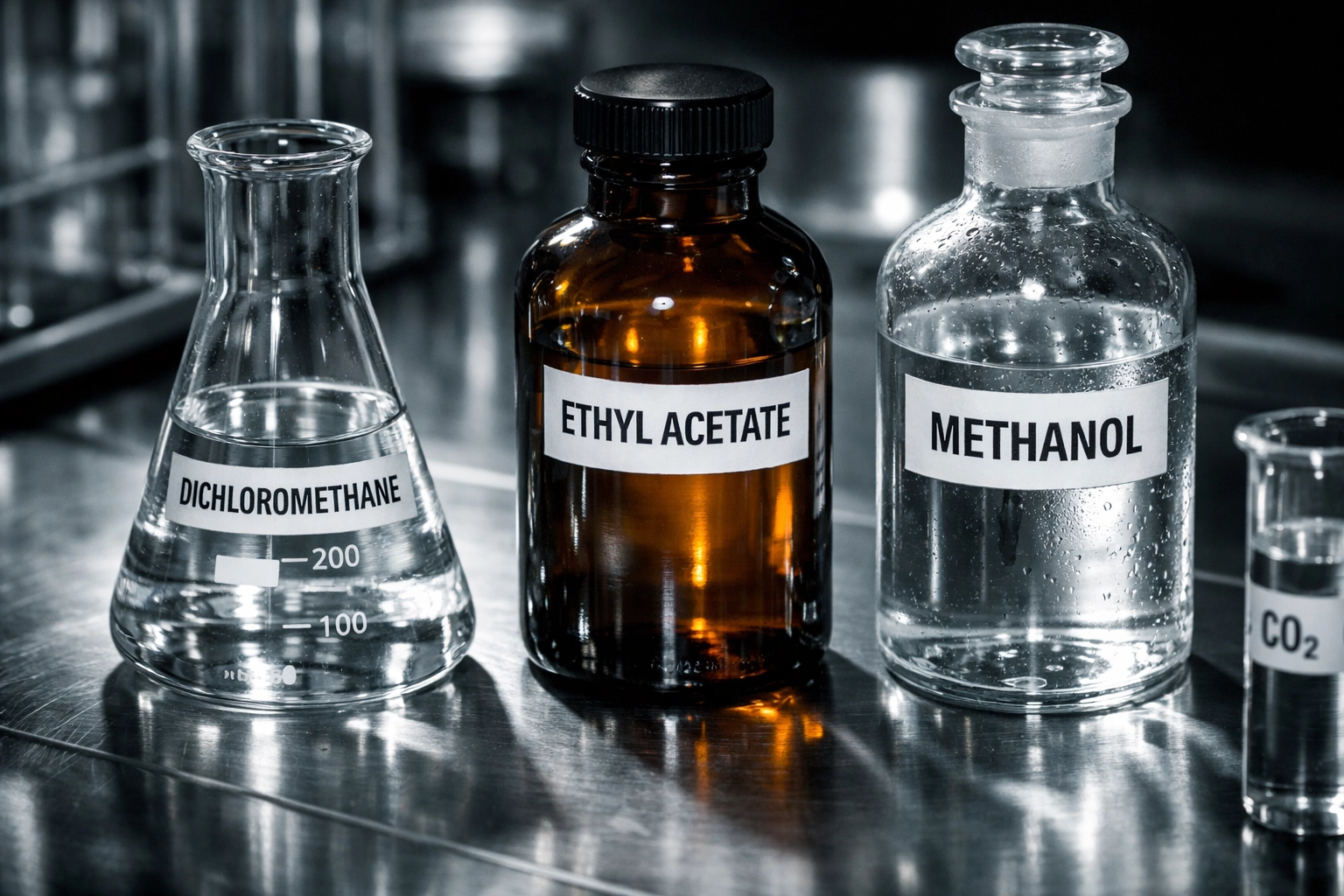
Traditional methods use chemical solvents like methylene chloride or ethyl acetate to strip caffeine from green coffee beans. These chemicals are effective at removing caffeine, we'll give them that. But they're also really good at removing flavour compounds, oils, and basically everything that makes coffee taste like coffee.
The result? Flat, one-dimensional brews that taste more like brown water than the complex, nuanced beverage we know and love.
It's like trying to remove just the seeds from a strawberry and ending up with a pale, flavourless ghost of fruit. Technically it's still a strawberry, but would you want to eat it?
Enter the Swiss Water Process
This is where things get interesting.
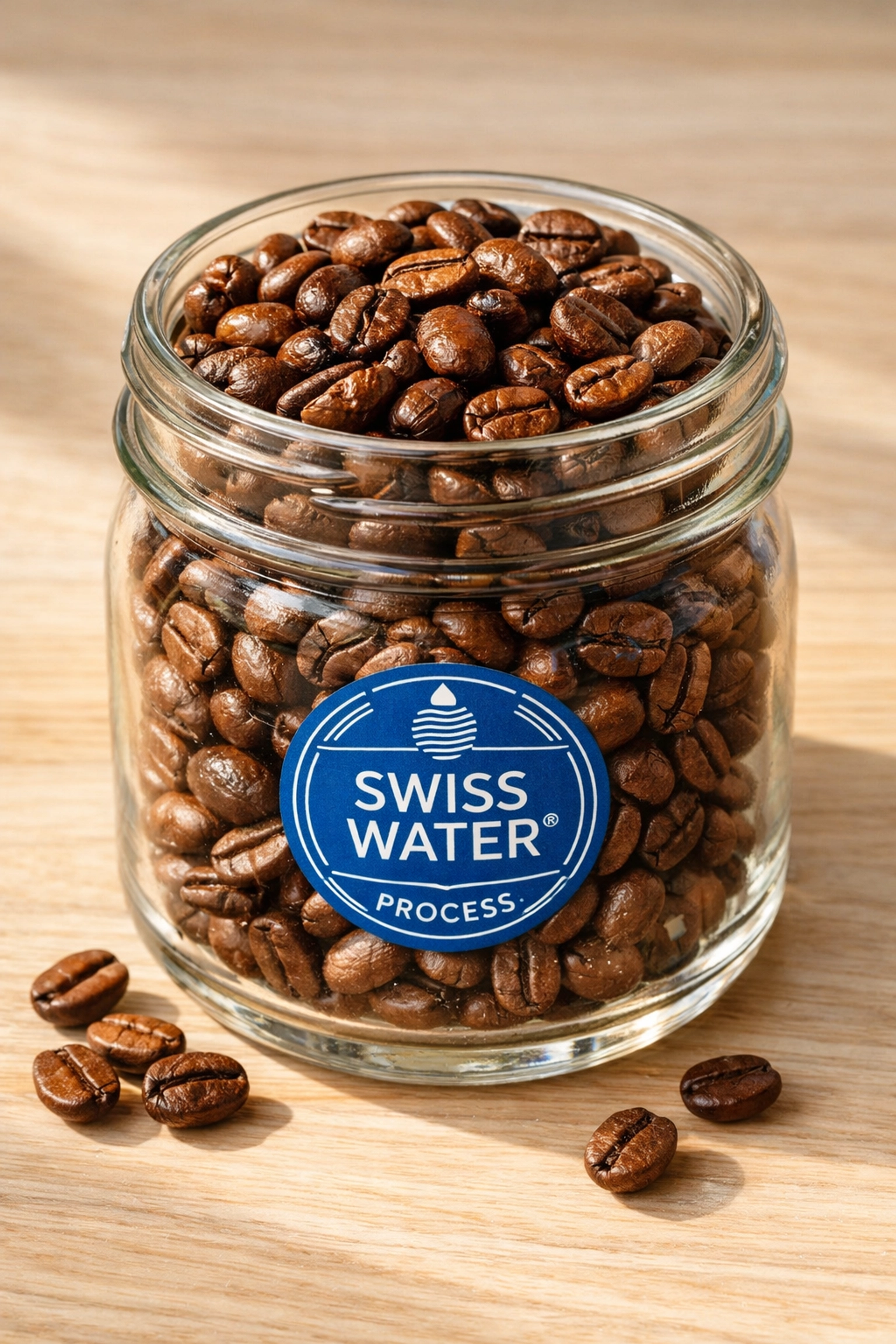
The Swiss Water Process is a completely chemical-free decaffeination method that uses only water, temperature, time, and some seriously clever science to remove 99.9% of caffeine while keeping the flavour intact.
No solvents. No chemicals. Just pure H₂O doing what it does best.
Developed in Switzerland (hence the name) and perfected in British Columbia, Canada, this method has been quietly revolutionizing decaf coffee for decades. The difference when you taste it? Honestly remarkable.
How Does It Actually Work?
Here's where we get a bit technical, but stay with us – it's genuinely fascinating.
The magic ingredient is something called Green Coffee Extract, or GCE for short. Think of it as a flavour-saturated water solution that contains all of coffee's soluble compounds except caffeine. Basically, it's caffeine-free coffee water that's absolutely loaded with all the good stuff – the oils, the sugars, the flavour compounds that make each origin unique.
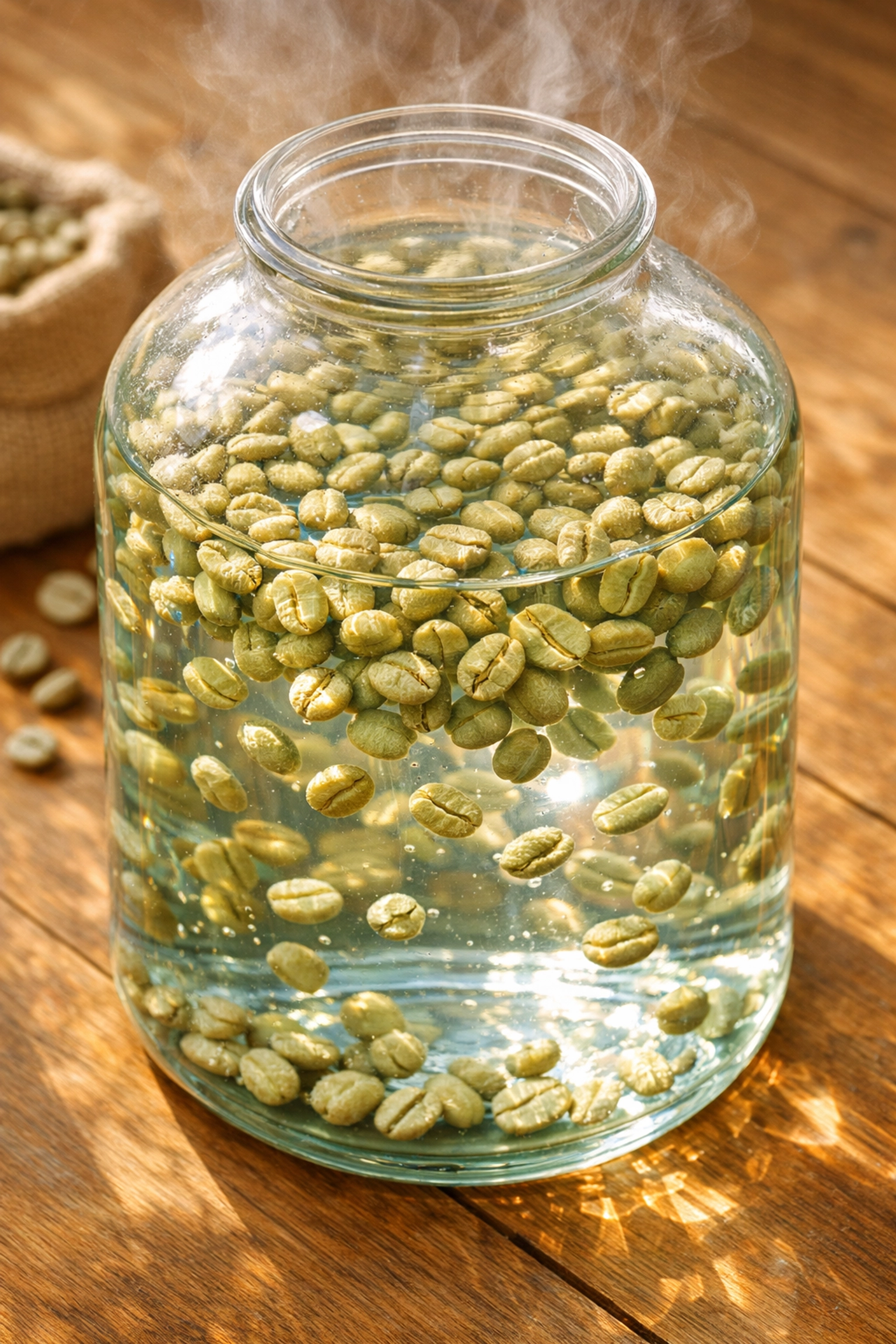
When green coffee beans are soaked in this GCE, something clever happens. Because the GCE is already saturated with flavour compounds, those compounds have no reason to leave the beans – they're in equilibrium. But caffeine? Caffeine isn't in the GCE, so it migrates out of the beans through diffusion, seeking balance.
It's selective extraction at its finest. The caffeine leaves. The flavour stays.
The entire process takes about 8-10 hours and unfolds in four main stages:
Preparation: Green beans are cleaned and pre-soaked to expand them to the perfect moisture level for decaffeination.
Caffeine Migration: Beans are immersed in the GCE, where caffeine molecules naturally diffuse outward while flavour compounds remain locked inside the bean structure.
Carbon Filtration: The now caffeine-saturated GCE is passed through activated carbon filters that specifically trap caffeine molecules while preserving all those precious flavour components. This refreshed GCE is then ready to use again for the next batch.
Drying: Finally, the decaffeinated beans are carefully dried at low temperatures with custom airflow patterns tailored to each coffee's specific origin and characteristics.
Why Does This Matter for Taste?
Because the Swiss Water Process is so selective about what it removes, the coffee's original character stays intact.
A bright, fruity Ethiopian decaf still tastes bright and fruity. A chocolatey Brazilian decaf still has those cocoa notes. A complex Colombian blend maintains its complexity.
We've done blind tastings here at Limini where experienced coffee drinkers genuinely couldn't tell which was the decaf. Not because the regular coffee was bad, but because the decaf was genuinely that good.
This is a complete game-changer for anyone who loves speciality coffee but needs to limit their caffeine intake. You're not sacrificing quality. You're not settling for second best. You're getting proper, delicious coffee that just happens to be 99.9% caffeine-free.
Who Should Be Drinking Swiss Water Decaf?
Honestly? More people than you'd think.
Yes, the obvious candidates are those who are caffeine-sensitive or have medical reasons to limit intake. Pregnant folks. People with anxiety disorders that are aggravated by caffeine. Anyone who's discovered the hard way that espresso after 3 PM means no sleep before 2 AM.
But there's a whole other category: coffee lovers who want to drink more coffee without turning into jittery, sleepless wrecks.
You know that feeling when you've already had your morning coffee, but you'd really love an afternoon brew with your cake? Or when you're out for dinner and actually want to enjoy an after-meal espresso without writing off the entire night's sleep? That's where quality decaf becomes a revelation rather than a compromise.
We've noticed more and more home brewers keeping both caffeinated and decaf beans on hand. Morning brew? Full strength. Afternoon flat white? Decaf. Evening experimenting with your new pour-over technique? Definitely decaf.
It means you can enjoy the ritual, the flavour, and the experience of great coffee without the cumulative caffeine load.
What About Limini's Decaf?
We're pretty proud of our decaf offerings, if we're honest.
All our decaf coffees at Limini Coffee use the Swiss Water Process exclusively. We wouldn't have it any other way. When you're sourcing the quality of green coffee we work with – carefully selected, ethically sourced, speciality-grade beans – it would be criminal to strip them of their character with harsh chemical processes.
Our decaf options change seasonally, just like our regular offerings, because we're always chasing the best beans available. But whether it's a decaf from Colombia, Ethiopia, or anywhere else, you can trust that it's been decaffeinated gently and thoughtfully.
And because the Swiss Water Process leaves no chemical residue whatsoever, it's also completely organic-compliant. So if that's important to you, you're covered.
The best part? When people try our decaf for the first time, the most common response is surprise. "Wait, this is decaf?" Exactly.
Brewing Tips for Decaf
Here's something worth knowing: decaf beans are slightly more soluble than their caffeinated counterparts.
This means they extract a bit faster, which can lead to over-extraction and bitterness if you're using the exact same parameters as your regular coffee. The solution is simple – grind slightly coarser or shorten your brew time just a touch.
For espresso, you might find you need to back off the grind setting by a notch or two. For pour-over, maybe reduce your total brew time by 15-20 seconds. For French press, well, French press is forgiving enough that you probably won't notice much difference.
The key is to taste and adjust. Start with your regular recipe and tweak from there. Don't assume decaf needs radically different treatment – it doesn't. Just a gentle nudge in parameters.
And please, for the love of coffee, don't store your decaf any differently than your regular beans. Airtight container, cool and dark location, used within a few weeks of roasting. Decaf deserves the same respect as your prized single-origin.
The Bottom Line
Decaf doesn't have to be disappointing. It really doesn't.
When it's done right – when it's high-quality green coffee decaffeinated using the Swiss Water Process and roasted with care – it's just… coffee. Delicious, complex, satisfying coffee that happens to let you sleep at night.
The old stigma is based on old methods and old expectations. We've moved on. The technology has improved. The quality has skyrocketed.
So if you've been curious about decaf but hesitant to try it, or if you tried it years ago and were disappointed, give it another shot. Specifically, give Swiss Water Process decaf a shot. Pop over to Limini Coffee and grab a bag of our current decaf offering.
Brew it properly, give it the same attention you'd give any speciality coffee, and taste for yourself.
We reckon you'll be pleasantly surprised. And your sleep schedule will definitely thank you.