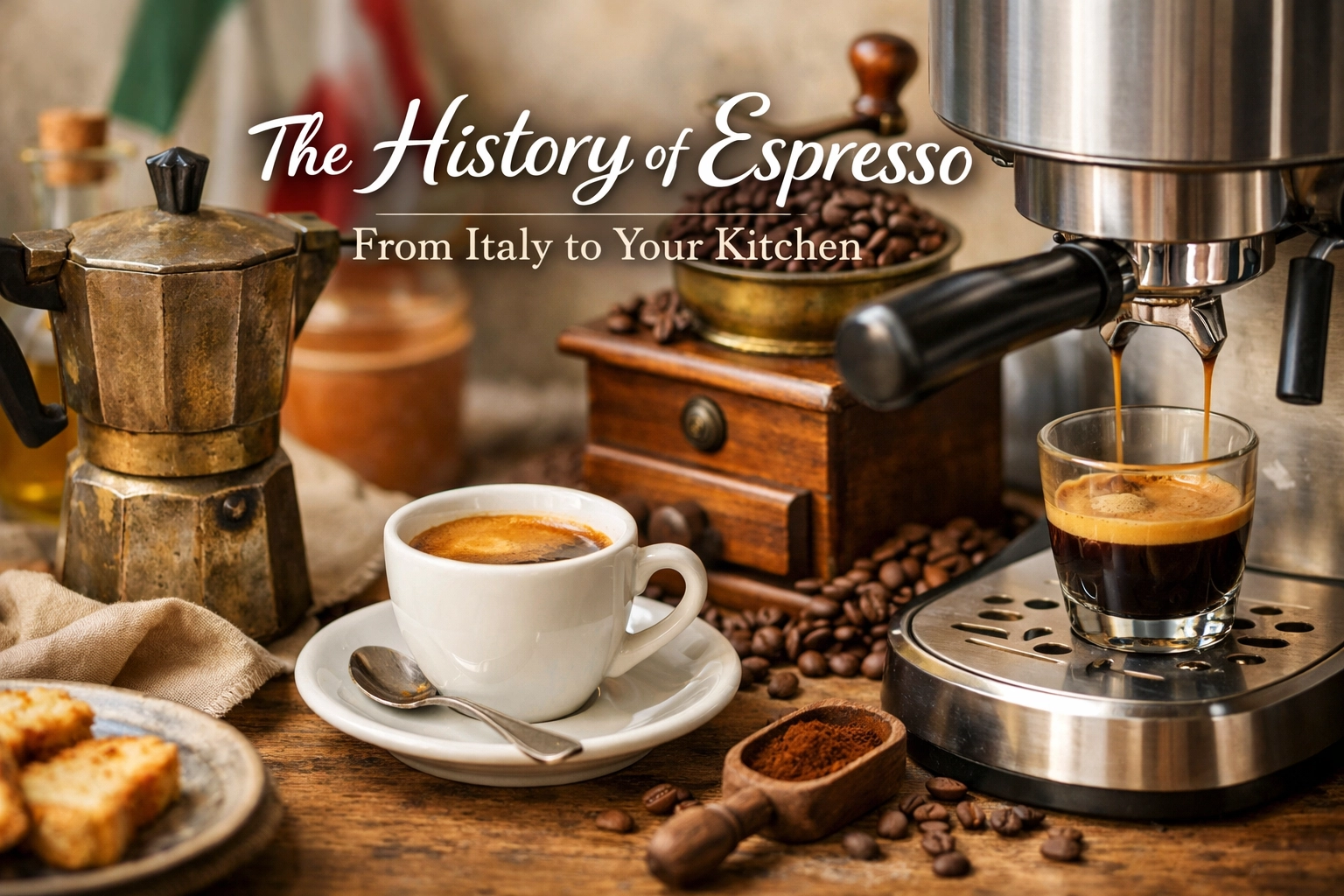
There's something special about that first sip of espresso in the morning. Rich, intense, topped with a layer of golden crema, it's a little moment of perfection before the day really gets going. But have you ever wondered how that tiny cup of concentrated coffee made its way from the cafés of Milan to your kitchen counter?
The journey of espresso is a fascinating story of innovation, persistence, and a distinctly Italian obsession with doing things properly. So let's take a quick trip through time and explore how espresso went from a 19th-century industrial experiment to the global phenomenon that fuels millions of us every single day.
Coffee Arrives in Italy
Before we can talk about espresso, we need to talk about coffee itself arriving on Italian shores. Venetian merchants brought coffee beans from the East during the 16th century, and Venice quickly became one of Europe's first coffee-loving cities. The famous Caffè Florian opened its doors in 1720 and is still serving coffee today, talk about staying power.
But here's the thing: brewing coffee back then was slow. Really slow. You'd boil water, steep the grounds, wait around, and eventually get your cup. For a culture that values efficiency and quality in equal measure, this just wouldn't do. Italian café owners in the late 19th century were looking for ways to serve more customers, faster, without sacrificing the quality of the brew.
That's where our story really begins.
The First Espresso Machines
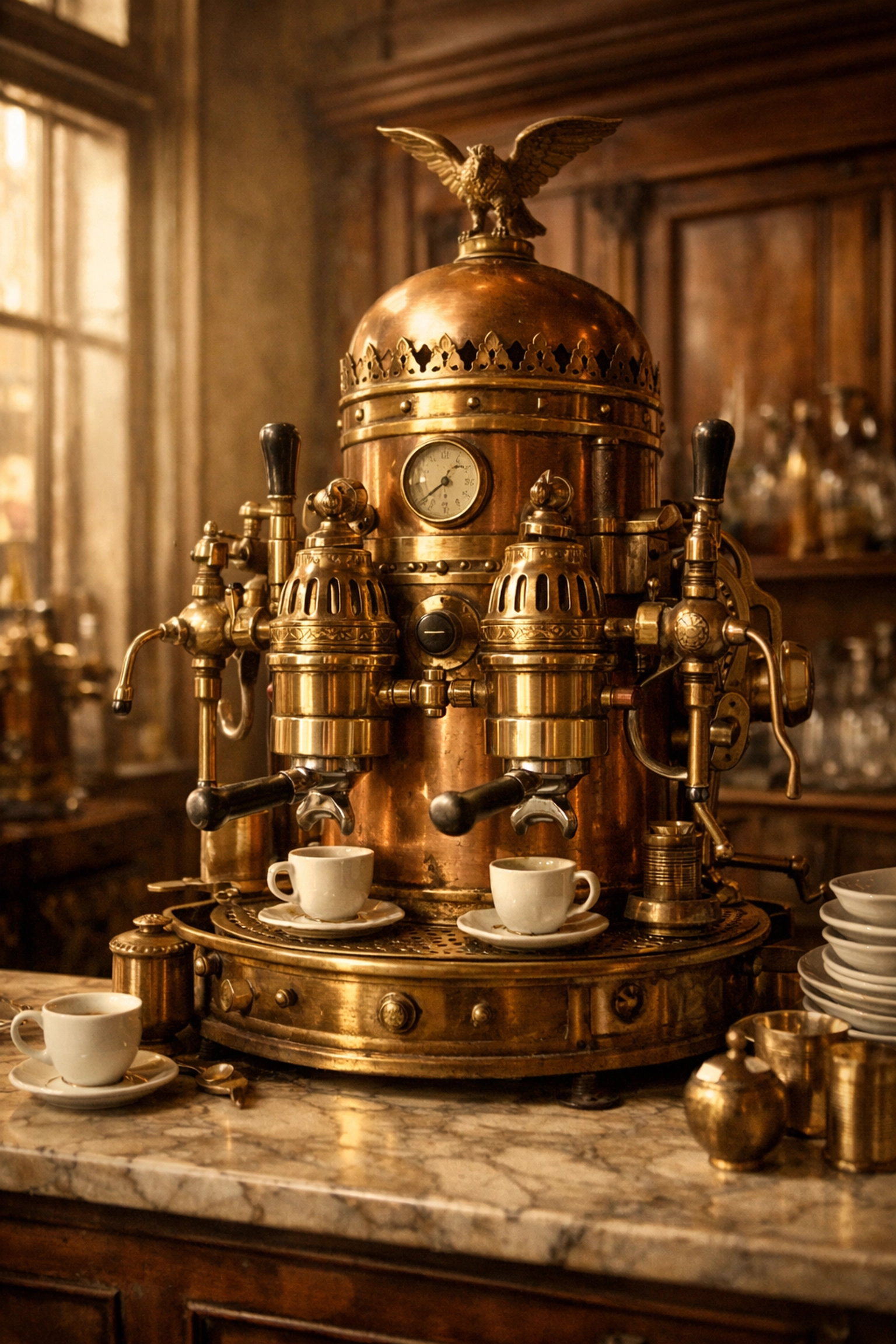
In 1884, an entrepreneur named Angelo Moriondo from Turin created what's considered the first espresso machine. His invention used steam pressure to force water through coffee grounds, a radical departure from traditional brewing methods. The machine was patented and even displayed at the General Expo in Turin, but it never really took off commercially. Moriondo's design brewed coffee in bulk rather than individual servings, which wasn't quite the revolution cafés were looking for.
Enter Luigi Bezzera, a Milanese inventor who took Moriondo's concept and ran with it. Around 1901, Bezzera developed an improved machine that featured groupheads and portafilters, components that are still fundamental to espresso machines today. His design could brew individual cups quickly, made "expressly" for each customer. That's actually where the name comes from: "espresso" means "expressed" or "pressed out" in Italian, but it also carries the meaning of something made quickly, in the moment.
Bezzera's machine was revolutionary, but he was better at inventing than marketing. That's where Desiderio Pavoni comes in. In 1903, Pavoni bought Bezzera's patents, refined the design with a pressure-release valve, and launched commercial production of the "Ideale" espresso machine at the 1906 Milan Fair.
These early machines were impressive from an engineering standpoint, they could theoretically produce up to 1,000 cups per hour. But there was a problem. The high-pressure steam created extremely hot water, which resulted in bitter, burnt-tasting coffee. The technology was there, but the taste? Not quite right yet.
The Gaggia Revolution
The real breakthrough came in 1938, thanks to Achille Gaggia. This Milano café owner wasn't satisfied with the steam-driven machines everyone else was using. He developed a lever-operated piston system that used spring tension to force hot (not boiling) water through finely-ground coffee at around 9 BAR of pressure.
The result? Game-changing.
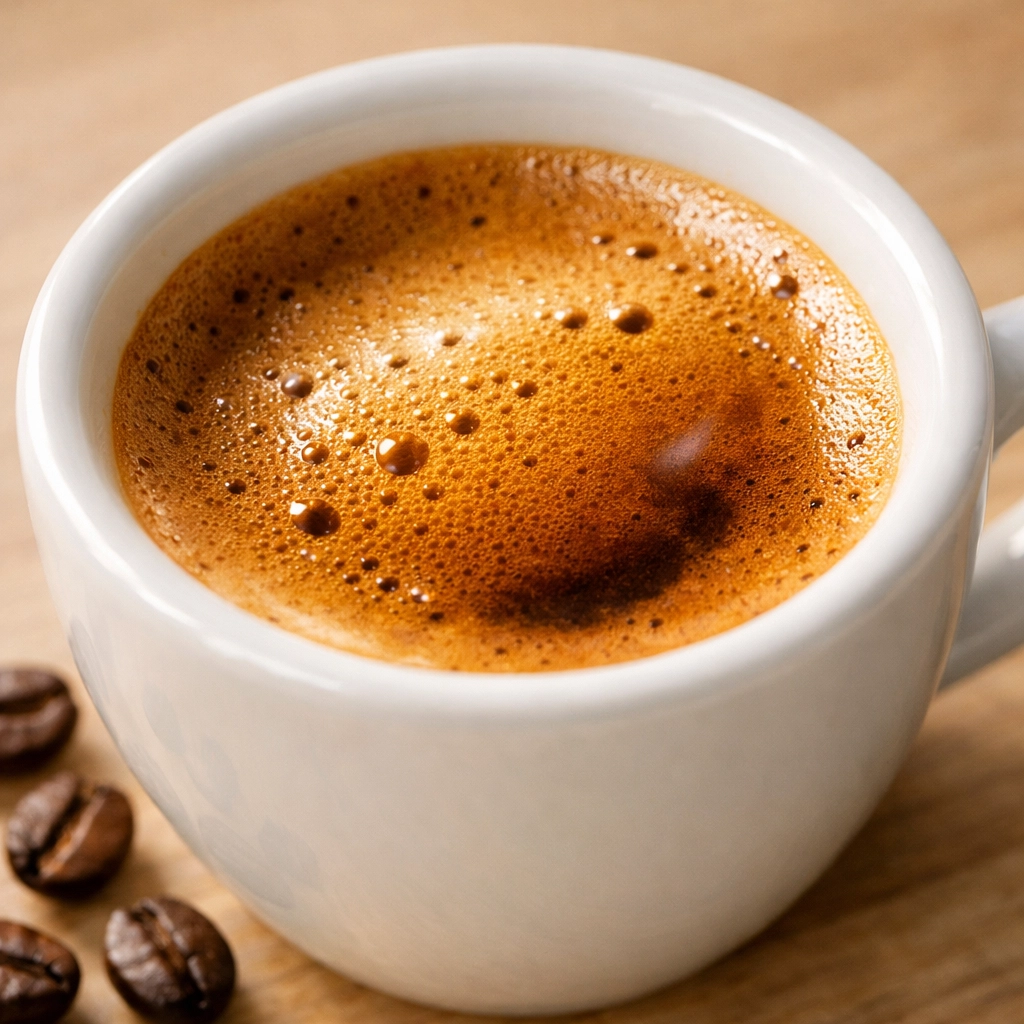
Gaggia's system produced something no one had seen before: a thick, golden layer of foam on top of the espresso. This creamy topping, which we now call crema, became the signature of a properly pulled shot. Initially, some customers were suspicious of this strange foam, but Gaggia marketed it as "caffè crema" and positioned it as a natural, luxurious element of fresh espresso. He was right. That layer of crema became the benchmark for quality espresso, and it still is today.
Gaggia's machines didn't just make better coffee, they created the espresso culture we recognize now. The ritual of watching a barista pull a lever, hearing the hiss and gurgle of the machine, seeing that perfect shot emerge with its crown of crema… it all started with Gaggia's innovation.
World War I had already helped spread coffee culture throughout Italy as soldiers consumed it during military service, but post-war, espresso bars became social hubs. Standing at the counter for a quick espresso before work or meeting friends for a mid-morning break became woven into the fabric of Italian daily life.
Espresso Goes Global
By the mid-20th century, espresso culture was spreading beyond Italy's borders. Italian immigrants brought their coffee traditions to cities worldwide, opening cafés in London, New York, Melbourne, and São Paulo. Each place added its own twist, Australians developed their renowned flat white, Americans supersized everything (including their lattes), and the British… well, we eventually came around.
The technology kept evolving too. In 1961, the Faema company introduced the first semi-automatic pump-driven machine. Instead of relying on manual lever operation, these machines used electric pumps to create consistent pressure and quickly heat water. This made espresso machines more compact, reliable, and user-friendly. Suddenly, you didn't need the strength to pull a lever or the years of experience to maintain perfect consistency.
These innovations democratized espresso. As machines became more accessible and affordable, coffee culture exploded globally. By the 1980s and 90s, specialty coffee shops were popping up everywhere, and people were becoming genuinely interested in where their coffee came from, how it was roasted, and most importantly, how to make it properly.
The Home Espresso Revolution
Here's where things get really interesting for us home coffee lovers. For decades, pulling a proper espresso shot was something you could only experience in a café. Home coffee was instant granules or drip coffee, fine for caffeine delivery, but not exactly exciting.
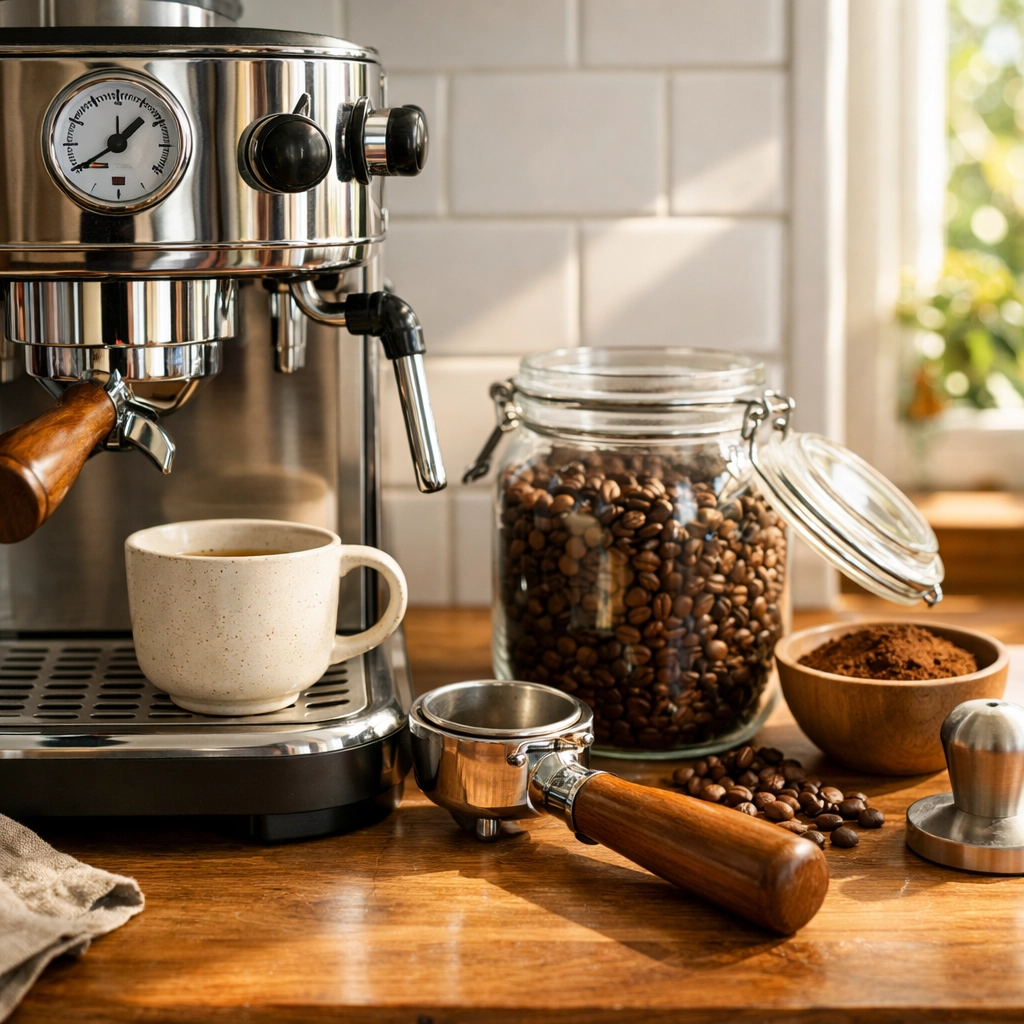
But technology has caught up. The same engineering innovations that made café machines more reliable have filtered down to home espresso machines. Now, you can buy machines with temperature stability, pressure profiling, and precise control, features that were once only available to professionals.
Modern home espresso machines range from simple single-boiler setups to sophisticated dual-boiler systems with PID temperature control. Grinder technology has improved dramatically too, which is crucial because freshly ground coffee makes all the difference. You can now recreate that Italian café experience in your own kitchen, experimenting with different beans, adjusting your grind, perfecting your tamping technique.
The learning curve is real, we'll be honest. Dialing in your first proper espresso shot takes practice. But that's part of the joy, understanding the craft, tasting the improvements, finally pulling that perfect shot that rivals anything you'd get at your favourite café.
Bringing Italian Magic Home with Limini Coffee
So you've got the machine, you're learning the technique… but here's what really matters: the coffee itself.
This is where we come in. At Limini Coffee, we're slightly obsessed with sourcing and roasting beans that work beautifully as espresso. Whether you prefer a classic Italian-style blend with rich chocolate notes and a syrupy body, or a single-origin bean that showcases fruity complexity, we've got options that'll make your home espresso setup shine.
Our espresso blends are developed specifically to create that perfect balance of sweetness, body, and crema, yes, that golden layer that Gaggia worked so hard to create back in 1938. We roast in small batches to ensure freshness, because espresso is unforgiving when it comes to stale coffee. Fresh beans mean better crema, clearer flavours, and that satisfying complexity in every cup.
And single-origin espressos? They're a revelation. You get to taste the distinct character of beans from Ethiopia, Colombia, Brazil, or wherever your coffee adventure takes you that week. It's like traveling the world, one shot at a time.
Check out our full range of espresso-perfect coffees at https://www.liminicoffee.co.uk/?af=1471531379787, and start exploring what your home setup can really do.
The Beautiful Circle
It's quite something when you think about it. What started as an industrial solution to speed up service in Italian cafés has become a global ritual, a daily pleasure, an art form practiced by millions of people in their own homes.
From Bezzera's groupheads to Gaggia's crema, from massive commercial machines to compact home setups, the technology has evolved dramatically. But the essence remains the same: forcing hot water through finely-ground coffee under pressure to create something concentrated, intense, and absolutely delicious.
Every time you pull a shot at home, you're participating in over a century of innovation and tradition. You're connecting with that lineage of inventors, café owners, and coffee lovers who believed that a small cup of perfectly made espresso was worth pursuing.
So whether you're just starting your home espresso journey or you've been pulling shots for years, remember: you're part of this story. And with quality beans from roasters who care about the craft: like the selection we offer at https://www.liminicoffee.co.uk/?af=1471531379787: you can create that Italian magic right in your own kitchen.
Now, if you'll excuse us, all this talk about espresso has made us need one. Time to fire up the machine.