Let's be honest: if you're starting a café or running an established coffee business, choosing your coffee supplier is one of the most critical decisions you'll make. And yet, so many businesses treat it like they're just ticking a box. Find a roaster, order some beans, job done.
The problem is this approach leaves massive amounts of value on the table.
When you work with the right specialty coffee roaster, you're not just buying coffee. You're entering a partnership that can fundamentally shape your business success, your brand identity, and your ability to deliver exceptional experiences to your customers. So let's talk about what that actually means in practice.
The Real Difference Between a Supplier and a Partner
Here's the thing about distributors versus roasters: distributors give you access to lots of products from different brands. Convenient, sure. But what they can't give you is deep coffee knowledge, flexibility, or direct communication with the people who actually roast your coffee.
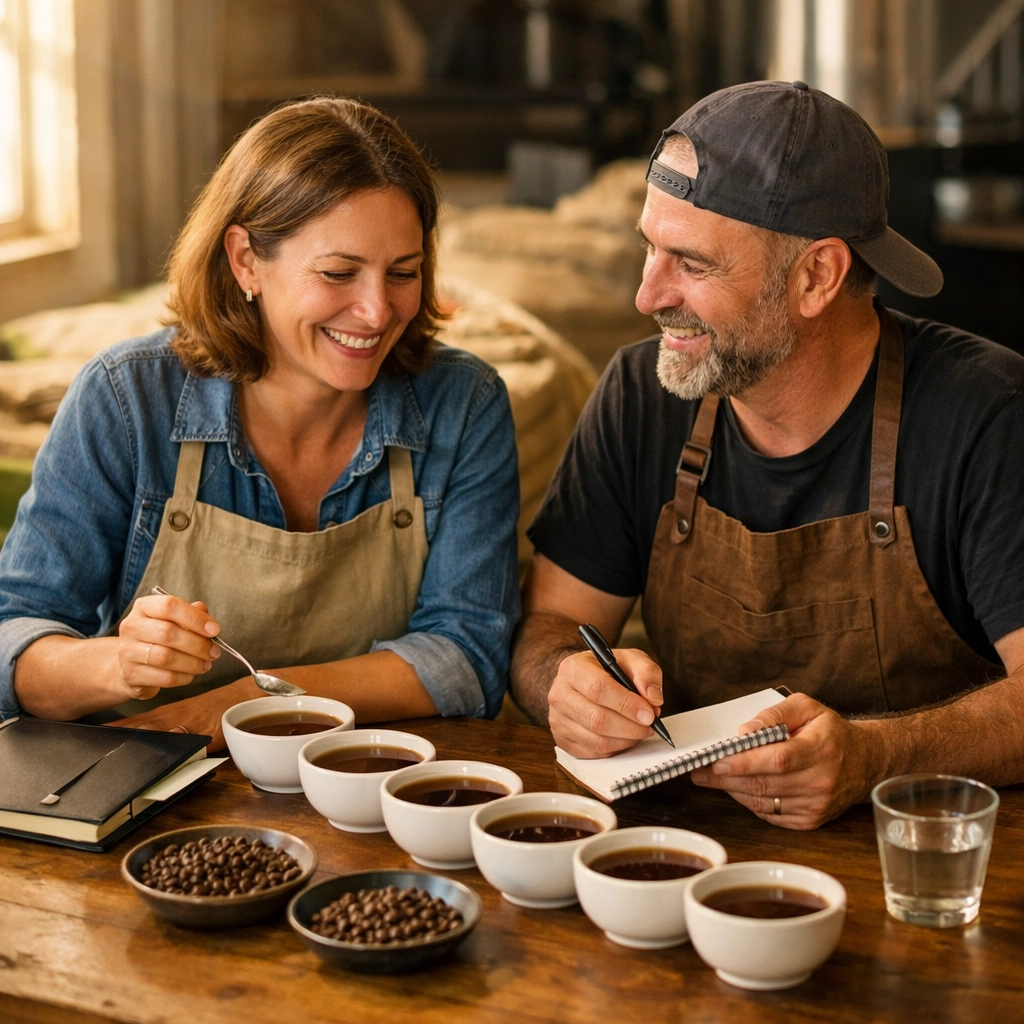
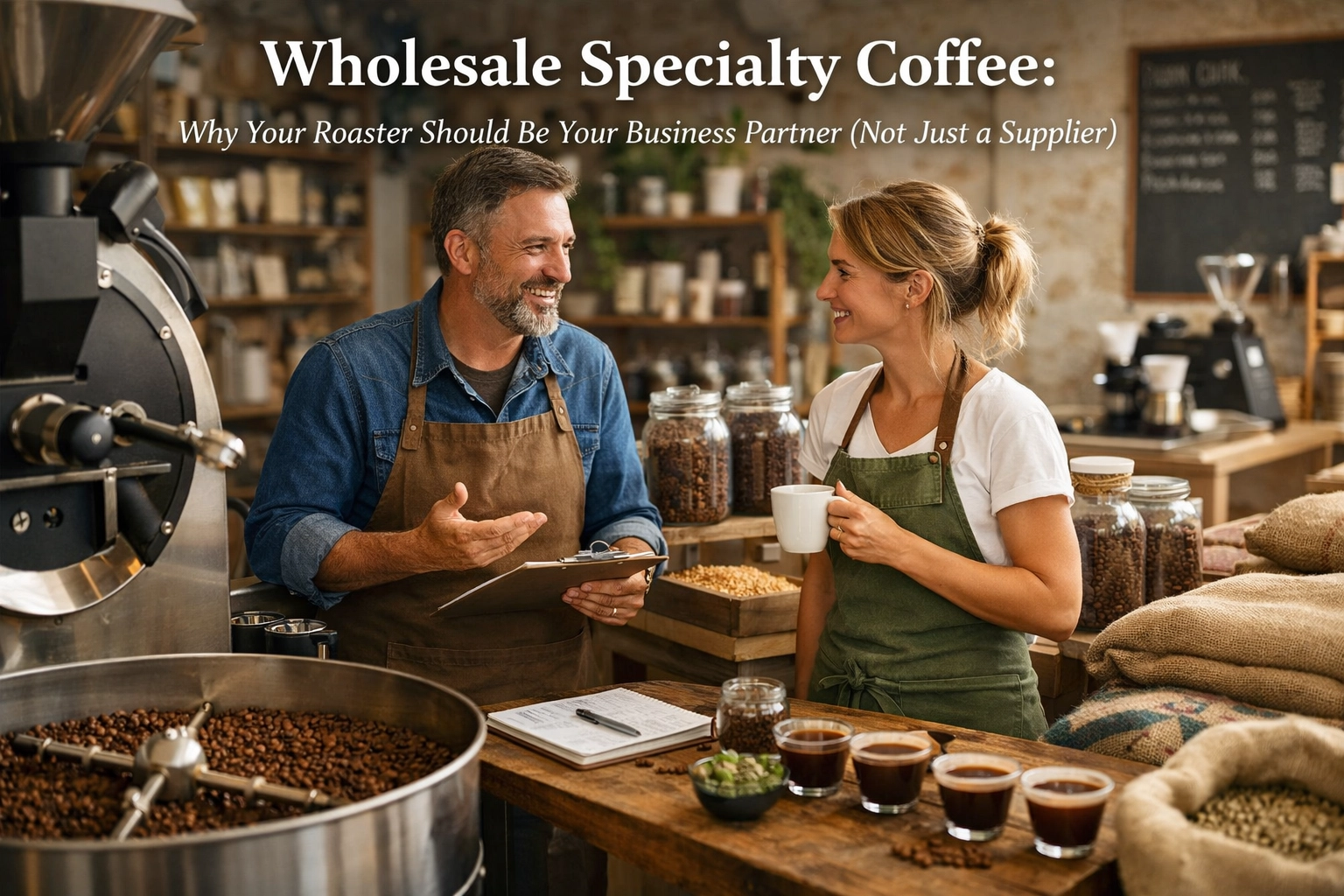
When you partner directly with a specialty roaster, you get something completely different. Communication is quicker. You can have actual conversations about roast profiles, origin characteristics, and what's working (or not working) for your customers. The roaster knows your business by name, not by account number.
And perhaps most importantly, you get flexibility. Want to adjust your blend? Need to trial a new single origin? Have a special request for a private event? With a true partner, these conversations happen easily. With a distributor acting as middleman, you're stuck with what's on the catalogue.
What Real Support Actually Looks Like
So what does partnership-level support actually include? Let's break it down.
Barista Training
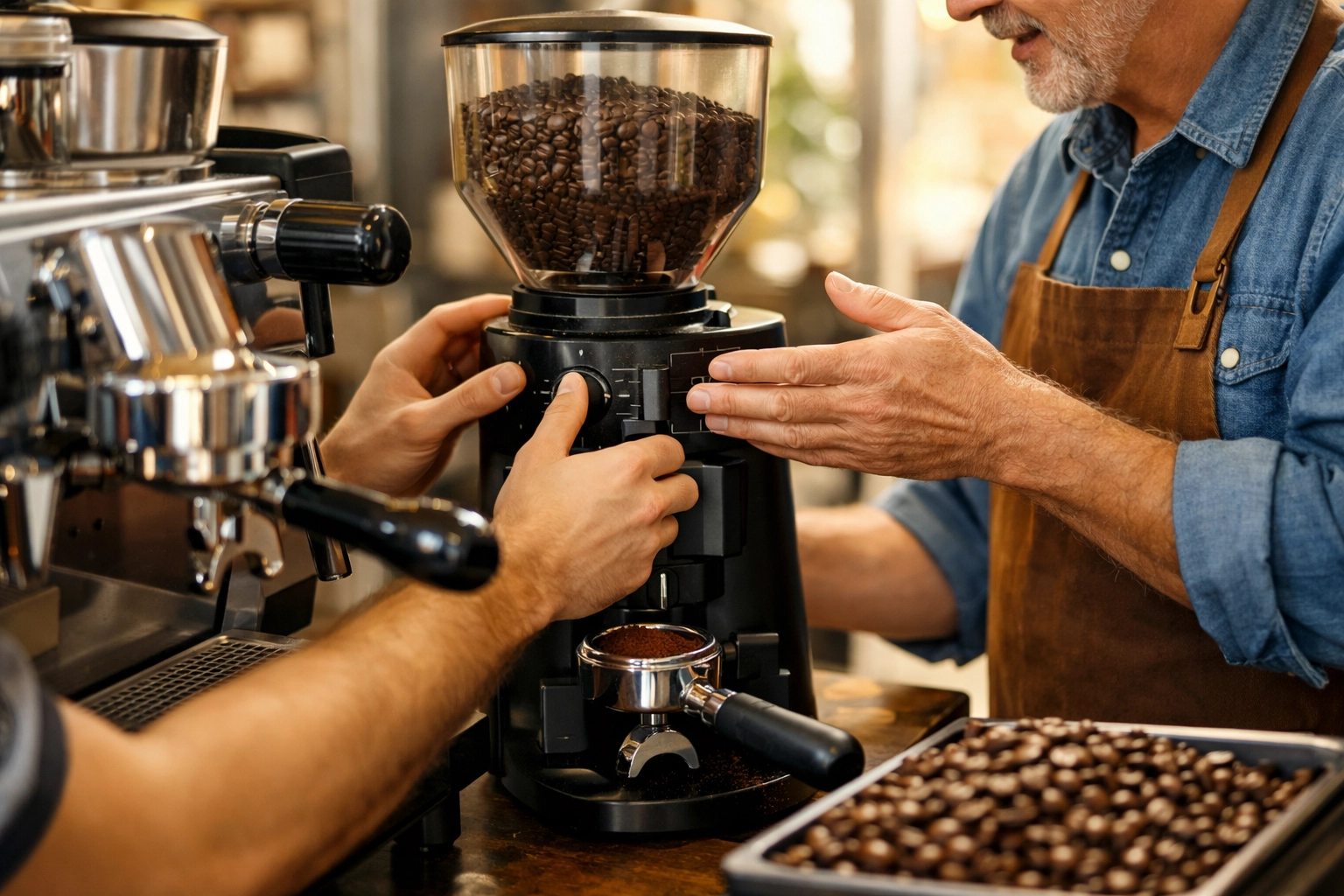
Your staff are the ones pulling shots and steaming milk every single day. They need to understand the coffee they're working with. A proper wholesale coffee roaster provides comprehensive training: not just a one-time session when you first sign up, but ongoing support as your team develops and new staff come onboard.
This matters because even the best beans in the world can taste mediocre if they're extracted poorly. Training ensures your team can showcase each coffee's potential, whether it's highlighting the bright citrus notes in an Ethiopian natural or the chocolate sweetness of a Brazilian blend.
Equipment Support
Here's something that catches a lot of café owners off guard: equipment issues. Your grinder isn't dialling in right. Your machine is losing pressure. These problems can cost you serious money in lost sales and technician fees.
The right roaster often provides equipment support as part of the partnership. This might include loaning or leasing espresso machines, helping with grinder selection, troubleshooting issues remotely, or even having technicians on call. Some roasters: like us at Limini Coffee: build long-term relationships where equipment support and coffee supply work hand-in-hand.
Recipe Development
Want to create a signature latte? Develop a house cold brew concentrate? Build a seasonal menu that actually excites customers?
A partner roaster helps you develop recipes that work specifically with their coffees. They understand the flavour profiles, they know what brewing parameters work best, and they can collaborate with you to create drinks that differentiate your café from the competition.
Strategic Support That Actually Impacts Your Bottom Line
Beyond the day-to-day operational support, a true partner brings strategic value that generic suppliers simply cannot match.
Market Insights
Your roaster works with multiple cafés and businesses. They see trends developing across the industry. They know what's gaining traction, what customers are asking for, and what's becoming yesterday's news.
This intelligence is incredibly valuable. It helps you make informed decisions about menu development, pricing strategy, and which coffees to feature. You're not operating in isolation: you're benefiting from the collective knowledge your roaster has gathered from their entire client base.
Marketing and Branding Support
Many specialty roasters provide marketing assets, help with social media content, and even custom packaging options. This isn't just nice-to-have fluff. In a competitive market, professional branding and compelling storytelling around your coffee offering can be the difference between another café and a destination.
Some roasters offer analytics as well: data on what's selling, seasonal patterns, and customer preferences. This kind of insight helps you stock smarter and reduce waste.
Why Generic Coffee Is a Trap
Consumers today aren't settling for mediocre coffee. They've been educated by the third wave movement, they care about origin and ethics, and they can absolutely taste the difference between fresh specialty coffee and stale commodity coffee from a big distributor.
When you source generic coffee: whether from local stores or large distributors: you're compromising on quality and uniqueness. You end up serving the same coffee as dozens of other cafés in your area. There's no story to tell, no distinctive flavour profile, nothing that makes customers choose your café over the one down the street.
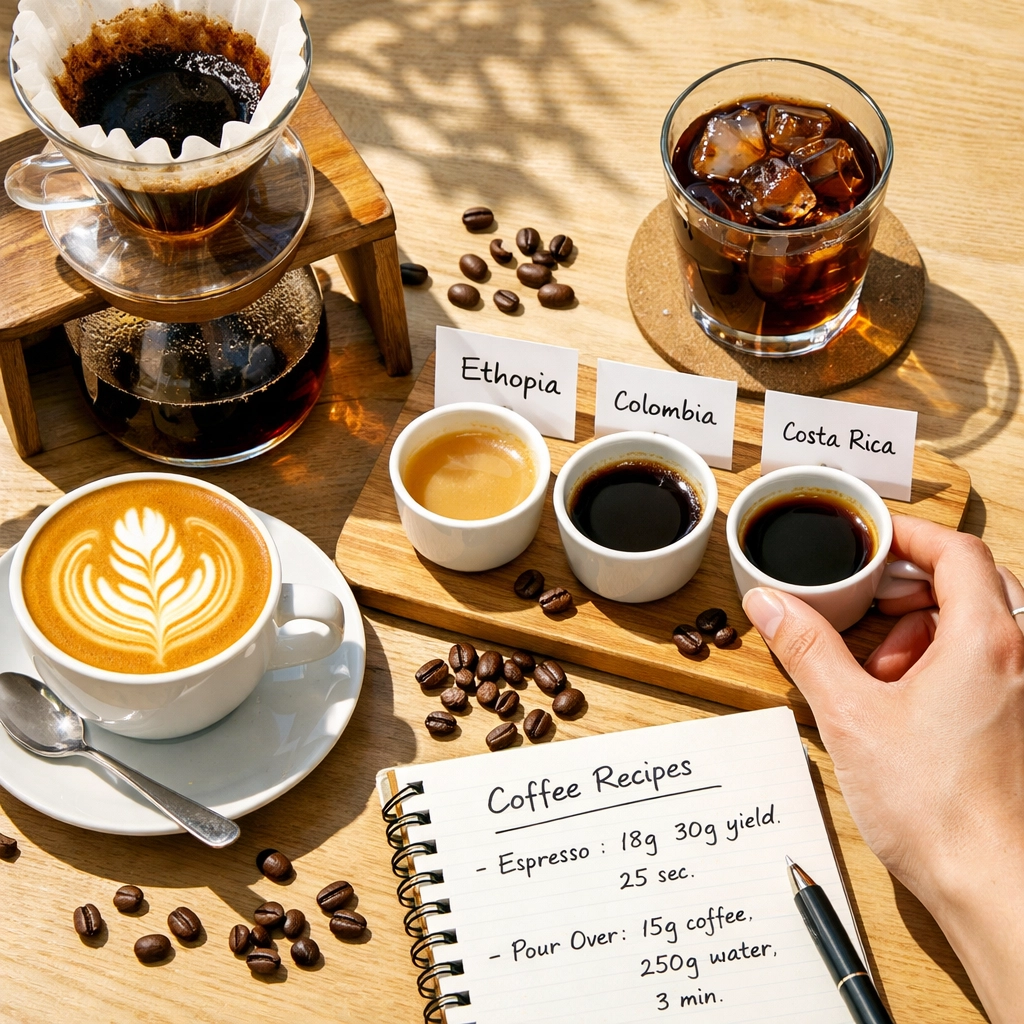
A specialty roaster gives you access to unique single-origin coffees, custom blends developed specifically for your business, and the kind of quality that builds reputation. These are coffees your customers literally cannot get anywhere else.
And here's the kicker: offering premium specialty coffee doesn't necessarily mean charging premium prices everywhere. Many roasters work with you to develop blends that hit different price points, so you can offer both accessible everyday options and special showcase coffees.
The Operational Benefits You Might Not Expect
Let's talk about the practical, behind-the-scenes benefits of partnership that often get overlooked.
Eliminating Overhead
If you tried to source, store, and manage coffee quality yourself, you'd need dedicated space, equipment, expertise, and time. Your roaster handles all of this. They manage the green coffee sourcing, the roasting facility, quality control, proper storage, and logistics.
This isn't just convenient: it's cost-effective. You get to focus on what you do best (running your café and serving customers) while they focus on what they do best (sourcing exceptional coffee and roasting it perfectly).
Consistent Quality and Reliability
Established specialty roasters operate with strict quality control standards. They roast in consistent batches, they cup and evaluate constantly, and they ensure on-time deliveries.
This reliability matters tremendously when you're running a busy café. You need to know that your coffee will arrive when promised, taste consistent batch to batch, and meet the quality standards your customers expect. Amateur roasters or unreliable suppliers create stress and operational headaches you simply don't need.
Building a Two-Way Relationship
Here's what separates a true partnership from a transactional supplier relationship: communication flows both ways.
Your feedback about roast profiles, customer preferences, and what's working in your café directly influences how your roaster serves you. Maybe customers are loving a particular origin and you want to feature it more prominently. Maybe your morning rush needs a quicker-extracting blend. Maybe you've noticed demand for decaf increasing.
A partner roaster listens to this feedback and adapts. They might develop new blends based on your input, adjust roast profiles to better suit your equipment and customer base, or bring in new origins they think will resonate with your clientele.
This collaborative approach means you both grow together. Your success directly contributes to their success, creating aligned incentives and a genuine partnership dynamic.
What to Look for in a Roaster Partner
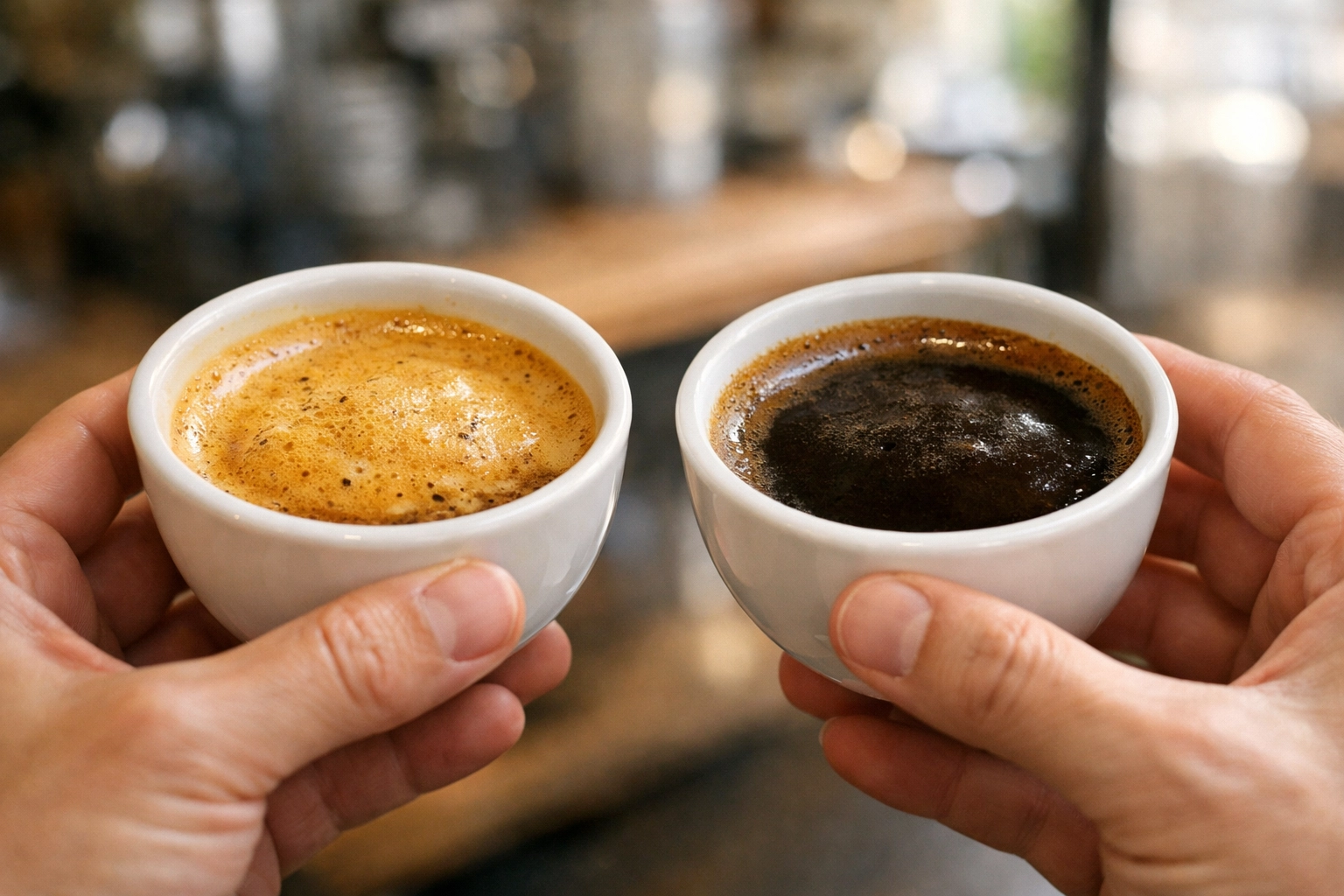
So how do you actually find the right partner? A few things to consider:
Direct Communication – Can you speak with roasters and coffee experts directly, or are you going through account managers who don't know the product intimately?
Training and Support – What's included beyond just coffee delivery? Do they offer barista training, equipment support, and ongoing consultation?
Transparency – Are they open about sourcing, roasting methods, and pricing? Do they share origin information and traceability?
Flexibility – Can they customize blends, adjust roast profiles, and accommodate your specific needs?
Values Alignment – Do their approach to quality, ethics, and sustainability match your café's values?
If you're exploring wholesale options, check out what partnership looks like with a roaster like Limini Coffee. The right relationship should feel collaborative from the first conversation.
The Bottom Line
Choosing wholesale coffee suppliers isn't just about finding beans at the right price point. It's about finding a partner who's invested in your success, who brings expertise and support beyond the product itself, and who helps you differentiate your café in an increasingly competitive market.
The roasters who understand this distinction: who see themselves as partners rather than just suppliers: are the ones who help cafés thrive, not just survive.
So when you're evaluating coffee suppliers or wholesale coffee roasters, ask yourself: are they offering me partnership-level support, or are they just trying to sell me beans? The answer to that question might just determine whether your café becomes another coffee shop or a genuine destination.