
You manage a property that needs smooth operations, happy guests, and steady revenue. A modern hotel property management system (PMS) ties reservations, check-in/out, housekeeping, and payments into one place so your team can move faster and avoid costly mistakes. Using the right PMS software streamlines daily hotel operations and boosts guest satisfaction.

You will learn what core tasks a PMS handles, which features matter most, and how integration with other tools can save time and increase revenue. This article shows how to pick a system that fits your property size and staff, and what to expect from implementation and ongoing support.
Key Takeaways
- A good hotel property management system centralizes operations and reduces errors.
- Look for features that improve guest flow, reporting, and revenue control.
- Choose a PMS that integrates well with your other systems and scales with your property.
Core Functions of Property Management Systems
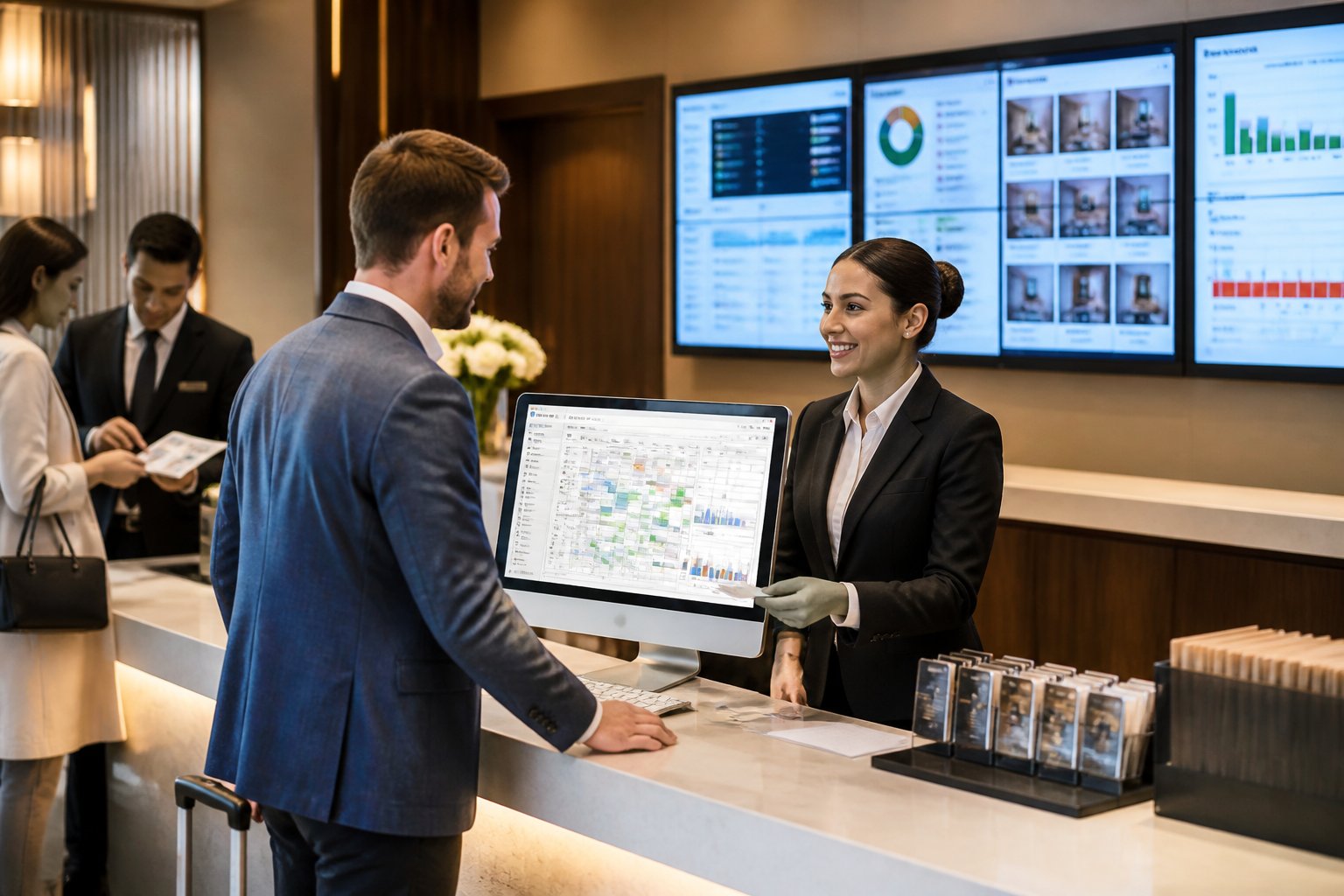
A strong property management system runs reservations, front desk work, payments, and guest messages from one dashboard. It keeps room status accurate, speeds check-ins, secures payments, and logs guest preferences for repeat stays.
Reservations and Availability Management
Your hotel PMS centralizes bookings from all channels so availability stays accurate. It shows real-time inventory, pulls reservations from OTAs and direct bookings, and updates room counts the moment a booking or cancellation happens. That reduces double bookings and lost revenue.
Use rate-plan controls to set rack, non-refundable, and package rates. The PMS should let you modify stays, add notes, and assign room types quickly. Look for automatic calendar sync, bulk-blocking for groups, and a search function that finds bookings by name, confirmation number, or dates in seconds.
Reporting on booking source and lead time helps you judge which channels bring profitable bookings. When your reservation system links to a channel manager and pricing tool, you can automate rate pushes and avoid manual errors.
Front Desk and Housekeeping Coordination
Your hotel management system ties front desk actions to room status so you assign rooms fast. At check-in, the PMS should show available rooms, guest profiles, key assignments, and balance due. You should complete check-ins in minutes and generate accurate folios at checkout.
Housekeeping management lives in the same system. Staff can mark rooms as dirty, cleaned, inspected, or out of service from tablets or phones. The front desk sees those updates instantly, which prevents assigning a dirty room. Use housekeeping checklists in the PMS for turn-downs, amenities restock, and maintenance requests.
A strong hotel PMS logs guest preferences—floor choice, pillow type, or accessibility needs—so you deliver consistent service. Linking housekeeping tasks to arrival times and VIP flags keeps high-priority rooms ready when guests arrive.
Integrated Payment Processing
Your hotel PMS software should process payments without manual entry. Integrated payments let you save card tokens securely, handle pre-authorizations, and accept split payments across room charges and incidental bills. This reduces errors and speeds checkout.
Look for PCI-compliant payment gateways and clear audit trails for every transaction. The system should create a folio that consolidates room rates, taxes, POS charges, and third-party fees. That folio must update in real time so front desk staff never read a stale balance.
Support for corporate billing, group invoices, and automatic refunds simplifies accounting. When payment processing ties into your accounting exports, you cut reconciliation time and reduce mistakes at month end.
Guest Communication Tools
Your hotel management software should centralize guest communication so messages stay consistent. Use automated pre-arrival emails, SMS check-in links, and post-stay review requests sent from the PMS. Automations reduce manual work and improve response times.
Maintain guest management through profiles that store contact details, stay history, preferences, and consent for marketing. That lets you send targeted offers and prevents repeated questions about past requests. Two-way messaging through the PMS keeps chat history with the reservation record.
Include templates for confirmations, payment reminders, and special requests to save time. Integration with mobile check-in and keyless entry options boosts guest convenience and reduces lines at your front desk.
Benefits of Adopting Modern PMS Solutions
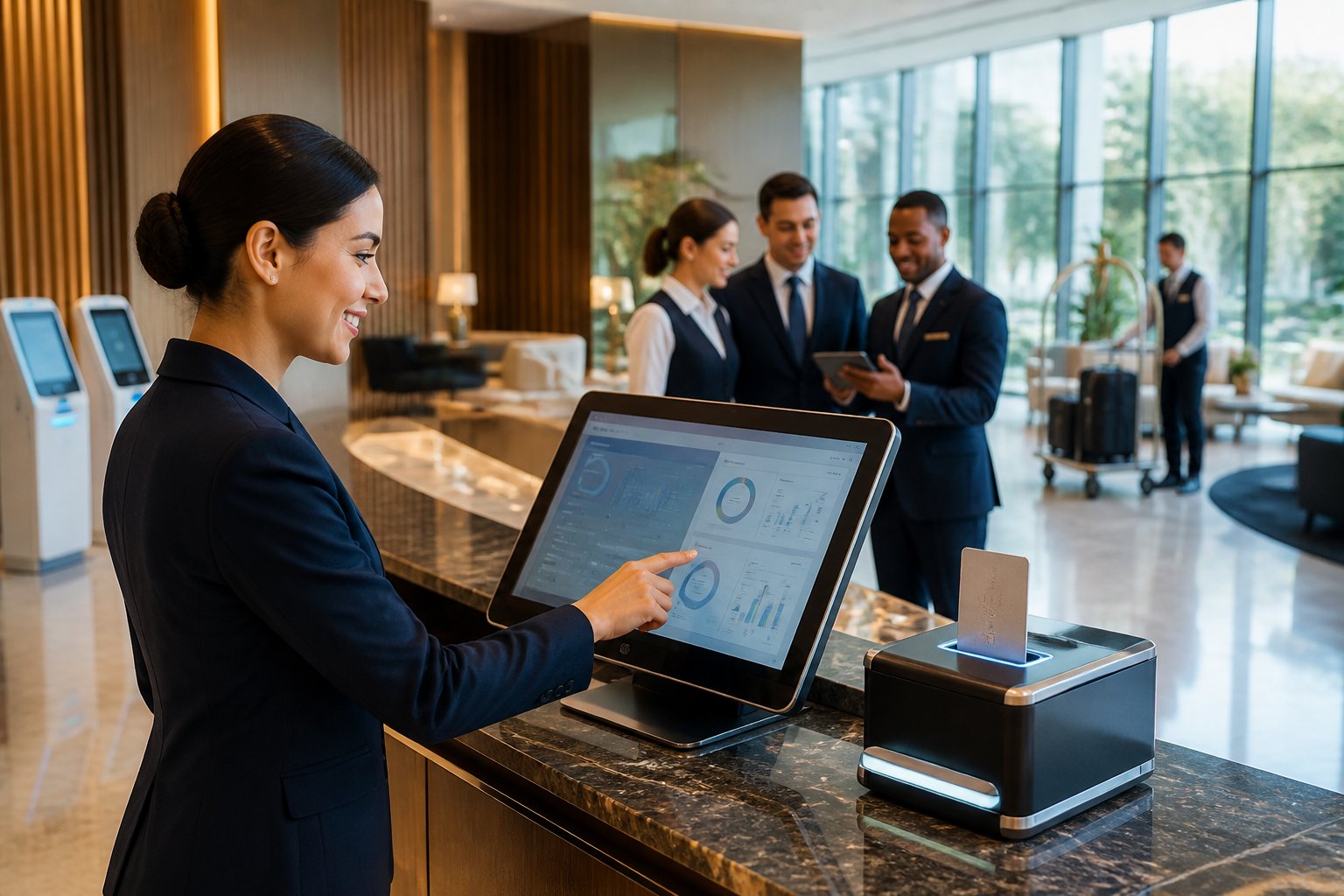
Modern property management systems bring faster daily operations, clearer financial control, better guest experiences, and stronger pricing decisions. You gain automation that reduces manual work, dashboards that show real-time performance, and tools that let you act on accurate forecasts.
Operational Efficiency and Automation
You cut routine tasks by using a cloud-based PMS that centralizes reservations, housekeeping, and billing. Automation handles confirmations, invoicing, and task lists so staff spend less time on phone calls and spreadsheets.
The PMS uses role-based access and mobile apps so front desk, housekeeping, and maintenance coordinate instantly. You can push work orders from a guest request into housekeeping workflows and track completion on a shared dashboard.
Integrations reduce double-entry. When your PMS links with channel managers and payment gateways, availability and rates update automatically. That lowers errors and speeds check-in/out during peak periods.
Revenue Management and Dynamic Pricing
You increase revenue by tying your PMS to a revenue management system or built-in pricing engine that supports dynamic pricing. Those tools analyze occupancy, local demand, and historical data to suggest optimal rates.
Dashboards show pick-up curves and ADR so you spot demand shifts quickly. You can set rules for minimum stays, packages, or last-minute discounts and have the PMS apply them automatically across channels.
Forecasting features let you model scenarios—group blocks, events, or seasonality—so you set prices that balance occupancy and revenue per available room. Linking revenue tools to distribution channels ensures the right rate shows on OTAs and direct booking pages.
Improved Guest Satisfaction
You raise guest satisfaction by using the PMS to store preferences and streamline service delivery. Profiles keep notes on room type, amenities, and past requests so staff can personalize stays without asking repeat questions.
Automated pre-arrival messages and digital check-in speed arrival. You can offer room upgrades or add-ons via email or the booking engine based on guest history, which boosts perceived value and ancillary revenue.
Operational automation reduces errors that harm guest experience—wrong billing, missed housekeeping, or late check-ins. A unified guest profile plus mobile access lets you resolve issues faster and maintain consistent service across departments.
Data-Driven Decision Making
You make better choices with consolidated data in one place. A modern PMS provides dashboards and reports that track occupancy, revenue, cancellations, and channel performance in real time.
Use forecasting tools to predict demand and staffing needs. That helps you plan labor, housekeeping schedules, and procurement more accurately, reducing cost overruns.
When your PMS connects to CRM and revenue systems, you get actionable insights—guest lifetime value, channel profitability, and booking lead times. Those metrics let you prioritize marketing spend and optimize distribution for higher returns.
Relevant reading on how PMS platforms have become operational backbones is available in this article on property management systems as the operational backbone of every hotel.
Essential Features in Leading Hospitality Management Software
Modern hospitality systems must connect sales, front desk, food and events, and finance so you run operations with fewer errors and faster turnarounds. You need tools that update availability instantly, capture payments securely, handle on-site sales, and manage multi-room group bookings.
Channel Management and Distribution
A channel manager keeps your room inventory and rates synced across OTAs, GDS, and your own website. It pushes updates in real time so you avoid double bookings and rate parity issues. Look for automatic mapping of room types and rate plans, push/pull of cancellations, and logging of channel fees.
Good channel management also provides performance reports by channel. That helps you spot low-yield partners and reallocate inventory. Choose a system with open APIs so it can connect to new booking channels without long implementation work.
Direct and Commission-Free Booking Engines
A booking engine on your website turns visitors into commission-free bookings when it supports secure payments, promo codes, and upsells like breakfast or room upgrades. It must show real-time availability and apply your dynamic rates from the PMS or revenue tool.
Focus on mobile-first checkout, simple group or package booking flows, and the ability to accept deposits or full prepayment through major payment gateways. A commission-free booking engine reduces OTA costs and gives you guest data for marketing and CRM.
POS and EPOS Integration
Your point-of-sale (POS/EPOS) must post charges directly to guest folios and sync inventory for restaurants, bars, spas, and mini-bars. Integrated EPOS reduces manual posting errors and speeds checkout by centralizing bills across outlets.
Look for offline mode, multi-terminal reconciliation, and sales reporting by outlet. The best systems let you apply house discounts, tie charges to room numbers, and export data to accounting. EPOS that links to loyalty profiles helps you tailor offers and measure spend per guest.
Event and Group Business Support
Event and group management handles room blocks, master accounts, function space bookings, and individual attendee pickup. It should create a master folio, track cut-off dates, and automate rooming-list imports from spreadsheets or CRS.
Key features include banquet event orders (BEOs), S&M reporting for leads and conversion, and contract templates with attrition and cancellation clauses. Integration with the PMS and POS ensures banquet charges hit the right folio and that housekeeping schedules reflect high-occupancy blocks.
Integration and Open API Ecosystems
You need systems that share data reliably, scale with more properties, and let you add or replace tools without long vendor lock-in. Focus on real-time data flows, secure authentication, and clear field mapping so daily ops and billing stay accurate.
Third-Party System Integrations
Integrations let your PMS exchange reservations, guest profiles, and folio charges with other systems. Prioritize two-way, real-time links for channel managers, POS, and housekeeping tools so availability, payments, and room status update instantly. Test error handling and retries; a failed POS-to-folio post causes billing disputes and extra staff work.
Ask vendors about supported data fields, rate-plan handling, and package logic. For example, confirm whether a channel manager integration respects promo rates and blackout dates. Use middleware or an integration hub when connecting many vendors to avoid point-to-point complexity. If you run multiple properties, choose solutions that support property-level settings and consolidated reporting.
Leveraging Open APIs for Scalability
Open APIs let you build and swap components without redoing integrations. Look for RESTful APIs with clear docs, sandbox environments, and OAuth security. Platforms like Mews and Cloudbeds publish APIs so you can pull bookings, push rates, and read guest profiles programmatically.
Design around rate limits and webhooks. Use webhooks for event-driven updates (new reservation, cancellation) and REST calls for ad-hoc queries. Track API response times and error rates. Keep a mapping table that translates vendor field names to your internal schema so new integrations go live faster and require less custom code.
Connecting Booking Engines and Payment Gateways
Booking engines must sync availability and rates to your PMS in real time to avoid overbookings. Verify that the booking engine supports the exact rate plans and packages you sell, and that it can post authorizations or capture payments through your payment gateway.
Choose payment gateways that offer PCI-compliant tokenization and support the currencies and card types you accept. Confirm the gateway can post settlement details back to the PMS or accounting system. Test edge cases: partial refunds, chargebacks, and group cancellations. Where possible, enable 3D Secure and store payment tokens in the PMS via the gateway to speed check-in and reduce decline risks.
Relevant reading: review integration patterns and vendor choices in the hotel tech stack at Hotel API Integration Platforms 2026 (https://hoteltech.review/hotel-api-integration-platforms-2026).
Enhancing the Guest Journey Through Technology
Technology shapes how guests discover, book, arrive, and enjoy your property. It can tailor stays, speed arrival, and create timely chances to sell upgrades without adding staff work.
Personalization With Guest Profiles
Collect clear guest data in your PMS and CRM: stay history, room preferences, arrival time, and loyalty status. Use that data to pre-set room temperature, assign preferred floor or mattress type, and record food allergies. When you know a guest prefers quiet rooms or late check-outs, automate those requests so staff don’t need repeated reminders.
Build segmented profiles for business vs. leisure travelers. Send targeted offers—like a workspace upgrade for business guests or a family suite for leisure bookings—before arrival. Keep privacy controls and opt-ins visible so guests choose personalization levels they accept.
Link your guest profiles to on-property services. Housekeeping, F&B, and spa should see relevant preferences in one view to deliver consistent guest experience across departments.
Mobile Check-In and Contactless Experiences
Enable mobile check-in from booking confirmation through a branded app or mobile web. Let guests upload ID, sign forms, and get a digital key before they arrive. That reduces front desk lines and speeds your operations.
Offer contactless payments and in-room controls through the same mobile channel. Guests can order room service, book spa slots, or change thermostat settings without calling the desk. Secure tokenized payments and separate guest and back-office Wi‑Fi protect data while keeping transactions smooth.
Provide clear in-app status updates: room ready time, parking instructions, and step-by-step directions. That lowers confusion at arrival and improves the guest journey from curb to room.
Guest Engagement and Upsell Opportunities
Use triggered messages at key moments: pre-arrival, check-in, mid-stay, and pre-checkout. Offer targeted upsells—late checkout, welcome amenity, room view upgrade, or dining credit—based on the guest profile and current occupancy. Keep offers time-limited and clearly priced.
Integrate upsell offers with one-click purchase paths in the app, SMS, or in-room tablet. Automate commission rules and inventory holds so front desk and revenue teams don’t need manual coordination. Track conversion rates by channel to refine which upsells work best.
Make engagement two-way. Allow guests to request services or ask questions via chatbots that escalate to staff when needed. That maintains high service levels while creating more revenue opportunities through relevant, well-timed offers.
Selecting the Right PMS for Various Property Types
Choose a PMS that matches your daily workflows, revenue goals, and staff skills. Focus on real-time booking sync, easy front-desk tasks, and the integrations you actually need.
Boutique Hotels and Small Properties
You need a hotel property management system that supports guest personalization without adding complexity. Look for a PMS with strong guest profile tools, a built-in booking engine, and easy CRM fields so you can store preferences, special requests, and stay history. Prioritize systems with simple dashboards and minimal setup time so your small team can learn quickly.
Make sure the PMS offers reliable OTA sync to avoid overbookings and a lightweight channel manager or native integrations. Mobile access and a responsive interface let staff handle check-ins, housekeeping updates, and late changes from anywhere on site. Choose vendors with clear pricing and good local support for faster problem solving.
Multi-Property and Chain Operations
For multi-property groups, your hotel PMS software must centralize reservations, reporting, and rate management. Seek a cloud-based PMS with a central dashboard, role-based access, and multi-property inventory controls to push rates and packages from a single place. Look for CRS capability or native multi-property modules to prevent data silos.
Integrations matter: the PMS should link to your revenue management system, central accounting, and group-level CRM. Ask about consolidated reporting templates, cross-property transfers, and bulk billing for group bookings. Verify 24/7 support and API availability so you can connect third-party tools as your portfolio grows.
Customizing Solutions for Unique Needs
Assess which hotel operations you must automate and which you want to keep manual. If you run a boutique with spa and F&B outlets, confirm the PMS offers POS integration and multi-outlet billing. If you manage vacation rentals, prioritize flexible rate rules, minimum-stay controls, and strong OTA distribution.
Create a short checklist: must-have integrations, expected daily tasks, peak-staffing workflows, and compliance needs (payments, tax rules). Test vendor demos with real scenarios like late check-ins, package bundling, or multi-guest folios. Choose a system that allows modular add-ons so you pay only for features you use.
Frequently Asked Questions
This section answers specific, practical questions about daily operations, technology, vendor selection, and metrics you can use to run a hotel property more efficiently. Expect clear steps, feature lists, and measurable KPIs you can act on.
What are the core responsibilities of a hotel property manager?
You oversee daily operations including front desk, housekeeping, maintenance, and food & beverage execution.
You manage staff scheduling, payroll accuracy, and training to keep service consistent and reduce turnover.
You control revenue through rate setting, group and banquet contracts, and upsell programs.
You handle financial duties: budgets, P&L review, vendor payments, and capital expenditure planning.
You enforce safety, compliance, and facility upkeep.
You also manage guest relations, complaint resolution, and reputation across review sites.
How does a hotel property management system typically work end to end?
A PMS centralizes reservations, guest profiles, and room inventory in one database.
When a guest books, the PMS updates availability, assigns a room, and stores payment and preference data.
At check-in the PMS posts charges, issues keys, and flags housekeeping needs.
Housekeeping staff update room status in the PMS so rooms return to inventory for sale.
During the stay the PMS records folio charges from F&B and POS integrations.
At check-out the system generates the final bill, processes payments, and logs stay data for reporting.
Post-stay data flows into reporting and revenue tools for forecasting, and it feeds guest profiles for marketing and loyalty.
Open APIs let you connect third-party revenue management, channel managers, and guest apps to automate workflows.
What features should you prioritize when selecting a hotel PMS for your property?
Prioritize real-time room inventory and reservation management to avoid overbookings.
Choose a PMS with robust guest profile and CRM fields to capture preferences and stay history.
Look for secure, PCI-compliant payments and stored payment tokenization.
Ensure the system supports mobile access for front desk and housekeeping staff.
Demand open APIs and a healthy marketplace of integrations for revenue management, channel management, and guest apps.
Pick scalable pricing and multi-property support if you plan to grow or franchise.
Prioritize reporting and dashboards with exportable P&Ls, occupancy reports, and ADR calculations.
Also evaluate training, support hours, and local language or currency options.
How do hotel PMS platforms integrate with channel managers, booking engines, and POS systems?
Integrations use APIs or middleware to sync inventory, rates, and reservations in near real time.
A channel manager updates OTAs and prevents double bookings by reflecting PMS availability to all sales channels.
A booking engine writes direct reservations into the PMS, capturing guest data and payment details.
The POS pushes restaurant and minibar charges into the guest folio in the PMS for consolidated billing.
Many vendors use standardized messages like OTA XML or RESTful APIs for reservation and rate exchanges.
Test bi-directional feeds during implementation so changes in one system immediately reflect across all connected systems.
What are common implementation challenges when switching to a new PMS, and how can they be avoided?
Data migration errors are common; they occur when reservations, rates, or guest records map incorrectly.
Avoid this by running parallel imports, validating sample records, and keeping a rollback plan.
Integration gaps with existing channel managers or POS can block operations.
Confirm API compatibility and schedule integration tests with all vendors before cutover.
Staff resistance and insufficient training slow adoption.
Plan role-based training, quick reference guides, and on-site support during the first two to four weeks.
Unexpected costs from custom reports or third-party connectors can arise.
Negotiate clear scoping, change-order rules, and define deliverables in the contract.
Which KPIs best measure operational performance and guest experience in hotel operations?
Track occupancy rate and average daily rate (ADR) to measure revenue performance.
Monitor revenue per available room (RevPAR) for a combined occupancy-plus-rate view.
Measure average check-in time and average check-out handling time to assess front desk efficiency.
Track housekeeping turnaround time and percentage of rooms inspected to monitor readiness and cleanliness.
Use guest satisfaction scores (e.g., post-stay survey rating) and online review rating averages to gauge experience.
Monitor repeat guest percentage and direct booking rate to measure loyalty and distribution mix.