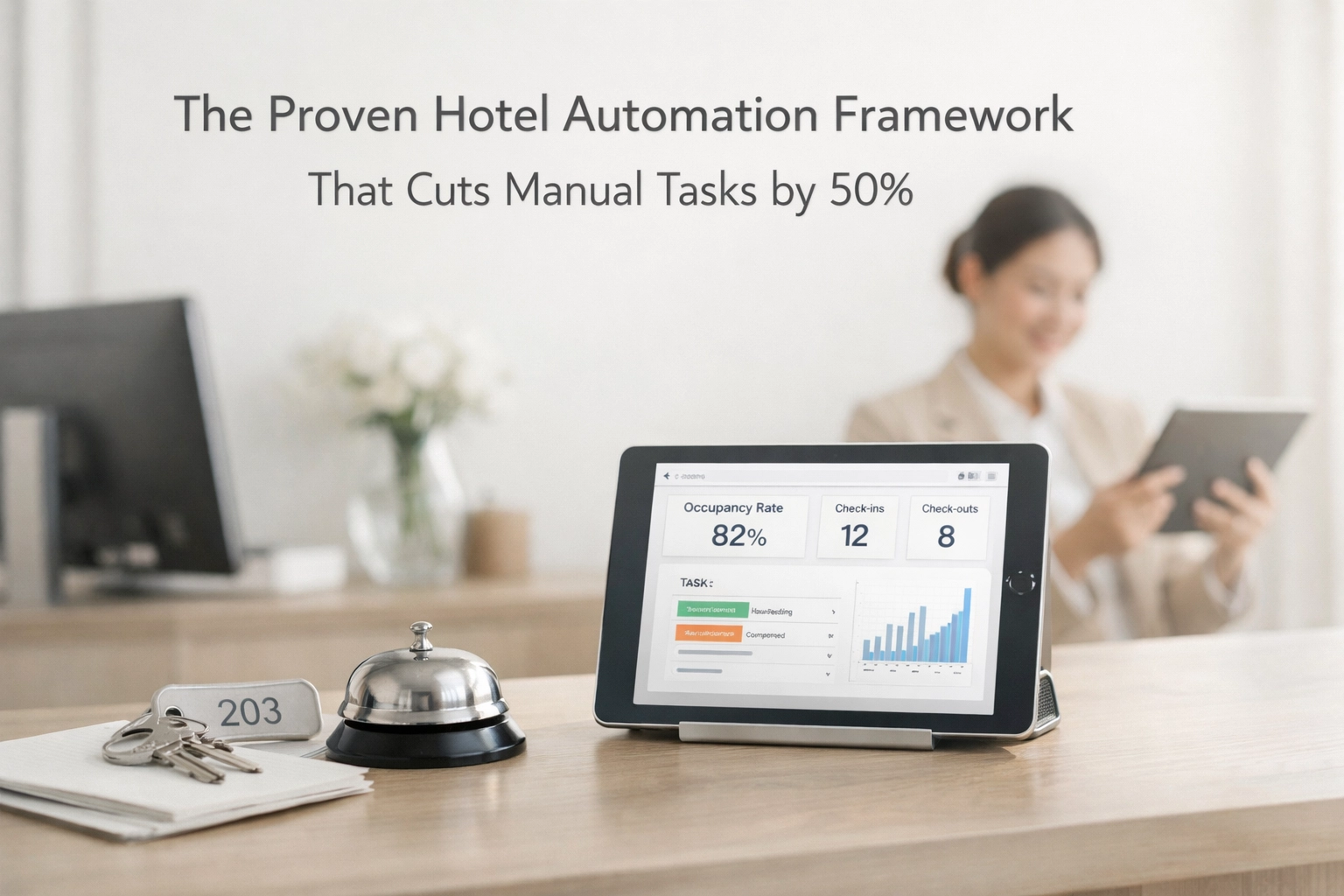
Your front desk staff shouldn't be drowning in spreadsheets. Your night auditors shouldn't be manually reconciling data until 2 AM. And your general managers definitely shouldn't be spending 20 hours a week on admin tasks that a good hotel PMS could handle automatically.
Here's the thing: automation isn't about replacing your team. It's about freeing them to do what actually matters: creating memorable guest experiences and driving revenue.
The hospitality industry has been talking about automation for years, but many hotels still struggle with where to start. That's where a proven framework comes in. Real properties are using systematic automation approaches to cut manual tasks by 50% or more. Let's break down exactly how they're doing it.
Why Most Hotels Get Automation Wrong
Most hotels approach automation backwards. They see a shiny new tool, implement it without a strategy, and wonder why it doesn't deliver results. Or worse: they try to automate everything at once and overwhelm their team.
The properties seeing real results take a different approach. They start small, target high-impact areas, and scale progressively. They focus on connecting existing systems behind the scenes rather than ripping everything out and starting over.
This is exactly what makes cloud-native hotel management software like Mews so effective. It's built to integrate with your existing tech stack and automate workflows without disrupting your operations.
The Framework: Seven Areas That Deliver Results
The most successful hotel automation strategies target seven key operational areas. Let's walk through each one and the impact you can expect.
1. Data Aggregation and Night Audits
Night audit shouldn't take all night. When your hotel PMS automatically compiles and verifies daily reports, you eliminate hours of manual spreadsheet work.
For multi-property groups, the savings multiply exponentially. One European hotel group documented saving more than 50 working days per year for each workflow they automated. That's nearly two months of labor saved: per property.
2. Front Desk Operations
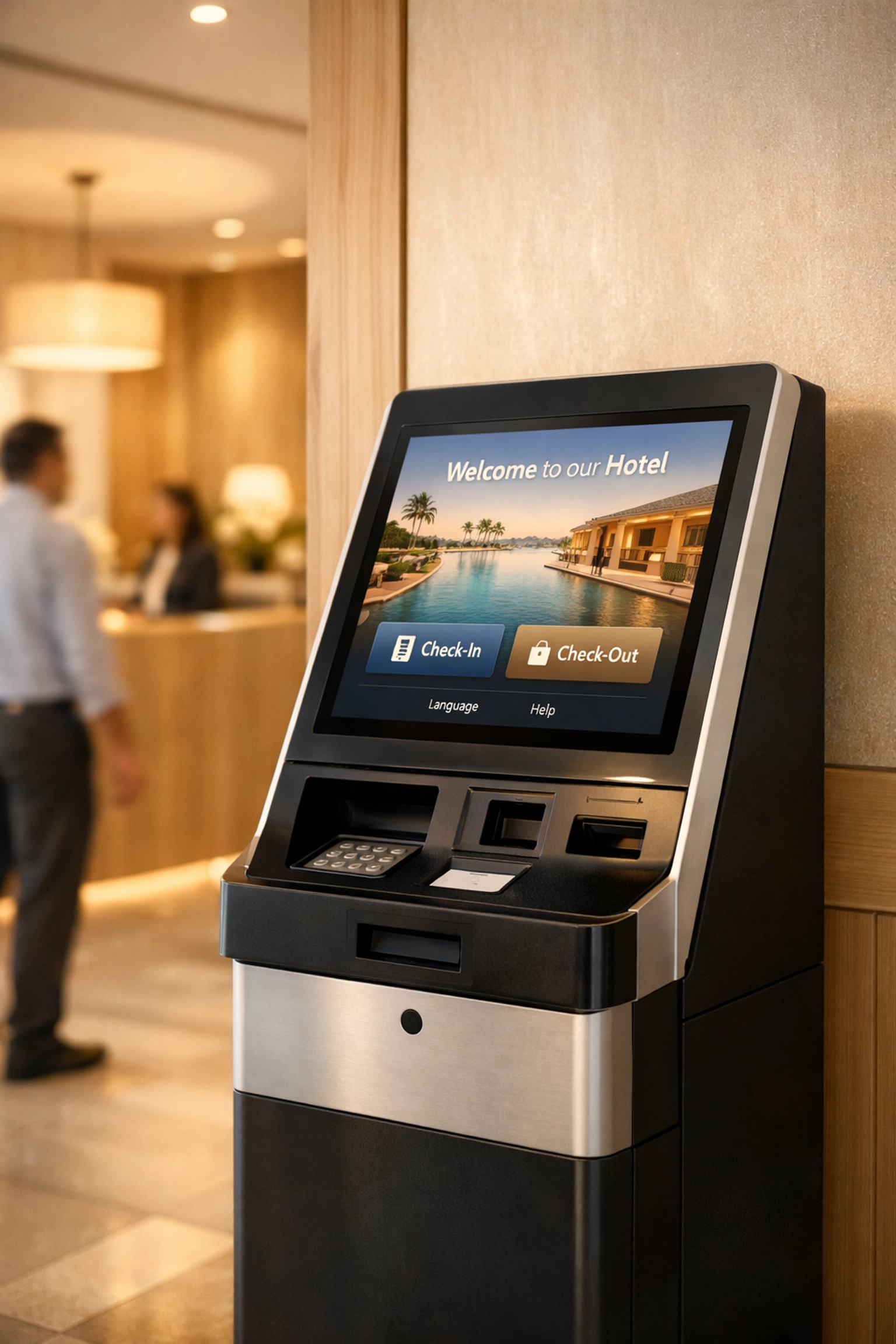
Check-in shouldn't be a bottleneck. Self-check-in kiosks and mobile check-in capabilities reduce wait times and free your front desk team to focus on guest interaction, not data entry.
Modern booking engines integrated with your hotel PMS let guests complete the entire check-in process before they arrive. Your team greets them with a key and a smile, not a clipboard full of forms.
3. Vendor Payments and Accounts Payable
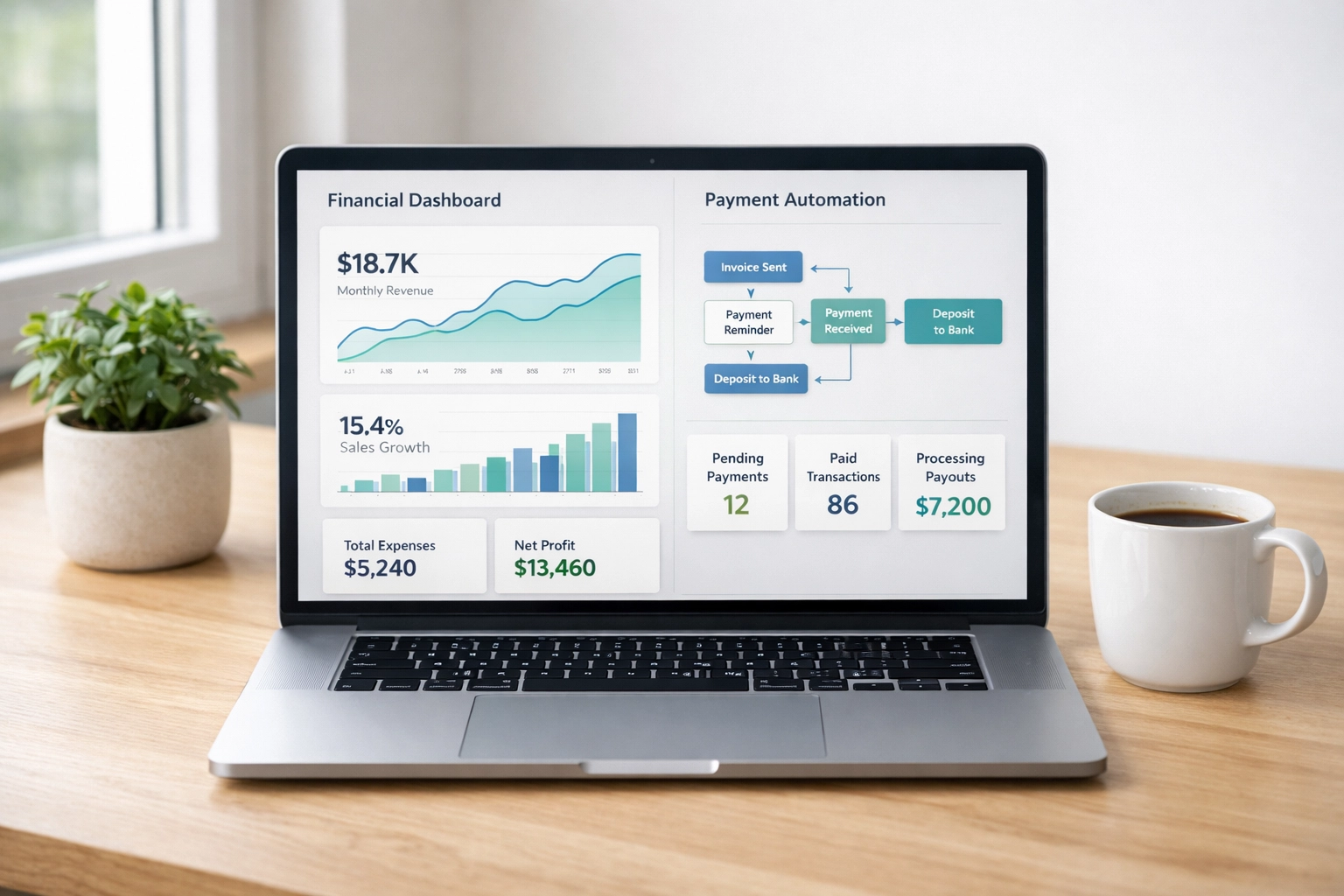
Nobody got into hospitality because they love cutting checks and routing invoices. Automating invoice verification, approval workflows, and payment processing eliminates manual errors and saves your accounting team hours every week.
The impact here goes beyond time savings. Fewer errors mean fewer vendor relationship issues and better cash flow management.
4. Housekeeping and Scheduling
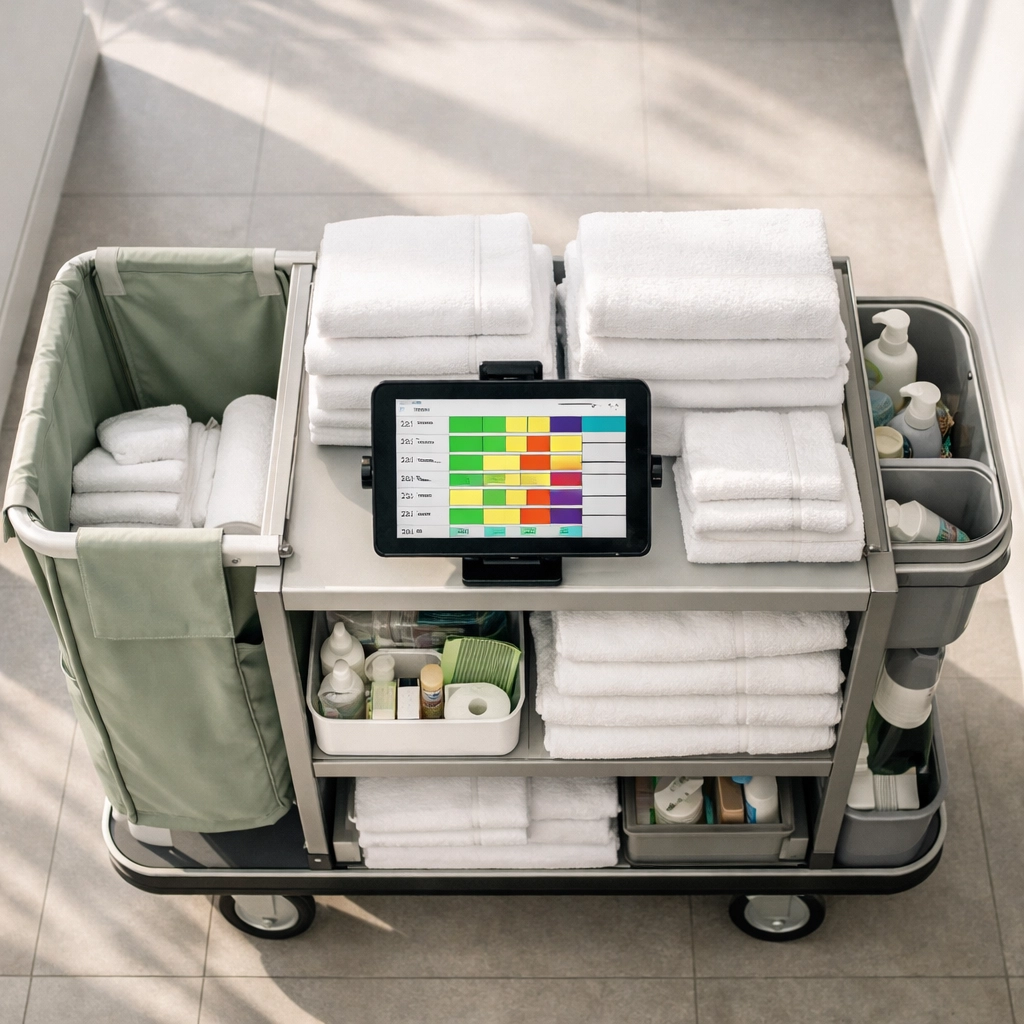
Your housekeeping team's schedule shouldn't be a guessing game. Dynamic shift assignment based on occupancy forecasts optimizes labor allocation during peak periods.
A good channel manager feeds real-time booking data into your system, so your housekeeping schedule adjusts automatically. Your team knows exactly where they're needed, when, and for how long.
5. Income Audits and Bank Reconciliation
Pulling transaction data from your PMS and point-of-sale systems, then manually matching everything for reconciliation, is time-intensive and error-prone. Automation pulls the data seamlessly and flags discrepancies instantly.
This is where cloud-native architecture really shines. Everything lives in one system with real-time updates, so there's nothing to manually reconcile.
6. Guest Communication and CRM
Sending pre-arrival emails, post-stay surveys, and review requests manually doesn't scale. An integrated CRM automates these touchpoints while maintaining personalization.
The best systems learn from guest preferences and behavior, so communications become more relevant over time: not more generic.
7. Revenue Management and Reporting
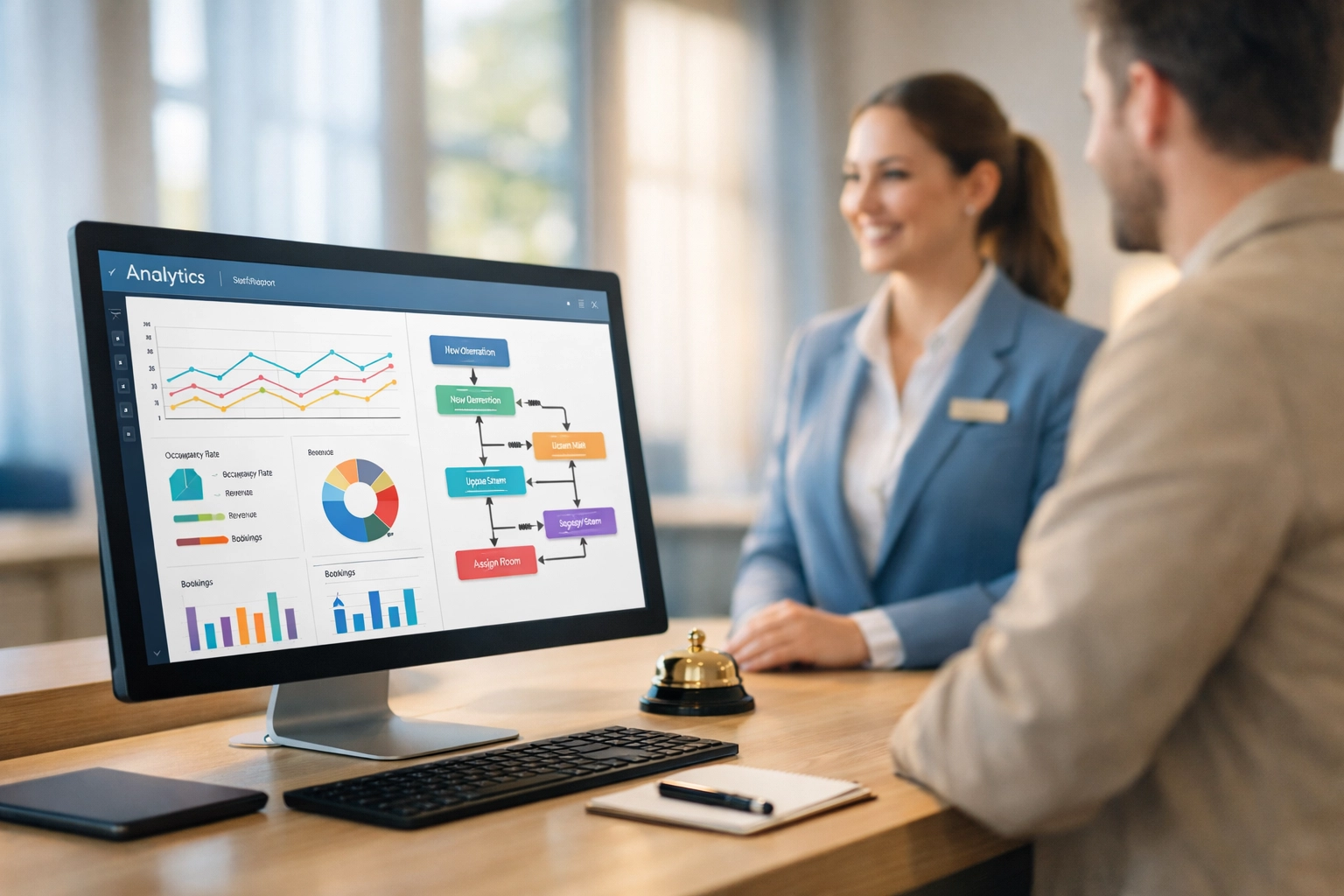
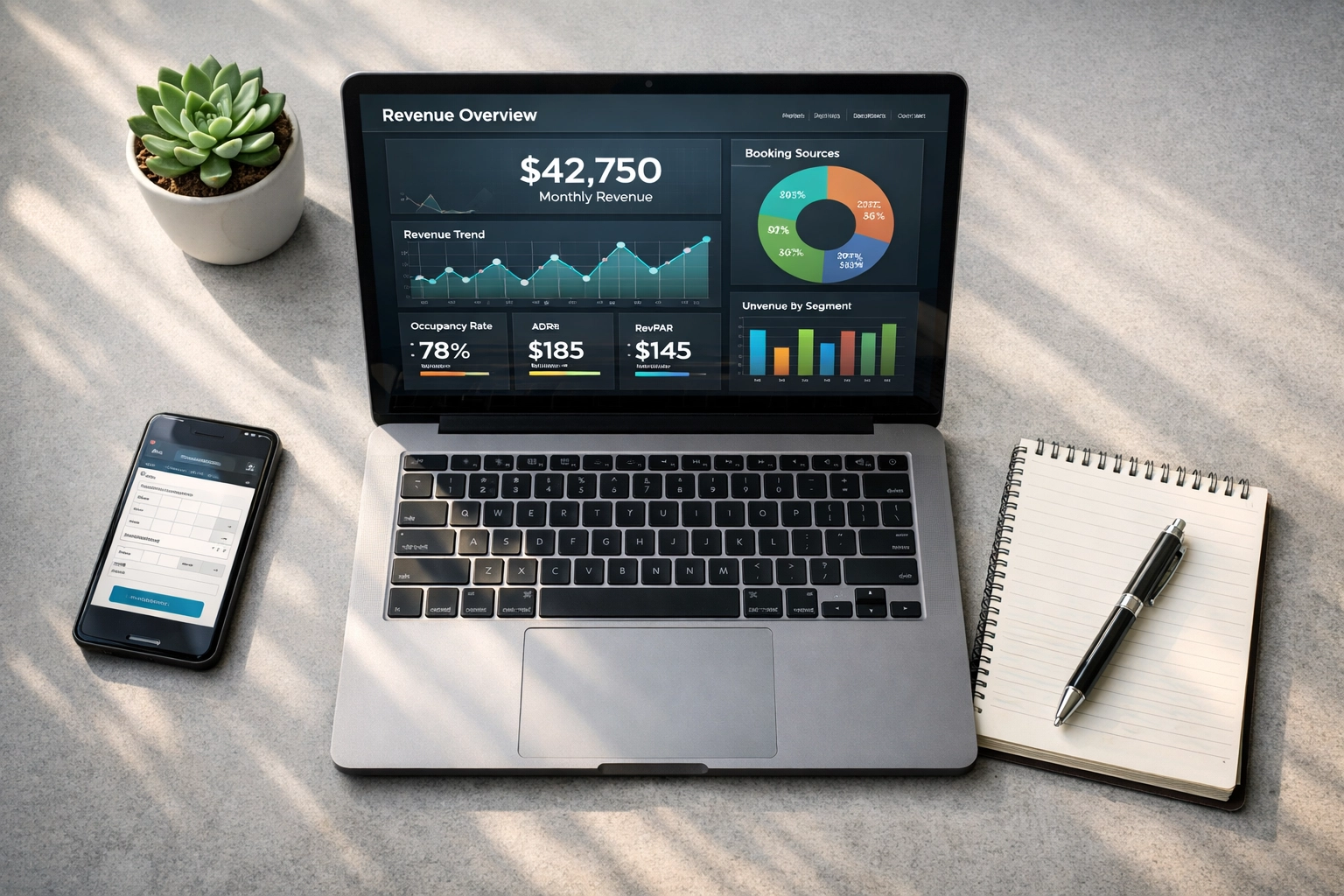
Real-time dashboards beat manual reports every time. When your hotel PMS automatically generates performance reports and revenue insights, you spot trends and opportunities faster.
Automation here doesn't just save time: it makes you money. Faster insights mean faster revenue decisions.
Real Results from Real Properties
Five Rivers Hospitality cut the time their general managers spend on administrative tasks by 50% using automated back-office solutions. That's 10-20 hours per week redirected toward revenue-generating activities and guest experience improvements.
Another property group documented the savings mentioned earlier: more than 50 working days per year saved for each automated workflow. Multiply that across multiple properties and workflows, and you're looking at thousands of hours reclaimed annually.
These aren't outliers. According to Deloitte, organizations that moved beyond piloting automation achieved an average cost reduction of 32%. The key word there is "beyond piloting." Testing automation is one thing. Systematically implementing it is what delivers results.
How to Get Started (Without Overwhelming Your Team)
The framework works because it's progressive. You don't need to automate everything tomorrow. Here's how to start:
Step 1: Audit your current manual tasks. Where does your team spend the most time on repetitive work?
Step 2: Identify the highest-impact opportunities. Which manual tasks are time-consuming, error-prone, and don't require human judgment?
Step 3: Start with one workflow. Pick something measurable, like night audit or vendor payments.
Step 4: Choose technology that integrates with your existing systems. A cloud-native hotel PMS designed for automation makes this easier.
Step 5: Train your team and measure results. Document time savings and identify the next automation opportunity.
Step 6: Scale progressively. Once one workflow is running smoothly, move to the next.
Step 7: Optimize continuously. Automation isn't set-it-and-forget-it. Review and refine as your operations evolve.
The properties seeing 50% reductions in manual tasks didn't get there overnight. They got there by taking small, consistent steps toward systematic automation.
Why Cloud-Native Architecture Matters
Not all hotel management software is built the same. Legacy systems require costly middleware and complex integrations to connect with modern tools. Cloud-native platforms like Mews are built for automation from the ground up.
What does that mean for you? Easier integrations with booking engines, channel managers, payment processors, and guest communication tools. Real-time data across all systems. And automation that actually works instead of creating more headaches.
When your hotel PMS, booking engine, and CRM live in the same cloud-native ecosystem, automation happens seamlessly. No manual exports, imports, or reconciliations. Just workflows that run automatically while you focus on running your property.
Start Cutting Manual Tasks Today
Automation isn't the future of hospitality: it's the present. Properties using systematic frameworks are already cutting manual tasks by 50% or more while improving guest experiences and team satisfaction.
The question isn't whether to automate. It's where to start.
If you're ready to explore how cloud-native hotel management software can transform your operations, check out Mews and see how automation can work for your property. The platform connects your hotel PMS, booking engine, channel manager, and CRM into one intuitive system designed for automation.
Your team deserves to spend their time on work that matters. Let automation handle the rest.