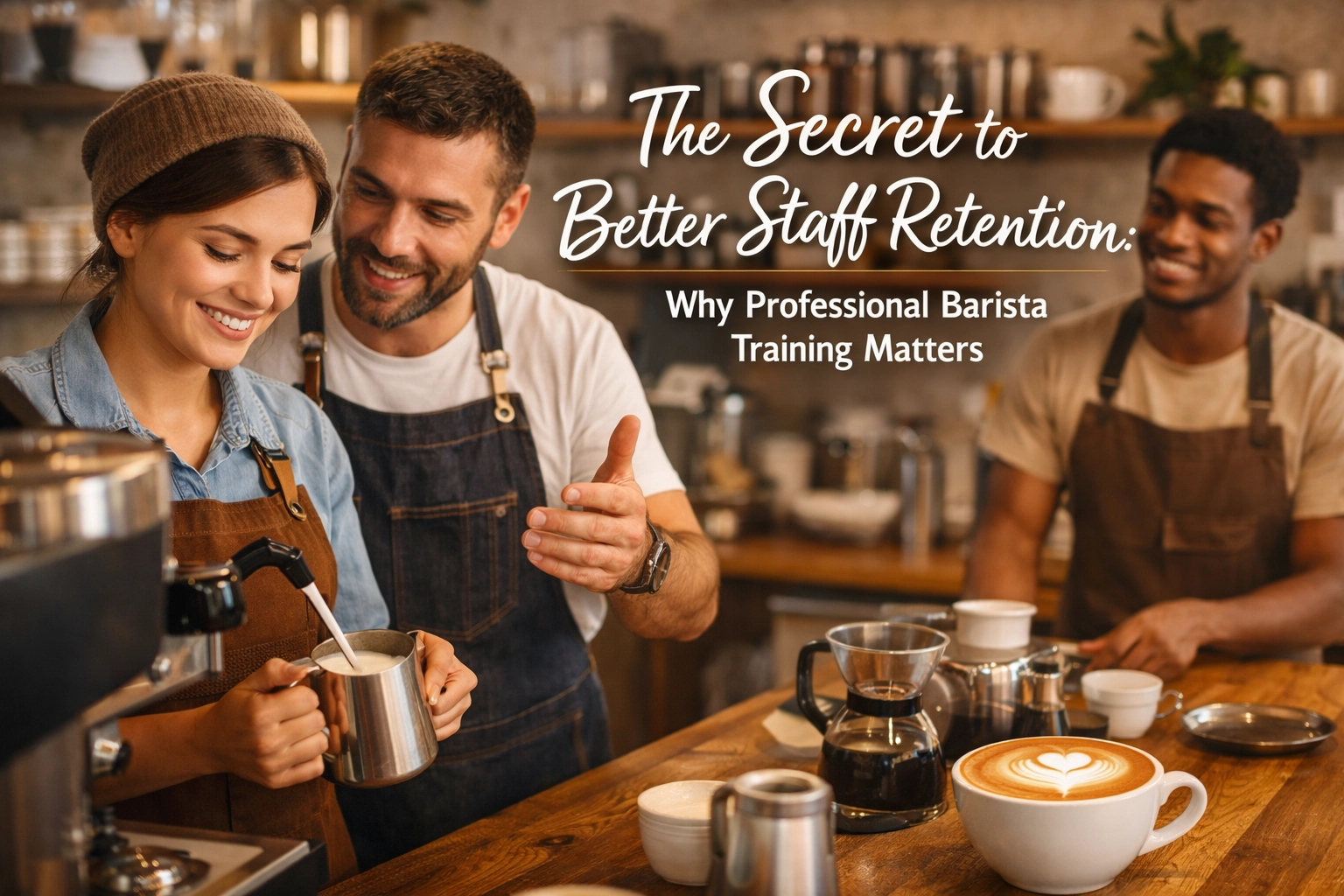
If you've been running a cafe for more than five minutes, you already know the problem. You hire someone promising, spend weeks getting them up to speed, watch them finally start to gel with the team, and then they hand in their notice. Two weeks later, you're back to square one, scanning CVs at midnight and wondering if you should just work every shift yourself.
The hospitality industry has always had a turnover problem, but it's gotten worse. Staff retention feels like trying to hold water in your hands. And every time someone leaves, it costs you, not just in recruitment fees and training time, but in team morale, service quality, and your own sanity.
But here's what most cafe owners don't realize: the solution isn't offering another 50p per hour or installing a fancier espresso machine. The answer is professional barista training. Proper, structured, meaningful training that turns your staff into skilled professionals rather than just people who show up for shifts.
The Real Cost of Getting It Wrong
Let's talk numbers for a second, because they're pretty sobering.
When a barista leaves, you're not just losing a body behind the counter. You're losing all the time and money you invested in them, the equipment training, the menu knowledge, the relationships they built with regulars. Industry research shows that replacing a staff member costs somewhere between 50-200% of their annual salary when you factor in recruitment, training, and lost productivity.
And it's not just money. Every time someone leaves, your remaining team picks up the slack. They get tired. They get frustrated. And then they start looking elsewhere too. It's a vicious cycle.
The turnover rate in hospitality averages around 73% annually, nearly double what you see in other industries. That means if you have a team of six, you're likely replacing four of them every year. Exhausting, isn't it?

Why Training Actually Works (The Data Is Compelling)
So why does professional barista training make such a massive difference to retention? It's not just about teaching someone how to pull a decent shot, though that's part of it. It's about what training represents to your staff.
Companies that invest in certified barista training see 47% better retention rates compared to those who don't. That's not a marginal improvement, that's transformative. And the benefits cascade from there: 38% higher job satisfaction, 42% fewer sick days, and 31% better collaboration between team members.
These aren't fluffy feel-good metrics. They translate directly into a better-run cafe with happier customers and a healthier bottom line.
Here's what happens when you properly train your team: they stop seeing themselves as "just a barista" and start seeing themselves as skilled professionals. They develop confidence. They take pride in their craft. They feel invested in by their employer, which makes them far more likely to invest back.
And crucially, they're better at their jobs. Confident baristas handle the morning rush without falling apart. They can troubleshoot when the grinder starts acting up. They create drinks that keep customers coming back. When your staff are skilled and confident, everything else gets easier.
What Your Team Actually Wants
This isn't guesswork, 68% of Gen Z and Millennial employees (who make up most of your potential staff) consider comprehensive coffee programs an important workplace benefit. And 72% specifically want barista skill development opportunities through their employer.
Think about that for a moment. Nearly three-quarters of your potential team actively want training. They're not asking for bean bags in the break room or unlimited holiday. They want to learn. They want to get better at what they do. They want development opportunities that turn a job into a career.
Professional training aligned with Specialty Coffee Association standards gives them exactly that. It's not just about your cafe, it's about credentials they can take anywhere, skills that make them more employable, knowledge that transforms how they think about coffee. When you provide that, you're not just filling a rota. You're changing someone's career trajectory.
The Ripple Effects You Don't Expect
Better retention is the obvious benefit, but it's not the only one. When you invest in training, you create ripple effects throughout your business that are honestly quite remarkable.
First, your service quality improves dramatically. Trained baristas make better coffee, that's obvious, but they also handle customers better, work more efficiently, and can train new starters themselves. This means you're not constantly firefighting quality issues or dealing with customer complaints about inconsistent drinks.
Second, your workplace culture transforms. Teams with access to proper training show 200% higher productivity during collaborative sessions. That's because learning coffee craft together develops communication patterns and mutual respect that carry over into how your team works day-to-day. Suddenly, your staff actually enjoy working together. Novel concept, right?
Third, you build career progression paths within your cafe. Someone doesn't just stay a barista, they progress from basic brewing through latte art, cupping techniques, and maybe even coffee sourcing and sustainability education. This keeps engagement high over the long term, because there's always something new to learn.
And finally, you attract better candidates. When word gets out that you actually invest in your team, you'll find that recruitment becomes easier. People want to work for employers who take training seriously.
What Good Training Actually Looks Like
Not all training is created equal. Showing someone how to use the espresso machine on their first day doesn't count as professional development.
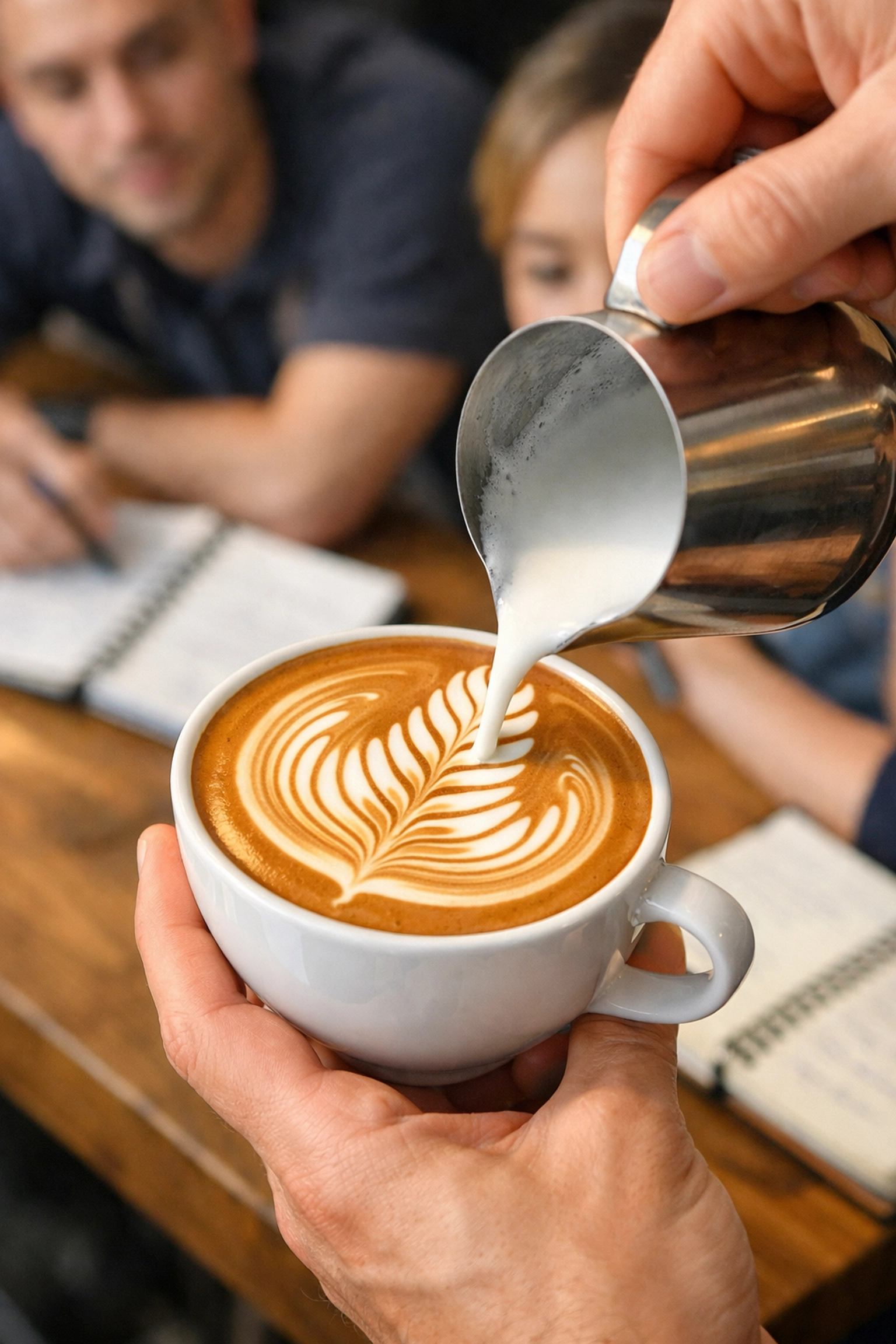
Good training is structured, comprehensive, and ongoing. It covers extraction theory, milk technique, equipment maintenance, customer service, and workflow efficiency. It gives your team a deep understanding of why they're doing what they're doing, not just how to press buttons.
It should be hands-on and practical, but also give them the theory behind the craft. Why does grind size affect extraction? What's actually happening when milk steams? How do different origins taste different, and why does that matter?
This is where partnering with the right coffee roaster makes all the difference. At Limini Coffee, we provide comprehensive barista training and ongoing support as a core benefit for our wholesale partners. We're not just selling you beans: we're helping you build a team that knows how to showcase those beans properly.
Our training covers everything from dialling in espresso to advanced latte art, equipment troubleshooting to seasonal menu development. And because we're working with you long-term, we're there when questions come up or when you bring new team members on board.
Making It Happen
If you're reading this thinking "this all sounds great, but I don't have time to organize training": we get it. You're already stretched thin. That's exactly why partnering with a roaster who provides training as part of the package is so valuable.
The return on investment is clear: 34% ROI through reduced recruitment costs alone, plus all the other benefits we've talked about: better service, happier staff, stronger culture, and customers who keep coming back because their coffee is consistently excellent.
You can explore our training options and see how we support our cafe partners at Limini Coffee. Whether you're just starting out or you've been running your cafe for years, investing in your team's development is one of the smartest business decisions you can make.
Your staff want to learn. Your customers want better coffee. Your business needs stability. Professional barista training delivers all three. The question isn't whether you can afford to invest in training( it's whether you can afford not to.)