So you've decided to dive into specialty coffee at home. Brilliant choice. But here's the thing, walk into any coffee forum or subreddit, and you'll be hit with a wall of conflicting advice about what you "absolutely need" versus what's "totally overrated." Equipment reviews that contradict each other. Brewing methods that all claim to be "the best."
Let's cut through that noise.
We're going to focus on what actually matters when you're starting out. Not the £500 espresso setup. Not the exotic brewing devices that look impressive on a shelf. We're talking about the fundamentals that will genuinely transform your daily cup, the things that make the biggest difference to your brew quality right from day one.
Start Here: The Grinder (Yes, Really)
If you're going to invest in one thing first, make it a burr grinder. Not a blade grinder. Not pre-ground coffee from the supermarket shelf. A proper burr grinder.
Why? Because coffee starts losing its aroma and flavor within minutes, literally minutes: of being ground. Those lovely volatile compounds that make specialty coffee worth drinking? They're escaping the moment you break open those beans. Pre-ground coffee has been sitting around for days or weeks. You're essentially brewing stale coffee before you even start.
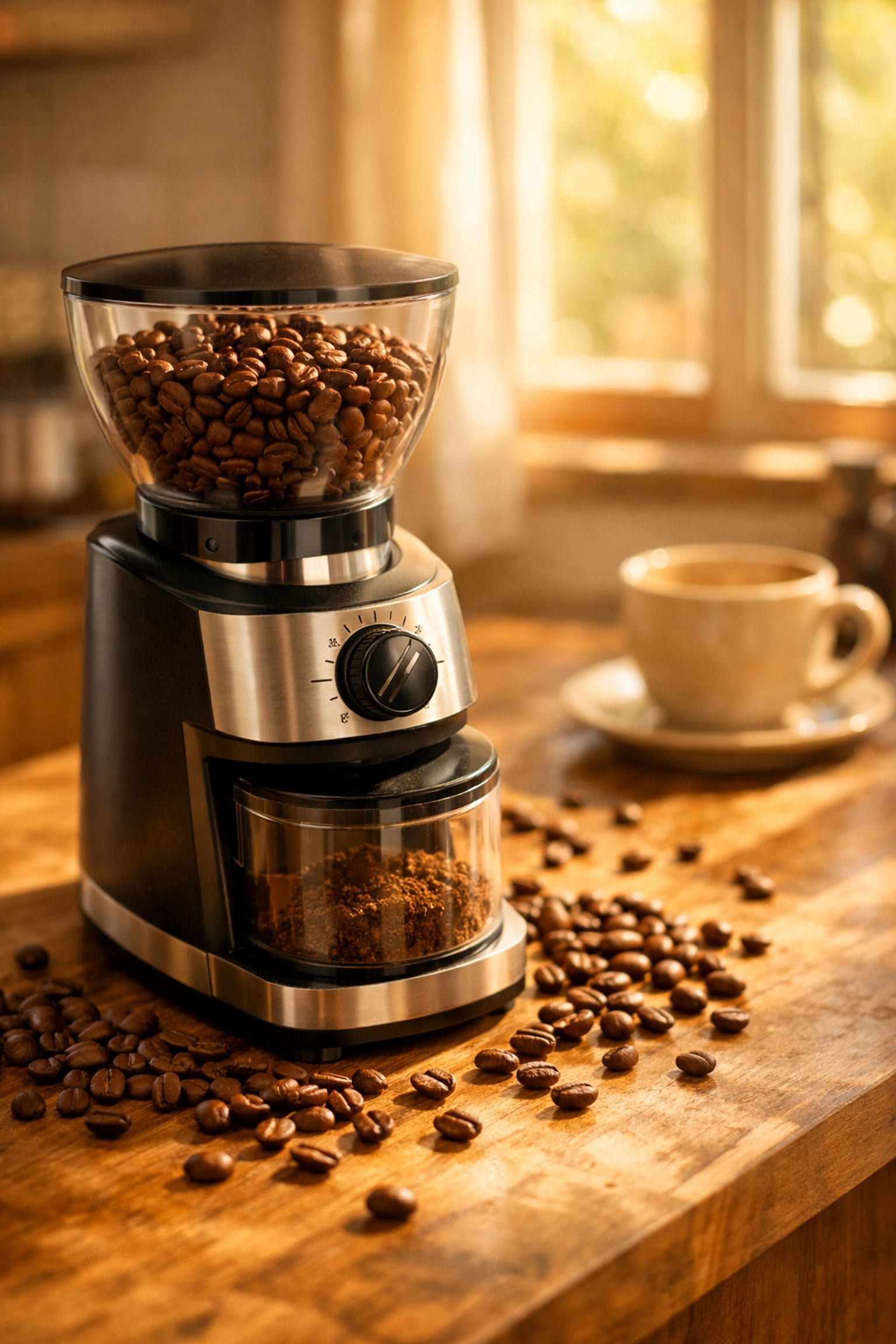
A burr grinder gives you consistent particle size, which means even extraction. Blade grinders just bash beans into randomly sized chunks: some dust, some boulders, nothing uniform. The result? Simultaneously over-extracted and under-extracted coffee. Bitter and sour at the same time. Not ideal.
For beginners, something like the Hario Mini Mill does the job without breaking the bank. It's manual, so you'll get a bit of an arm workout, but it produces decent, consistent grounds. If you want to invest a bit more upfront, the Baratza Encore is considered the gold standard entry-level grinder: electric, reliable, and produces excellent results.
Fresh Beans Are Non-Negotiable
Here's where we need to talk about coffee quality. Your shiny new grinder won't perform miracles on stale supermarket beans that were roasted six months ago and sitting in a warehouse.
Specialty coffee is about freshness and quality sourcing. At Limini Coffee, we roast in small batches precisely because freshness matters. You want beans roasted within the past few weeks, ideally consumed within a month of the roast date. Look for roasters who date their bags and can tell you exactly where the coffee came from.
Single-origin beans are a great starting point. They let you taste the characteristics of a specific region: whether that's the bright, fruity notes of an Ethiopian Yirgacheffe or the chocolate-and-nut profile of a Brazilian. Starting with single origins helps you develop your palate and figure out what you actually enjoy, rather than guessing at what's hiding in a blend.
Pick Your Brewing Method (Just One to Start)
The beautiful thing about specialty coffee at home is you don't need every brewing device under the sun. Pick one method that fits your lifestyle and get good at it. You can always expand later.
AeroPress: Compact, fast, nearly impossible to mess up. Brew time is about 1-2 minutes, and it's incredibly forgiving while you're learning. Travel-friendly too. Great choice if you want something versatile and low-pressure.
French Press: Similarly forgiving and beginner-friendly. Immersion brewing (where the grounds sit in the water) is more forgiving than percolation methods. You'll get a fuller-bodied cup with more oils present. Just remember to use a coarse grind.
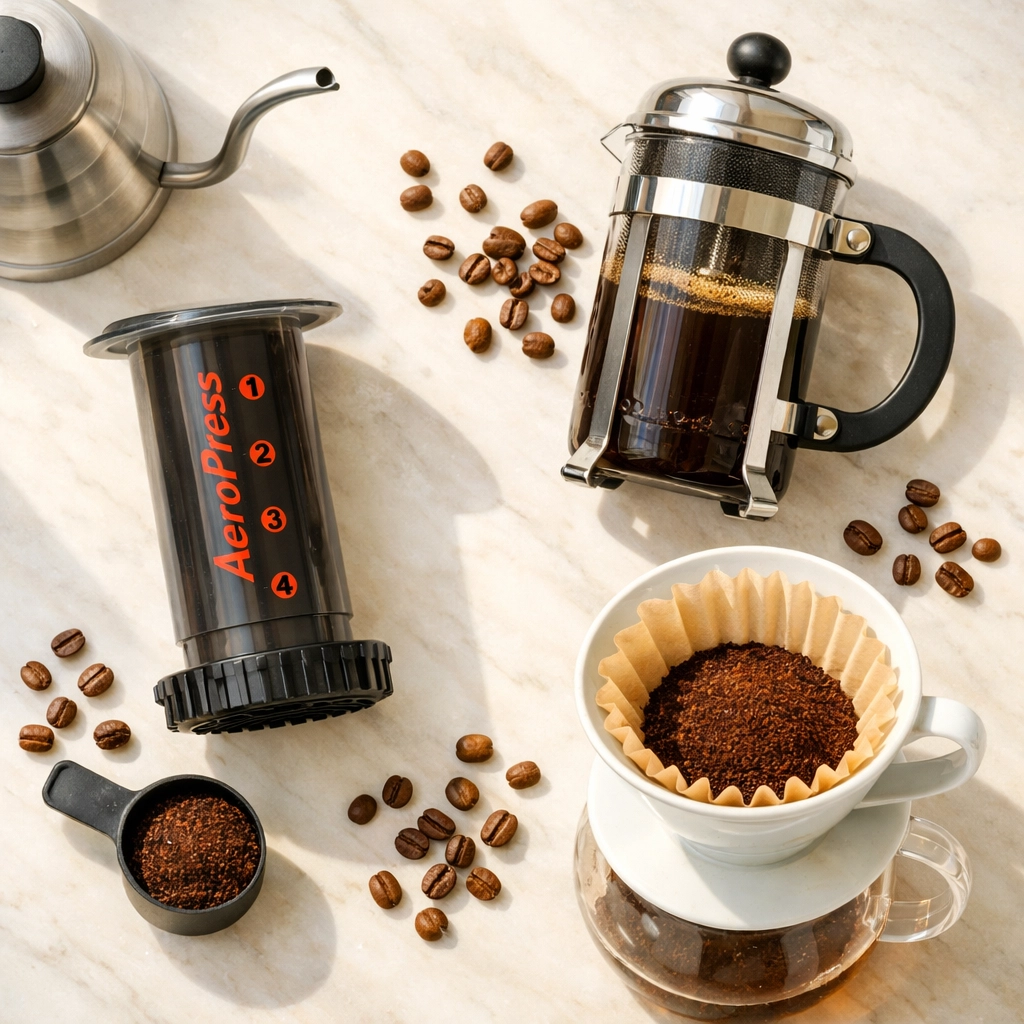
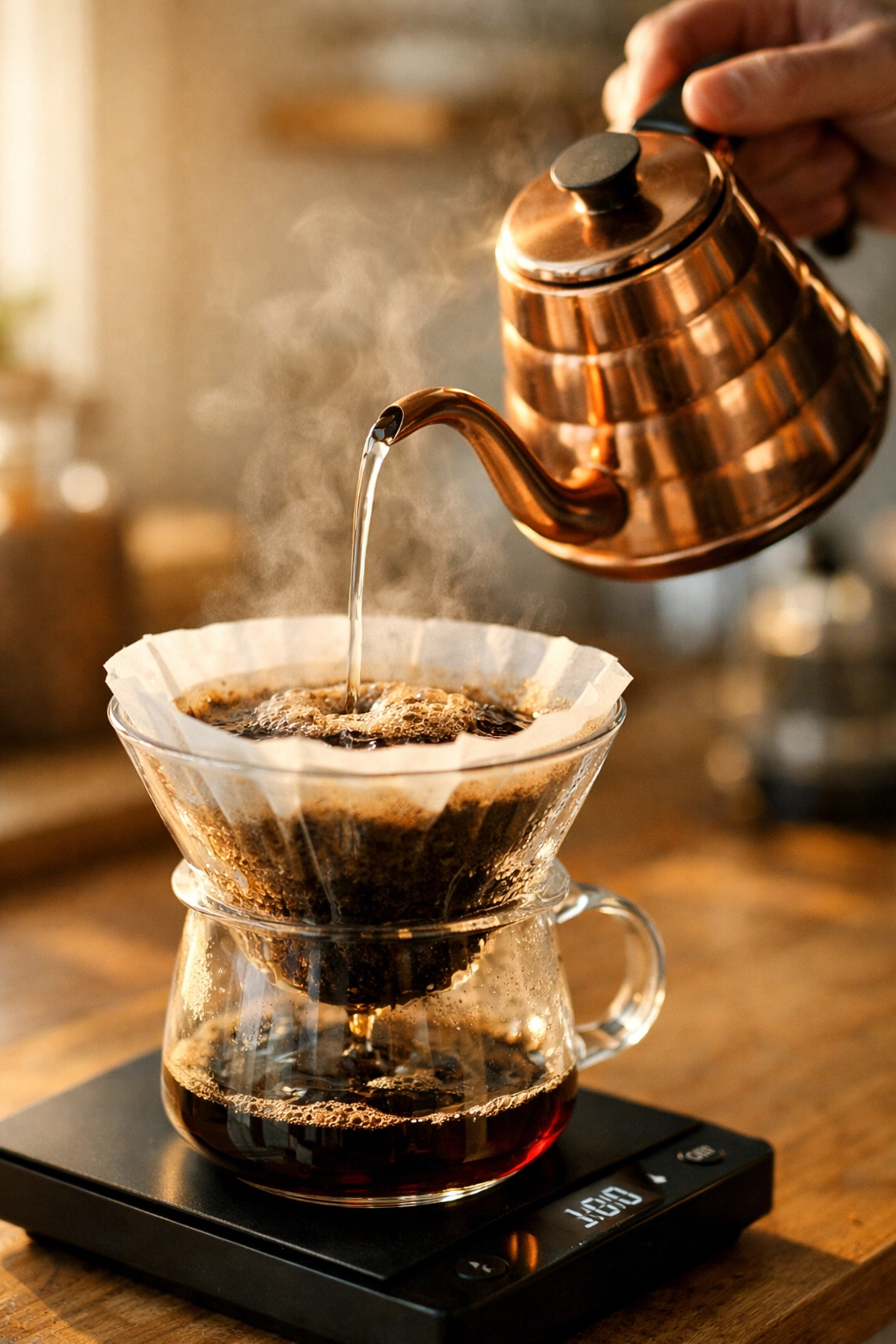
Pour Over (V60 or Chemex): Offers excellent control and clarity in the cup. There's a slight learning curve here: you'll want a gooseneck kettle for precision pouring. But the results are worth it if you enjoy the ritual of making coffee. Brew time is around 3-4 minutes.
Drip Coffee Machine: If hands-off convenience is your priority, a quality drip machine delivers consistent results without the fuss. Look for one with SCAA certification: that means it hits proper brewing temperatures.
We'd suggest starting with whichever method appeals to you most. There's no "wrong" choice here. The best brewer is the one you'll actually use every morning.
Add Precision: Scale and Kettle
Once you've got your grinder and chosen your brewer, the next upgrade is a digital scale. This might seem overly fussy at first, but consistency is what separates a good cup from a "why doesn't this taste like yesterday's brew?" cup.
Coffee brewing is fundamentally a ratio game. Most specialty coffee recipes hover around 1:15 to 1:17 coffee-to-water ratio: meaning 1 gram of coffee for every 15-17 grams of water. Without a scale, you're just guessing. With a scale, you can replicate your best brews and troubleshoot your worst ones.
You don't need anything fancy. A basic digital scale that measures to 0.1g and has a timer function will do everything you need. We're talking £15-25, not a major investment.
As for kettles: a standard electric kettle works fine to start. If you go the pour-over route, though, upgrading to a gooseneck kettle transforms your control. The narrow spout lets you pour precisely and at a controlled rate, which matters enormously for even extraction. Variable temperature control is a nice bonus but not essential at first.
Your Actual Starting Kit
Let's bring this together. Here's what we'd recommend for someone starting their specialty coffee journey:
Essential tier:
- Burr grinder (manual or electric based on budget)
- One brewing device that matches your lifestyle
- Digital scale
- Kettle (gooseneck if doing pour-over)
- Fresh, quality beans from a specialty roaster
Nice-to-have additions:
- Proper storage container for beans (airtight, opaque)
- A timer (though your phone works fine)
- A notebook for tracking recipes and results
Notice what's not on there? Expensive espresso machines. Milk frothers. Twelve different brewing devices. Fancy coffee subscription boxes with mystery beans. Temperature-controlled mugs. None of that matters yet.
Master the fundamentals first. Learn to pull out the flavors in your coffee through proper grinding, accurate ratios, and good technique. Everything else is embellishment.
The First Thing You Should Actually Do
Buy fresh beans and a burr grinder. Seriously. If you're reading this and you don't have a grinder yet, that's your starting point. You can use a French press you already own, a cheap V60 cone, or even a simple drip maker: but you need freshly ground coffee.
Then dial in your ratio using a scale. Start with 1:16 (e.g., 15g coffee to 240g water) and adjust from there based on taste. Too weak? Use more coffee. Too strong or bitter? Use less coffee or adjust your grind coarser.
Keep notes for the first few weeks. It sounds tedious, but it's the fastest way to learn what works. Write down the coffee, grind setting, ratio, water temperature, and how it tasted. When you nail a brew, you'll know exactly how to repeat it.
Ready to Begin?
The specialty coffee world can feel intimidating from the outside: all that gear, all that jargon, all those strong opinions about the "right" way to brew. But here's the truth: it starts simple.
Grind fresh. Measure accurately. Brew with intention. That's it.
Everything we've covered here: the grinder, the fresh beans, the scale, the chosen brewing method: these aren't gatekeeping requirements. They're tools that let you taste what specialty coffee actually offers. The bright acidity of a Kenyan. The stone fruit sweetness of a Colombian. The floral complexity of an Ethiopian natural process.
If you're ready to get started with quality beans roasted fresh, check out what we're currently offering at Limini Coffee. We source carefully and roast in small batches, so you're getting coffee at its best.
Welcome to specialty coffee. Your mornings are about to get significantly better.