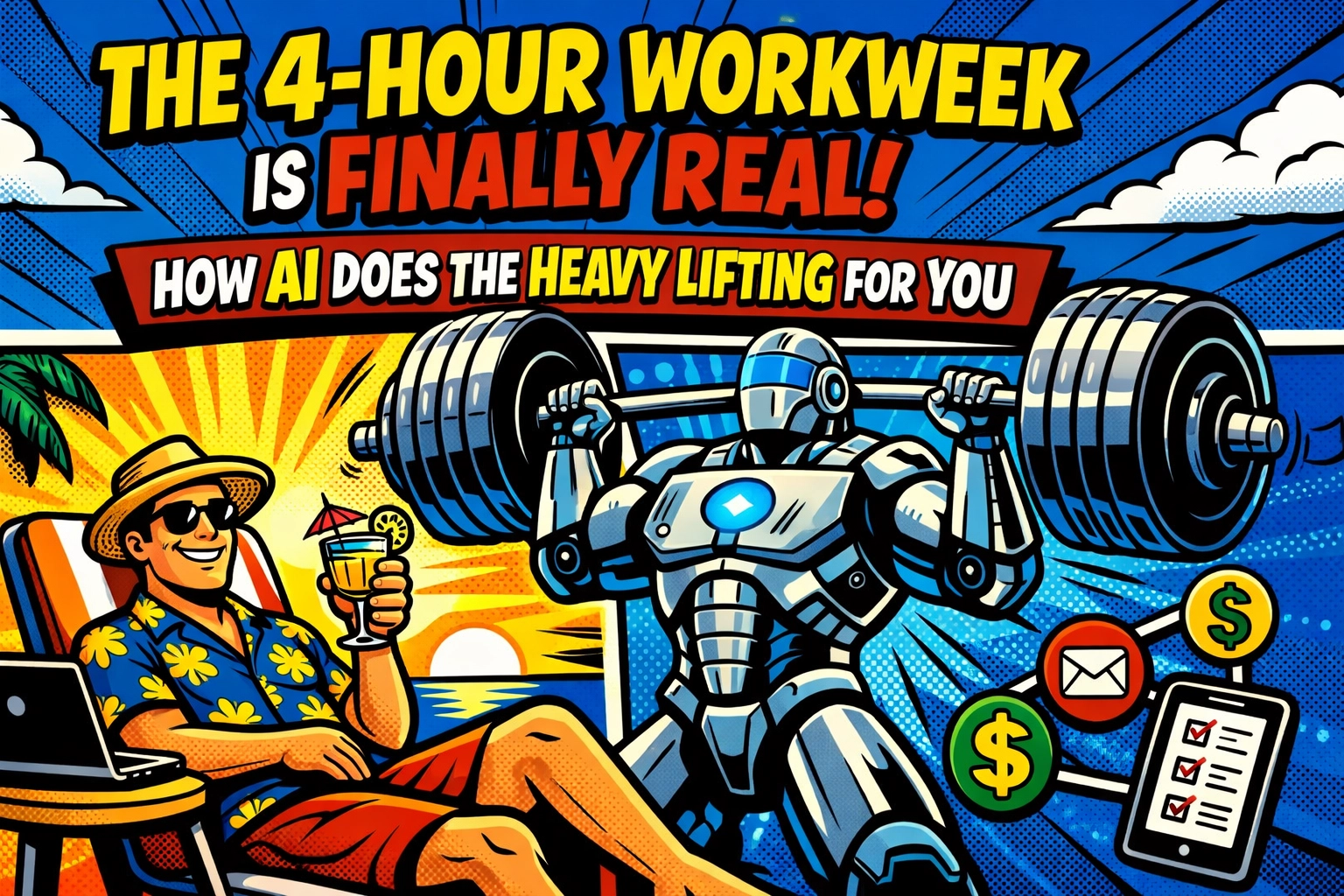
You know that book. The one that promised you'd work four hours a week and spend the rest sipping cocktails on a beach somewhere.
You tried. You really did.
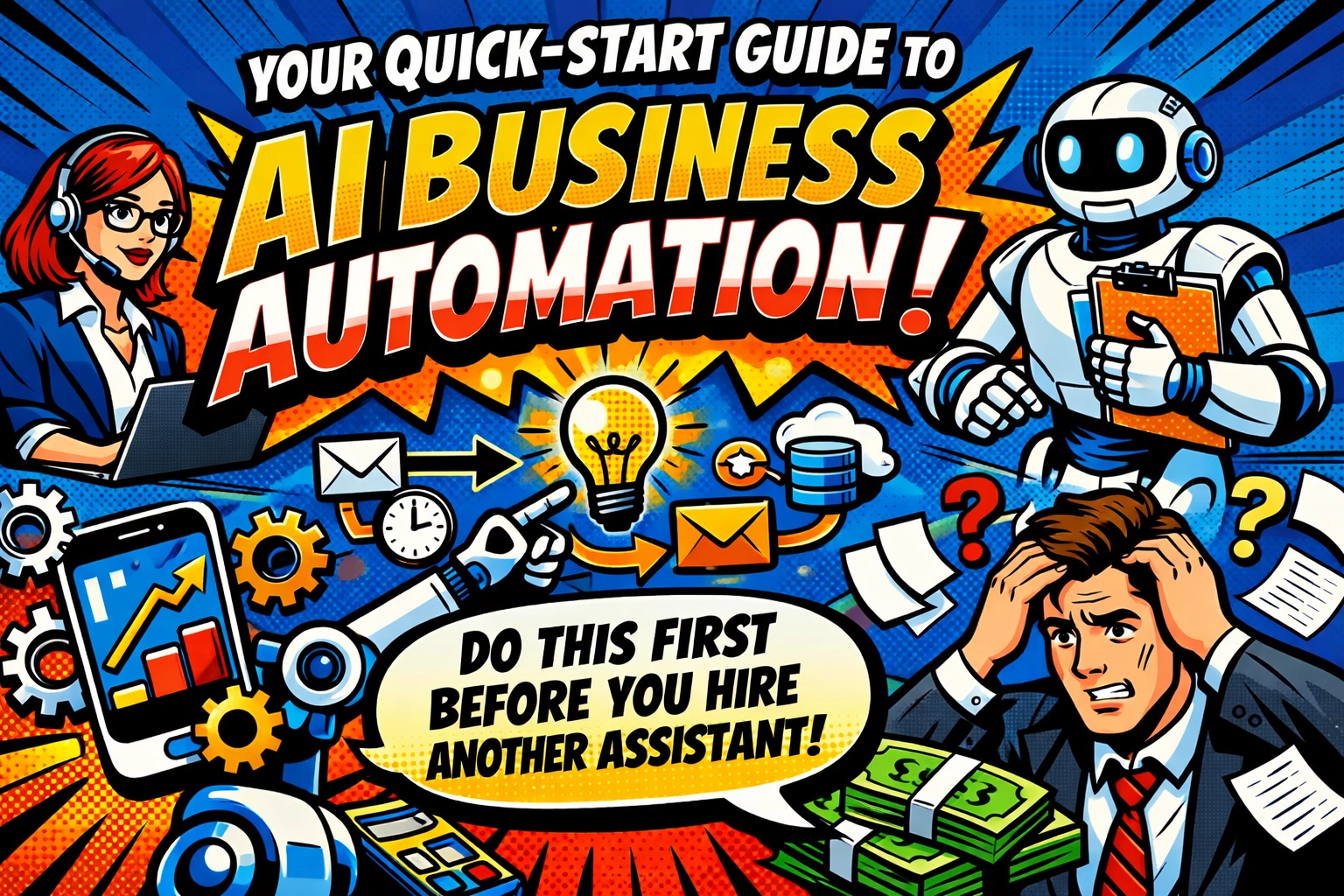
But the reality? You're drowning in the exact opposite. Email. Scheduling. Data entry. Customer follow-ups. Invoice chasing. Report generation. Meeting prep…
The list never ends. And the actual work : the creative thinking, the strategy, the innovation that actually grows your business : gets pushed to "when I have time."
Which is never.
Here's the thing: Tim Ferriss wasn't wrong. He was just early.
THE PROMISE IS FINALLY HERE
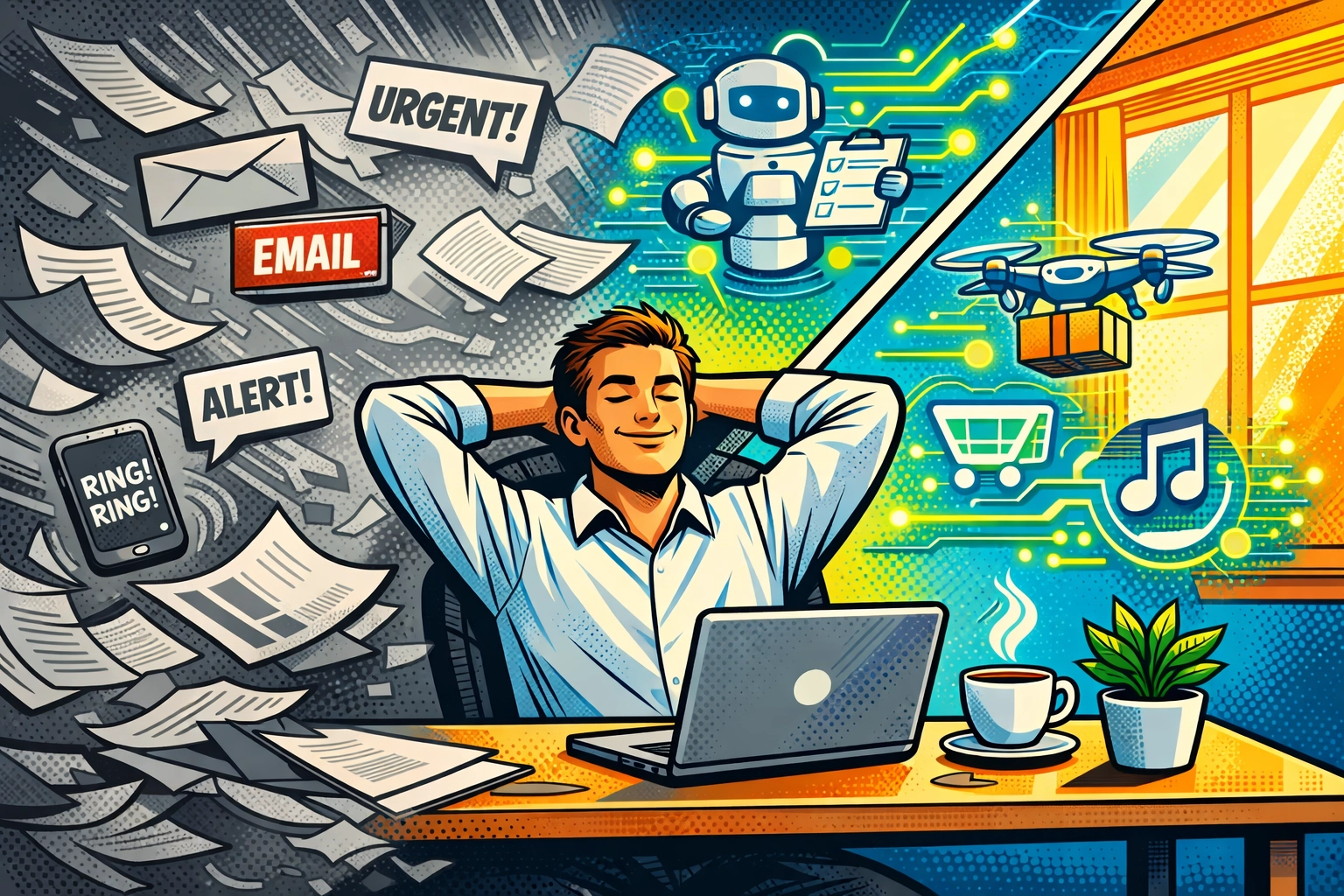
In 2026, the four-hour workweek isn't a pipe dream anymore. It's quietly becoming reality for business owners who figured out the secret.
AI doesn't just "help" with your work. It does the work.
Not the important stuff. The other stuff. The administrative quicksand that's been eating 80% of your day.
While you sleep, AI is responding to customer inquiries. While you're in a meeting, it's organizing your CRM. While you're thinking through your next strategic move, it's handling expense reports, scheduling follow-ups, and prepping tomorrow's tasks.
Companies are already proving this works. At Convictional, the CEO noted that employees are "way happier" while accomplishing the same volume of work : because AI handles the coding grunt work, generates marketing copy, and breaks down projects into manageable chunks. A law firm uses ChatGPT Pro to handle research, track billable hours, summarize calls, and plan client strategy.
The cost? About $20 a month for AI virtual assistants. Less than a single lunch meeting.
☕ 7:00 AM : YOUR DAY ACTUALLY BEGINS
You wake up. Check your phone.
Normally, this is where the anxiety starts. The inbox explosion. The urgent Slack messages. The "quick question" that derails your entire morning.
But today?
Your AI assistant already triaged everything. Urgent client request? Handled with a personalized response pulled from your previous conversations. Scheduling conflict? Resolved : it moved the less important meeting and sent apologies. Three invoices that needed follow-up? Done at 6:47 AM.
The chaos is gone before you even take your first sip of coffee.
You scan the summary. Everything that actually needs you : your strategic input, your creative decision-making, your expertise : is clearly highlighted. Three items. That's it.
The rest? Automated. Delegated to business automation tools that never sleep, never complain, and cost less than your monthly streaming subscriptions.
9:00 AM : DEEP WORK, FINALLY
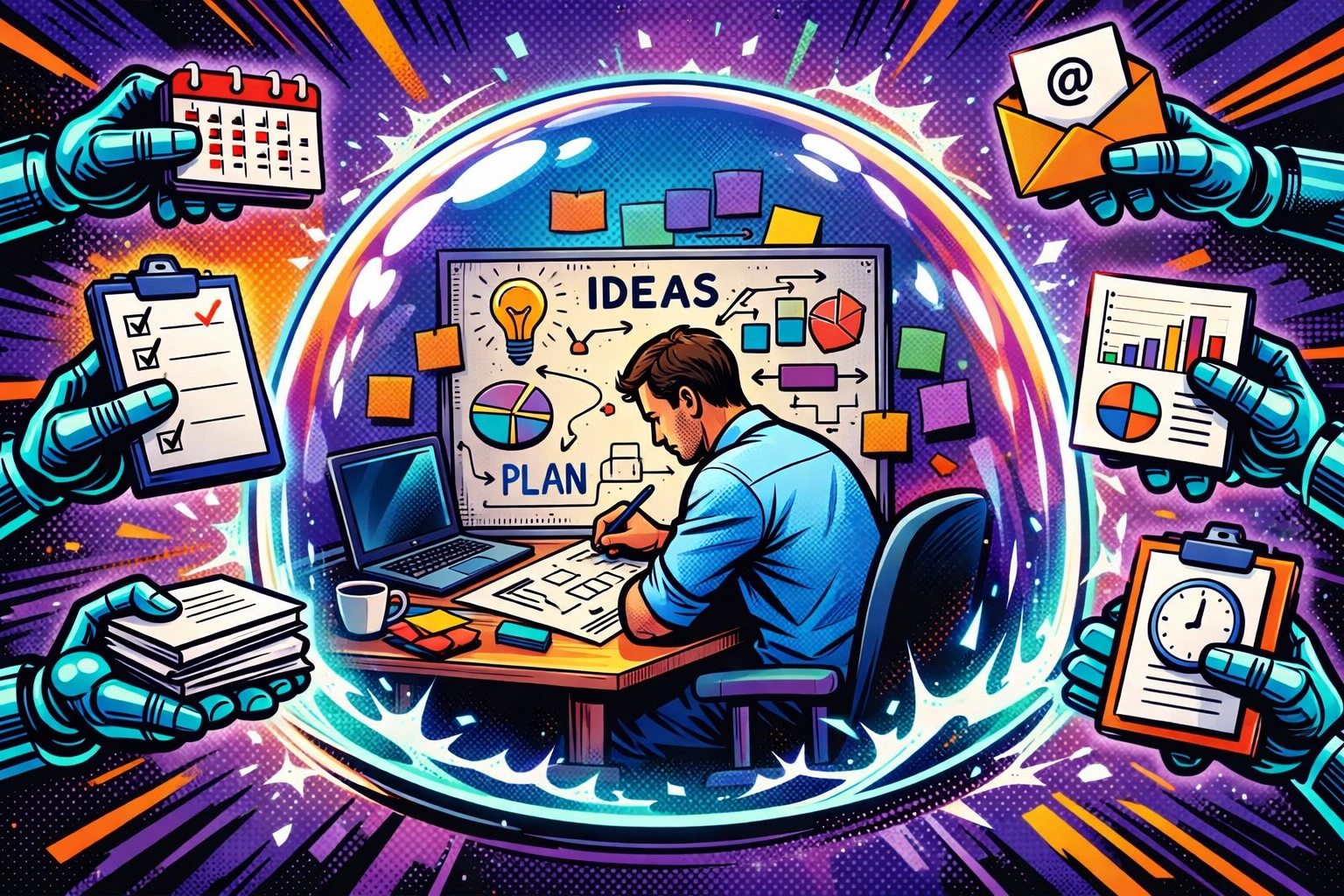
You sit down at your desk. No email marathon. No administrative cleanup.
Just… the work that matters.
That new product strategy you've been thinking about? You dive in. Your mind is fresh. No interruptions. No context-switching between "CEO brain" and "admin assistant brain."
AI is handling the mundane in the background. Customer support queries are being answered with your tone and knowledge base. Data from last quarter is being formatted into a readable report. Follow-up emails to prospects are being drafted and queued for your quick approval.
You're not managing tasks. You're creating value.
The irony? This used to feel impossible. Now it feels… normal.
Roger Kirkness, CEO of Convictional, watched his team accomplish the same work volume while being "way happier." The secret wasn't working harder. It was letting AI automate admin tasks that consumed entire afternoons.
11:30 AM : THE MEETING THAT DIDN'T WASTE YOUR TIME
You join a client call. But here's what's different.
The AI already prepped everything. Client history. Previous conversation notes. Outstanding action items. Relevant data points.
You walk in prepared : without spending an hour preparing.
During the call, your AI assistant is quietly taking notes. Capturing action items. Identifying follow-up tasks. When the call ends, you don't scramble to remember who's doing what.
The summary is already in your inbox. Tasks are already assigned. Calendar invites are already sent.
You just… move on to the next thing.
1:00 PM : LUNCH (ACTUALLY LUNCH)

You take a real lunch break.
Not "eating at your desk while answering emails" lunch. Actual lunch.
Because here's what changed: AI doesn't just help you work faster. It helps you stop working.
While you're away, it's organizing tomorrow's priorities. Updating your CRM with today's interactions. Preparing reports you'll review later. Following up with leads who went quiet last week.
JPMorgan Chase CEO Jamie Dimon predicts workweeks could shrink to 3.5 days within the next few decades. Zoom CEO Eric Yuan is targeting three- or four-day weeks within five years using "digital twins" : AI that handles email, messages, and meetings on your behalf.
It sounds wild. But you're living a version of it right now.
3:00 PM : THE CREATIVE BREAKTHROUGH
You're back at your desk. Not exhausted. Not buried.
Actually energized.
That strategic problem you've been mulling? You crack it. Not because you suddenly got smarter. But because you finally had space to think.
The employees at RocketAir deployed an AI tool that processes massive data sets quickly, freeing strategists and designers to focus on creative work. Boston College economist Juliet Schor notes there's "enough social consensus that people are exhausted and stressed" : and AI is the release valve.
Your breakthrough doesn't happen in spite of technology. It happens because of it.
AI handled the repetitive, time-consuming tasks that used to consume your cognitive load. Now your brain has room for the work that actually matters.
🌙 5:00 PM : YOU'RE DONE
Not "I'll finish this tonight" done. Actually done.
Your AI assistant sends you an end-of-day summary. Everything that was urgent got handled. Everything that needs your input tomorrow is queued and prioritized. Follow-ups are scheduled. Invoices are sent. Reports are drafted.
You close your laptop.
The guilt you used to feel : like you're always behind, always scrambling : is gone.
Employees at companies testing four-day workweeks reported using extra time for rest, community involvement, and creative projects. Paradoxically, this led to more breakthrough moments at work, not fewer.
The four-hour workweek isn't about working less because you're lazy. It's about working smarter because you finally can.
THE REALITY CHECK

Is it literally four hours? Not always.
But here's what is real: you're not drowning anymore.
The administrative quicksand that used to steal 30+ hours a week? AI handles it for roughly $20 a month through tools like ChatGPT and business automation platforms. One in three companies is investing at least $25 million in AI : not because it's trendy, but because the math works.
A law firm uses generative AI for research and billable hour tracking. A marketing agency uses it for copywriting and project breakdowns. A consulting firm uses it for client planning and call summarization.
These aren't futuristic scenarios. This is 2026. This is now.
The companies winning aren't the ones with bigger teams or longer hours. They're the ones who figured out how to automate admin tasks and redirect human energy toward high-value work.
YOUR MOVE
Tim Ferriss wrote the book. AI wrote the sequel.
The four-hour workweek isn't about escaping work. It's about reclaiming your time from the tasks that don't need you. The admin. The follow-ups. The data entry. The scheduling chaos.
AI does the heavy lifting. You do the thinking.
If you're ready to stop drowning in admin work and start focusing on what actually grows your business, see how Marblism makes it real. Business automation tools that handle the mundane while you handle the meaningful.
The chaos isn't gone because you worked harder.
It's gone because you finally stopped doing work that didn't need you in the first place.