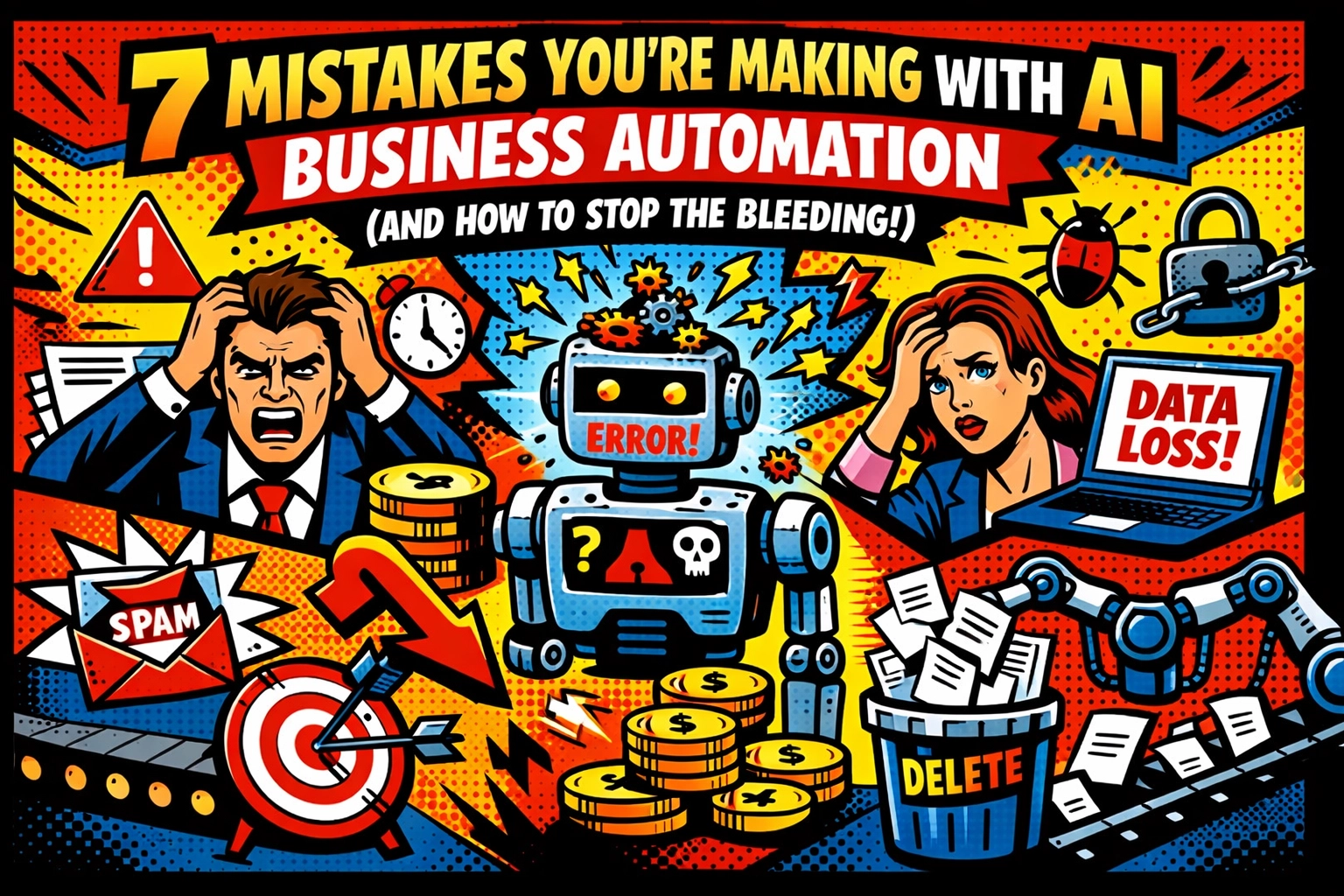
You wake up, and your phone is already screaming at you.
72 notifications. Three "urgent" emails from customers who sound… confused. One very angry LinkedIn comment about a post you don't even remember writing.
This was supposed to be the "hands-off" life. You bought the business automation tools. You signed up for the AI platforms. You were promised a tropical beach and a cocktail while your business ran itself like a well-oiled Tesla.
But instead? It feels like you’ve handed the keys of your company to a very fast, very confident, but slightly drunk intern.
The bleeding is real. And if you don't stop it, your brand is going to look like a digital ghost town.
Here is how you’re breaking your own business with AI, and how to fix it before the "Delete Account" button becomes your only option.
☕ 7:00 AM , THE GHOST IN THE MACHINE
You’re scrolling through your automated social media feed. It’s… fine. But it’s also constant. You’ve automated every single post, every reply, and every outreach message for the next three months.
And that’s the first mistake: Over-automating without human review.
You thought you were being efficient. You thought you were "scaling." But in reality, you’ve just become noise. When you automate everything, blogs, emails, ads, without a human touch, you lose the one thing that keeps customers paying: trust.
AI is a world-class assistant, but a terrible CEO. When it starts talking to your customers without you looking over its shoulder, things get weird. Fast.
Stop the bleeding: Use AI to draft, not to publish. Let it brainstorm the 10 ideas, but you pick the winner. Let it write the first draft, but you add the "you." Automation should support your strategy, not replace your brain.
🤝 9:30 AM , THE IDENTITY CRISIS
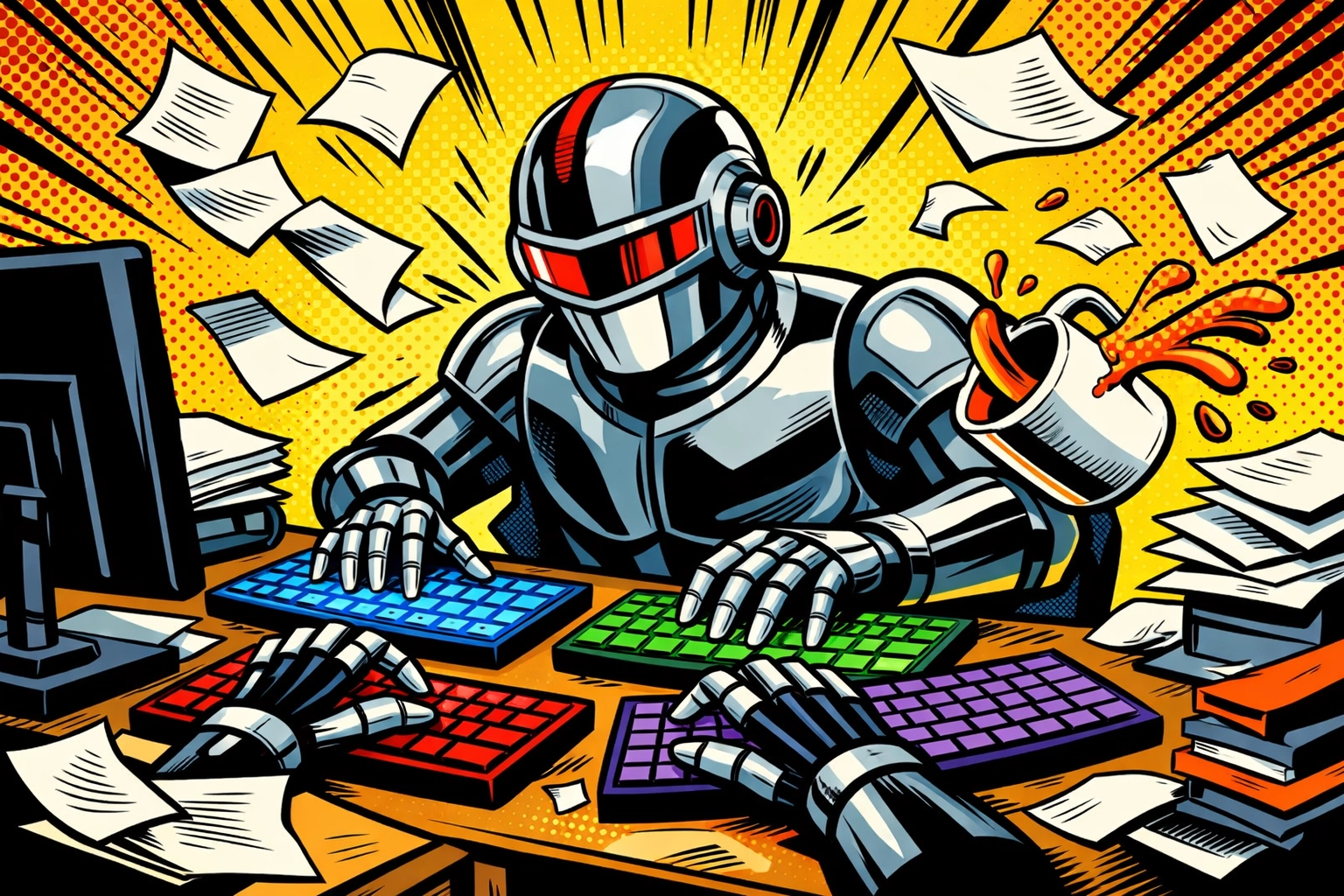
You open a draft of your latest newsletter. It’s polished. It’s grammatically perfect. And it sounds absolutely nothing like you.
Mistake number two is ignoring your brand voice.
Small businesses don't survive on features; they survive on personality. People buy from you because they like the way you talk, the way you solve problems, and even your weird quirks.
When you feed a prompt into a generic AI tool, it spits out "Corporate Professionalism™." It’s boring. It’s generic. It feels like reading a toaster manual. If your customers wanted to talk to a toaster, they’d go to a kitchen appliance store.
Stop the bleeding: Feed your AI examples of your actual writing. Tell it: "Write this like a casual friend who’s had one too many coffees." Use Marblism to create workflows that actually understand your specific tone. You can check out how we handle that here at https://marblism.link/scott-bowen. Don't let your brand die in a sea of "In the rapidly evolving landscape of…"
🔍 11:00 AM , THE PINOCCHIO PROBLEM
You just noticed a comment on your latest blog post. "Uh, this law hasn't existed since 2019. Where did you get this info?"
Ouch. Mistake number three: Trusting AI information blindly.
AI is a pattern-matching engine, not a truth-machine. It is incredibly good at sounding confident while being 100% wrong. It will invent statistics. It will hallucinate quotes. It will tell you that the Earth is flat if you prompt it the wrong way.
If you’re using ai business automation to generate factual content, you are playing Russian Roulette with your reputation.
Stop the bleeding: Fact-check everything. Every stat. Every date. Every "proven" method. If your AI tells you the sky is blue, go outside and look up. Treat AI-generated info like a rumor from a guy you met at a bar, interesting, but needs a Google search to verify.
📱 1:00 PM , GARBAGE IN, GARBAGE OUT
You’re looking at your lead generation dashboard. The AI was supposed to be "optimizing" your funnel. Instead, it’s sending your high-ticket offers to people who signed up for a free sticker three years ago.
Why? Because your data is a mess.
Mistake number four: Feeding AI messy data.
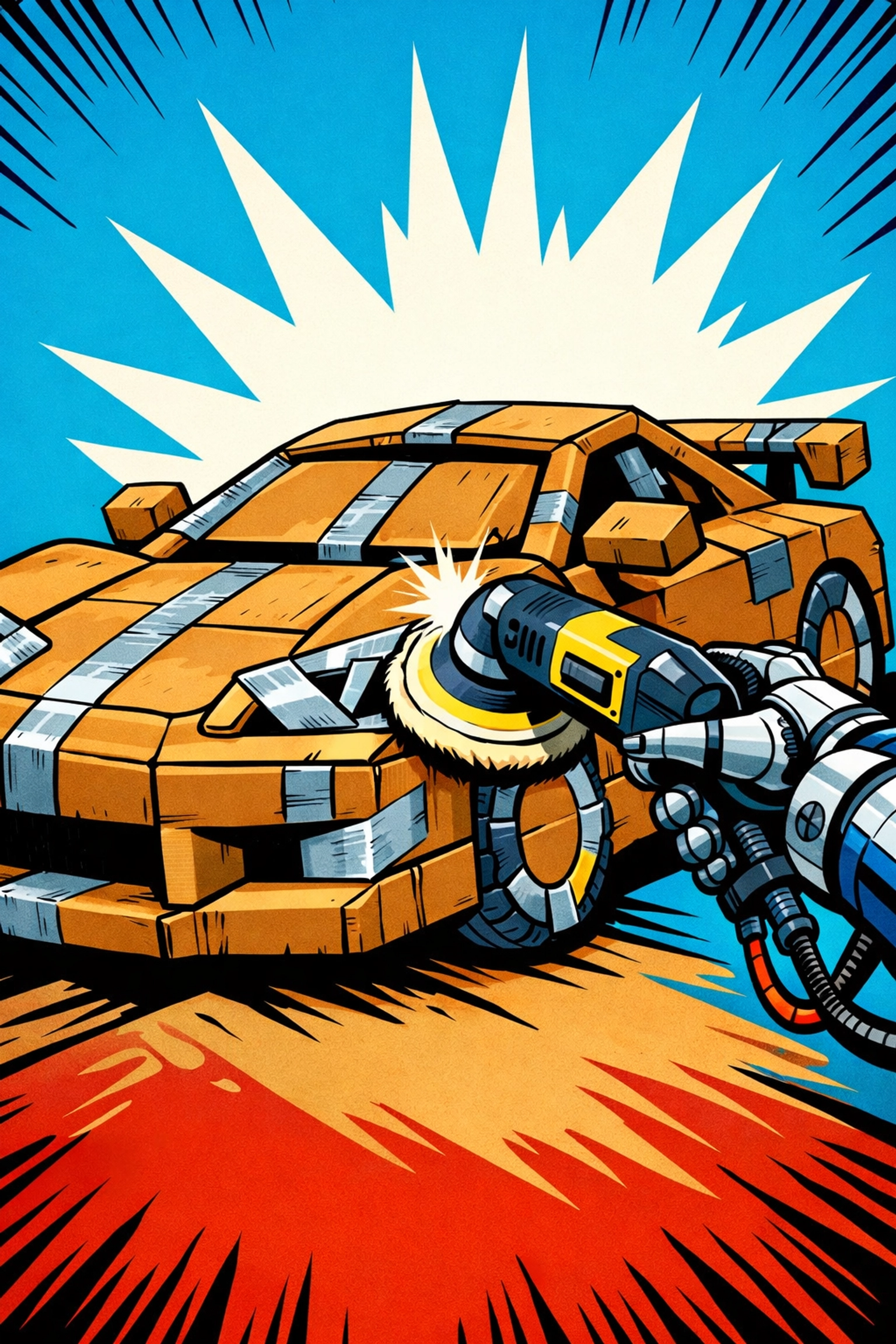
AI is only as smart as the data you give it. If your CRM is a graveyard of half-filled forms and duplicate contacts, your "intelligent" automation is going to make some very stupid decisions. It’s like trying to build a Ferrari out of cardboard boxes.
Stop the bleeding: Before you flip the switch on a new automation tool, clean your room. Organize your leads. Tag your customers correctly. AI can find patterns, but it can’t fix your bad filing habits.
🔒 3:00 PM , THE OPEN WINDOW
Your phone buzzes. It's a security alert.
Mistake number five: Ignoring data security.
In the rush to be "AI-powered," many business owners are copy-pasting sensitive customer data, proprietary secrets, and private financial info directly into public AI tools.
Guess what? Most of those tools "learn" from what you give them. You might have just fed your competitor's marketing strategy directly into the public brain. Or worse, you’ve exposed your customers' private info to a platform that doesn't have your best interests at heart.
Stop the bleeding: Establish a "No-Private-Info" rule for public AI. If you wouldn't post it on a billboard, don't put it in a basic prompt. Use secure business automation tools that offer enterprise-level privacy.
☎️ 4:30 PM , THE ROBOTIC SHOULDER
A customer reaches out because they’re frustrated. They’ve been stuck in your "automated support loop" for twenty minutes.
Mistake number six: Automating without empathy.
There is a time for bots, and there is a time for humans. If a customer is genuinely upset, the last thing they want is a cheery "I’m sorry you’re feeling that way! How can I help today? 🤖"
Removing the human element from customer-facing processes is a one-way ticket to a 1-star review. You can’t automate a genuine apology. You can’t automate empathy.
Stop the bleeding: Always provide an "escape hatch." Give people a way to talk to a real person within two clicks. Use AI to handle the "Where is my tracking number?" questions, but keep the "I’m really disappointed" conversations for yourself.
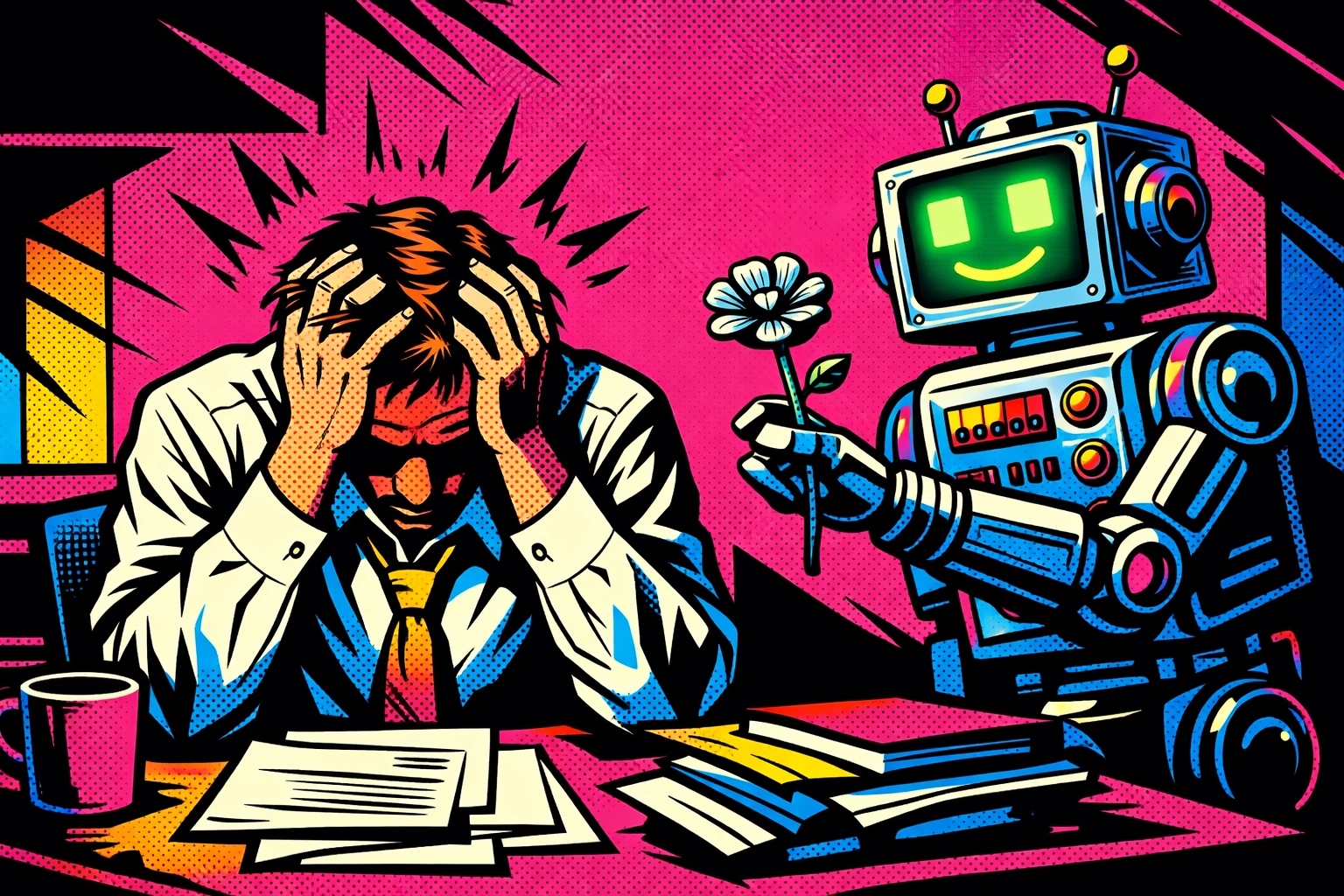
🌙 6:00 PM , THE ORACLE FALLACY
You’re staring at a "strategic recommendation" your AI tool gave you about your Q4 budget. It suggests cutting your best-performing ad set because of a "pattern" it found.
Mistake number seven: Over-relying on AI outputs.
You’ve started treating the AI like an oracle. If the machine says it, it must be right, right? Wrong.
AI doesn't have "gut feeling." It doesn't know that the market just shifted because of a global event. It doesn't know that your main competitor just went out of business. It’s looking at the past to predict the future, and in business, the past is rarely a perfect map.
Stop the bleeding: Maintain your veto power. AI is there to give you options, not orders. Use the insights as a starting point, but let your experience make the final call.
STOP JUGGLING. START GROWING.
The chaos is gone before you even take your first sip of coffee.
Scaling shouldn't be this hard. But here we are, fighting with tools that were supposed to save us.
If you're tired of the "intern-level" results from your current setup, it’s time to see what actual, strategic ai business automation looks like. We’ve built a system at Marblism that doesn’t just "automate", it integrates with your actual business goals without the hallucinations or the headache.
See for yourself. Stop the bleeding and start building.
Click through this 3-min interactive demo to see how Marblism fixes your automation nightmares.
FAQ: Because you’ve got questions.
Q: Is AI going to replace my job?
No. But the guy who knows how to use AI without making these 7 mistakes will.
Q: Can I automate my entire customer service?
You can, but you shouldn't. Automate the repetitive stuff; keep the human stuff human.
Q: How do I know if my data is "clean"?
If you look at your spreadsheet and feel a localized headache, it’s not clean.
Q: Is Marblism hard to set up?
Nope. We designed it for people who want to run a business, not a coding lab.
The lights are off. The house is quiet. Your business is running.
And for the first time in months… you’re actually sleeping.
YOU’VE GOT THIS.