You've just brewed what should have been a brilliant cup of coffee. You used the right water temperature, your technique was spot-on, and you're brewing with beans from a quality roaster. But something's off. The flavour is flat, muted, lacking that vibrant complexity you know should be there.
The culprit? Storage.
Even the best coffee in the world won't taste great if you're not storing it properly. And here's the thing – most people are unknowingly sabotaging their beans every single day. So let's fix that.
The Four Enemies of Fresh Coffee
Coffee beans are surprisingly delicate. Once they're roasted, they're actively losing freshness, and four main factors accelerate this process: air, light, heat, and moisture.
Air is probably the biggest offender. When coffee is exposed to oxygen, it begins to oxidise. This means those beautiful aromatic compounds and oils that give your coffee its flavour start breaking down. The result? Stale, cardboard-like flavours that no amount of brewing skill can fix.
Light – particularly sunlight – causes coffee to deteriorate through a process called photodegradation. Those UV rays are breaking down the molecular structure of your beans, and clear glass jars on sunny countertops are basically speeding up the ageing process exponentially.
Heat accelerates all chemical reactions, including the ones that make coffee go off. Storing your beans near the stove, on top of the fridge, or anywhere warm is essentially fast-forwarding their expiry date.
Moisture is perhaps the sneakiest enemy. Coffee beans are porous and hygroscopic, meaning they absorb moisture and odours from their environment. Store them near your garlic or in a humid area, and you'll end up with coffee that tastes… well, not like coffee should.
Container Choices: What Actually Works
So you've got your beautiful fresh beans – maybe a bag from Limini Coffee's selection that arrived this week. What now?
The original bag your coffee comes in is fine for the first few days, especially if it has a one-way valve (that little circular disc you see on most specialty coffee bags). This valve lets CO2 escape – which freshly roasted beans release quite a bit of – without letting oxygen in. But here's the catch: most coffee bags aren't completely airtight once opened. Every time you roll down the top and clip it, some air is getting in.
For serious freshness protection, we recommend transferring your beans to a proper storage container. And not just any container.
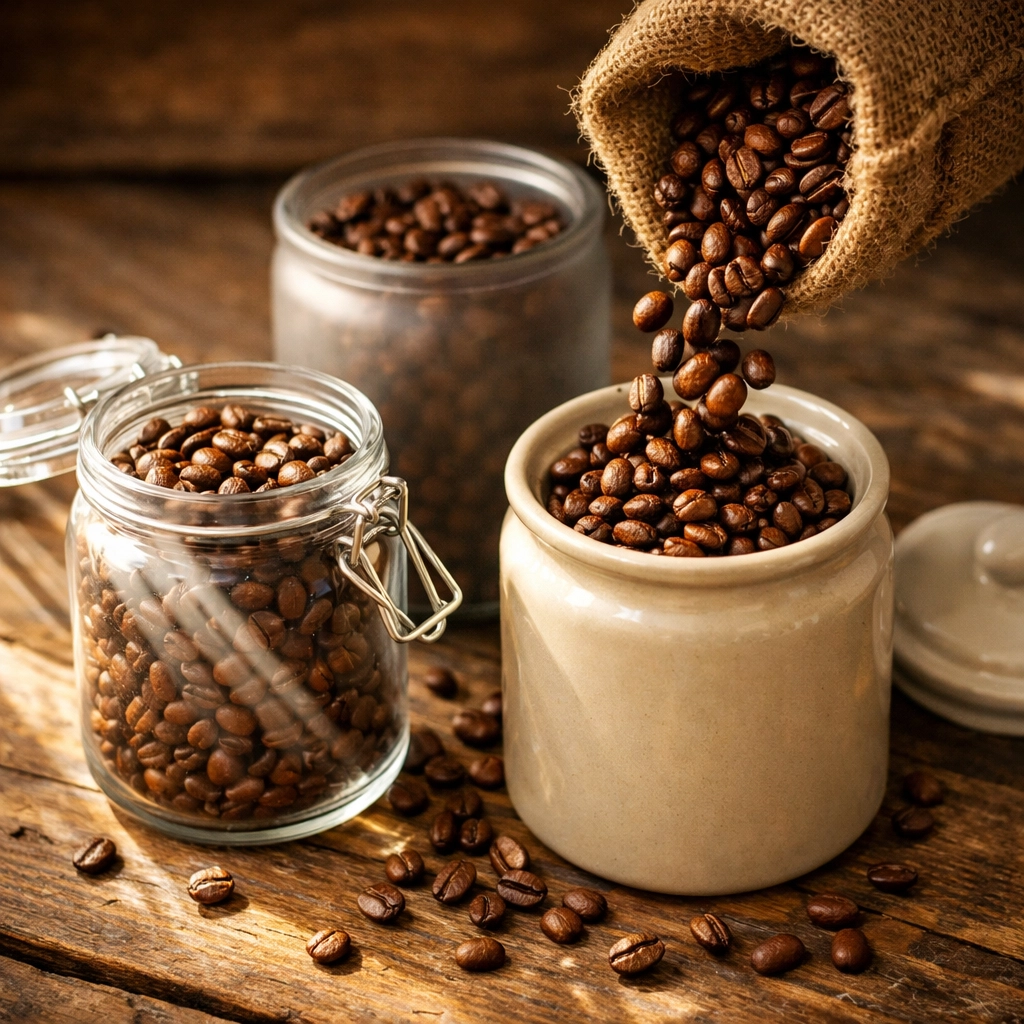
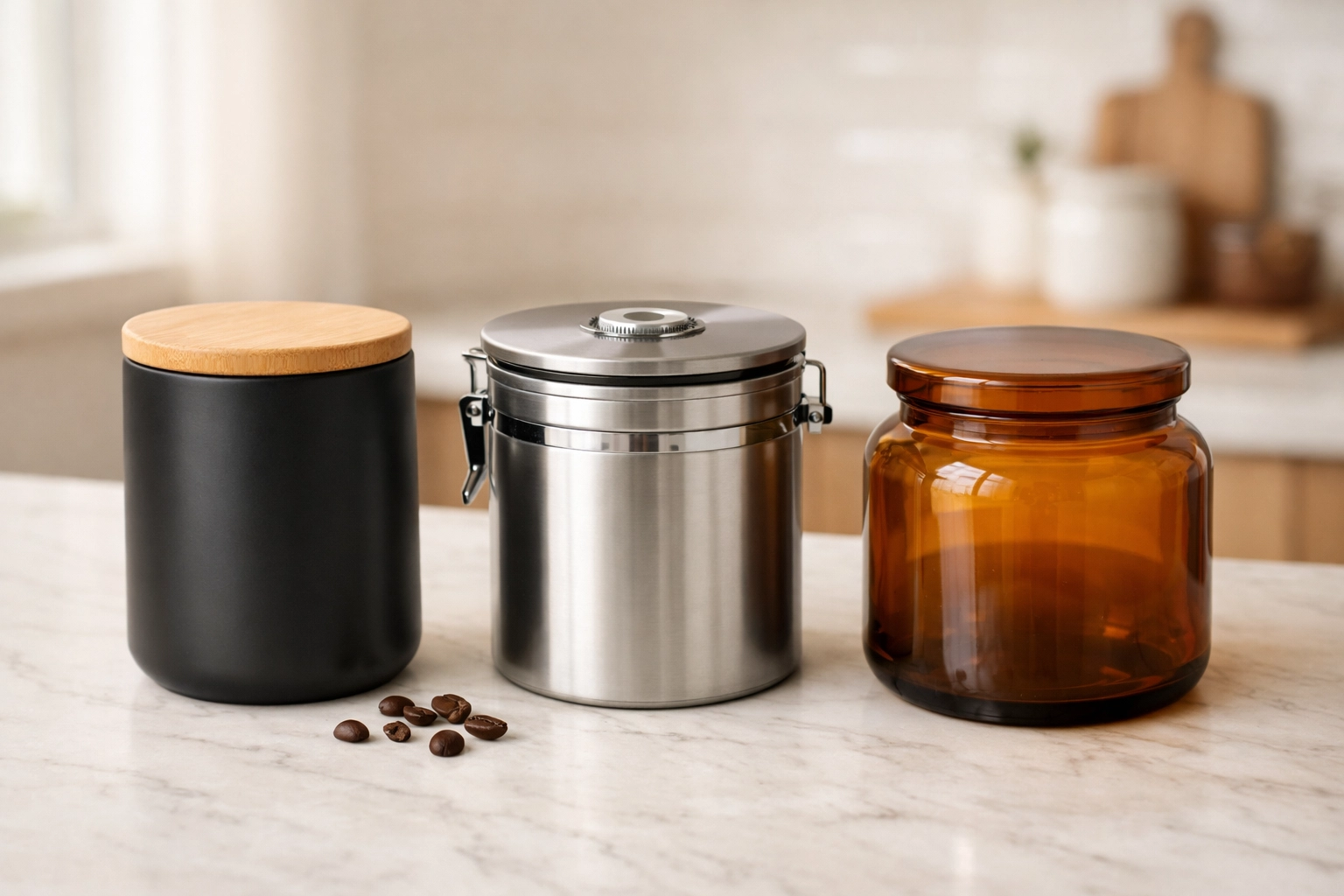
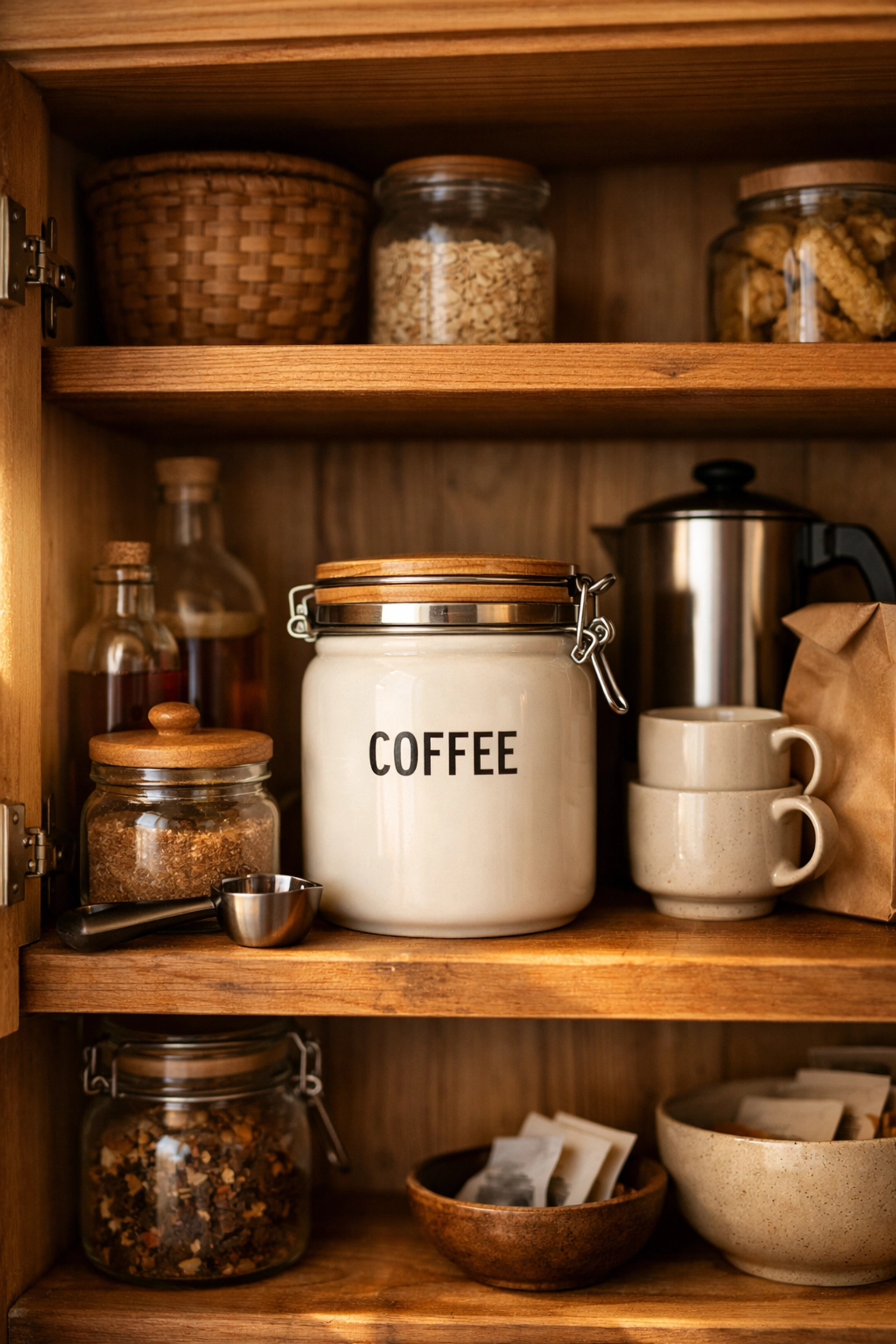
Ceramic or opaque glass containers are your best friends here. Ceramic doesn't hold onto odours and completely blocks light. Opaque glass does the same while letting you see when you're running low (though honestly, if you're a proper coffee lover, you always know).
Avoid clear glass. Yes, it looks nice on your counter. Yes, you can see the beans. But you're basically giving light a free pass to degrade your coffee. Not worth it.
As for plastic and metal containers? We're less enthusiastic. Plastic can impart weird odours over time, and some metals can do the same. If you're going to invest in quality beans, invest in a quality container.
The Container Tech Worth Knowing About
If you want to get really serious about storage, there are two types of containers that outperform everything else:
CO2 valve canisters are brilliant for everyday use. These containers have built-in one-way valves that let freshly roasted beans off-gas while keeping oxygen out. They're particularly useful in the first week after roasting when beans are releasing the most CO2. We use these here at Limini for our own daily coffees.
Vacuum-seal containers take things up another level by removing air entirely. These are ideal if you buy in bulk and want to store beans for longer periods. The key here is not opening them frequently – every time you break the seal, you're reintroducing air. So if you've got a large batch, consider dividing it up: keep one portion in your daily container and the rest vacuum-sealed.
Where to Store Your Coffee
Location matters as much as container choice. Your beans need a cool, dark, stable environment.
The best spot? A cupboard or pantry away from any heat sources. Think away from the stove, oven, kettle, or that sunny windowsill. Room temperature is fine – we're talking 15–24°C (60–70°F). You don't need anything fancy.
What you want to avoid is temperature fluctuation. Moving your beans from a warm kitchen to a cold cupboard and back creates condensation inside the container. That moisture is terrible for your beans, causing them to deteriorate faster and potentially even going mouldy.
And here's where people often go wrong: don't store coffee in the fridge. Yes, it's cool. Yes, it seems logical. But fridges are humid and full of odours. Your coffee will absorb moisture and end up tasting like last night's leftovers. Not the morning experience you're after.
The freezer is slightly different. If you're storing beans long-term – we're talking weeks or months – freezing in a completely airtight, vacuum-sealed container can work. But here's the critical bit: you can only thaw them once. Once you take them out, that's it. No refreezing. The freeze-thaw cycle creates moisture and ruins the beans. Basically, freezing is only practical if you're batch-storing and can commit to using a whole portion once defrosted.
Practical Storage Strategies That Work
Let's talk real-world application. You've ordered a kilo bag of beans because, well, coffee. Here's what we recommend:
Divide and conquer. Split that kilo into portions. Keep about a week's worth in your daily-use airtight container on the counter (or in the cupboard). Store the rest sealed away – either in the original valve bag rolled tight and clipped, or better yet, in vacuum-sealed bags or containers.
This approach means you're only exposing a small amount of coffee to air repeatedly, while the bulk of your stash stays sealed and fresh.
Grind as you go. Pre-ground coffee loses freshness exponentially faster than whole beans. We're talking days instead of weeks. The increased surface area means more exposure to air, and those aromatic compounds vanish quickly. So grind right before brewing, every single time. Yes, it's an extra minute in the morning. Yes, it's absolutely worth it.
Use a scoop. This might sound pedantic, but when you reach into your container, you're introducing warm air and moisture from your hand. Using a dedicated scoop minimises this. Small detail, noticeable difference over time.
Seal immediately. Don't leave your container sitting open while you weigh beans or faff about with your grinder. Get what you need and seal it back up straight away. Every second of exposure counts.
The First Step: Start with Fresh Beans
Here's something we need to be honest about – all the perfect storage in the world can't resurrect beans that were already stale when you bought them. Coffee has a peak window of flavour, and that window starts the moment it's roasted.
This is why starting with freshly roasted beans is non-negotiable. When you order from a specialty roaster like Limini Coffee, you're getting beans roasted to order, often within days of delivery. That means you're starting with maximum freshness and maximum flavour potential.
Then it's up to you to maintain that freshness with proper storage. Think of it like buying fresh vegetables – you wouldn't expect a salad to stay perfect for months in the fridge, right? Coffee is similar. It's a fresh product that deserves to be treated as such.
Most specialty coffee is at its best between 7–30 days after roasting (espresso sometimes benefits from a few days of rest after roasting to let CO2 levels stabilise). After a month, you'll notice the flavour beginning to fade. After two months, you're drinking significantly degraded coffee. And those supermarket beans with no roast date? They could be six months old before they even reach your cupboard.
How Long Does Coffee Really Stay Fresh?
With proper storage – airtight container, cool dark place, whole beans – you're looking at peak freshness for about 2–4 weeks after opening. You can stretch it to 6–8 weeks and still get decent coffee, but you'll notice the difference.
This is why we recommend buying in quantities that match your consumption rate. If you drink a cup a day, a 250g bag will last about two weeks. Perfect. A kilo bag? Consider splitting it up or sharing with a friend.
The beauty of specialty coffee is that it's meant to be enjoyed fresh. It's not meant to sit in your cupboard for months. Once you experience what truly fresh, properly stored coffee tastes like, there's no going back.
The Bottom Line
Storing coffee properly isn't complicated, but it does require a bit of attention. Protect your beans from air, light, heat, and moisture. Use an airtight, opaque container. Keep them in a cool, dark cupboard. Grind just before brewing. And most importantly, start with freshly roasted beans.
Do these things, and every cup you brew will be showing off the coffee's true potential – those origin characteristics, that careful roasting, all the work that went into creating something special.
Your morning coffee deserves better than stale beans in a clear jar on the windowsill. Sort your storage, and you'll taste the difference immediately.