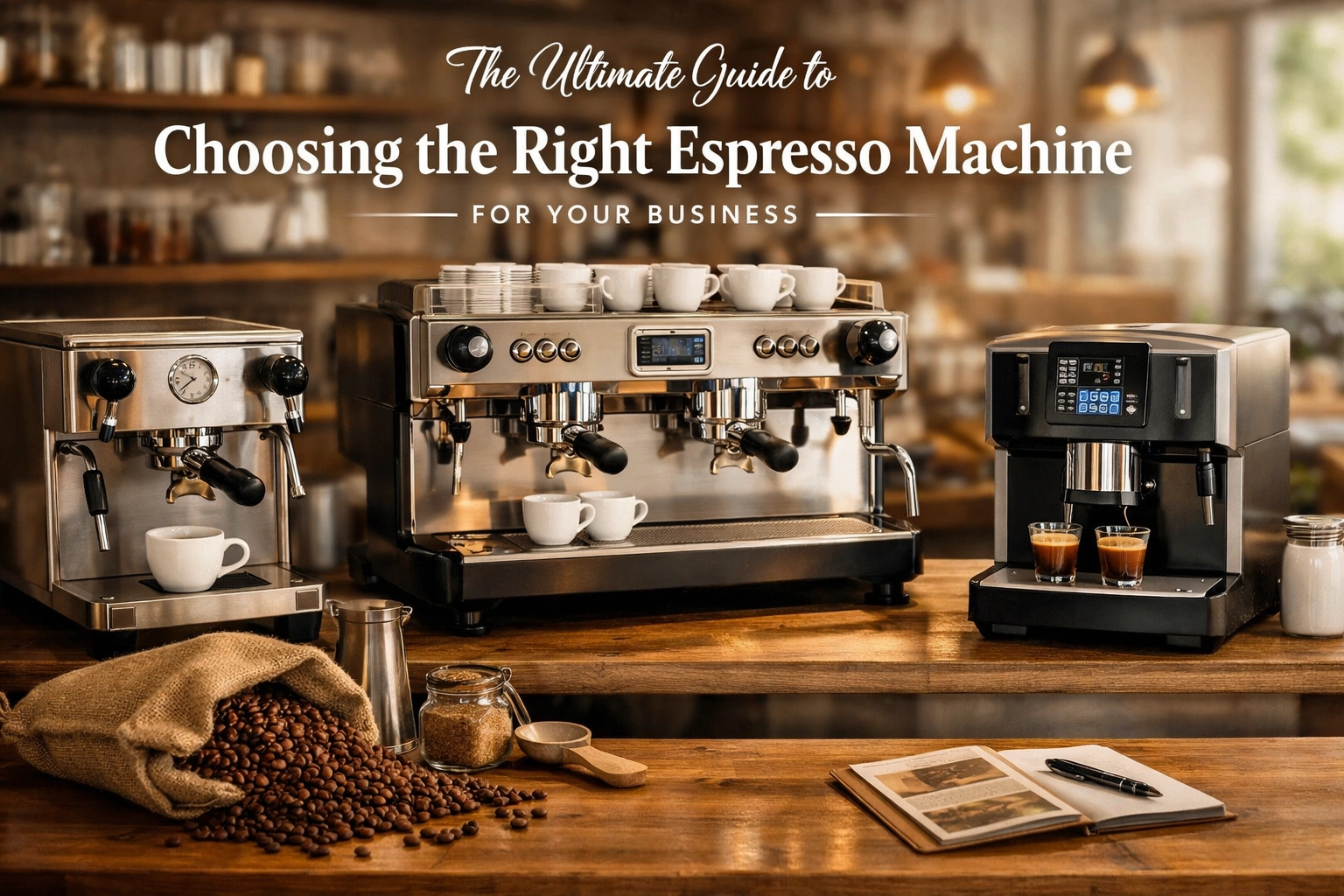
Buying an espresso machine is one of the biggest investments you'll make when starting or upgrading your coffee business. We're talking anywhere from a few thousand pounds to well over twenty grand for a top-tier multi-group setup. It's not just about the upfront cost either: your machine choice affects everything from your workflow efficiency to the quality consistency your customers experience.
So how do you navigate the overwhelming number of options out there? Let's break down exactly what you need to consider to find the perfect match for your business.
Understanding Machine Types
The first decision you'll face is what level of automation suits your operation and barista skill level.
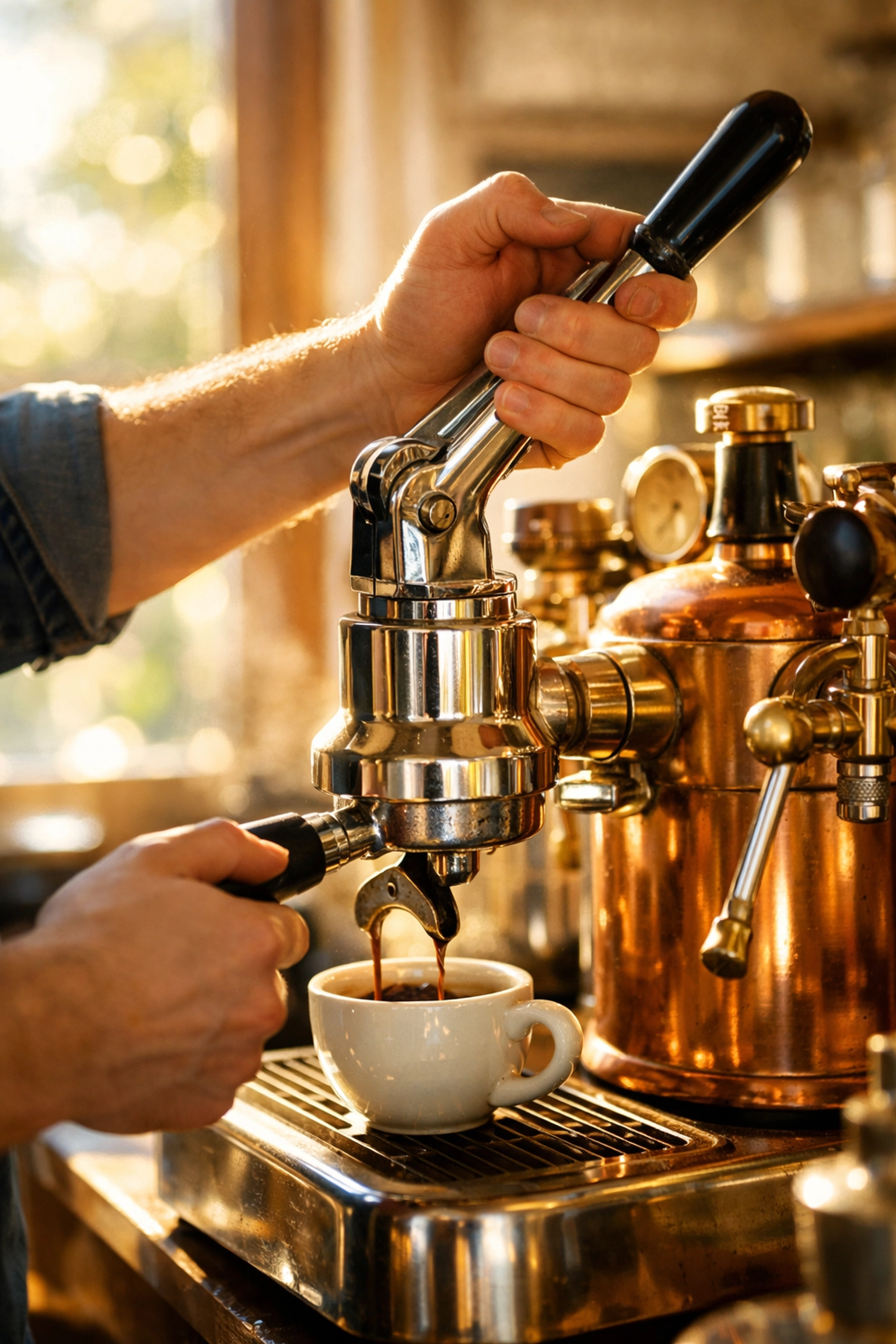
Manual/Lever Machines offer maximum control over every aspect of extraction. They're beautiful, tactile, and give skilled baristas the ability to fine-tune each shot by manipulating pressure throughout the pull. The downside? They require serious training and aren't ideal for high-volume environments where consistency and speed matter most.
Semi-Automatic Machines are the sweet spot for specialty coffee shops with trained baristas. You control when to start and stop the extraction, which means you can adjust on the fly based on what you're seeing in the cup. This is what most independent cafes run, and for good reason.
Automatic (Volumetric) Machines take the guesswork out of shot timing. You programme the exact volume for a single, double, or lungo, and the machine stops automatically. These are brilliant for busy environments where you need consistent results without requiring every team member to be an extraction expert.
Super-Automatic Machines do everything: grinding, tamping, extracting, and even steaming milk. They're ideal for hotels, offices, or high-volume venues where coffee quality matters but you don't have dedicated baristas. The trade-off is less flexibility and a different flavor profile compared to traditional espresso.
Matching Your Machine to Your Business Type
Your business model should drive your equipment choice, not the other way around.
If you're running a small café or bakery where coffee complements food offerings, you'll want something compact with quick heat-up times and straightforward operation. Reliability matters more than bleeding-edge features here.
A high-volume specialty coffee bar needs the big guns: dual boiler systems, multiple groupheads, and volumetric controls that let you maintain quality during the morning rush. You'll also want a machine that gives your baristas enough control to showcase different coffees properly.
Restaurants and hotels often benefit from super-automatic setups with self-cleaning functions and automated milk systems. Your staff can produce decent drinks without extensive training, and maintenance becomes far simpler.
For mobile operations or pop-ups, look at tank-fed machines with lower power requirements. You need portability and flexibility, so a massive plumbed-in three-group beast just won't work.
Boiler Systems: The Heart of Performance
The boiler configuration affects everything: temperature stability, recovery time, and your ability to brew and steam simultaneously.
Heat Exchanger Machines use a large steam boiler with a separate tube running through it to heat brew water. They're cost-effective and powerful, making them popular in traditional Italian cafes. The challenge is maintaining consistent brew temperature, especially with light-roast specialty coffee. You might need to do a "cooling flush" before pulling shots to get the temperature just right.
Dual Boiler Machines are the standard for specialty coffee. Two separate boilers mean one is dedicated purely to brewing while the other handles steam. This gives you incredible temperature stability and the ability to pull shots and steam milk simultaneously without any compromise.
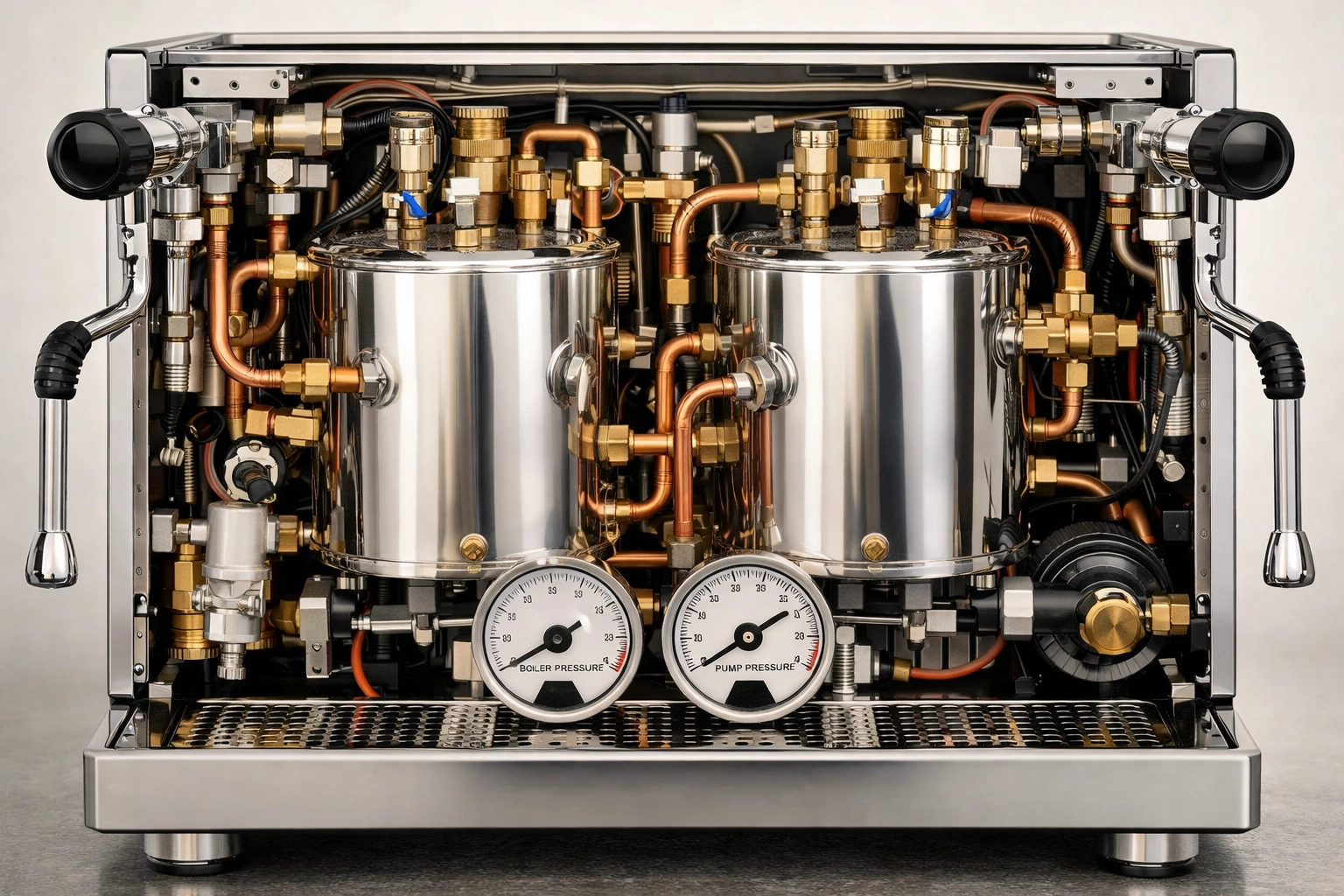
For specialty roasters and third-wave shops showcasing delicate, light-roast coffees, dual boilers are basically non-negotiable. The precise temperature control makes a massive difference in extraction quality.
Grouphead Configuration
How many groupheads do you actually need?
Single Group Machines work well for lower-volume locations, as a secondary machine for decaf or single-origin espresso, or in restaurants where coffee isn't the primary focus. They're also significantly more affordable and take up less counter space.
Two-Group Machines are the workhorse of the industry. This configuration handles steady morning rushes with one or two baristas comfortably. It's the most common setup in independent coffee shops for good reason: it offers the right balance of capacity and footprint.
Three-Group and Beyond are for serious high-volume operations. If you're consistently pulling shots across multiple groupheads simultaneously during rush periods, you need this. Otherwise, you're paying for capacity you don't use and taking up valuable counter real estate.
Key Features Worth Considering
Beyond the basics, several features can significantly impact your daily operation:
PID Temperature Control is like cruise control for your brew temperature. It maintains incredibly precise temperature settings, which is crucial for consistency. For specialty coffee focused on showcasing origin characteristics, this isn't optional: it's essential.
Volumetric Controls let you programme shot volumes with precision. Press a button, and you get exactly 36g out every single time. This consistency is invaluable during busy periods when your attention is split between multiple tasks.
Pre-Infusion gently saturates the coffee puck before applying full pressure. This helps with even extraction and can significantly improve shot quality, particularly with lighter roasts that benefit from a more gradual extraction.
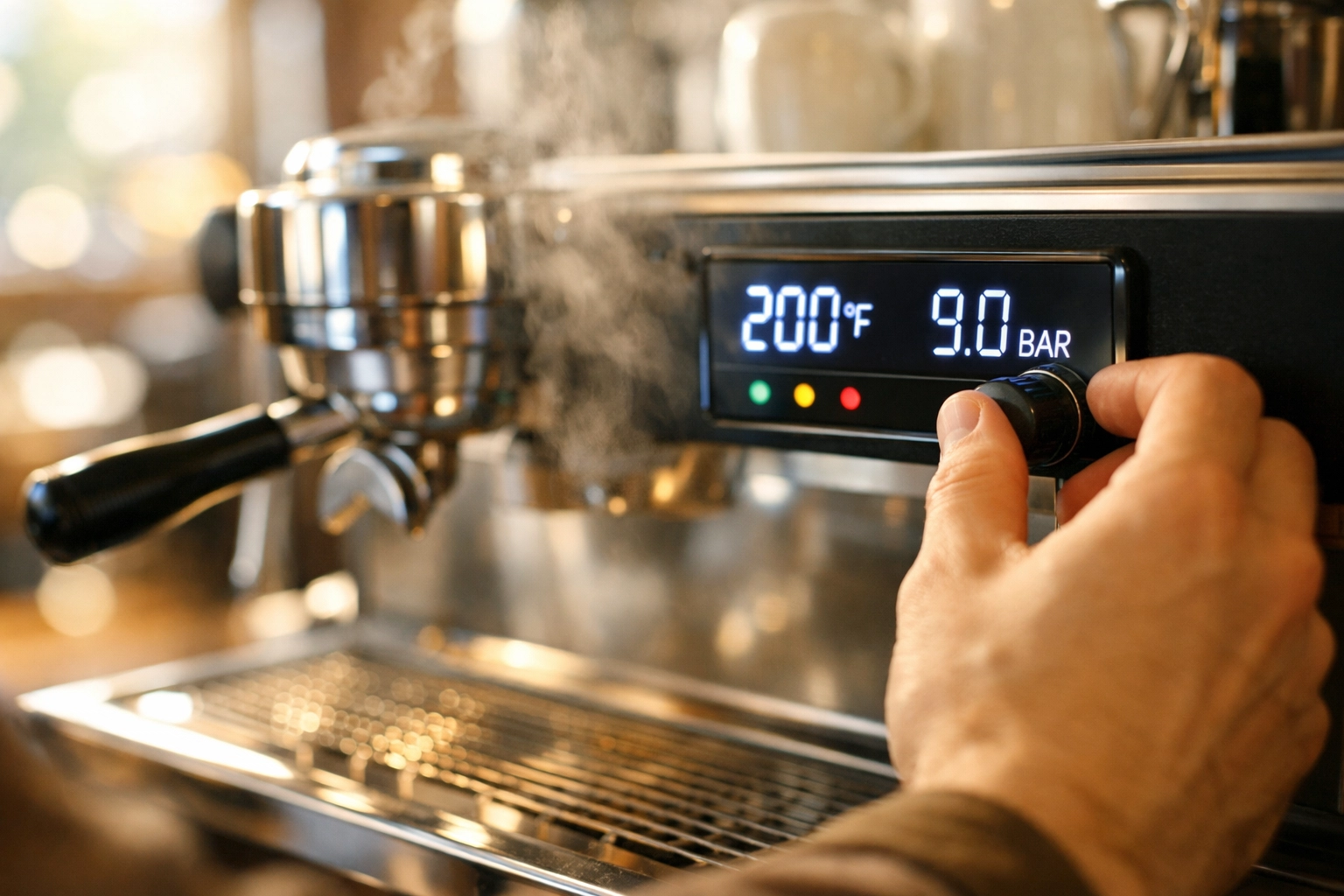
Independent Boilers Per Group (found on high-end machines) give each grouphead its own temperature control. This means you can have one group set at 93°C for your main espresso blend and another at 96°C for a light-roast Ethiopian single origin.
Ease of Maintenance might not seem exciting, but it matters enormously over time. Can you easily access components for cleaning and repairs? Are parts readily available? Downtime costs you money, so factor this into your decision.
Top Recommendations by Category
For high-end specialty shops, the La Marzocco Strada MP remains the industry benchmark. Individual boilers per group, manual paddle control over pressure, and periscope pressure gauges give you complete control over extraction. It's what you'll find in World Barista Championship competitions for good reason.
The Nuova Simonelli Appia Life offers excellent value for small to medium cafes. It's compact, reliable, and features dual steam wands with volumetric controls. The heat-up time is impressively quick, and maintenance is straightforward.
For those wanting super-automatic reliability with decent quality, the Franke A-series machines are worth exploring. They're workhorses in hotel and corporate environments, delivering consistent results with minimal intervention.
If budget is tight but you still want dual boilers and volumetric control, the Rancilio Classe 5 USB offers impressive features at a more accessible price point. It's a solid workhorse that punches above its weight.
Beyond the Machine: Training and Support Matter
Here's something that often gets overlooked: the machine is only as good as the person operating it.
At Limini Coffee, we don't just roast exceptional beans; we also supply top-tier equipment and provide comprehensive training to help you get the most from your investment. Whether you're installing your first machine or upgrading to a multi-group setup, proper barista training makes an enormous difference to your output quality and efficiency.
We work with coffee shops to match equipment to their specific needs, space constraints, and skill levels. We've seen too many businesses buy the wrong machine (usually overbuying based on aspirational volume rather than realistic needs) and struggle with the complexity or running costs. You can explore our full range of commercial espresso equipment and speak with our team about what makes sense for your operation.
Our training programmes cover everything from basic espresso extraction to advanced workflow optimization. Many shops find that proper training delivers as much improvement as upgrading equipment.
Making Your Decision
Start by honestly assessing your volume, skill level, and growth projections. Are you serving 50 drinks a day or 500? Do you have trained baristas or a rotating staff with minimal coffee experience?
Consider your space constraints and power requirements. A three-group machine might seem ideal until you realize your electrical setup can't support it without costly upgrades.
Think about ongoing costs: maintenance, repairs, and energy consumption all add up over time. Sometimes a slightly more expensive machine with better reliability and lower running costs makes more financial sense.
And remember, your machine should complement your coffee, not compensate for it. Great equipment amplifies great beans but can't rescue poor-quality coffee.
If you're ready to explore equipment options or need guidance on choosing the right setup for your business, check out our equipment range and wholesale offerings. We're here to help you make the right choice for your business, backed by ongoing support and training to ensure you're getting the absolute most from your investment.