Walk into any specialty coffee shop and you'll be faced with a decision: light, medium, or dark roast? And if you're like most home coffee drinkers, you might wonder if it actually matters, or if it's just marketing speak.
Here's the thing: roast level dramatically changes everything about your coffee. We're talking flavor, acidity, body, even caffeine content. Understanding the differences helps you choose beans that'll actually taste great in your favorite brewing method.
So let's break down the roast spectrum and help you figure out which roast deserves a permanent spot in your kitchen.
What Actually Happens During Roasting?
Before we dive into the specifics, it's worth understanding what roasting does to a coffee bean.
Green coffee beans (yes, they start green) are dense, grassy-smelling little things with none of the characteristics we associate with coffee. Roasting applies heat over time, triggering chemical reactions that develop the flavors, aromas, and colors we recognize.
The roasting process has key milestones. The "first crack" happens around 385–410°F (196–210°C), you'll literally hear the beans crack as moisture escapes and they expand. Keep roasting past this point, and you'll eventually hit the "second crack" around 435–450°F (224–232°C), where the bean structure breaks down further and oils migrate to the surface.
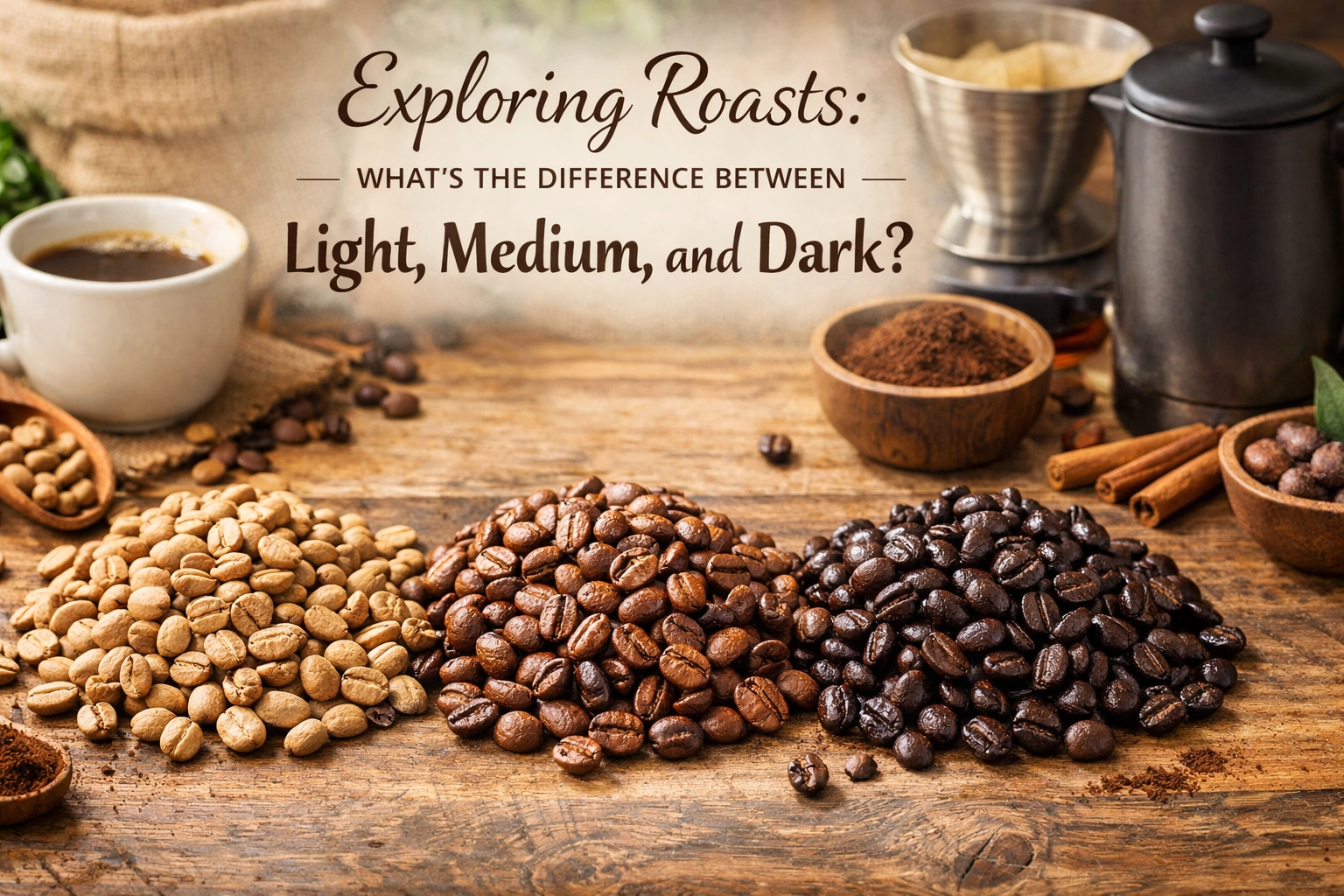
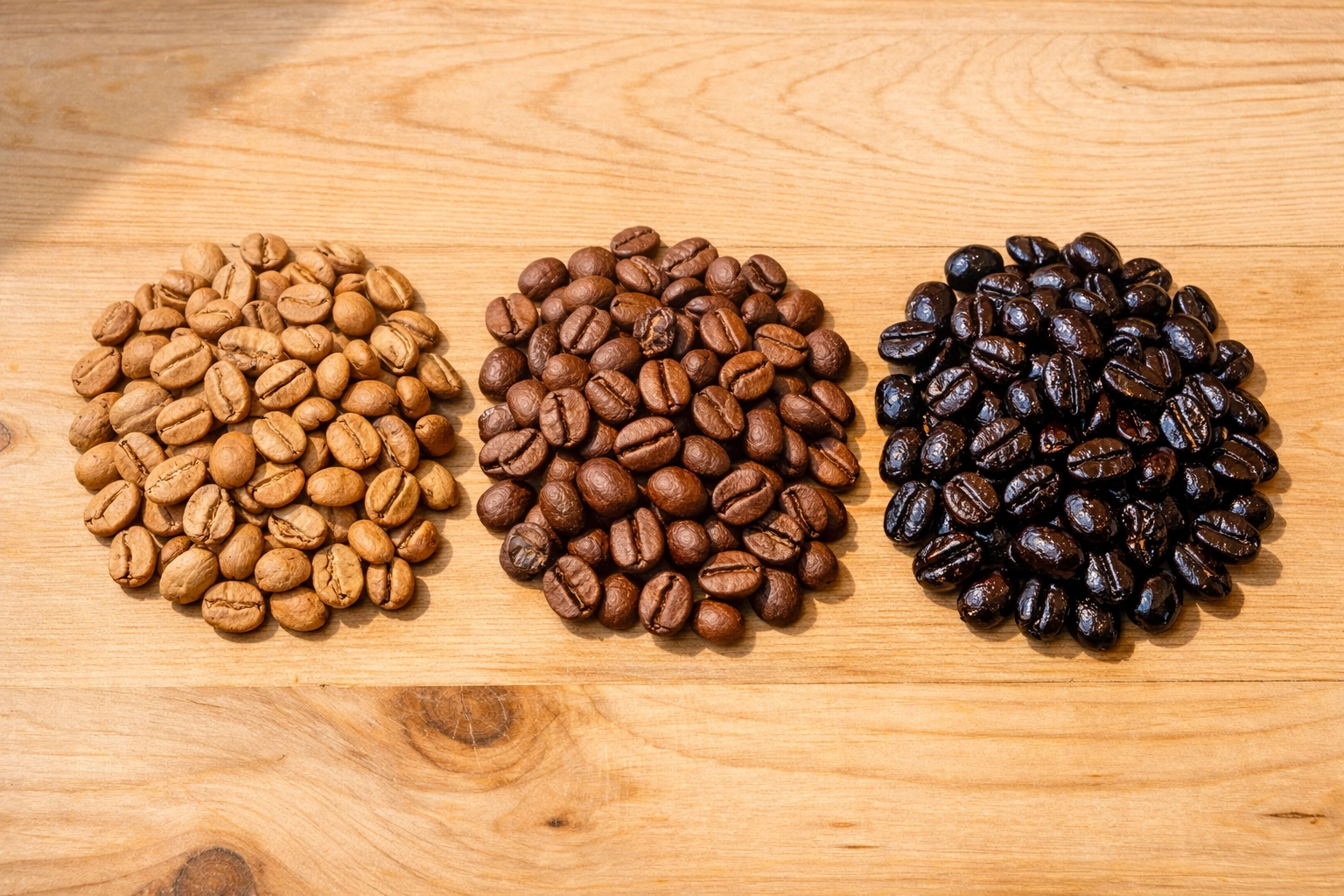
Light roasts stop at or just after first crack. Medium roasts go a bit further. Dark roasts push through to or past second crack.
This matters because the longer beans roast, the more the origin characteristics cook out, replaced by flavors created by the roasting process itself.
Light Roasts: Bright, Complex, and Origin-Forward
Light roasts are where you taste the coffee's origin most clearly.
These beans are light brown, dry to the touch (no surface oils), and stop roasting shortly after first crack. Because they spend less time at high temperatures, they retain more of the bean's inherent characteristics, the stuff that comes from the soil, climate, processing method, and variety.
What do they taste like?
Light roasts tend to be bright and acidic (in a good way, think wine-like or citrusy, not sour). You'll pick up floral notes, fruity flavors, and complex layers that change as the coffee cools. Ethiopian light roasts might taste like blueberries and jasmine. Kenyan ones often have blackcurrant and tomato notes. Colombian beans might give you citrus and stone fruit.
They're delicate, nuanced, and honestly a bit polarizing. Some people find them too acidic or tea-like. Others (ourselves included) love how they showcase what makes each origin unique.
Best brewing methods:
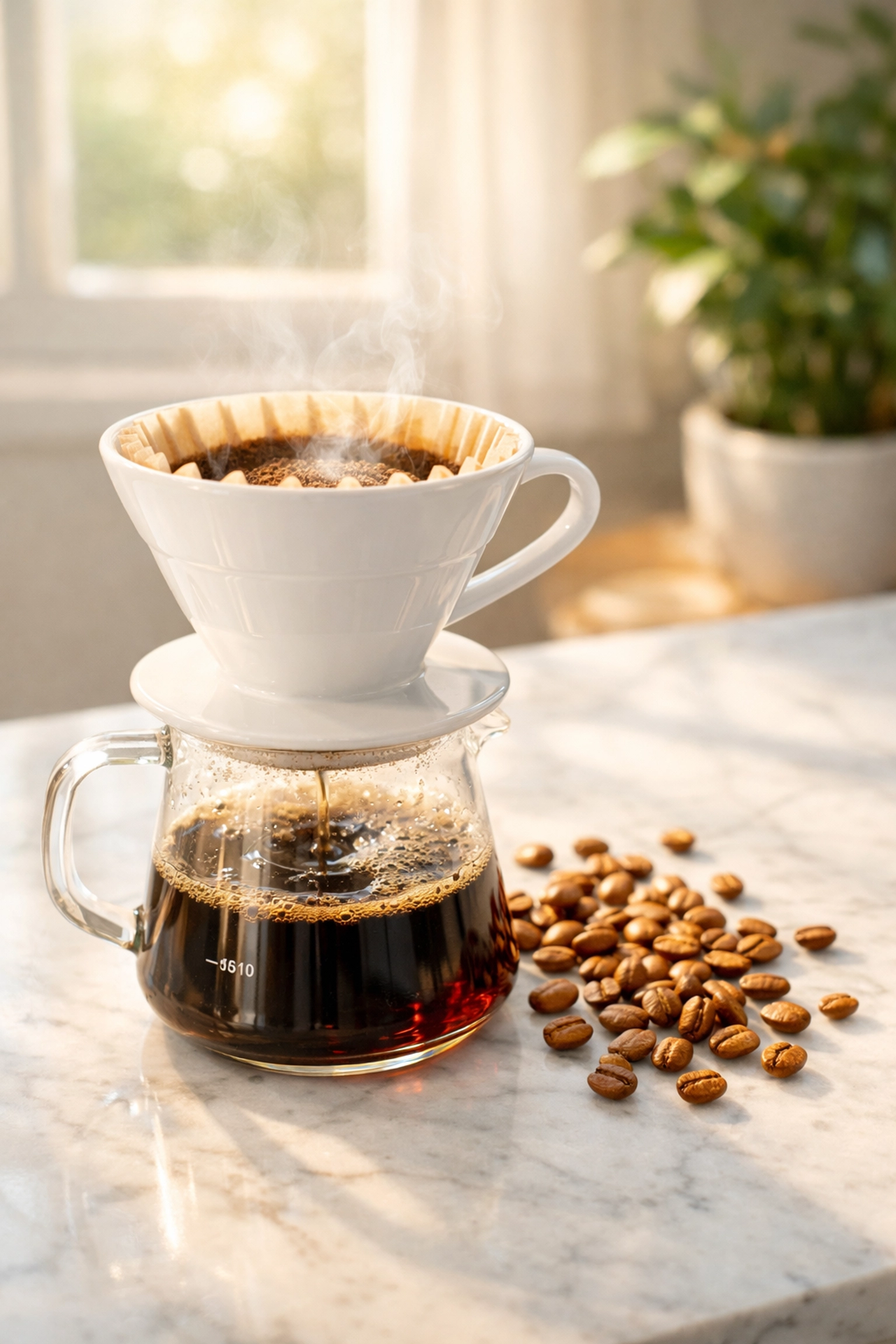
Light roasts shine in clean, filtration-based methods like pour-over (V60, Chemex), Aeropress, or drip coffee makers. These methods highlight clarity and let those complex flavors come through without getting muddy.
They can work in espresso, but you need to dial in your extraction carefully, too fast and they'll taste sour and underwhelming.
Medium Roasts: The Balanced Sweet Spot
Medium roasts are the crowd-pleasers, and for good reason.
These beans are medium brown with a balanced flavor profile that sits between the brightness of light roasts and the boldness of dark roasts. They're roasted beyond first crack but stop well before second crack. You might see slight oil on the surface, but they're not fully glossy.
What do they taste like?
This is where you get balance. Medium roasts retain some origin characteristics, you can still taste where the coffee came from, but they've also developed sweetness and body from the roasting process. Think caramel, milk chocolate, nuts, and balanced acidity.
They're approachable without being boring. A medium roast Brazilian might give you chocolate and hazelnut notes. A medium roast Guatemalan could offer brown sugar and orange zest.
We find that medium roasts work brilliantly when you want something flavorful but not challenging. They're also fantastic when you're adding milk, as they have enough presence to come through without overwhelming.
Best brewing methods:
Medium roasts are versatile. They work well in almost anything, French press, drip, cold brew, Aeropress, or espresso. If you're making milk-based drinks at home, medium roasts are often your best bet.
Dark Roasts: Bold, Smoky, and Full-Bodied
Dark roasts are the deepest end of the spectrum.
These beans are dark brown to nearly black, with a shiny, oily surface. They're roasted well past second crack, sometimes to the point where the bean structure is quite fragile. The trade-off? You lose most of the origin character, but you gain intense roasted flavors.
What do they taste like?
Dark roasts are bold and heavy-bodied. You'll taste roasted, smoky, and sometimes charred notes. Think dark chocolate, caramelized sugar, molasses, roasted nuts, and tobacco. The acidity is low, almost none, really, replaced by a rich, thick mouthfeel.
Some dark roasts can taste bitter or burnt if pushed too far, which is why quality matters here. A well-executed dark roast should be rich and satisfying, not ashy.
Best brewing methods:
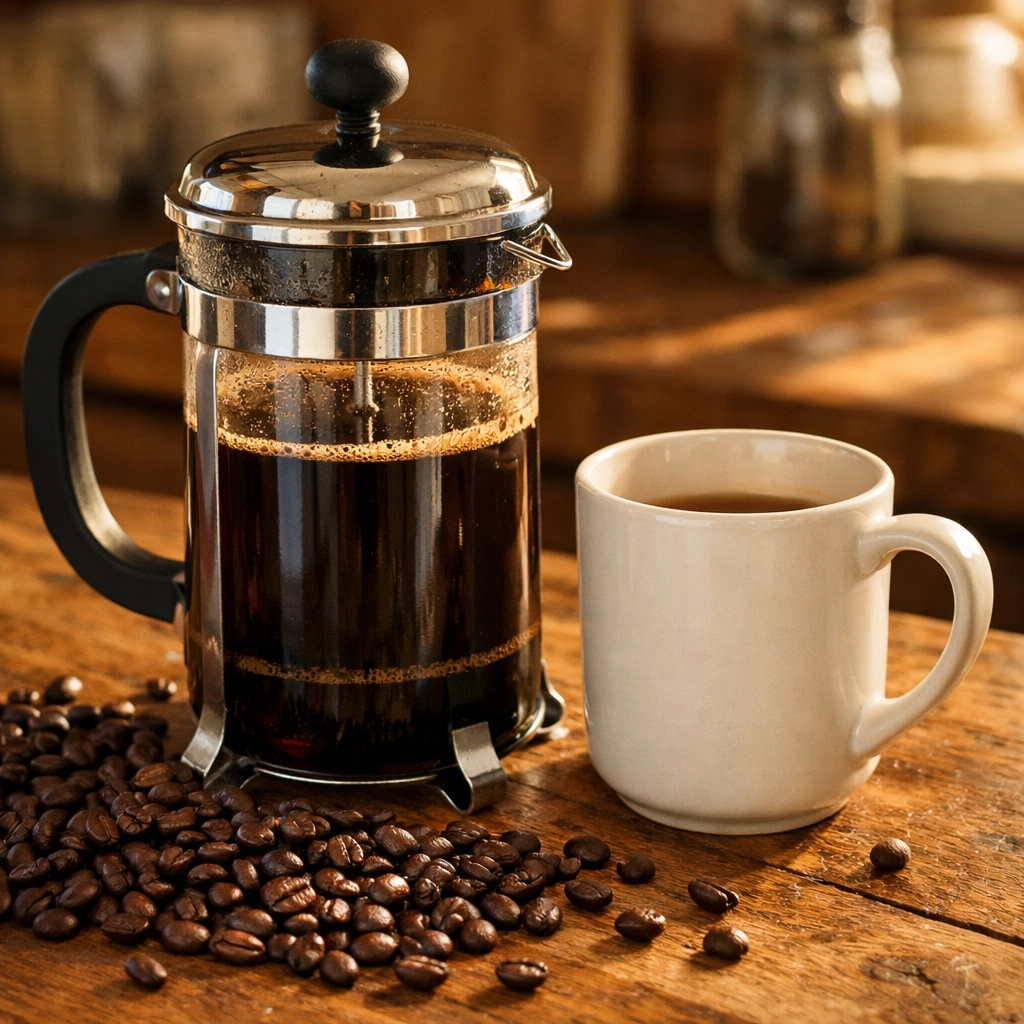
Dark roasts work beautifully in espresso machines, especially when you're making lattes, cappuccinos, or flat whites. The bold flavors cut through milk without disappearing. They're also excellent in French press, where the full body and low acidity create a satisfying, robust cup.
They're less ideal for pour-over or light-touch methods, as there's less nuance to showcase, but if you love bold coffee, go for it.
Matching Roasts to Your Brewing Method
Let's get practical. Here's a quick guide to help you choose:
Pour-over (V60, Chemex, Kalita): Light to medium roasts work best. These methods highlight clarity and complexity, which is exactly what lighter roasts offer.
French Press: Medium to dark roasts are ideal. The immersion brewing creates a full-bodied cup that complements the richness of darker roasts.
Espresso: All roasts can work, but medium to dark are traditional. If you're making milk drinks, go darker for more presence. If you're drinking straight espresso and want complexity, try medium or even light (just expect to tweak your grind and timing).
Cold Brew: Medium roasts are brilliant here. They give you sweetness and body without the bitterness that dark roasts can sometimes develop in long, cold extractions.
Drip/Filter Machine: Medium roasts are the safe bet, but honestly, anything works depending on your preference.
The Caffeine Myth: Light vs. Dark
Here's something that surprises most people: light roasts actually contain slightly more caffeine than dark roasts.
Why? Because caffeine breaks down at high temperatures over time. Light roasts spend less time roasting at lower temperatures, so they retain marginally more caffeine. Dark roasts cook longer at higher heat, losing a tiny bit of caffeine in the process.
That said, the difference is minimal, we're talking maybe 5-10% at most. You're not going to notice a massive energy difference between a cup of light and dark roast.
However, darker roasts are more soluble, meaning their caffeine extracts more easily into your cup. So in practical terms, the caffeine content in your actual brewed coffee depends more on your brewing method, water temperature, and contact time than roast level.
Basically, don't choose your roast based on caffeine content. Choose it based on flavor.
How to Start Exploring (And What We Recommend)
If you've only ever drunk one type of roast, we'd encourage you to explore the spectrum.
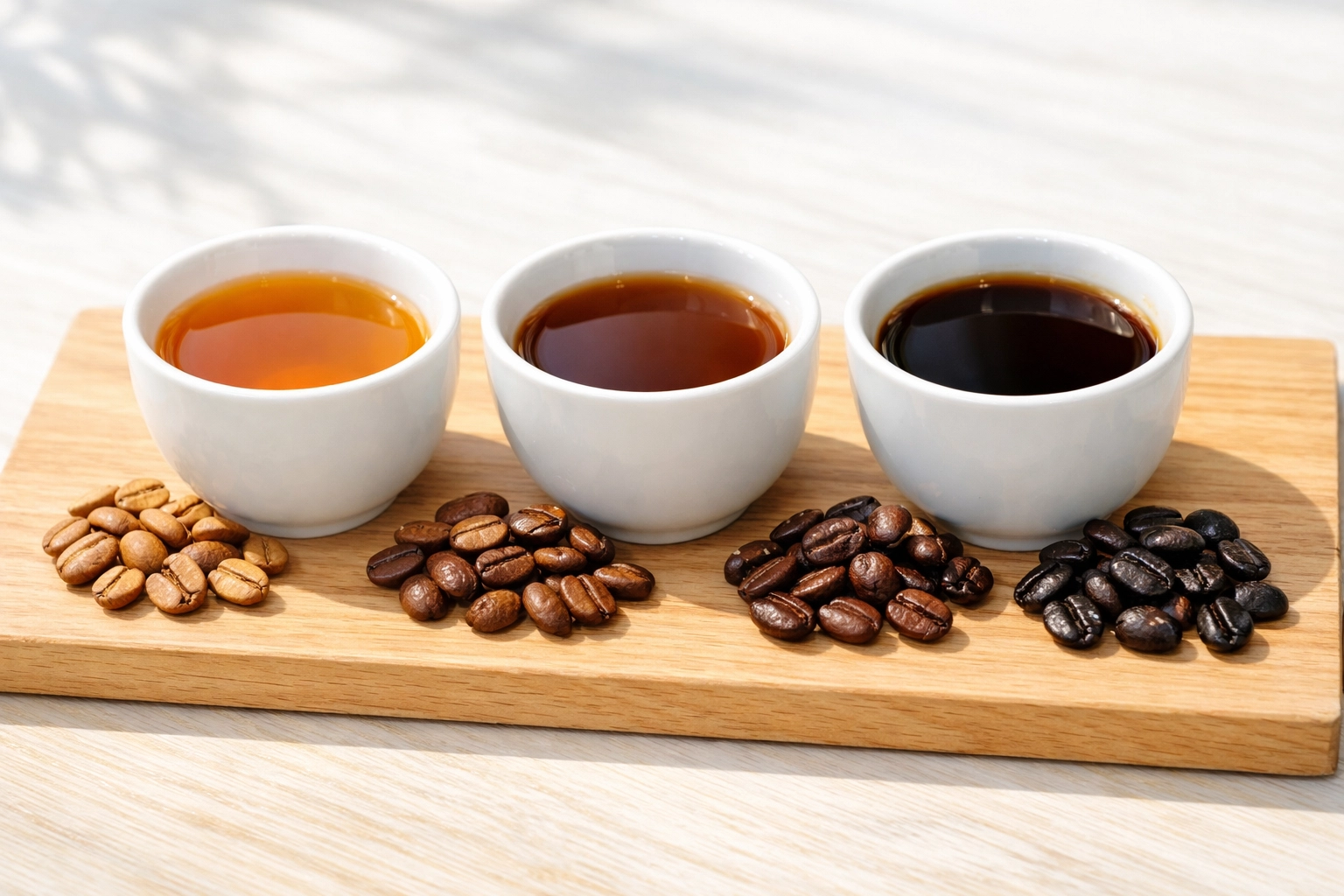
Start by trying the same origin at different roast levels. Grab a light, medium, and dark roast of, say, Colombian coffee. Brew them identically and taste them side by side. You'll immediately understand how roasting transforms the same bean into entirely different experiences.
Or go the other direction: pick your favorite roast level and try different origins. A light roast Ethiopian will taste completely different from a light roast Brazilian, even though they're both light.
At Limini Coffee, we roast across the spectrum because we believe every roast level has its place. We've got bright, fruity light roasts for your weekend pour-overs, balanced medium roasts for your daily drip, and rich dark roasts for your morning espresso.
The beauty of specialty coffee is that there's no "right" answer: just what tastes good to you in your cup, in your kitchen, with your brewing method.
Find Your Roast
So, which roast should you choose?
If you love complexity, brightness, and tasting the origin's unique characteristics: go light.
If you want balance, approachability, and something that works everywhere: go medium.
If you crave boldness, richness, and a heavy body that stands up to milk: go dark.
Or better yet, keep all three on rotation. Your taste preferences change with mood, season, and brewing method. We certainly do.
Ready to explore the full roast spectrum? Head over to Limini Coffee and find your next favorite. Whether you're team light, team dark, or somewhere in between, we've roasted something you'll love.
Happy brewing.