So, you’ve decided to take the plunge into the world of home brewing. Welcome to the club! We think it’s one of the most rewarding hobbies you can pick up. There is something truly special about waking up, weighing out your beans, and crafting a cup of coffee that rivals (or honestly, beats) what you’d find in most high-street shops.
But we know it can be a bit overwhelming at first. Between the jargon, the endless gadgets, and the conflicting advice on the internet, where do you even start? Don't worry, we’ve got your back. At Limini Coffee, we live and breathe speciality beans, and we want to help you get the absolute best out of them.
Whether you are looking for fresh roasted coffee beans or trying to figure out which brewer fits your lifestyle, this guide is designed to take you from "confused" to "connoisseur."
The Golden Rule: It All Starts with the Bean
We can give you the most expensive espresso machine in the world, but if you’re using old, oily, supermarket beans, your coffee is going to taste… well, mediocre.
Speciality coffee is different. It’s about quality, traceability, and fresh roasting. When we talk about sourcing our coffee, we’re looking for unique flavour profiles that reflect the soil and climate where they were grown. This is what we call "Single Origin" coffee.
Why fresh is best:
Coffee is a perishable product. Once it’s roasted, it begins to degas (release carbon dioxide) and oxidize. We believe the "sweet spot" for most coffees is between 7 to 21 days after roasting. If you use beans that have been sitting on a shelf for six months, you’ve lost all those vibrant fruity or chocolatey notes that make speciality coffee so exciting.
If you’re looking to level up your bean game, you can check out our latest seasonal roasts at Limini Coffee.
The Essential Toolkit: What You Actually Need
You don’t need to spend thousands of pounds to make great coffee at home, but you do need the right tools. Think of it like cooking: you can’t bake a perfect soufflé without a whisk and a timer.
1. The Grinder (The Most Important Investment)
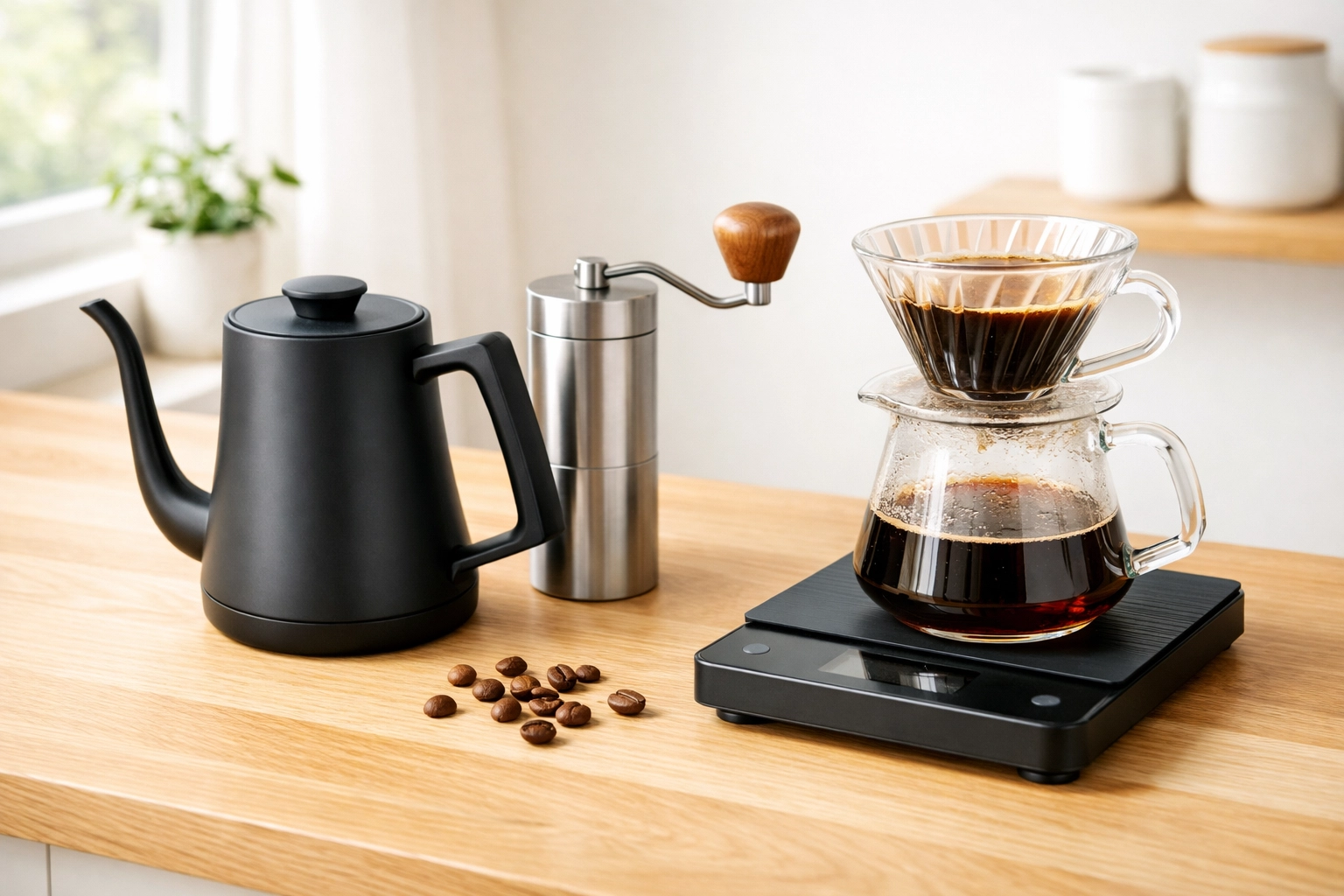
If you only buy one piece of gear this year, make it a decent burr grinder. We cannot stress this enough. Blade grinders (the ones that look like little blenders) chop the coffee into uneven shards. This means some bits are tiny dust (which over-extracts and tastes bitter) and some are big chunks (which under-extract and taste sour).
A burr grinder crushes the beans to a uniform size. Consistency is the secret to a balanced cup.
2. Digital Scales
Measuring coffee with a "scoop" is like measuring flour for a cake with your hands, it’s never the same twice. Coffee beans vary in density. A scoop of a dark roast weighs much less than a scoop of a light roast. By using a scale, you ensure that your coffee brewing ratio is spot on every single time.
3. A Gooseneck Kettle (For Pour-Over Lovers)
If you’re into V60s or Chemex brewing, a gooseneck kettle gives you the precision you need to saturate the grounds evenly. If you just dump boiling water from a standard kettle, you’ll create "channels" where water bypasses the coffee entirely.
The Four Pillars of a Great Brew
Once you have your gear and your Limini Coffee beans, it’s time to talk about the science. Don't worry, we won't get too technical, but understanding these four variables will help you "dial in" your brew.
1. The Ratio
This is the relationship between how much coffee you use and how much water you use. A standard starting point is 60g of coffee per 1 litre of water (or a 1:16 ratio). If your coffee feels too thin or weak, use more coffee. If it’s too intense, use more water. It’s that simple.
2. Grind Size
Think of grind size like rocks vs. sand. Water flows through rocks very quickly but takes a long time to seep through sand.
- Coarse (Rock Salt): Best for French Press or Cold Brew.
- Medium (Table Salt): Best for V60 or Drip coffee.
- Fine (Powder): Essential for Espresso.
3. Water Temperature
Please, don't use boiling water (100 ºC / 212 ºF). It can scorch the coffee and bring out unpleasant bitterness. We generally recommend a range between 88 ºC and 95 ºC (190 ºF to 203 ºF). If you’re brewing a lighter roast, you can go a bit hotter to help extraction. For darker roasts, drop the temp a bit.
4. Contact Time
This is how long the water is actually touching the coffee. If the water stays in contact for too long, you’ll get over-extracted, bitter coffee. Too short, and it’ll be sour and watery.
Choosing Your Method: Which One Is For You?
There is no "best" way to make coffee, only the way that you enjoy the most. Here’s a breakdown of the most popular home brewing methods.
The Cafetiere (French Press)
The old reliable. It’s an immersion method, meaning the coffee sits in the water for the whole duration of the brew. This produces a heavy-bodied, textured cup. It’s perfect for those who like a classic, "coffee-flavoured" coffee.
- Pros: Easy to use, no paper filters needed.
- Cons: Can be a bit sediment-heavy.
The V60 (Pour-Over)
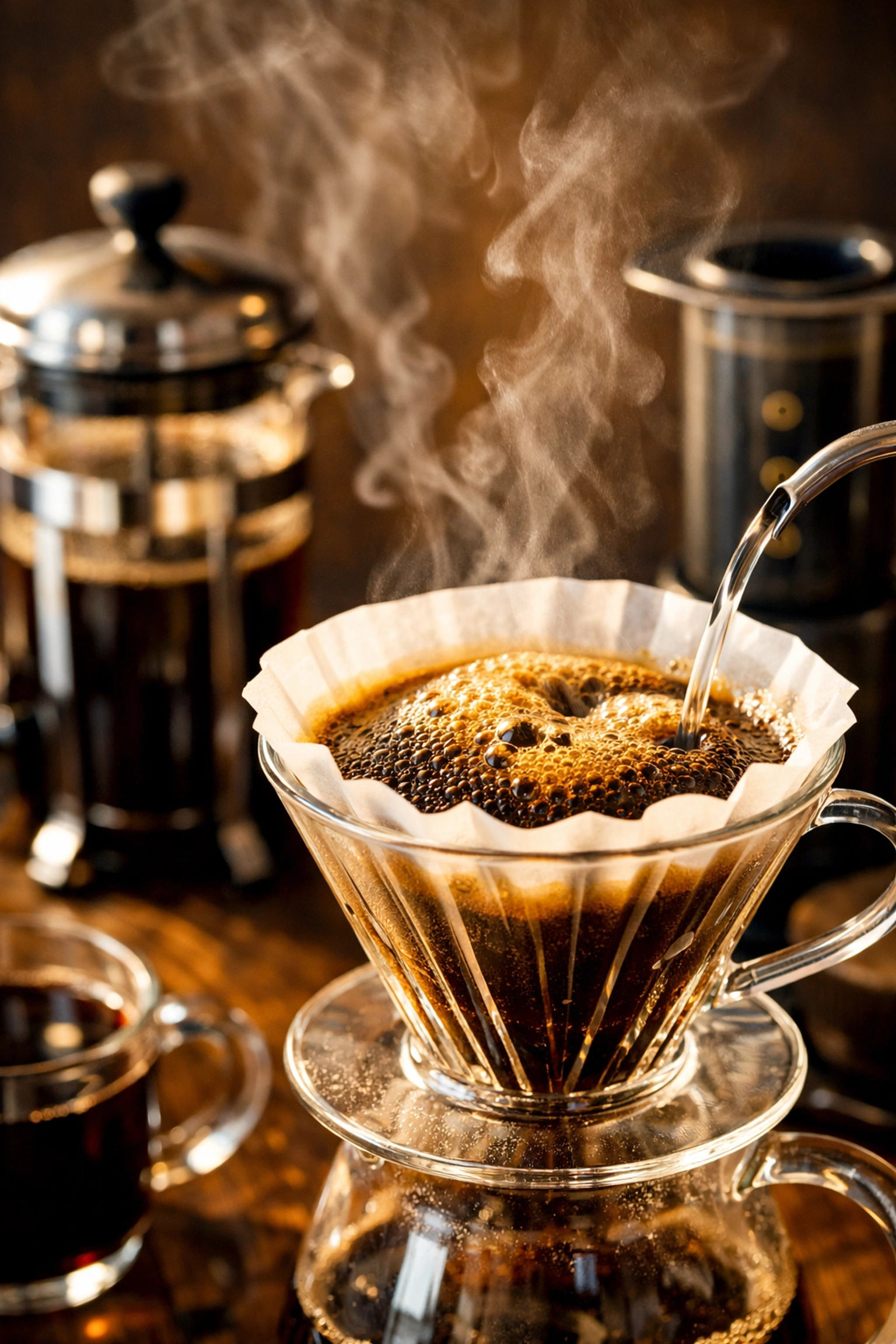
This is for the purists. Because it uses a paper filter, it removes the oils and "fines," resulting in a very clean, bright, and tea-like cup. It’s the best way to taste the delicate notes in a single origin coffee.
- Pros: Highlights complex flavours.
- Cons: Requires a bit of technique and a steady hand.
The Aeropress
The ultimate travel companion. It’s almost indestructible and incredibly versatile. You can make anything from a concentrated, espresso-style shot to a standard filter brew. It’s also very forgiving of mistakes.
- Pros: Fast, easy to clean, nearly impossible to break.
- Cons: Only makes one cup at a time.
Home Espresso
Now, this is the big leagues. Espresso is a completely different beast. It requires 9 BAR of pressure and very precise puck preparation. If you’re thinking about going down this rabbit hole, we recommend reading our guide on choosing espresso equipment. You’ll also need to master tamping and understand what makes a good crema.
Troubleshooting Your Brew: The "Compass"
Is your coffee not tasting quite right? Don't pour it down the sink just yet! Use this quick guide to fix your next brew:
- If it tastes Sour, Salty, or Weak: Your coffee is Under-extracted. This means you didn't take enough flavour out of the beans. Next time, try a finer grind, hotter water, or a longer brew time.
- If it tastes Bitter, Ashy, or Dry: Your coffee is Over-extracted. You took too much out. Next time, try a coarser grind, slightly cooler water, or a shorter brew time.
- If it tastes "Muddy" or Muffled: Your grinder might be producing too many fines, or your water quality might be poor. Try using filtered water! Since coffee is 98% water, the stuff coming out of your tap can have a huge impact on the final taste.
Why We Love What We Do
At the end of the day, home brewing is a journey. You’ll have days where you make the best cup of your life, and days where it’s just… okay. And that’s fine! That’s the beauty of coffee :).
We’ve spent years exploring different origins and roasting profiles because we believe everyone deserves a better cup of coffee. Whether you are a wholesale partner or a home enthusiast, we treat every bag of beans with the same level of care.
If you ever feel stuck, or if you want to dive even deeper into the craft, we offer coffee barista training for all levels. We love meeting people who are as passionate about the bean as we are.
So, go ahead: grab some fresh beans, fire up the kettle, and start experimenting. Your perfect cup is waiting.
Ready to start your brewing journey?
Explore our range of speciality coffees and equipment at Limini Coffee. From chocolatey Brazilian blends to zesty Ethiopian single origins, we’ve got something for every palate. Happy brewing!