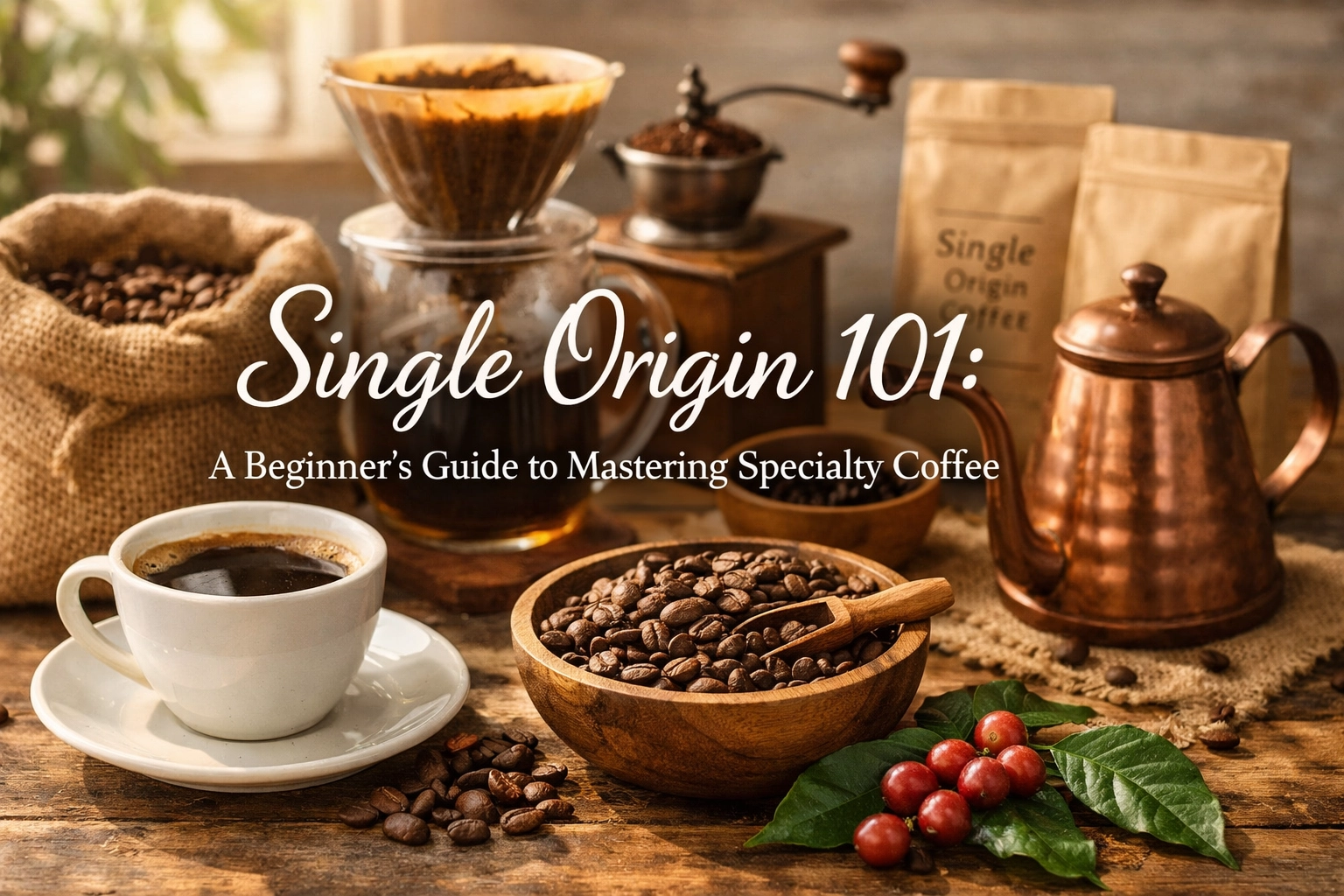
So… what actually counts as single origin, and why does it sometimes taste like blueberries, jasmine, or chocolate mousse even though it’s, you know, coffee?
If you’re buying fresh beans for home and you want to level up (without turning your kitchen into a lab), this is your playbook. We’ll cover what “single origin” means, how it differs from blends, how to read a bag like you know what you’re doing, and how to dial it in for espresso and filter without wasting half the bag.
And yep, if you want to browse fresh roasts and gear as you read, here’s the Limini Coffee link we use: https://www.liminicoffee.co.uk/?af=1471531379787
What “single origin” really means… and why it matters
At its core, single-origin coffee means the beans come from one specific geographic source. That could be:
- One country (e.g., “Ethiopia”)
- One region (e.g., “Yirgacheffe”)
- One farm/estate (e.g., “Finca La Esperanza”)
- One tiny lot from a specific plot/harvest (micro-lot)
The point is traceability, you can track it from farm to cup, not just “somewhere in South America.” And for you as a home brewer, that traceability usually signals two things:
- Distinct flavour (it tastes like somewhere)
- Seasonality (it won’t taste identical forever, and that’s the fun)
Single origin is basically coffee with a passport.
Single origin vs blends… which should you choose?
You’ll see both, and both are valid. The trick is knowing what problem you’re trying to solve.
| What you want | Choose | Why |
|---|---|---|
| Big, specific flavours (floral, fruit, funky, winey) | Single origin | You’re tasting terroir (environment + processing) |
| Consistency week to week | Blend | Blends are built to be stable and balanced |
| A “daily driver” espresso with easy dialing-in | Blend (usually) | More forgiving across grinders/machines |
| A new experience every bag | Single origin | Seasonal lots keep it interesting |
| To learn coffee fast | Single origin | It teaches your palate patterns quickly |
We love single origins for filter and “coffee tasting mode,” and blends when we want a no-drama espresso before a busy morning. (No shame. Caffeine first, philosophy later.)
If you want to explore what we’re roasting right now, start here: https://www.liminicoffee.co.uk/?af=1471531379787
The single origin label… decoded (without the fluff)
Ever picked up a bag and thought, “Cool… but what does any of this mean?”
Here’s what matters most, in the order we think you should care:
1) Origin & specificity
- Country/region gives you broad expectations (Ethiopia = florals/fruit; Brazil = nutty/chocolatey… generally).
- Farm / washing station / cooperative usually means higher traceability and more deliberate processing.
2) Varietal (plant genetics)
You might see Bourbon, Caturra, Gesha, SL28, Pink Bourbon, etc. This is the type of coffee plant, not the origin.
This means… some varietals naturally lean floral, some lean sweet, some lean bright and citrusy.
3) Processing method
This is how the fruit is removed and the beans are dried. It’s a massive flavour lever.
- Washed: cleaner, brighter, more “transparent” flavours
- Natural: fruit-forward, heavier body, sometimes boozy
- Honey: somewhere in between: sticky sweetness, rounded acidity
- Anaerobic / extended fermentation: intense, funky, sometimes tropical
Processing is where a lot of the “how is this coffee tasting like pineapple?” magic comes from.
4) Altitude
Often shown in masl (metres above sea level). Higher altitude generally = denser beans, slower maturation, often more acidity/complexity.
Not a guarantee. But it’s a useful clue.
5) Roast date (extremely important)
Fresh is best.
We generally like:
- Filter: start around day 5–14 post-roast (it often opens up nicely)
- Espresso: day 7–21 post-roast is a sweet spot for many coffees
If you’re shopping, always prioritise roast date over buzzwords. And if you want genuinely fresh roasted coffee shipped in the UK, that’s the whole point of what we do at Limini: https://www.liminicoffee.co.uk/?af=1471531379787
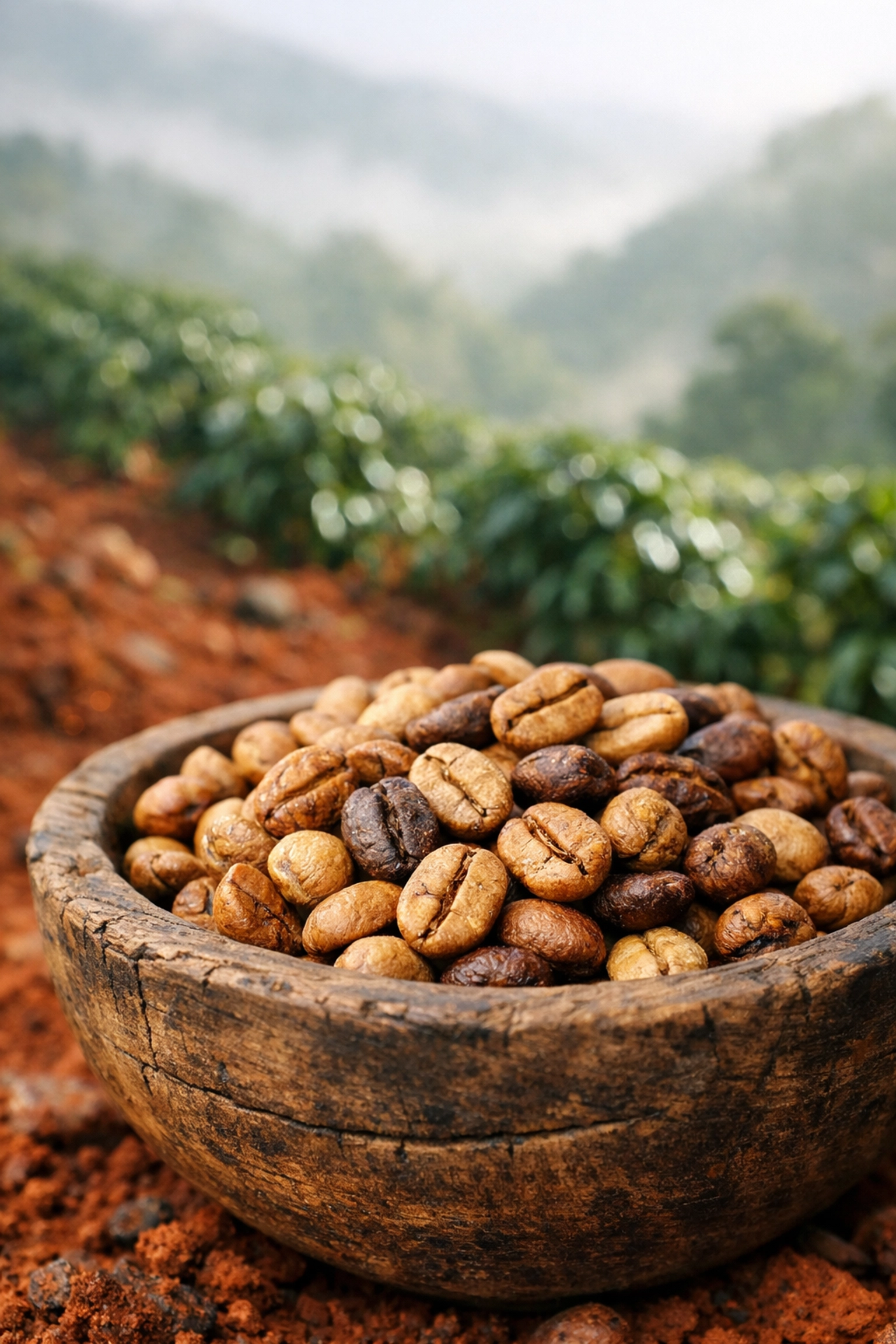
Terroir… the coffee word that’s actually useful
Terroir is basically “why this tastes like this here.”
It’s the combination of:
- soil
- altitude
- climate
- local varieties
- farming practices
- processing culture
So a washed coffee from Ethiopia can feel like tea: bergamot, lemon, jasmine. Meanwhile a natural from Brazil might taste like cocoa, hazelnut, and dried fruit. Different place, different genetics, different process, different result.
Why is this important?
Because once you start connecting origin → processing → flavour, you get way better at buying beans you’ll love (and avoiding ones you’ll regret at 7am).
How to choose your first (or next) single origin
Let’s make this practical. If you’re browsing and you don’t want to overthink, use this simple “flavour compass”:
If you like sweet, chocolatey, low-acid
Try:
- Brazil (natural/pulped natural)
- Colombia (washed, classic profiles)
- Guatemala (washed, cocoa + citrus)
Keywords on the bag: chocolate, caramel, nuts, toffee.
If you like bright, fruity, “wow”
Try:
- Ethiopia (washed = floral/citrus; natural = berry bomb)
- Kenya (blackcurrant, grapefruit, punchy acidity)
- Rwanda/Burundi (tea-like, clean fruit)
Keywords: berry, stone fruit, floral, citrus, juicy.
If you like funky, experimental
Try:
- Anaerobic/fermentation-led lots (often Colombia, Costa Rica, Panama)
- Naturals with tropical notes
Keywords: tropical, boozy, fermented, bubblegum (yes, really).
And if you want a place to start that’s curated for home brewing (not just café service), browse what’s in season here: https://www.liminicoffee.co.uk/?af=1471531379787
Brewing single origin at home… the “don’t mess this up” basics
Single origin rewards precision: but it doesn’t need to be complicated.
The 3 things that matter most
- Grind size (your #1 control)
- Water quality (under-rated, huge)
- Ratio (coffee to water)
If you only improve one thing, make it the grinder. A good grinder turns “nice beans” into “oh wow.”
Quick ratios we actually use
- Filter (V60 / batch / AeroPress): 1:15 to 1:17
- e.g., 20 g coffee → 300 g water (1:15)
- Espresso: 1:1.8 to 1:2.5
- e.g., 18 g in → 36–45 g out
Want to calculate without doing maths in your head? We’ve got you: https://www.liminicoffee.co.uk/coffee_brewing_calculator
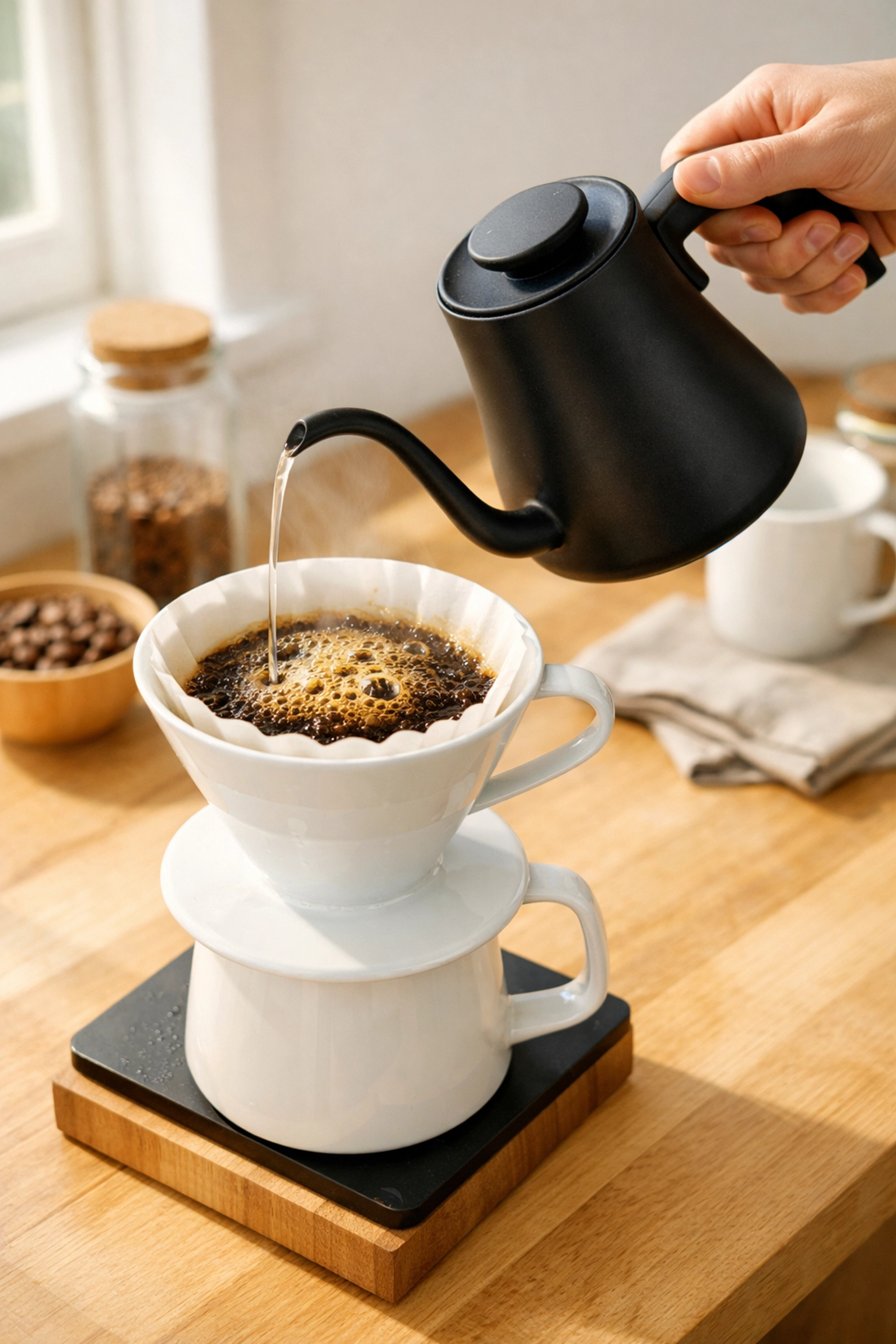
Dialling in for filter… clean, sweet, not sour
Filter is where single origin shines, because you’re not forcing everything through a puck at 9 BAR.
Starting recipe (V60-style):
- Dose: 18 g
- Water: 270 g (1:15)
- Temp: 94 °C / 201 °F (lighter roasts like hotter water)
- Time: 2:30–3:15 total brew time
Taste diagnosis (fast and reliable):
- Sour / thin: grind finer, or raise temp (92 → 95 °C / 198 → 203 °F)
- Bitter / dry: grind coarser, or lower temp (95 → 92 °C / 203 → 198 °F)
- Flat: increase dose slightly or tighten ratio (1:16 → 1:15)
And remember: single origin flavours can be subtle. Don’t chase “stronger.” Chase clearer.
Dialling in for espresso… where single origin gets spicy
Espresso with single origin can be unreal… but it can also punish lazy settings. The problem is that brighter coffees show extraction issues immediately.
A solid starting point:
- Dose: 18 g (in a typical 54–58 mm basket, depending on your setup)
- Yield: 40 g out (1:2.2-ish)
- Time: 26–32 seconds
- Temp: 93–94 °C / 199–201 °F (lighter = hotter, generally)
If it’s sour (common with light roasts):
- grind finer
- increase yield (go from 36 g to 42–45 g)
- increase temp 1–2 °C (2–4 °F)
- consider a longer pre-infusion if your machine allows it
If it’s bitter:
- grind a touch coarser
- reduce yield (pull shorter)
- drop temp 1–2 °C
Puck prep matters here, too. Distribution and tamping errors show up as channeling (water finding cracks and over-extracting parts of the puck). If you want a straight, practical guide, we’ve written one: https://www.liminicoffee.co.uk/article_tamping
And if you’re choosing equipment specifically to make single origins easier (PID stability, good steam, decent pre-infusion), this is worth a read: https://www.liminicoffee.co.uk/choosing_espresso_equipment
“Tasting notes” you’ll actually taste… and how to train your palate
You don’t need to be a Q-grader to taste more. You just need a repeatable method.
Try this 60-second tasting routine
When you sip:
- Aroma: what do you smell before sipping?
- Acidity: is it lemony, apple-like, grape-like?
- Sweetness: honey? caramel? ripe fruit?
- Body: tea-like, silky, syrupy?
- Finish: short and clean, or long and chocolatey?
Basically… you’re building a mental map. Over time you’ll notice patterns like:
- Kenya often hits blackcurrant / grapefruit
- Washed Ethiopia often hits floral / citrus
- Naturals often hit berry / tropical / heavier body
Pro tip: compare two coffees side-by-side using the same recipe. The differences jump out instantly.
Storage & freshness… keep your single origin tasting like it should
Want the easiest win? Don’t let oxygen and heat wreck your coffee.
Do this
- Keep beans sealed, cool, and dry
- Use the bag’s one-way valve, or an airtight container
- Buy amounts you’ll finish in 2–4 weeks after opening
Avoid this
- Storing near the hob (temperature swings)
- Clear jars on sunny countertops (looks cute, tastes stale)
- Freezer in/out daily (condensation is the enemy)
If you do freeze, freeze in small portions and don’t repeatedly thaw/refreeze. One-and-done.
Common beginner mistakes (we’ve all done them)
Buying single origin and expecting it to taste like “strong coffee”
Single origins can be delicate. If you want heavy body and classic “coffee” flavours, choose origins/processes that lean that way (Brazil, Guatemala, washed Colombia).
Grinding too coarse because the coffee is “bright”
Bright isn’t bad. Under-extraction is. If it’s sour, go finer or increase contact time/yield.
Changing five variables at once
Don’t. Change one thing, taste, repeat. Coffee rewards patience (annoyingly).
Using boiling water on dark roasts
For darker roasts, try 88–92 °C / 190–198 °F. Too hot and it turns ashy fast.
Where to go next… a simple path to “we get it now”
If you want to get genuinely good at single origin (without drowning in theory), we’d do it like this:
- Pick one brew method for two weeks (V60 or espresso)
- Buy two different origins roasted in a similar style
- Brew them with the same ratio and water
- Adjust grind until both taste sweet and clear
- Only then start playing with temperature, yield, and agitation
And if you want to explore single origins that are roasted fresh and described in plain English (not just poetic waffle), have a look at what’s currently available at Limini Coffee here: https://www.liminicoffee.co.uk/?af=1471531379787