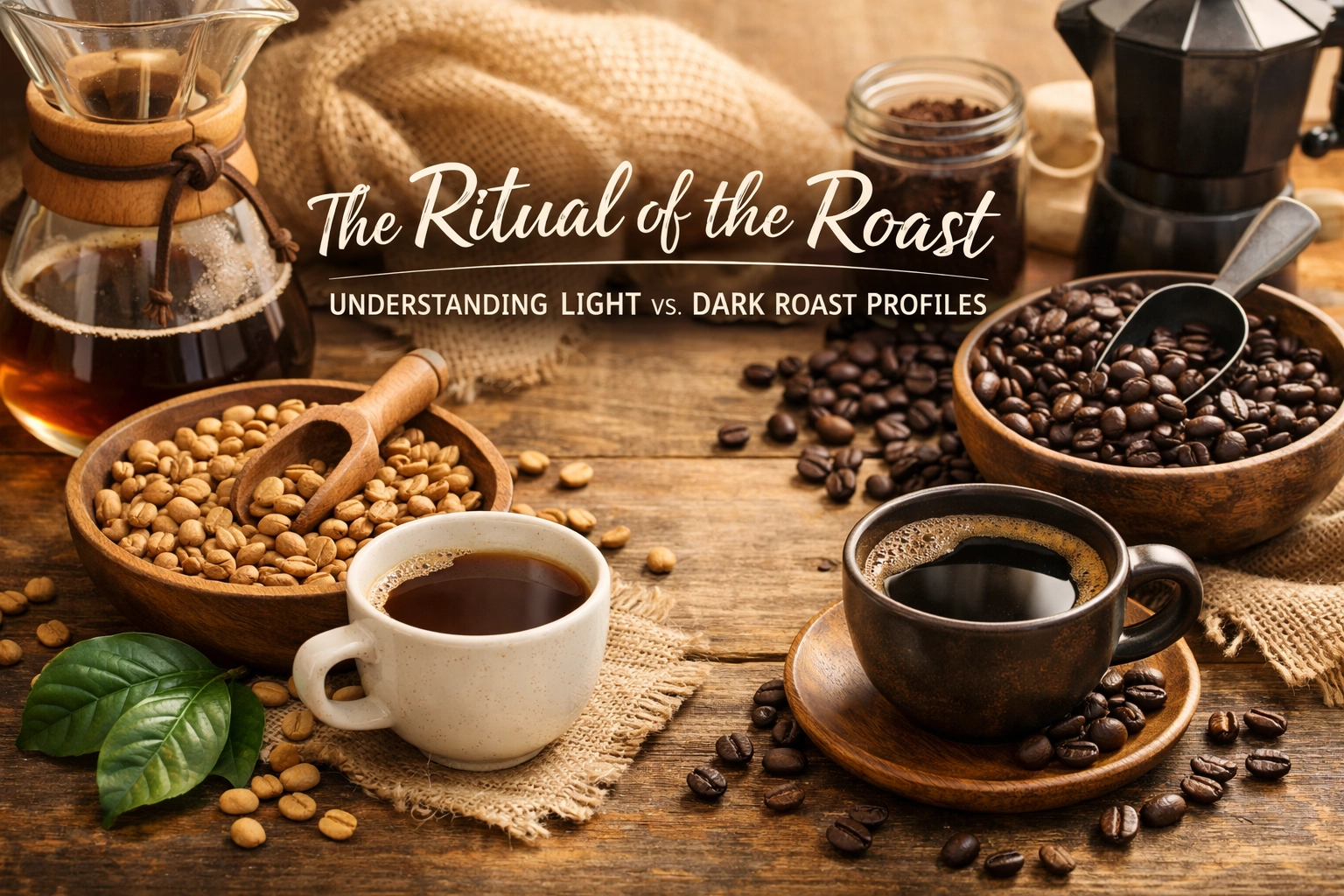
So you're standing in front of a wall of coffee bags, squinting at labels that promise "bright citrus notes" on one side and "rich chocolatey depth" on the other. Light roast, dark roast, medium roast, what's the actual difference, and more importantly, which one belongs in your morning cup?
Let's demystify the roast spectrum. Because once you understand what's happening inside that roaster, choosing your perfect coffee becomes less about guesswork and more about matching your taste buds to the right profile.
What Actually Happens During Roasting?
Before we dive into light versus dark, it's worth understanding what roasting does to a coffee bean. Raw coffee beans (we call them green coffee) are dense, grassy-smelling little pellets that would make a terrible cup of coffee. Roasting transforms these beans through carefully controlled heat, triggering hundreds of chemical reactions that develop the flavors, aromas, and colors we associate with coffee.
The roasting process has distinct audible markers. The first is called, wait for it, the "first crack." This is when the beans have absorbed enough heat that moisture inside turns to steam and escapes with an audible pop. Think popcorn. The second crack happens at higher temperatures when the bean's cellular structure breaks down further.
Where a roaster stops this process determines whether you're getting a light, medium, or dark roast. And that decision? It fundamentally changes everything about your coffee.
Light Roasts: The Origin Storytellers
Light roasts are finished just after that first crack, typically around 356-401°F (180-205°C). The beans are pulled from the heat before the roasting process can dominate the coffee's natural characteristics.
What does this mean for your cup? Light roasts are all about origin transparency. The flavors you're tasting are direct expressions of where and how the coffee was grown, the soil composition, the elevation, the processing method, the specific coffee varietal. You'll often encounter bright acidity, complex fruit notes (think citrus, stone fruits, berries), floral aromatics, and sometimes tea-like or herbal qualities.
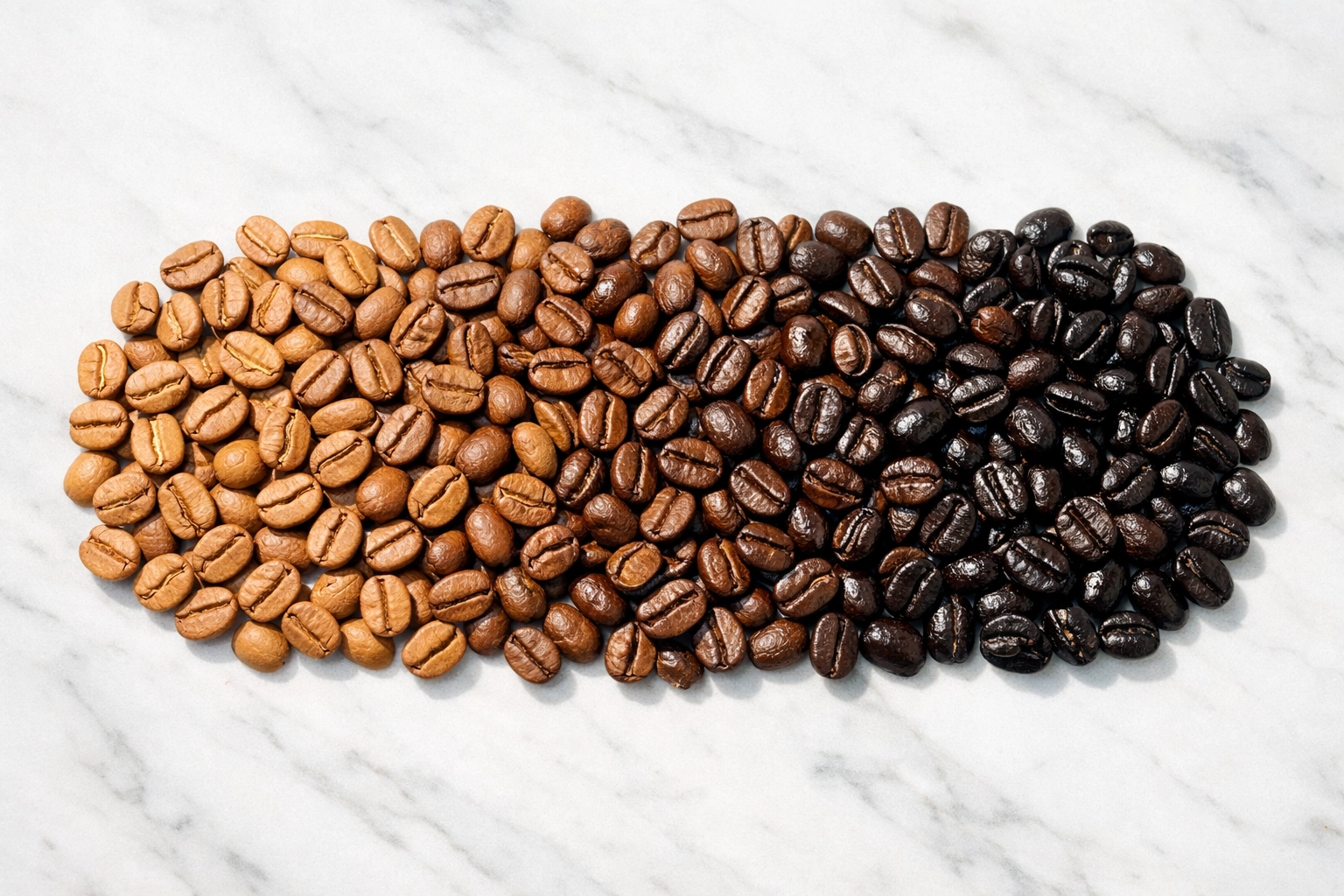
Visually, light roast beans are, well, lighter in color: ranging from cinnamon to light brown. The surface stays dry because the oils haven't been drawn to the surface yet. These beans are also denser and heavier than their darker counterparts because they've retained more moisture.
The body tends to be thinner and more delicate. This isn't a criticism: it's a feature. Light roasts offer clarity and nuance that would get buried under heavier roasting. We love light roasts for single-origin coffees where the terroir tells an interesting story.
Dark Roasts: The Bold Simplifiers
Dark roasts take the heat well past the second crack, typically above 430°F (220°C). At these temperatures, the roasting process itself becomes the dominant flavor creator. The bean's cellular structure breaks down, oils migrate to the surface, and you start developing those robust, straightforward flavors.
What you'll taste in a dark roast: toasted nuts, baker's chocolate, caramel, smoky notes, and earthy depth. The acidity that defined the light roast? Gone. Replaced by a rich, bittersweet character with lower perceived acidity and a fuller, sometimes syrupy body.
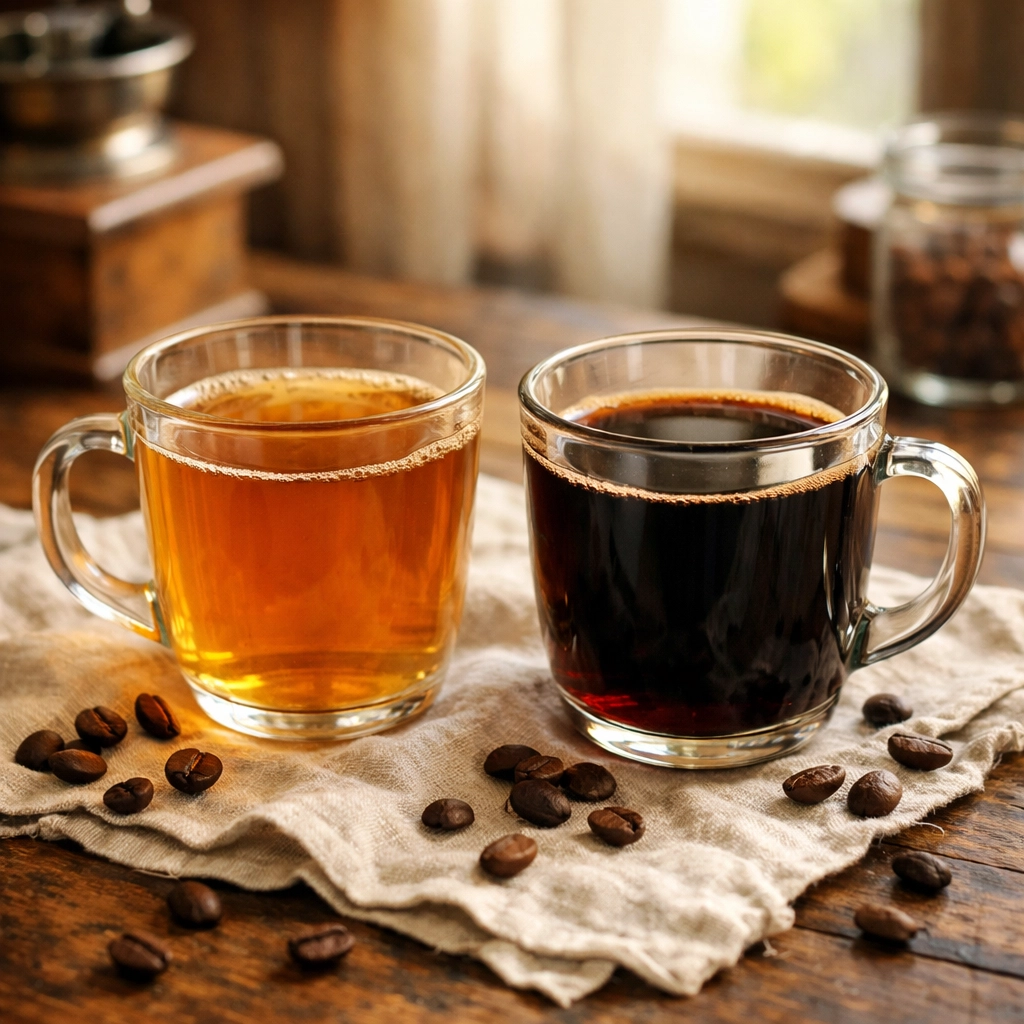
Dark roast beans look dramatically different: they're deep brown to almost black, with a glossy, oily surface. Those natural oils that stayed inside the light roast beans have now emerged, creating that characteristic sheen. The beans are also noticeably lighter in weight and puffier, because extended roasting drives off more moisture and expands the cellular structure.
Here's the thing about dark roasts: they're not trying to showcase origin. They're creating a consistent, bold flavor profile that many people find comforting and familiar. There's nothing wrong with that. Dark roasts have their place, especially in milk-based drinks where you want coffee flavor that can stand up to steamed milk.
The Great Caffeine Myth
Let's tackle this one head-on because it comes up constantly: dark roasts do not have significantly less caffeine than light roasts.
The confusion comes from how we measure coffee. If you measure by volume (scoops), light roasts will give you slightly more caffeine because those dense beans pack more mass into the same space. One scoop of light roast might yield 70mg of caffeine versus 65mg from a scoop of dark roast.
But if you're measuring by weight: which is what you should be doing anyway for consistent brewing: the difference becomes negligible. The extended roasting does degrade caffeine molecules slightly, but we're talking about such small variations that you won't notice in real life.
So choose your roast based on flavor preference, not on some misguided attempt to optimize your caffeine intake. They're all going to wake you up just fine.
Finding Your Perfect Match
Here's where it gets personal. There's no "correct" roast level: only what works for your palate and your brewing method.
Go lighter if you:
- Love exploring different flavor notes and complexities
- Enjoy bright, crisp acidity
- Drink your coffee black or with minimal additions
- Use pour-over, Chemex, or other filter brewing methods
- Get excited about tasting the specific characteristics of different origins
Go darker if you:
- Prefer bold, straightforward coffee flavors
- Add milk, cream, or non-dairy alternatives to your coffee
- Like lower acidity and richer body
- Make espresso drinks, cold brew, or iced coffee
- Want consistency over complexity
And honestly? You don't have to choose just one. We know plenty of coffee lovers who keep both a light roast Ethiopian and a dark roast Brazilian in their pantry, choosing based on mood and method.
Brewing Recommendations by Roast
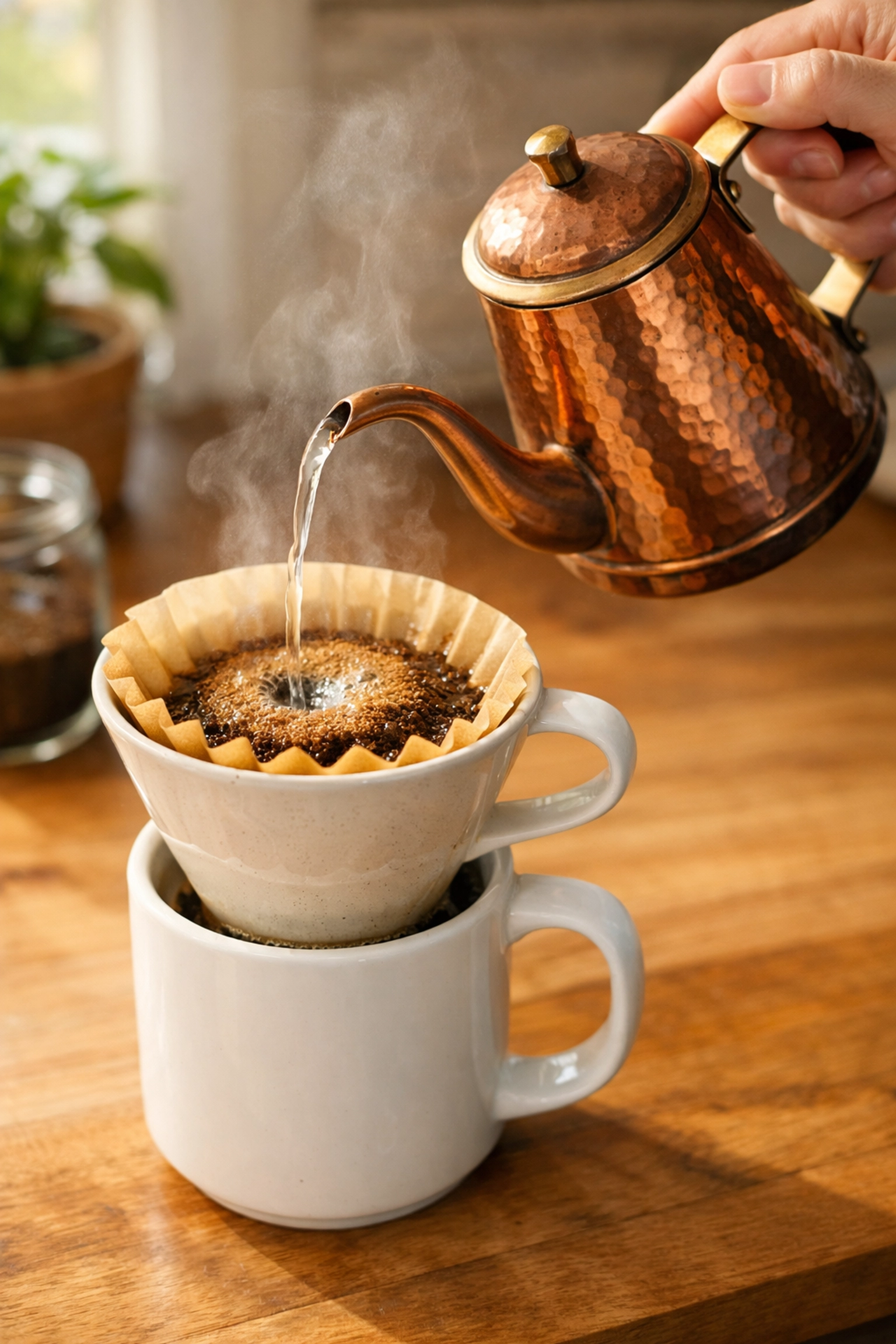
Your roast level should influence your brewing approach. Light roasts benefit from methods that highlight clarity and complexity: pour-over methods like V60 or Chemex work beautifully. These coffees shine when you can taste the distinct flavor notes without interference.
Dark roasts are more forgiving and versatile. They work wonderfully in French press, where the fuller body comes through nicely. They're also excellent for espresso because those bold flavors cut through milk in cappuccinos and lattes. Cold brew with dark roast creates a smooth, chocolatey concentrate that's dangerously easy to drink.
Medium roasts (which we haven't focused on here, but they're the comfortable middle ground) tend to be the most versatile, working well across virtually any brewing method.
What We're Doing at Limini
At Limini Coffee, we roast across the spectrum because we believe different coffees deserve different treatments. Some origins are so expressive and unique that we'd never dream of taking them past a light roast: that would be like painting over a masterpiece. Other coffees develop beautiful caramelized sweetness and body with a bit more heat.
We're particularly passionate about showing people what specialty coffee can be at lighter roast levels. So much of the coffee world's default has been dark roasting, partly because it masks defects in lower-quality beans. When you start with exceptional green coffee: carefully sourced, properly processed, and freshly harvested: you can roast lighter and let those natural flavors shine.
That said, we're not roast snobs. If you prefer darker roasts, brilliant. We'd rather you drink coffee you genuinely enjoy than force yourself through a light roast because someone told you it's "better." There's room for all of it.
The Experimentation Invitation
Here's our suggestion: grab a light roast and a dark roast of the same origin if you can find them. Brew them side by side using the same method and ratio. Taste them both black first, then try adding milk to see how they respond differently.
You'll learn more about your preferences from this one exercise than from reading a dozen articles about cupping notes and roast profiles. Coffee is experiential. The best way to understand what you like is to taste, compare, and pay attention.
And if you want to start that exploration with beans we're genuinely proud of, we'd love to have you browse what we're currently offering at Limini Coffee. We're roasting fresh every week, and we're always happy to chat about which of our coffees might suit your taste.
The ritual of the roast isn't just about heat and time: it's about transformation and choice. Light or dark, bright or bold, the perfect roast is simply the one that makes you excited to wake up and brew another cup.